
Hydraulics move heavy loads in a compact, reliable way. For pilots and instructors, understanding aircraft hydraulic systems helps you interpret cockpit indications, follow emergency procedures, and communicate effectively with maintenance. This article explains how aircraft hydraulic systems work, why they matter in flight operations, common failure modes, and practical steps pilots can take to reduce risk and make better decisions.
Whether you fly light single-engine airplanes with simple hydraulic brakes or complex airliners with multiple, redundant hydraulic systems controlling flight controls, landing gear, and brakes, the basic principles are the same. Read on for clear explanations, operational takeaways, and real-world examples you can use in flight training and line operations.
How Aircraft Hydraulic Systems Work
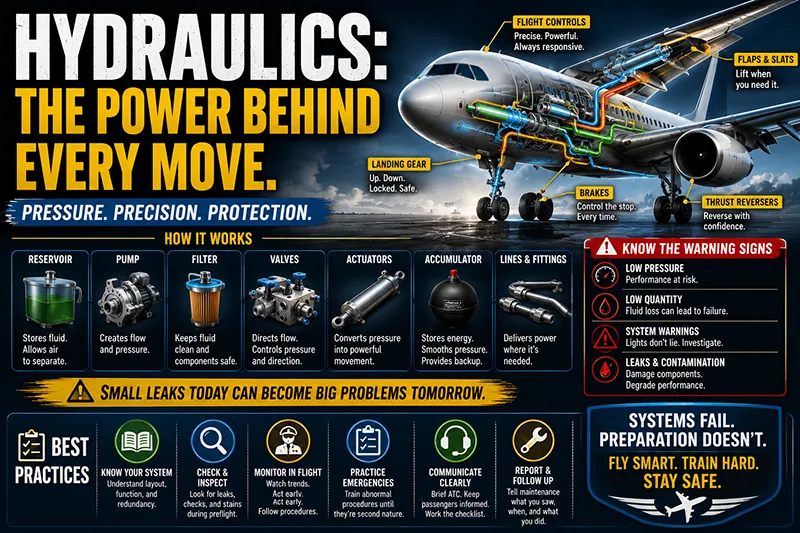
An aircraft hydraulic system converts mechanical or electrical energy into fluid pressure to move actuators. The essential components are a reservoir, pump, filter, pressure regulator or relief valve, control valves, actuators (cylinders or motors), lines and fittings, and often accumulators. Each component has a specific role:
Reservoir: Holds hydraulic fluid and provides a space for air to separate from fluid. It also supplies fluid to the pump and accommodates thermal expansion.
Pump: Produces flow and pressure. Pumps can be engine-driven, electrically driven, or both. In larger aircraft, multiple pumps and redundancy are common.
Filters: Remove particles and contamination that can damage valves and actuators.
Valves: Control direction, pressure, and flow. Directional control valves route fluid to extend or retract an actuator. Relief valves protect the system from overpressure.
Actuators: Convert fluid pressure into mechanical movement. Linear actuators or pistons are used for landing gear and flaps, while hydraulic motors or rotary actuators may drive other components.
Accumulators: Store hydraulic energy and smooth pressure fluctuations. They provide limited emergency power if the pump fails and help dampen shock loads.
Lines and fittings: Carry fluid between components. Proper routing, support, and leak-free connections are critical for system integrity.
Hydraulic fluid itself is part of the system. There are several types of aviation hydraulic fluids. Systems are designed around a specific fluid family; mixing different fluids can cause seal degradation or system failure, so always follow manufacturer guidance.
Why This Matters in Real-World Aviation
Hydraulics perform many flight-critical tasks. In transport-category aircraft they typically power primary and secondary flight controls, landing gear, brakes, thrust reversers, and cargo systems. In many business and regional aircraft, hydraulics provide primary actuation and redundancy. Even in light general aviation aircraft, hydraulic systems may operate landing gear or wheel brakes.
When a hydraulic system fails, the consequences range from increased pilot workload to reduced controllability. Redundancy and design features mitigate risk, but pilots must recognize indications of hydraulic problems early and follow appropriate procedures. Knowing how systems behave helps with diagnosis in flight and effective communication with maintenance on the ground.
How Pilots Should Understand This Topic
Focus on system function and indications rather than internal detail. Key things to learn for each aircraft you fly:
- Which systems power flight-critical controls, brakes, and gear.
- What cockpit indications—pressure gauges, quantity gauges, annunciator lights—mean in practical terms.
- How redundancy is arranged. For example, are flight controls backed up by another hydraulic system or by an alternate method?
- What the emergency or alternate extension methods are for landing gear and flaps.
- Applicable limitations, MEL items, and required maintenance actions following a hydraulic fault.
Understand that hydraulics are deterministic: pressure loss usually traces to a leak, pump failure, control valve misposition, or contamination. Symptoms such as low fluid quantity, falling pressure, or abnormal noises should prompt immediate reference to the aircraft’s normal and emergency procedures.
Common Mistakes or Misunderstandings
Pilots and maintenance personnel sometimes make incorrect assumptions about hydraulic systems. Common pitfalls include:
Assuming cockpit gauges show the full story. A pressure gauge may read normal while a leak elsewhere is depleting the reservoir over time. Monitor quantity as well as pressure and note trends.
Confusing system redundancy with invulnerability. Multiple hydraulic systems can provide significant fault tolerance, but common-mode failures, contamination, or hydraulic fluid cross-contamination can still degrade multiple systems.
Delaying action on small leaks. Small leaks can worsen rapidly. If an abnormal hydraulic indication appears, follow the appropriate procedures rather than assuming it is not serious.
Mixing hydraulic fluids. Different fluids have different chemical properties and compatibility with seals. Cross-contamination can damage components and should be avoided.
Relying solely on memory for emergency extension or alternate procedures. Practice and briefings are essential. Use the QRH or POH as the primary source and maintain currency in abnormal procedures training.
Practical Example
Scenario: You are a PIC on a regional turboprop on approach when a hydraulic pressure warning illuminates. The affected system supplies the primary flight controls and the landing gear.
Practical response: First, fly the airplane. Maintain control using available control authority and cross-check other flight instruments and systems. Consult the quick reference checklist for hydraulic warnings and follow memory items only if they are explicitly required. Select alternate or emergency gear extension if the gear cannot be lowered normally. Communicate with ATC, declare abnormal, and prepare for a potential abnormal landing. If hydraulic quantity is falling, brief the cabin and consider fuel and landing weight considerations that may affect stopping distance if brakes are degraded. After landing, provide maintenance a full description of the sequence and indications observed.
Why this example matters: The scenario emphasizes priorities—aviate, navigate, communicate—while interpreting hydraulic indications and planning for degraded systems. It also illustrates the value of pre-briefed contingency plans and clear communications with maintenance crews after the flight.
Best Practices for Pilots
Adopt these practical habits to reduce hydraulic-related risk:
- Know the system layout and the function of each hydraulic system in the aircraft you fly.
- Include hydraulic quantity and pressure checks in your flow checks where appropriate.
- During preflight, look for visible leaks, fluid stains, and condition of hydraulic lines in accessible areas. Report any discrepancy to maintenance.
- Practice emergency and alternate extension procedures during training so you can execute them calmly when needed.
- When a hydraulic indication occurs in flight, reference the QRH/POH immediately and follow procedures. Prioritize aircraft control and safe landing over troubleshooting while airborne.
- After an event, provide maintenance with clear symptom descriptions, timeline, and any cockpit actions taken—this aids diagnosis and repair.
Frequently Asked Questions
How do I tell if a hydraulic leak is serious?
Look at both quantity and pressure indicators and watch for a trend. A sudden drop in pressure or rapid loss of fluid quantity is serious and requires immediate action. Also note any new noises, vibration, or changes in control feel. Always follow the aircraft’s procedures and consult maintenance if you suspect a leak.
Can I mix hydraulic fluids if the wrong fluid is added during servicing?
No. Different hydraulic fluids are formulated with different chemical properties and seal compatibility. Mixing fluids can lead to seal swelling or shrinkage and component damage. If incorrect fluid is added, follow the aircraft manufacturer’s guidance and maintenance procedures; this is a maintenance issue, not something to resolve in flight.
What should I do if landing gear won’t extend normally?
Follow the published abnormal procedures in the POH/QRH for alternate or emergency extension. Brief passengers and prepare for a landing with potentially degraded braking. If time allows, configure the aircraft for a higher approach speed recommended by the aircraft procedures and coordinate with ATC and emergency services.
Are hydraulic failures common in light aircraft?
Many light aircraft rely on mechanical or cable systems for primary flight controls, but hydraulic systems may be present for brakes or retractable gear. The prevalence of hydraulic issues depends on aircraft type, age, and maintenance. Whether operating in general aviation or transport operations, regular maintenance and good preflight inspections reduce the likelihood of in-flight failures.
What is an accumulator and why is it important?
An accumulator stores pressurized fluid under a gas charge to provide short-term hydraulic power and smooth pressure fluctuations. It can supply fluid for limited actuator operation if the pump fails and helps dampen shocks in the system. Accumulators are part of system resilience but do not replace primary pumps.
Key Takeaways
- Practical takeaway: Know which systems hydraulics power on your aircraft and interpret pressure and quantity trends to spot developing problems early.
- Safety takeaway: Treat any unexplained pressure loss or rapid fluid loss as urgent. Prioritize flying the airplane and follow QRH/POH procedures for hydraulic failures.
- Training/regulatory takeaway: Maintain currency in abnormal procedures and consult the aircraft manufacturer’s documentation and maintenance organization for any hydraulic discrepancies.