
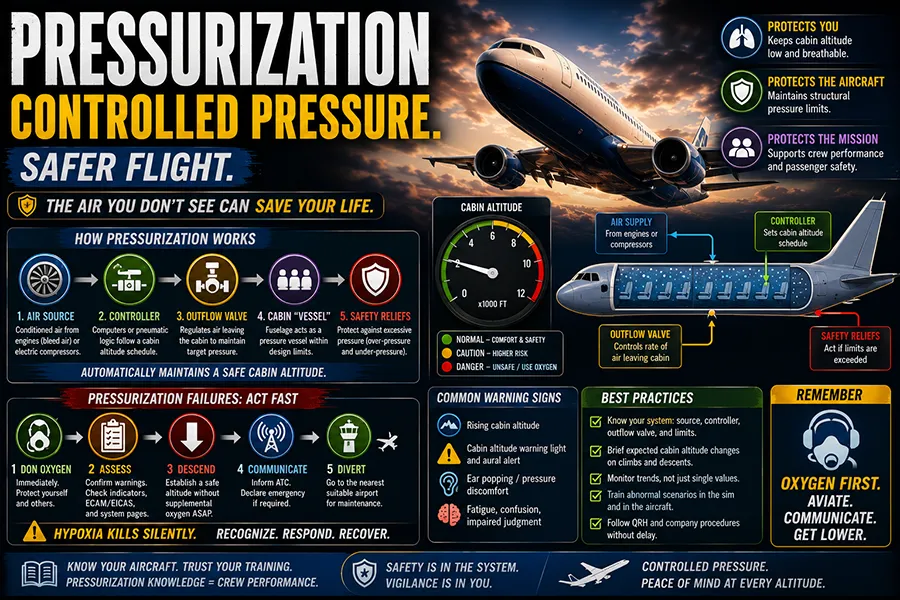
Aircraft pressurization systems are a foundational part of modern flight safety and comfort. Aircraft pressurization controls cabin altitude and the flow of breathable air so crews and passengers remain safe and functional at flight levels where the outside atmosphere would otherwise be hostile. For pilots, instructors, and maintenance personnel, understanding how pressurization works and how it can fail is essential for sound decision-making, effective training, and safe operations.
This article explains the science behind pressurization, how common systems regulate cabin pressure, the operational implications for flight crews, typical failure modes, and practical steps pilots should take in both routine and abnormal situations. The goal is practical clarity: you should finish with usable mental models you can apply in the cockpit and in training.
How Aircraft Pressurization Works
At its core, a pressurization system maintains a controlled pressure differential between the aircraft cabin and the ambient atmosphere. That differential keeps cabin altitude low enough for occupants to breathe normally and reduces the physiological stresses of high-altitude flight.
Key components and concepts:
- Pressure source: Air for pressurization typically comes from conditioned bleed air taken from engine compressors or from environmental control system compressors. Some modern designs use electrically driven compressors instead of bleed air.
- Cabin pressure vessel: The fuselage acts as a pressure vessel; its strength and the design differential pressure limit define safe operating envelopes.
- Outflow valve: A regulated valve that controls the amount of air leaving the cabin. By modulating the outflow valve, the system maintains the target cabin pressure schedule.
- Pressurization controller: Electronic or pneumatic logic that references recorded or commanded cabin altitude and automatically commands the outflow valve to achieve the desired cabin altitude profile.
- Safety reliefs: Mechanical relief valves protect against excessive positive or negative differential pressure.
Pressurization control is usually schedule-based: as the aircraft climbs, cabin pressure is reduced gradually to a predetermined cabin altitude that is a compromise between passenger comfort and structural loading. During descent the system allows faster equalization to the outside atmosphere.
Why This Matters in Real-World Aviation
A reliable pressurization system affects many operational domains. It has direct consequences for physiology, aircraft structural integrity, emergency procedures, and maintenance priorities.
Physiology: Hypoxia risk increases with cabin altitude. If pressurization fails or Drifts beyond the intended schedule, occupants can develop symptoms that degrade cognitive and motor performance. For flight crews, even mild hypoxia can impact decision-making.
Structural integrity: The fuselage design specifies maximum differential pressure. Exceeding that limit — for example during improper pressurization control or maintenance errors — can stress the structure and may require grounding and inspection.
Operations: Pressurization failures frequently drive operational decisions: an emergency descent, diversion to the nearest suitable airport, or a return to lower altitudes might be necessary. Understanding system behavior informs those decisions and helps crews prioritize tasks under pressure.
How Pilots Should Understand Pressurization
Think in terms of three interacting domains: air supply, control, and safety limits. Pilots do not need to be systems engineers, but a clear mental model reduces surprises in flight.
Air supply. Know the source of conditioned air on your type: engine bleed air, environmental control packs, or electrically driven compressors. Each has different failure modes and associated indications. On ground power, the pressurization source or its availability may change; standard operating procedures often require selecting the correct mode to avoid unintended pressurization during engine start or ground operations.
Control. Most pressurization systems operate automatically. The controller sets a cabin altitude schedule keyed to aircraft altitude or a selected cabin altitude. Familiarize yourself with how the controller displays status and how to place it in manual mode if needed. Manual mode gives direct command over the outflow valve and can be useful for troubleshooting but requires careful monitoring.
Safety limits. Know the maximum differential pressure and any cautionary ranges displayed on your aircraft’s indicators. If the cabin differential approaches those limits or if a safety relief opens, follow the manufacturer’s emergency procedures and consider diversion.
Common Mistakes or Misunderstandings
Pilots and maintainers sometimes misunderstand or underestimate how quickly pressurization can affect flight operations. Common errors include:
- Confusing cabin altitude with aircraft altitude: Cabin altitude is the pressure-equivalent altitude inside the cabin; it can lag or behave differently from aircraft altitude during climbs and descents.
- Assuming automatic always means infallible: Automation prevents many routine errors but can mask faults. For example, controllers can fail or sensors can provide erroneous inputs.
- Not briefing pressurization actions: Failure to brief expected cabin altitude changes during climb or descent can create confusion, especially when passengers report ear discomfort or when the crew must don oxygen in an abnormal situation.
- Poor ground handling of pressurization modes: Leaving the system in an incorrect mode while taxing or during engine start can lead to inadvertent pressurization or venting.
Training gaps also appear when pilots practice emergency descents without simulating degraded pressurization annunciations. Effective training should include recognizing cabin altitude warnings, reading the outflow valve position, and executing appropriate descent profiles while coordinating with ATC.
Practical Example
Imagine a medium-range transport climbing to cruise. Shortly after reaching cruise, the cabin altitude warning illuminates and aural alert sounds. The flight crew’s immediate priorities are: confirm the warning, don oxygen masks, evaluate the rate of cabin altitude change, and identify the system fault via the annunciator and system synoptic pages.
If the outflow valve is stuck open, the cabin will begin to equalize with ambient pressure and cabin altitude will rise. The crew will typically establish an emergency descent to a lower altitude where supplemental oxygen is not required, declare an emergency if needed, and plan a diversion to an airport where maintenance can diagnose and repair the outflow valve and related components. While executing these actions, clear cockpit communications, timely use of oxygen, and quick reference to the aircraft’s QRH or manufacturer procedures reduce risk and confusion.
Best Practices for Pilots
Adopt these practical habits to manage pressurization risks effectively:
- Brief pressurization expectations as part of the departure and climb briefing, including planned cabin altitude and any likely passenger symptoms.
- Monitor cabin altitude and differential pressure trends during climb, cruise, and descent. Anomalies often present as trends before a full failure.
- Know how to switch the pressurization controller to manual and how to position the outflow valve if required. Train these steps in simulators or procedural practice sessions.
- If a pressurization warning occurs, follow the aircraft’s emergency procedures first: oxygen, assess, descend as required, and communicate with ATC. Do not delay donning masks to hunt for a checklist.
- Coordinate with maintenance and follow the manufacturer’s recommended inspections after any pressurization fault. Don’t assume an intermittent warning can be ignored.
Frequently Asked Questions
What causes a loss of pressurization?
Loss of pressurization can be caused by an air supply failure, outflow valve jam or miscommand, structural leaks, safety valve actuation, or sensor and controller malfunctions. Human factors such as incorrect switch selection during ground operations or maintenance errors can also contribute.
How will the crew know pressure is abnormal?
Modern aircraft provide multiple indications: cabin altitude and differential pressure gauges, system synoptics, and discrete warnings or caution messages. An aural alert often accompanies a cabin altitude warning. Listen for passenger reports of ear discomfort and monitor human performance for subtle signs of hypoxia.
Can small general aviation aircraft be pressurized?
Yes. Some high-performance piston and turboprop aircraft feature pressurized cabins. Those systems are typically simpler than commercial transport systems but use the same basic principles: conditioned air supply, outflow control, and safety relief valves. Follow the aircraft-specific procedures and maintenance requirements when operating or servicing these systems.
Is it safe to continue flight after a single pressurization fault?
That depends on the fault and the operator’s manuals. Some anomalies permit continued flight to a suitable airport, while others require immediate descent and diversion. Use the aircraft’s QRH or checklist and the operator’s policies; when in doubt, prioritize the physiological safety of occupants and plan a descent to a lower altitude.
Common Mistakes, Revisited
One recurring misunderstanding is treating pressurization solely as a comfort feature rather than a safety-critical system. This mindset can lead to delayed recognition of a failure. Another mistake is overreliance on a single instrument or message; cross-check multiple indications and use system synoptics to build a coherent picture before committing to a plan.
Key Takeaways
- Practical takeaway: Understand the source of conditioned air on your aircraft and how the controller and outflow valve interact to maintain cabin altitude.
- Safety takeaway: Prioritize donning oxygen and descending to a safe altitude if cabin altitude warnings indicate a pressurization failure.
- Training and regulatory takeaway: Follow the aircraft manufacturer’s procedures and applicable operational guidance; verify any maintenance actions before returning the aircraft to service.
Pressurization is a system pilots interact with every time they fly at higher altitudes. A clear mental model, routine monitoring, effective briefing, and prompt response to warnings keep pressurization issues from becoming emergencies. Use training and procedural resources to practice recognition and response until the critical actions are automatic.