
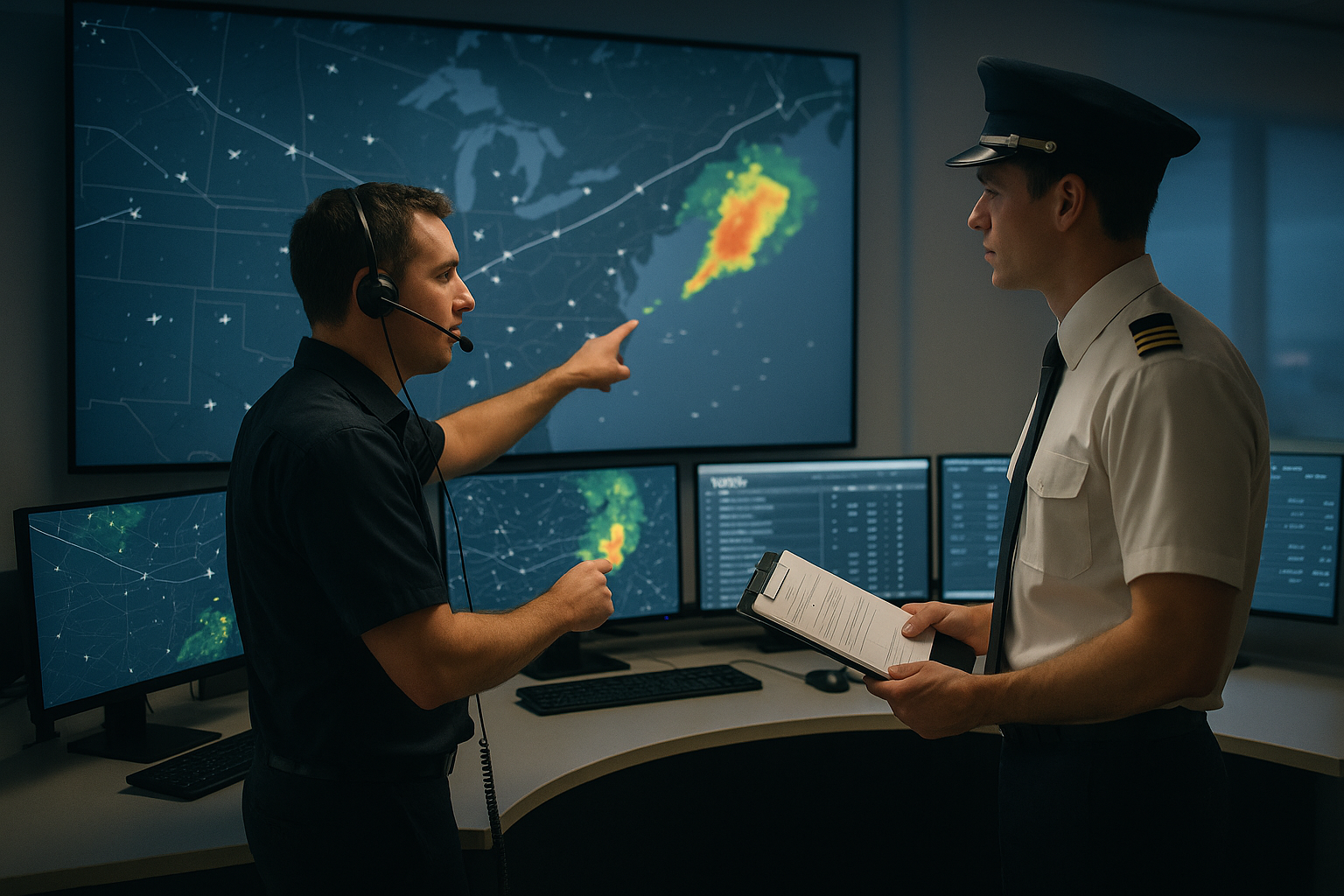
Airline dispatchers are central to daily flight operations and safety. Pilots, instructors, and aviation professionals rely on dispatchers for flight planning, real-time monitoring, and operational decisions that affect fuel, routing, weather mitigation, and diversion planning. Understanding the dispatcher role improves crew coordination, decision-making, and safety margins in routine and abnormal situations.
This article explains what airline dispatchers do, why their work matters to flight crews and trainers, and how pilots should interpret and interact with dispatch information. Practical examples, common misunderstandings, training implications, and clear operational takeaways are included so the reader can apply this knowledge in training, line operations, or academic study.
What Dispatchers Do: Core Responsibilities
At its core, airline dispatch is about preparing and supporting a flight from origin to destination. Key responsibilities include flight planning, monitoring weather, checking operational constraints, coordinating fuel and alternate requirements, issuing operational releases when required by company procedures or regulation, and maintaining situational awareness while flights are airborne. Dispatchers use company tools, meteorological services, NOTAMs, performance calculators, and coordination channels to present a viable, safe plan to the crew.
Flight planning starts before any briefing. Dispatchers synthesize routing options, predicted winds, known airspace constraints, and applicable operational limits to select routes and fuel profiles. They evaluate alternates and contingency fuel and identify potential en route restrictions. The plan that reaches the flight crew should summarize the operational proposal along with known risks and the logic behind fuel and alternate choices.
Operational monitoring continues after takeoff. Dispatchers track aircraft position, weather developments, air traffic flow, and mechanical status. They coordinate with operations control, maintenance control, and crew scheduling when disruptions occur. When weather deteriorates, a mechanical issue appears, or airspace constraints force reroutes, dispatchers help identify alternatives, calculate fuel implications, and coordinate with the captain on the best course of action.
Why This Matters in Real-World Aviation
Dispatcher work directly affects safety, on-time performance, and regulatory compliance. From a safety perspective, early identification of weather hazards or en route constraints reduces pilot workload and gives crews more time to make deliberate decisions. Effective dispatching supports conservative fuel planning, appropriate alternate selection, and timely reroutes. For training, dispatchers are an extension of crew resource management because they provide critical information that crews use for decisions.
Operationally, dispatchers reduce uncertainty. They aggregate data sources that might be unavailable or impractical for a single cockpit to monitor continuously while flying. For example, dispatch centers can detect a developing line of thunderstorms along a route and propose a reroute before the crew must react in high-workload conditions. Predictive work by dispatchers also reduces surprises that can cascade into operational delays or safety risks.
Dispatch decisions intersect with maintenance and airworthiness issues. When a mechanical discrepancy appears, dispatchers coordinate between maintenance control and the flight crew to determine whether the planned flight can proceed safely, whether a delay is necessary, or if a ferry or cancellation is required. That coordination preserves operational control and ensures decisions consider both technical and operational perspectives.
How Pilots Should Understand Dispatch Work
Pilots should view dispatchers as operational partners. The flight plan or release delivered by dispatch is a collaborative product, not an instruction that removes pilot judgment. Pilots retain command authority for the safe operation of the aircraft, and dispatcher-provided data should inform pilot decisions. Read the dispatch plan critically, ask clarifying questions during preflight briefing, and discuss contingencies before engine start.
Key points pilots should keep in mind when working with dispatchers include:
Understand the assumptions behind fuel and alternate choices. Ask what contingencies were included and what margins exist for unplanned reroutes.
Clarify weather uncertainties. If forecasts are marginal or convective activity exists along your route, request the latest analysis and contingency routing options.
Confirm runway and performance constraints. Dispatch may plan for a particular runway, intersection departure, or airport configuration. Verify that planned takeoff performance matches the crew calculation and that any runway intersections or obstacles were accounted for.
Maintain open communication. If the crew detects an issue in flight, notify dispatch immediately so they can coordinate traffic flow, fuel calculations, and alternates.
Understanding the terminology dispatchers use also helps. When a dispatcher references a planned diversion, reroute, or an alternate, ask whether those options are calculated with current fuel and performance numbers. When weather is cited as a limiting factor, ask what probability or timing drove the assessment.
Common Mistakes and Misunderstandings
Misperceptions about dispatcher authority and capabilities create operational risk. Common mistakes include:
Overreliance on dispatch as a substitute for in-cockpit decision-making. Dispatchers can provide information and recommendations, but the final tactical decisions in-flight rest with the flight crew.
Poor preflight communication. If crews do not review the dispatch plan or ask questions, assumptions can lead to mismatched expectations during departure or en route changes.
Assuming dispatch data is definitive and static. Weather and traffic evolve. Treat the dispatch plan as the starting point, not the final answer. Continuous cross-checks are essential.
Misreading fuel and alternate logic. Crews sometimes assume fuel figures include additional contingencies that were not applied. Confirm whether fuel includes specific contingencies for extended holding, long reroutes, or anticipated delays.
Underestimating human factors in dispatch. Dispatchers work shifts and manage multiple flights. Fatigue, workload, and information overload can affect performance. Mutual support and clear communication reduce errors.
Practical Example: Weather-Driven Reroute and Fuel Management
Consider a mid-afternoon domestic flight planned across a region with forecast convective development. The dispatcher prepares a route based on current TAF and radar trends and calculates fuel with a conservative reserve and an alternate airport. During climb, ATC notifies the crew of a convective line building along the filed route. The crew calls dispatch to coordinate.
In this scenario, the dispatcher evaluates alternatives: reroute around the line, climb above certain layers if possible, or delay to wait for dissipation. The dispatcher calculates fuel implications for each option and communicates this to the crew. If the reroute adds significant time and fuel burn, the dispatcher will propose revised alternates or suggest a stop if available. If an alternation requires a longer diversion, dispatch will coordinate with operations to ensure ground support and passenger handling are ready.
From the crew perspective, the captain considers the proposed alternatives against current fuel state, known performance limits, and passenger considerations. The crew retains the authority to accept or reject dispatcher recommendations based on real-time observations and cockpit workload. The most effective outcome arises when both parties share situational awareness and agree on a clear path forward, including preassigned contingency actions if conditions further deteriorate.
Best Practices for Pilots When Working with Dispatchers
Successful pilot-dispatch partnerships rely on clear expectations and proactive habits. Recommended practices include:
Preflight collaboration: review the dispatch plan early, discuss contingencies, and align on who will do what if circumstances change.
Ask targeted questions: clarify fuel assumptions, alternate choices, and the conditions that would trigger a reroute or diversion.
Maintain concise, clear communications in flight: provide timely updates on fuel state, system anomalies, or observed weather to enable dispatch to plan ahead.
Document significant changes in the flight plan or dispatch release so the entire operations team has a consistent record.
Use CRM principles: include dispatch in the decision loop rather than viewing them as a separate function. Treat them like an external crewmember for planning and contingency management.
Training and Human Factors Considerations
Dispatch training emphasizes systems knowledge, meteorology, operational procedures, and decision-making under uncertainty. For pilots and instructors, training that includes dispatcher interaction improves team coordination. Scenario-based training that simulates disruptions, weather shifts, and mechanical issues helps both dispatchers and flight crews practice shared decision-making.
Human factors are significant. Dispatchers often manage multiple flights and must prioritize resource allocation. Fatigue management, ergonomic tools, team communication, and a supportive reporting culture contribute to safer operations. Flight training that includes simulated dispatcher interactions helps pilots recognize common information gaps and improves preflight brief quality.
Technology and Tools That Support Dispatch Operations
Dispatch centers rely on integrated software for flight planning, weather visualization, NOTAM consolidation, and tracking. Common tools include electronic flight bags, graphical weather overlays, en route monitoring systems, and automated alerts for fuel or route deviations. These tools increase the speed and accuracy of dispatcher decisions but do not eliminate the need for professional judgment.
Automation can present its own risks. Overreliance on automated recommendations without understanding underlying assumptions can lead to surprises when tools misinterpret data or when inputs are stale. Pilots and dispatchers should cross-validate automated outputs and retain the ability to compute or approximate key metrics manually if needed.
How Dispatch and Regulations Interact
Dispatch procedures operate within national and company regulatory frameworks that define responsibilities, documentation requirements, and operational control processes. The specifics vary by jurisdiction and operator. Pilots should be aware that dispatch practices reflect a combination of regulatory obligations, company policy, and operational culture. Ask your operations department or training department for local details on how dispatch responsibilities are structured within your operator.
Because regulations and company policies differ, do not assume the same level of dispatcher authority or documentation applies across carriers. When transitioning between operators or flying as a contractor, take time to understand the particular dispatch interface and any differences in how flight releases or operational control are assigned.
Common Communication Protocols Between Crew and Dispatch
Standardized, concise communication reduces misunderstanding. Effective protocols include specifying the flight identification, current position or phase of flight, a brief description of the problem or request, and the crew's intended action, if any. Dispatch responses should similarly contain the proposed action, fuel or timing consequences, and any actions for the crew to take immediately.
Examples of useful content during a call: the crew states fuel remaining, planned destination or diversion, and major system limitations. Dispatch provides routing alternatives, estimated additional time and fuel, and whether ground services or passenger handling need to be requested. Clear readbacks and confirmations are essential to ensure both sides have the same plan.
Frequently Asked Questions
What authority do dispatchers have compared to the pilot in command?
Dispatchers are operational partners who provide flight plans, monitoring, and recommendations. The captain retains ultimate authority for the safe operation of the aircraft in flight. Dispatchers and pilots coordinate decisions; final responsibility for tactical in-flight actions rests with the flight crew. Specific legal authority and operational control assignments vary by jurisdiction and operator, so consult your company procedures for exact details.
How do dispatchers determine fuel and alternates?
Dispatchers combine forecast weather, predicted winds, en route routing, expected delays, airport availability, and company policy when calculating fuel and selecting alternates. They typically include planned trip fuel, contingencies for reroutes, reserves for unplanned holding, and considerations for alternates. Always verify the assumptions used in calculations and ask dispatch to clarify what contingencies are included.
Can the crew reject a dispatcher recommendation while en route?
Yes. The flight crew may decline a dispatcher recommendation if they judge it unsafe or impractical given current cockpit conditions. Ideally the crew discusses the reason for rejection with dispatch and agrees on an alternative. Effective communication minimizes conflicting actions and preserves safety margins.
How do dispatchers stay informed of rapidly changing weather?
Dispatch centers use real-time weather services, radar feeds, pilot reports, and graphical weather tools to monitor developing conditions. They coordinate with meteorological providers and maintain continuous watch over flights to detect evolving hazards. Pilots should still report observed conditions to dispatch because in-situ observations can provide context that remote sensing may miss.
What should pilots do if they suspect an error in the dispatch plan?
Raise the concern immediately with dispatch and explain the specific discrepancy. Provide observed facts, such as unexpected winds, relevant system indications, or runway conditions. A quick exchange usually resolves discrepancies. If unresolved and safety is affected, follow immediate safety protocols and, if necessary, divert or delay as appropriate.
Common Operational Scenarios and How Dispatch Helps
Dispatch is especially valuable in scenarios that require proactive planning. Examples include extended overwater flights where alternate availability is limited, operations into airports with short operating windows, flights into regions with rapidly changing convective activity, or flights with maintenance irregularities that may restrict dispatch choices. In each case, dispatchers evaluate alternatives and communicate options that preserve safety while considering passenger and operational impacts.
Key Takeaways
- Practical takeaway: Treat dispatchers as operational partners. Review and discuss the dispatch plan before departure and keep communication open in flight.
- Safety takeaway: Dispatcher monitoring and timely coordination reduce surprise and workload, improving safety margins in changing conditions.
- Training takeaway: Include dispatcher interaction in scenario-based training to build shared decision-making skills and clarify operational roles.
Airline dispatchers are a force multiplier for flight crews when communication and mutual understanding work well. Pilots who invest in effective preflight collaboration and ongoing in-flight communication with dispatch reduce operational risk and improve decision-making under pressure.
If you are an instructor, incorporate dispatcher scenarios into briefings and simulate real-time dispatch communications in scenario-based training. If you are a student pilot or aviation enthusiast, observe how dispatch influences routes and fuel planning and ask experienced crews about their best practices for engaging with operations control.