
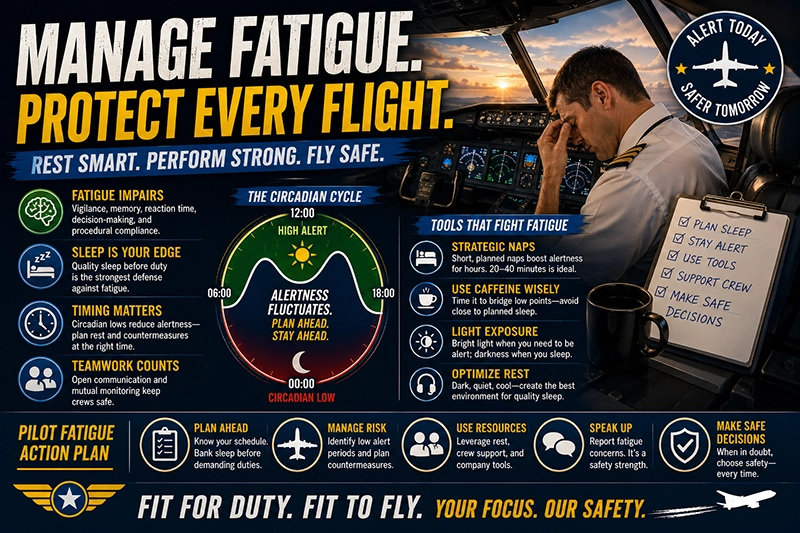
Pilot fatigue is an unavoidable human factor in aviation operations. For airline pilots, managing fatigue is not just a matter of personal comfort. It affects vigilance, decision-making, manual control, and adherence to procedures. This article explains how airline pilots manage fatigue in operational settings, translates human factors principles into practical actions, and highlights practices that support safety, training, and sound judgment.
Read on for an operational view of fatigue physiology, circadian effects, practical mitigation tools such as in-flight rest and strategic napping, and the behavioral practices pilots and operators use to reduce fatigue-related risk. The guidance here is written for pilots, instructors, and aviation professionals seeking real-world approaches to a persistent challenge.
The physiology of fatigue pilots need to understand
Fatigue is a state resulting from sleep loss, extended wakefulness, circadian disruption, or a combination of those factors that leads to impaired performance. For airline pilots, the principal contributors are insufficient sleep, disruption of the body clock when crossing time zones or working at night, and the accumulation of small sleep deficits over days.
Two biological processes determine sleepiness and alertness. The first is a homeostatic process: the longer you have been awake, the stronger your drive to sleep. The second is the circadian process: a roughly 24-hour rhythm that promotes wakefulness during the day and sleep at night. When these processes are out of sync with duty schedules, fatigue risk increases.
Sleep itself is structured in cycles, and the restorative value of sleep is not uniform. Deep sleep and rapid eye movement sleep serve different recovery roles. Fragmented or shortened sleep often leads to incomplete recovery and residual sleepiness even after being awake for short periods.
Why this matters in real-world aviation
Fatigue degrades cognitive functions pilots rely on: situational awareness, memory, reaction time, judgment, and communication. These impairments can reduce the ability to monitor automation, detect subtle changes in aircraft behavior, or complete complex crosschecks under time pressure. In multi-crew operations, fatigue can also affect crew coordination, briefing quality, and the effectiveness of challenge-and-response between pilots.
Beyond the flight deck, fatigue affects training outcomes, checkride performance, and the ability to assimilate new procedures. From an organizational perspective, fatigue management affects scheduling, crew pairing, and the design of rest facilities. Tackling fatigue therefore spans the individual, crew, and operator levels.
How pilots should understand fatigue in practical terms
Managing fatigue is not a single action. It is a set of predictable strategies that reduce risk and sustain performance. These include sleep opportunity management before duty, using controlled rest or strategic naps where permitted, tactical use of stimulants such as caffeine, and organizational mitigations like adequate rest periods and predictable rosters.
Fitness for duty is a decision pilots must make before reporting for duty and during flight. It requires honest self-assessment, understanding how recent sleep and circadian phase affect alertness, and recognizing that short-term countermeasures are not substitutes for adequate sleep. Pilots should err on the side of safety when in doubt and use available reporting or support systems to address fatigue before it contributes to an operational event.
Operational tools and strategies pilots use
These are the most commonly applied approaches in airline operations and training. Each tool requires training and local procedures to use safely and effectively.
Sleep banking and pre-duty sleep: Pilots build sleep opportunity into days preceding demanding schedules. When a known long duty or circadian low is approaching, increasing nightly sleep or adding naps in advance reduces vulnerability to performance decline.
Strategic napping: Short naps can improve alertness and performance for several hours. Where allowed by operator policy, short controlled naps on the ground before duty or in-flight naps during cruise periods are used. Properly planned naps reduce sleep pressure without producing prolonged sleep inertia. Naps on the commute to or from duty require care; waking groggy while driving can introduce risks.
Controlled rest in the cockpit: Some operators permit brief, planned rest periods in the cockpit when the aircraft and crew configuration meet safety requirements. Controlled rest is used only under approved procedures, with clear boundaries on duration, monitoring, and seat position. Procedures vary by operator. When used correctly, controlled rest can reduce acute sleepiness on long sectors.
Caffeine management: Caffeine is a reliable short-term stimulant but must be used strategically. Timing matters. Consuming caffeine too close to planned sleep opportunities can reduce sleep quality. Pilots use caffeine tactically to bridge periods of high workload or to combat transient sleepiness while allowing for subsequent sleep when feasible.
Bright light exposure: Exposure to appropriately timed bright light helps shift the circadian rhythm and improve alertness during night operations. Pilots use light strategically before and during duty to align their body clock with operational requirements. Similarly, blocking light and reducing stimulant intake after duty helps facilitate daytime sleep after night shifts.
Sleep hygiene and environment: Quality sleep requires a conducive environment. Pilots who prioritize blackout curtains, earplugs or active noise reduction, temperature control, and consistent sleep schedules often recover more completely. The same applies to on-board rest facilities; well-designed crew rest areas lead to better rest outcomes.
Peer support and culture: Open communication about fatigue and a just culture for reporting are essential. When pilots feel they can declare unfit for duty without punitive consequences, the organization can manage the operational risk proactively.
Common mistakes and misunderstandings
There are several recurring errors in how pilots and operators approach fatigue. Recognizing these helps avoid predictable lapses and improves safety margins.
Overreliance on caffeine: Caffeine masks symptoms without restoring the cognitive capacity lost to sleep deficit. Excessive use can disrupt later sleep, creating a self-perpetuating cycle.
Underestimating circadian effects: Sleep for the same number of hours is not equally restorative at all times of day. Nighttime sleep or sleep at adverse circadian phases is usually less restorative than sleep during the normal biological night.
Misuse of naps: Very short naps may not relieve deeper sleepiness, while overly long naps can produce prolonged sleep inertia that impairs performance. Failure to plan for wake-up monitoring and a brief recovery period can negate nap benefits.
Commuting fatigue: Long or difficult commutes to and from duty reduce available recovery time and increase overall fatigue risk. Pilots sometimes fail to account for commute time when deciding whether they are fit for duty.
Underreporting fatigue: Fear of reprisal or a mistaken cultural expectation to 'push through' leads pilots to underreport fatigue. This hides systemic issues with rostering and rest opportunities and leaves operators unable to make needed adjustments.
Practical example
Imagine a transcontinental operation that departs late in the evening and arrives in the early morning at the destination time zone. The first officer lives two hours from the airport and has been awake since the afternoon preparing. The captain has been on reserve and was called for duty; they had a fragmented nap earlier in the day. Around halfway through cruise, both pilots experience increasing sleepiness as the circadian low approaches.
Applying fatigue management principles: before the flight, the crew conducted a briefing that included identification of likely low points in alertness and planned countermeasures. The operator approved a short controlled rest for one crewmember during a low-workload cruise segment. The non-resting pilot stayed fully engaged at the controls and performed an internal monitoring checklist. The resting pilot used an approved rest position, set an alarm, and the relief of responsibility was clearly documented in the log. After waking, the rested pilot took several minutes to recover before assuming critical tasks. The crew also used timed caffeine earlier in the flight to delay the onset of sleepiness and adjusted cockpit lighting to increase alertness during final descent. On arrival, both pilots recognized residual fatigue and requested an extended break before the next duty period.
This scenario highlights coordinated planning, adherence to approved procedures, and honest fitness-for-duty assessments. It also demonstrates that fatigue management is a team activity that needs operator support.
Best practices for pilots
The following practices are widely recognized as effective. They should be adapted to specific operator procedures and integrated into training.
- Prioritize sleep before duty: treat sleep as a safety-critical task and protect opportunities to sleep in the days before demanding schedules.
- Use naps strategically: plan short, timed naps to reduce sleep pressure, and allow brief recovery after waking before performing critical tasks.
- Plan for circadian lows: identify likely low points during the duty period and schedule countermeasures such as rest or increased monitoring.
- Manage caffeine intentionally: use it as a tactical tool, not a substitute for sleep, and avoid caffeine within the window before planned sleep.
- Optimize sleep environment: control light, noise, and temperature to maximize sleep efficiency between duties.
- Communicate openly: raise fatigue concerns early and use organizational reporting structures and support systems without fear of undue punishment.
- Train for controlled rest and monitoring: if your operator allows in-flight rest, ensure you understand authorized procedures, monitoring duties, and wake-up recovery practices.
- Account for commute and duty transitions: factor in time spent commuting, post-duty tasks, and recovery windows when assessing fitness for duty.
Training, procedures, and organizational measures
Fatigue risk management requires policies and training at the organizational level. Operators implement fatigue risk management systems that include rostering practices designed to minimize circadian disruption, clear procedures for in-flight rest, training on fatigue recognition and mitigation, and monitoring of fatigue-related incidents. Line pilots should engage with these systems, provide feedback, and participate in training that covers both physiological concepts and practical countermeasures.
Flightcrew training should include recognition of fatigue signs in self and others, practical nap and rest techniques, planning for circadian effects, and clear protocols for communicating and documenting fatigue events. Operators often pair policy with practical guidance on commute time, rest facility standards, and fitness-for-duty reporting channels.
Common safety risks and operational consequences
Left unmanaged, fatigue increases the risk of errors, lapses in following standard operating procedures, degraded monitoring of automation, and slower recovery from unusual events. Fatigue can also erode communication quality in the cockpit and with ATC. On the organizational side, chronic fatigue may indicate problems with rostering, reserve staffing, or rest facility standards that need systemic corrective actions.
Regulatory frameworks and industry guidance set expectations for operator responsibility. Pilots should understand their operator's policies, their rights and responsibilities regarding reporting fatigue, and the resources available for managing fatigue-related events.
How to assess and document fatigue concerns
Prior to duty, use a structured self-assessment: review recent sleep history, current alertness, and the planned duty profile. During duty, monitor for signs of reduced performance such as missed callouts, slow responses, decreased situational awareness, and increased reliance on automation. When fatigue is identified, follow company procedures for declaring unfit for duty or for requesting additional rest or relief.
Documentation matters. Clear notes in the flight log or fatigue reporting system help the operator analyze trends and adjust rostering or rest facilities. Post-event debriefs are valuable for capturing lessons learned and preventing recurrence.
Evidence-based personal habits that support recovery
Consistent sleep schedules, limiting alcohol before sleep, avoiding heavy meals immediately before sleep, and maintaining physical fitness contribute to better sleep quality. Use of light exposure to align circadian rhythms, and behavioral tactics such as a short pre-sleep routine, can also improve sleep onset and maintenance.
For multi-day operations across time zones, plan a gradual phase shift of sleep and meal times when possible. For short trips, aim to maintain a stable sleep schedule and use strategic naps to bridge gaps.
Frequently Asked Questions
How do pilots decide if they are fit for duty?
Pilots assess recent sleep, current alertness, and personal factors such as illness or medication effects. Fitness for duty depends on honest self-evaluation and knowledge of how sleep loss or circadian misalignment affects performance. If a pilot doubts their fitness, they should follow company procedures for declaring unfit and seek a replacement or rest as required by local policy.
Are naps allowed in the cockpit?
Some operators permit short, controlled rest periods in the cockpit under approved procedures. These procedures specify when rest is allowed, who may rest, the required monitoring arrangements, and how to record the rest event. Pilots must follow their operator's specific guidance and training before using in-flight rest.
Can caffeine fully counteract fatigue?
Caffeine temporarily improves alertness and reaction time but does not replace sleep. It is a short-term countermeasure and should be used strategically. Overuse can impair subsequent sleep and contribute to a cycle of sleep disruption and dependency.
How should I plan sleep before a night operation?
Prioritize a consolidated sleep period where possible and consider a short nap before reporting for duty to reduce sleep pressure. Adjust light exposure and social activities to begin shifting your body clock if you expect multiple night duties. Plan recovery sleep immediately after duty to limit further sleep debt.
What should I do if fatigued during approach or a high-workload phase?
If you experience significant fatigue during a critical phase, communicate with the other pilot immediately, transfer tasks to the more alert pilot, and request additional monitoring or assistance as necessary. If safety is at risk, consider options such as diverting, delaying approach, or declaring a safety issue consistent with company procedures and ATC coordination.
Key Takeaways
- Practical takeaway: Plan sleep and naps to align with duty periods and circadian rhythms to sustain alertness during critical phases of flight.
- Safety takeaway: Use approved rest procedures, honest self-assessment, and open communication to manage fatigue before it affects flight safety.
- Training and regulatory takeaway: Integrate fatigue recognition and mitigation into training and follow your operator's policies and reporting channels to address systemic risks.
Managing fatigue is an ongoing part of professional airmanship. Pilots who combine physiological understanding, individual discipline, crew coordination, and adherence to company procedures reduce operational risk and support safer flights. When organizational systems back up these individual actions with clear policy, adequate rest facilities, and a nonpunitive reporting culture, the entire operation benefits.