
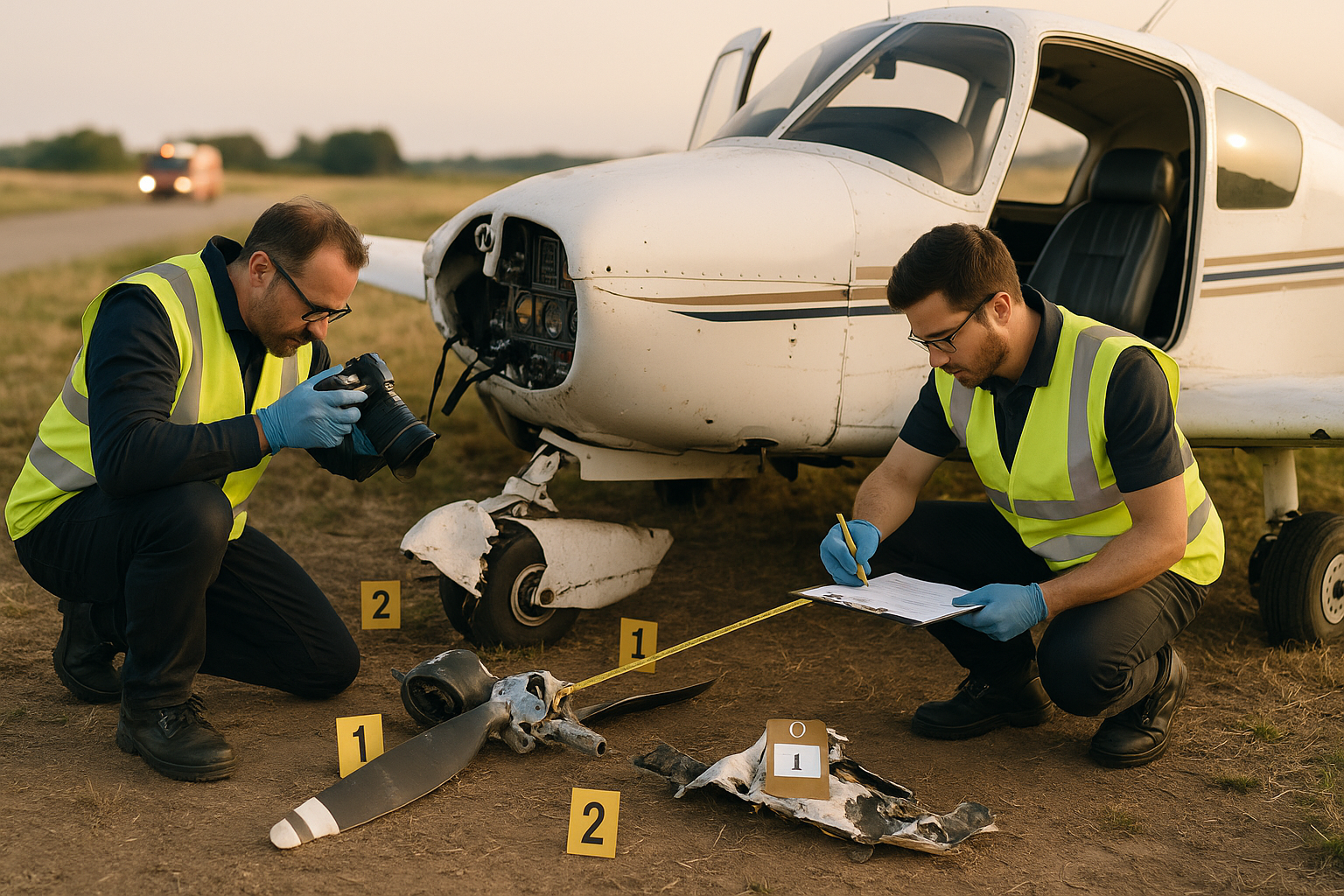
Aviation accident investigations are a structured process that turns tragic or damaging events into actionable safety knowledge. For pilots, instructors, and aviation professionals, understanding how investigations work clarifies what happens after an accident, what investigators look for, and how findings translate into training, procedures, and equipment changes. This knowledge helps crews act appropriately on-scene, protect evidence, and learn the right safety lessons.
This article walks through the typical investigation lifecycle, explains the technical and human factors investigators analyze, highlights why the process matters to everyday flying and training, and offers practical recommendations pilots can use before, during, and after an occurrence. The primary keyword "aviation accident investigations" appears early because pilots frequently search for a clear, operational explanation of the process.
What an Aviation Accident Investigation Is
An aviation accident investigation is the organized effort to establish facts, determine causal and contributing factors, and identify safety lessons that reduce the risk of recurrence. Investigations focus on what happened, why it happened, and what changes might prevent the same sequence of events. They examine technical evidence, operational context, human performance, and organizational influences. Investigations are not primarily about blame; they are about improving safety based on objective analysis.
Core Phases of an Investigation
Investigations usually move through a series of phases. The precise structure varies by jurisdiction and the investigating body, but the operational pattern is consistent: notification and initial response, on-scene work, evidence collection and cataloging, technical analysis, synthesis and drafting of findings, and safety recommendations. Each phase serves a practical purpose for pilots and operators.
Notification and initial response involve first responders, local authorities, and the designated investigating agency. On-scene work focuses on securing the site, preserving evidence, and gathering immediate factual data. Evidence collection includes wreckage documentation, instruments, ATC and radar data, weather information, and witness interviews. Technical analysis brings together specialists in structures, powerplants, avionics, flight recorders, and human factors. Synthesis is the step where investigators integrate disparate findings into likely causal chains and write the factual report, analysis, and safety recommendations.
Who Conducts Investigations and What They Do
The organization that leads an investigation depends on where the event occurred and the type of operation involved. In many countries, a national accident investigation board handles civil aviation accidents. Other parties typically involved include the operator, the aircraft manufacturer, air traffic service providers, and representatives of maintenance organizations. Each participant brings technical expertise while the investigating authority maintains control of the process and final report.
Investigators deploy specialists: wreckage examiners map and photograph the scene; powerplant and propeller analysts inspect engines; avionics technicians retrieve and decode onboard recording devices when present; and human factors specialists examine pilot training, decision making, and fatigue. Investigators also examine organizational factors that may influence safety, such as training programs, maintenance practices, dispatch procedures, and safety culture.
Types of Evidence and Why They Matter
Investigators collect both physical and nonphysical evidence. Physical evidence includes wreckage, engine parts, fragments, and the aircraft’s fuel and oil systems. Nonphysical evidence includes flight data, cockpit voice recordings, air traffic control recordings, radar tracks, weather reporting, maintenance logs, operational records, pilot training records, witness statements, and medical or toxicology results.
Flight data recorders and cockpit voice recorders are valuable when available, but many small general aviation aircraft do not carry recorders. In those cases, investigators rely more heavily on wreckage patterns, engine examination, witness observations, and performance calculations. Meteorological data and ATC communications often provide crucial context: knowing the exact wind, visibility, and traffic environment helps distinguish controllable from uncontrollable factors.
Human Factors and Organizational Influences
Human performance is central to most aviation events. Investigators evaluate decision making, situational awareness, communication, training, stress, fatigue, and physical condition. They also look at how organizational systems—such as dispatch, maintenance schedules, supervision, and economic pressures—might create conditions that make human error more likely.
Understanding human factors means moving beyond simple labels like "pilot error." Analysts work to map causal chains where equipment problems, ambiguous procedures, poor training, or unrealistic expectations interact with human limitations. For pilots and instructors, recognizing those interactions can inform better training and operational practices.
How Findings Become Safety Action
Investigators produce factual reports and analytical sections that identify probable causes and contributing factors. Many investigation authorities also issue safety recommendations aimed at regulators, manufacturers, operators, or training organizations. Accepting and acting on these recommendations is how investigations improve safety across the industry.
Recommendations may lead to revised procedures, design changes, new training standards, equipment modifications, or updated guidance for pilots. Operators and instructors often incorporate investigation findings into scenario-based training, checklists, and dispatch rules to address the precise failures identified.
Why Aviation Accident Investigations Matter in Real-World Flying
Investigations turn rare but high-consequence events into practical lessons. For pilots and instructors, learning how investigators trace cause helps target training to underlying weaknesses. A single investigation can reveal systemic issues—such as weak maintenance oversight or confusing instrumentation—that, if corrected, prevent many future events.
Investigations also influence certification and operational standards. Changes to equipment, procedures, or training that result from investigations have direct operational impact: they can change preflight checks, revise emergency procedures, or highlight the need for additional training in certain flight regimes.
How Pilots Should Understand the Process
Pilots who encounter an accident or serious incident should know a few practical points. First, prioritize safety and follow emergency procedures: life preservation and preventing further damage come first. Second, preserve evidence where safe: avoid moving wreckage or disturbing controls unless necessary for rescue or safety. Third, provide honest, factual statements to investigators. Investigators need accurate details; speculation can complicate analysis.
Pilots should also be aware of legal and insurance considerations and may seek legal counsel before formal interviews if advised by their operator or insurer. At the same time, cooperation with investigators is important for safety outcomes. Understanding these practical trade-offs helps pilots respond calmly and effectively.
Common Mistakes and Misunderstandings
Many common errors after an occurrence are avoidable with simple awareness. One frequent mistake is treating the investigation as a fault-finding exercise instead of a safety process. That misconception can create defensive behavior, reduce cooperation, and hide useful information. Another mistake is moving or cleaning the accident site unnecessarily; even small alterations can destroy critical evidence like paint transfer, fracture patterns, or instrument positions.
Pilots sometimes post photos or commentary on social media before investigators have examined the scene. This can compromise evidence and complicate public perception. Additionally, witnesses and involved crewmembers may unknowingly provide inaccurate chronological details due to stress; investigators expect this and use multiple evidence sources to corroborate timelines.
Finally, misunderstanding the meaning of "probable cause" can lead to confusion. A probable cause statement is a reasoned analysis explaining why an event likely occurred, not a legal adjudication or punishment. Investigations focus on safety improvements and prevention rather than assigning criminal blame.
Practical Example: Single-Engine Forced Landing Investigation
Consider a realistic scenario: a single-engine aircraft experiences a loss of power shortly after takeoff and performs a forced landing with minor injuries and substantial aircraft damage. Investigators would first secure the scene and document the wreckage distribution to reconstruct the final flight path and impact attitude. They would examine the engine, fuel system components, and carburetor or fuel injection plumbing for evidence of mechanical failure or fuel contamination.
Investigators would collect the pilot's flight and maintenance records, fuel receipts, and witness statements about preflight fueling. Weather and NOTAMs for the departure airport would be reviewed to verify conditions. If a fuel sample is available, laboratory testing can reveal contamination, water, or degradation. Maintenance records could show recent work on the fuel system or discrepancies that went uncorrected.
Human factors would also be central to the analysis. Investigators would examine the pilot's recent experience, recent duty and rest history, decision making in the preflight and emergency, and whether checklist items were completed. Organizational factors—such as pressure to complete a trip, training in forced landing procedures, and the operator's maintenance oversight—would be considered as potential contributors.
The final report would integrate technical and human factors evidence to identify probable cause(s). The safety recommendations could include improved preflight fuel checks, better training for forced landings, modifications to fuel system components, or procedural changes for fueling practices.
Best Practices for Pilots and Instructors
Pilots can take specific actions to reduce risk and help investigations when events occur. These practices improve safety and ensure investigators have the best possible information.
Secure life and property first. Treat injured persons and fire risk as the top priority.
Preserve the site. Avoid moving wreckage or controls unless necessary to secure life or prevent further damage.
Document your own observations immediately if safe to do so. Notes written soon after an event help preserve accurate recollections.
Cooperate with investigators. Provide factual statements and be available for interviews, while balancing legal and insurance advice when appropriate.
Manage information sharing. Delay public commentary and social media posts until investigators have had a chance to document the scene.
Use incident findings in training. Incorporate lessons learned into scenario-based training and recurrent checks.
How Training and Organizations Benefit from Investigations
Instructors and training organizations should treat investigation findings as an ongoing curriculum resource. A disciplined approach to incorporating real investigation lessons helps students recognize causal chains and practice decision-making under realistic conditions. Training syllabi that reflect recent safety trends are more likely to address current risk areas and prepare pilots for scenarios they might encounter.
Operators can use findings to evaluate maintenance programs, dispatch policies, and safety management systems. When safety recommendations are available, airlines and operators that act quickly reduce exposure to repeated failures and protect their crews and assets.
Frequently Asked Questions
Who leads an aviation accident investigation?
A designated national or regional investigation authority usually leads the investigation. Other stakeholders such as manufacturers, operators, and air traffic service providers commonly participate as accredited representatives, providing technical expertise while the lead authority manages the investigation and issues the final report.
What should a pilot do immediately after an accident?
Prioritize response actions for safety and rescue. Once people are safe, preserve the scene where possible, document observations while fresh, follow instructions from emergency responders, and cooperate with investigators. Seek legal or insurance guidance if needed before engaging in formal interviews beyond initial factual statements.
Will the investigation blame the pilot?
Investigation reports aim to identify causal and contributing factors and to produce safety recommendations. Reports describe actions and conditions that led to an event; they typically do not serve as a legal judgement. Understanding the difference between safety analysis and legal liability is important.
How long do investigations take?
The duration varies widely with event complexity, available evidence, and jurisdictional procedures. Simple events may be resolved in weeks to months; complex investigations involving systems analysis, lab testing, or multiple parties can take a year or more. The timeline depends on the depth of analysis required to produce actionable findings.
Can an investigator remove my aircraft components?
Investigators may remove components for detailed examination if it is necessary to understand the event. This is a standard part of technical analysis. Such actions are usually documented, and chains of custody are maintained to preserve evidence integrity.
How do investigation findings become safety changes?
Findings and recommendations are issued to regulators, manufacturers, and operators. Those entities evaluate the recommendations and may implement design changes, procedural updates, training modifications, or regulatory actions. The goal is to mitigate identified causal factors and reduce recurrence.
Key Takeaways
- Practical takeaway: Preserve the scene when safe and document your observations immediately to support accurate investigation outcomes.
- Safety takeaway: Investigations focus on systemic safety improvement; cooperation and factual reporting speed corrective action.
- Training and decision-making takeaway: Use investigation lessons to practice realistic scenarios, addressing both technical failures and human factors.
Understanding aviation accident investigations gives pilots and instructors a clearer view of how safety improvements are identified and implemented. Knowing what investigators look for, what evidence matters, and how human and organizational factors are evaluated helps aviators make better operational choices and contribute constructively when incidents occur. Treat investigations as a path toward safer skies: they convert hard lessons into concrete improvements for training, equipment, and procedures.