
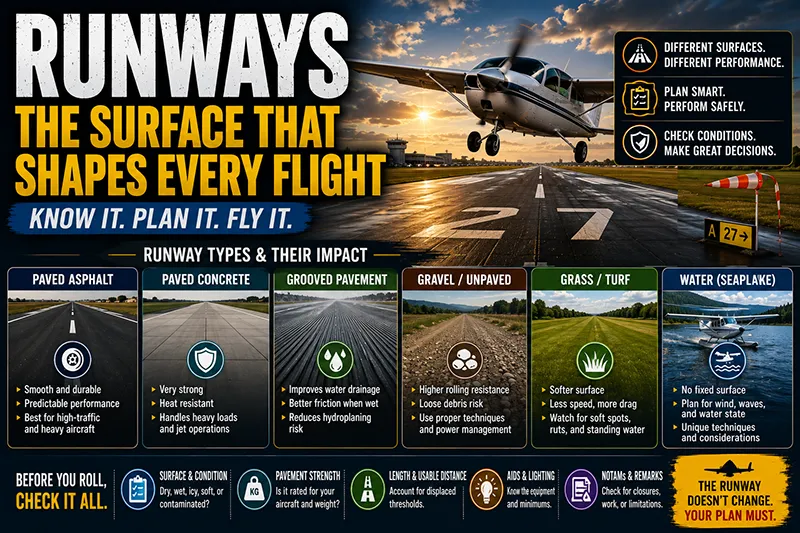
Different types of runways affect every phase of an aircraft operation, from takeoff roll to landing rollout and turning on taxiways. Pilots, instructors, and operators must understand why runways vary in surface, length, slope, strength, and equipment so they can plan performance, assess risk, and make sound go/no-go decisions. This article explains the main runway types and the practical consequences for flight operations.
The goal here is practical: help you recognize how runway construction, surface condition, and layout influence aircraft performance, braking, directional control, and planning. Read on for real-world examples, common mistakes, and clear guidance you can apply during preflight planning and training flights.
Types of Runways and What Distinguishes Them
Runways are designed and maintained for different aircraft, traffic patterns, and environmental conditions. The primary distinctions are surface type, structural strength, length and width, and additional runway infrastructure. Each factor changes how an airplane accelerates, climbs, slows, or handles crosswinds.
Common runway surface types include paved (asphalt or concrete), grooved pavement, gravel, grass or turf, and water surfaces for seaplanes. Paved runways are the most common at airports serving heavier aircraft and higher traffic volumes. Grooved pavement improves water drainage and friction when the runway is wet. Gravel and unpaved runways are typical in remote or less-developed fields and require specific operational considerations. Grass and turf strips are common at many general aviation fields and are often used by light aircraft and taildraggers. Seaplane bases use designated water operating areas rather than a fixed paved surface.
Beyond surface composition, runway classification also reflects structural strength. Pavement strength indicates how much load an aircraft imposes before damaging the surface. Airports publish pavement strength data so pilots and operators can determine whether a runway is suitable for a specific airplane and weight. Other runway features that change operations include runway slope, lighting and approach aids, runway markings, displaced thresholds, stopways, clearways, and arrestor systems at some airports.
Why This Matters in Real-World Aviation
Runway differences change the pilot’s preflight calculations and in-flight decisions. Surface type and condition alter takeoff and landing distances, accelerate-stop capability, and braking effectiveness. Pavement strength limits maximum allowable weights. Runway lighting and approach aids affect minimum weather conditions for safe operation. Slope and obstacles change climb gradients and obstacle departure procedures.
In everyday operations, pilots use runway information to choose flap settings, rotation speeds, and landing points; to decide whether to accept a short-field or soft-field runway; and to determine go-around decision points. Flight instructors should train students to recognize how surface and condition affect control inputs—especially crosswind control, directional braking, and rudder use during rollout.
How Pilots Should Understand This Topic
Think of the runway as part of the airplane’s operating environment. When you plan a flight, integrate runway characteristics into performance planning rather than treating them as secondary details. Key questions to ask during planning include:
- What is the runway surface and condition? (dry, wet, contaminated, grooved, turf, gravel, soft, icy)
- What is the published pavement strength and is my airplane within that limit?
- What are the runway length and usable landing distance after displaced thresholds?
- What lighting, approach aids, and NOTAMs affect the runway tonight or in marginal weather?
Operationally, adjust techniques to match the runway. On soft, unpaved, or grass fields expect higher rolling resistance and reduced acceleration on takeoff; use soft-field techniques to protect the landing gear and avoid digging in. On wet, contaminated, or grooved runways, be aware of hydroplaning risk and altered braking performance. When operating on gravel or loose-surface runways, use power settings and control inputs to minimize propeller or engine ingestion of debris and consider protective measures where available, such as reduced thrust on taxi and directed braking.
Common Mistakes or Misunderstandings
Pilots often underestimate how much runway surface and contamination affect performance. Typical errors include assuming landing distances printed for paved, dry conditions apply to wet or soft surfaces; neglecting pavement strength limits when operating heavier aircraft; and failing to brief or practice soft-field or short-field techniques before attempting them.
Another common misunderstanding is treating grooved pavement as a cure-all for wet braking. Grooves help reduce hydroplaning potential by channeling water, but they do not eliminate braking degradation on heavily contaminated surfaces. Similarly, assuming identical crosswind capability on grass versus paved surfaces can be dangerous. Grass offers different directional stability and can hide ruts or soft spots that increase the chance of ground-loop events in tailwheel aircraft.
Finally, pilots sometimes neglect to check NOTAMs and airport remarks for temporary runway issues such as reduced pavement strength, displaced thresholds, or work zones. Those temporary changes can significantly alter runway usability for certain aircraft and weights.
Practical Example
Scenario: A single-engine, four-seat airplane is scheduled to depart a rural field with a 2,200-foot grass runway. Density altitude is moderate and there is a light crosswind. The pilot is current but has limited soft-field experience.
Preflight planning should include a performance calculation for soft-field takeoff, allowing for increased rolling resistance. The pilot should walk the runway or inspect recent pilot reports/NOTAMs for soft spots and ensure the aircraft weight is within safe limits for the available distance. For departure, the recommended technique is to keep controls light, maintain best ground effect attitude to reduce drag, use sufficient power to accelerate smoothly, and avoid heavy braking. If rotation is delayed due to soft surface resistance, the pilot should resist the urge to pull aggressively once airborne; instead, achieve a positive rate of climb and accelerate to best climb speed before climbing out of ground effect. If the pilot is uncomfortable with the surface conditions or performance margins, the safer decision is to wait for better conditions, reduce weight, or use an alternate airport with a longer, paved runway.
Best Practices for Pilots
Make runway assessment a routine part of your preflight. Incorporate these practices into your planning and training:
- Always review airport facility data, NOTAMs, and the latest pilot reports for runway condition and pavement strength.
- Adjust performance calculations for surface type and contamination; when in doubt, add conservative safety margins to landing and takeoff distances.
- Practice soft-field and short-field procedures with an instructor until comfortable performing them under realistic conditions.
- Inspect unpaved runways on foot if possible before first operations at an unfamiliar strip; look for standing water, ruts, or debris.
- Consider aircraft configuration and loading: reducing weight can substantially improve performance on short or soft surfaces.
Frequently Asked Questions
What are the main runway surface types and how do they affect performance?
Paved runways (asphalt, concrete) offer predictable rolling resistance and are typically used for heavier and faster aircraft. Grooved pavement enhances water drainage and friction. Unpaved surfaces such as grass, gravel, and dirt increase rolling resistance, can reduce acceleration, and may require special operating techniques. Water operating areas are used by seaplanes and require different techniques entirely. Each surface changes takeoff and landing distances and directional control demands.
Can any aircraft use a grass or gravel runway?
Not necessarily. Aircraft performance, landing gear design, and manufacturer recommendations determine suitability. Some aircraft and operators are equipped and approved for unpaved operations, while others are not. Always consult the aircraft flight manual and applicable operating guidelines, and factor pavement strength and surface condition into your decision.
How does runway surface influence braking and stopping distance?
Braking effectiveness depends on surface friction and contamination. Wet or contaminated paved surfaces reduce friction and increase stopping distance. Grooved pavement and proper maintenance improve braking in wet conditions but do not restore dry-pavement friction. On soft or unpaved surfaces, brakes may be less effective and directional control can be more challenging, lengthening the required stopping distance.
What should I check in NOTAMs and airport information related to runways?
Look for NOTAMs about runway closures, reduced pavement strength, displaced thresholds, construction, lighting outages, or temporary contamination. Airport facility directories and charts often include remarks about surface type and limitations; combine these sources when planning operations to unfamiliar runways.
How do runway slope and obstacles change departure and arrival planning?
Runway slope affects takeoff and landing performance: an uphill landing or downhill takeoff will change ground roll and climb requirement. Obstacles in the approach or departure path may require steeper climb gradients or different flap settings. Incorporate slope and obstacle assessment into performance and departure planning rather than relying solely on runway length.
Key Takeaways
- Practical takeaway: Match your aircraft configuration and technique to the runway surface and condition; soft-field and short-field skills should be practiced and planned.
- Safety takeaway: Always check pavement strength, NOTAMs, and surface contamination; when in doubt, add conservative safety margins or select an alternate runway.
- Training and decision-making takeaway: Build runway-specific briefings into your preflight routine and train until you can confidently adjust techniques for surface differences.