
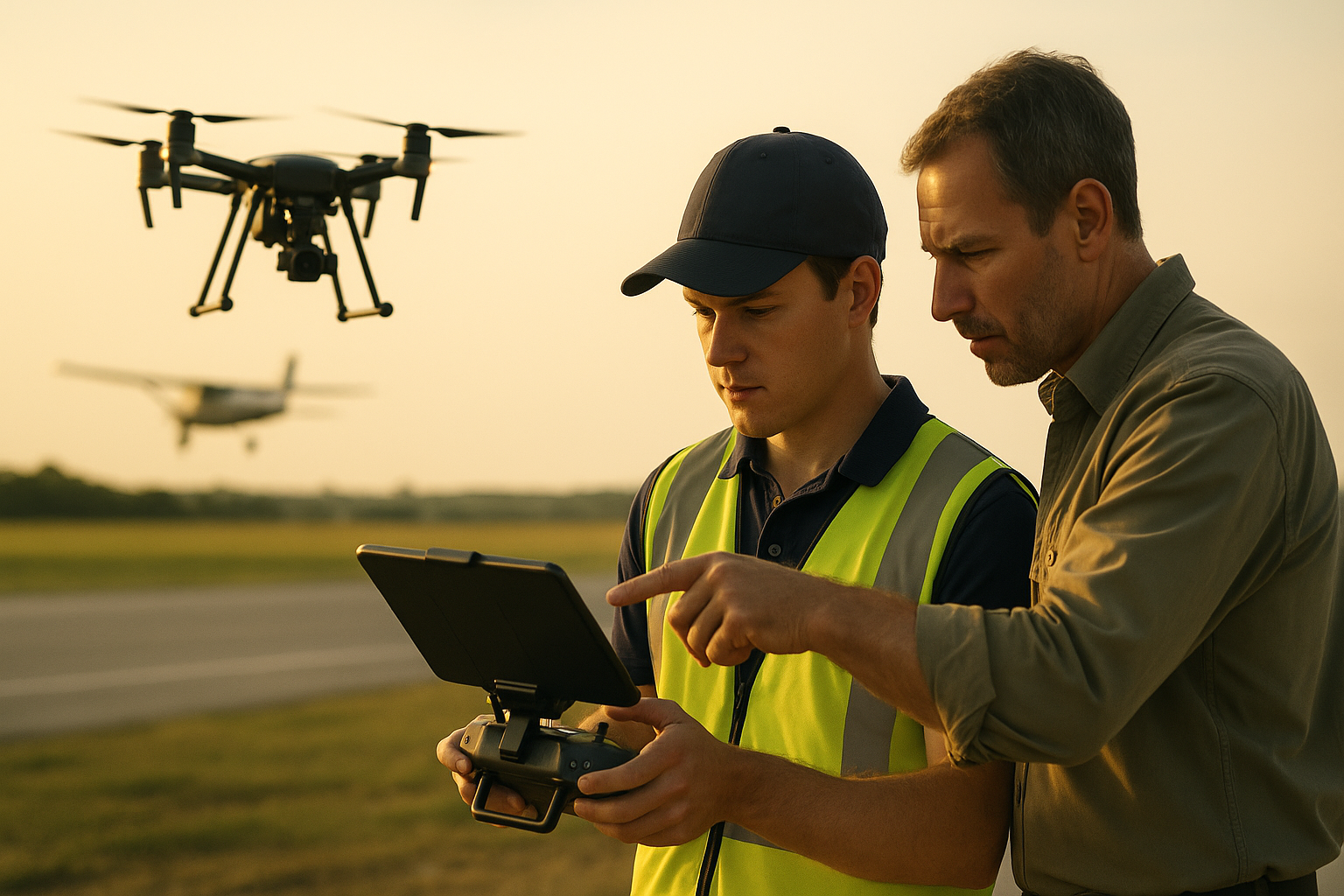
Drone pilot training is reshaping how we teach basic aeronautical skills, decision-making, and scenario-based instruction for manned and unmanned operations. For pilots, student pilots, and flight instructors, understanding how drones integrate into training programs offers practical advantages and new safety considerations.
This article explains what those changes look like in everyday flight training, how instructors can incorporate small unmanned aircraft systems into syllabi, and what pilots should understand about the operational and safety implications. It is written for pilots, student pilots, instructors, aviation professionals, and serious aviation enthusiasts who want practical, operational guidance rather than marketing or hype.
What It Means: The Core Idea
At its core, the arrival of affordable, capable drones puts a flexible, low-cost training tool in the hands of instructors and students. Drones can simulate traffic, provide aerial observation, recreate emergency scenes, and support scenario-based exercises without the cost and risk of using a full-sized airplane. They also create opportunities to teach sensor-based decision-making, automated flight management, and airspace integration. The collective result is more varied, frequent, and measurable training exposures.
Why This Matters in Real-World Aviation
Training is about exposure and feedback. Traditional training relies on scheduled flights, instructor availability, and aircraft access. Drones change that dynamic in several practical ways.
First, drones provide repeatable scenarios for students. An instructor can design a sequence that a student flies repeatedly while practicing decision-making and communication. Repetition improves proficiency and allows focused remediation on specific skills.
Second, drones enable new observation and evaluation perspectives. Aerial footage from a drone can record flight profiles, traffic pattern geometry, or runway incursion scenarios for post-flight debriefs. This perspective helps students see errors they may not perceive from the cockpit and helps instructors deliver more concrete feedback.
Third, drones offer a low-risk environment to teach systems thinking. Modern aircraft include automation, sensors, and flight-management systems. Many drones are sensor-rich and present students with similar human-machine interface challenges on a smaller, less costly platform. Teaching students how to manage automation, build mental models of system behavior, and maintain situational awareness transfers to manned aircraft operations.
How Pilots Should Understand This Topic
Pilots should think of drones as a complementary training tool, not a replacement for full-scale flight time. Useful concepts to internalize include mission design, risk management, and the limits of simulation fidelity.
Mission design: Effective training uses clear objectives. A drone exercise should have measurable outcomes, such as maintaining a specified ground track, performing coordinated pattern entries for a simulated glider tow, or locating and marking a pre-briefed ground reference point. Define success criteria, observable behaviors, and debriefing points in advance.
Risk management: Even small unmanned aircraft carry risk to people, property, and other aircraft. Safe use requires planning for lost-link scenarios, off-field landings, and public exposure. Integrating drone operations into training means treating them as live-aircraft operations with written risk assessments and contingency plans.
Simulation fidelity: Drones do not perfectly replicate manned-aircraft aerodynamics, cockpit workload, or physiological demands such as vestibular inputs. When using drones to teach concepts like aerodynamic stalls, energy management, or visual scanning, instructors must be explicit about where the analogy holds and where it breaks down.
Common Mistakes or Misunderstandings
Misunderstandings about drones in training fall into several categories: overreliance, misapplied analogies, and assumptions about regulatory benignity.
Overreliance: Some programs may be tempted to use drones to replace in-aircraft time because drones are cheaper and easier to schedule. That risks underpreparing students for the sensory and workload realities of piloted flight. Keep drone-based training targeted to skills that transfer reliably, such as traffic pattern orientation, visual scanning, or mission planning.
Misapplied analogies: Students may draw incorrect conclusions from drone behavior. For example, many small multirotor drones have rapid climb and descent rates and immediate throttle response that do not reflect traditional piston or turboprop aircraft. Instructors must highlight differences when using drones to teach energy management or approach control.
Regulatory assumptions: The presence of a small unmanned aircraft does not eliminate operational oversight. Depending on jurisdiction, drone operations used for training or commercial instruction may be subject to remote pilot certification, operational limitations, or local permissions. Training providers should verify legal requirements before integrating drone exercises into syllabi. Because no specific regulatory material is supplied with this article, readers should confirm regulatory applicability with their aviation authority.
Practical Example
Scenario: Integrating a drone into a cross-country navigation exercise for a private pilot candidate.
Objective: Use a small fixed-wing or multirotor drone to provide aerial reconnaissance of the planned diversion airport, simulate a forced landing site, and capture imagery of local landmarks for a post-flight debrief on decision points.
Execution: Before the student’s supervised cross-country flight, the instructor deploys a drone to the diversion airport and flies a standard traffic pattern to demonstrate runway geometry, surrounding obstacles, and wind indicators. The drone captures video and stills showing runway surface conditions, taxiway layout, and nearby terrain. The instructor then briefs the student using the footage, asking the student to identify approach hazards, required maneuvers, and potential landing sites in a forced-landing scenario.
Training value: The student benefits by pre-exposure to the diversion environment, sharper situational judgment, and a debrief supported by objective imagery. The drone exercise preserves aircraft hours while improving the student’s ability to anticipate hazards and plan contingencies.
Best Practices for Pilots
Use drones intentionally. Define how drone exercises map to learning objectives and which skills will be practiced. Here are practical actions to keep training effective and safe.
- Align objectives: State the competency you want the student to develop and ensure the drone exercise targets that skill. Avoid using drones because they are convenient rather than pedagogically appropriate.
- Standardize scenarios: Create repeatable, documented exercises with measurable outcomes. Repeatability reduces variability in instruction and supports objective evaluation.
- Prepare contingency plans: Treat every drone sortie like a live-aircraft operation. Include contingency procedures for loss of control, public safety, and airspace conflict.
- Integrate debriefing tools: Record video or telemetry for objective post-flight analysis. Use annotated footage to identify specific errors and reinforce correct techniques.
- Clarify transfer limits: Before each exercise, explain which lessons transfer to manned flight and which do not. This helps students avoid incorrect generalizations.
- Document policy and insurance: Training providers should have clear policies covering drone use in instruction and verify insurance coverage for both drone operations and combined training activities.
How Instructors Can Incorporate Drones into Syllabi
Instructors can integrate drone-based learning at several points in standard training programs.
Preflight planning: Use drones to survey intended training areas, check for obstructions or temporary hazards, and provide students with imagery to support navigation planning.
Pattern training: Simulated traffic or visual cues can be set up with drones to teach pattern geometry and visual scanning. Drones can also capture pattern entries from overhead perspectives for debriefing.
Emergency procedures: Drones can help create realistic scenarios to practice forced landings, simulated instrument failures, or diversion decision-making without risking a full-sized aircraft.
Automation management: For students learning to manage automation, sensor-based drone flights can demonstrate mode transitions, lost-link handling, and the importance of monitoring automation rather than expecting it to be perfect.
Scenario-based assessment: Use drone footage as part of scenario-based assessments to evaluate a student’s threat-and-error management, communication, and decision-making in complex environments.
Safety Implications and Operational Considerations
Adding drones to training introduces specific safety considerations that mirror broader aviation safety thinking: a focus on human factors, system interactions, and environment management.
Human factors: Drone operations change instructor and student roles. For example, the instructor might be both safety pilot and drone operator during combined exercises, creating workload and attention divides. Planning roles and responsibilities before flight prevents confusion and preserves safety.
System interactions: Radios, transponders, and collision-avoidance sensors behave differently in drones and manned aircraft. When conducting mixed operations near aerodromes, plan for radio communication and visual separation to reduce the risk of airspace conflicts.
Environmental constraints: Weather impacts drones differently than larger aircraft. Wind gusts and rain may ground certain drone types while a manned aircraft could still safely operate. Ensure that environmental constraints for drone flights are clearly communicated and respected.
Training Assessment and Measurement
One of the major advantages of drone use in training is improved measurability. Objective data streams such as telemetry, GPS tracks, altitude profiles, and video allow instructors to quantify performance.
Examples of measurable metrics include path accuracy during a simulated approach, time-to-decision in a diversion scenario, and scan rates during traffic pattern operations. Use these metrics to set performance baselines, measure improvement, and identify persistent deficiencies. Quantitative assessment helps standardize instruction and supports data-driven improvements to syllabi.
Technology Integration and Simulation Fidelity
Not all drones are equal. Fixed-wing drones simulate gliding and forward-flight aerodynamics better than multirotors when the goal is to teach energy management or approach control. Multirotor platforms are more useful for high-resolution observation, hovering traffic simulations, and close-in visual tasks.
Sensor fidelity matters as well. Platforms with stable video, accurate GPS, and reliable telemetry provide the best debriefing material. If an exercise depends on an instrument or sensor behavior, confirm that the drone’s systems emulate the manned-aircraft system closely enough for the lesson to be valid.
Common Operational Scenarios Where Drones Add Value
There are several routine training scenarios where drones provide outsized value:
- Runway environment familiarization at unfamiliar fields.
- Traffic pattern geometry and spacing exercises using simulated traffic elements.
- Post-landing inspections or runway condition assessments in remote training locations.
- Forced-landing site reconnaissance and decision-making rehearsals.
- Night-ops site surveys and lighting assessments where allowed.
Common Mistakes Revisited
It is worth reiterating frequent mistakes because they have operational consequences.
Assuming equivalence: Treat drones as a different category of aircraft. If you want students to experience cockpit workload and physiological cues, drones will not substitute. Make sure the exercise objective is appropriate to the tool.
Poor integration planning: Introducing drones into training without policy, roles, and documentation increases legal and safety exposure. Treat drone integration like any curricular change: plan, document, train instructors, and monitor results.
Insufficient debriefing: The most valuable part of drone-assisted training is the post-flight analysis. If instructors fail to use recorded data effectively, the training opportunity is wasted.
Frequently Asked Questions
Can drone training replace in-aircraft flight time for pilot certification?
No. Drone exercises can supplement and improve training efficiency, but they cannot replace the sensory, workload, and regulatory requirements of manned flight time needed for pilot certification. Drones are most effective for preparatory work, scenario rehearsal, and objective debriefing.
Are drones safe to use around flight schools and active airports?
They can be, if operations are planned, coordinated with airfield management, and conducted within applicable regulatory limits. Use risk assessments, designated operating areas, and clear communication to prevent conflicts with aircraft operations.
What type of drone should flight schools use?
Choice depends on training objectives. Fixed-wing drones suit aerodynamics and cross-country planning lessons. Multirotor platforms work well for observation, pattern geometry, and close-in visual scenarios. Prioritize stable video, reliable telemetry, and ease of maintenance.
How should instructors document drone-based training?
Document objectives, scenario parameters, safety briefings, and student performance outcomes. Record video and telemetry for debriefs and retain logs for quality assurance and risk management purposes.
Will insurance cover drone operations used in instruction?
Coverage varies. Training providers should consult their insurer and verify that drone operations used in instruction are specifically covered. Include policy details in operational documentation.
Implementing a Drone Training Module: Step-by-Step Suggestions
To implement a drone module within an existing syllabus, follow a pragmatic sequence: define objectives, select appropriate platforms, build standard scenarios, train instructors, conduct pilot trials, and refine based on measured outcomes. Start small, measure results, then scale where benefits are clear.
Key Takeaways
- Practical takeaway: Use drones to create repeatable, measurable scenarios that improve student decision-making and reduce aircraft hours for preparatory work.
- Safety takeaway: Treat drone sorties as live operations with written risk assessments, clear roles, and contingency plans to protect people and property.
- Training takeaway: Map drone exercises explicitly to learning objectives, clarify transfer limits to manned flight, and use recorded telemetry for objective debriefs.
Integrating drones into pilot training is not about replacing existing fundamentals. It is about expanding instructional tools to deliver more frequent, measurable, and varied exposures to scenarios that matter. Done correctly, drone-based training makes students better prepared, helps instructors identify and remedy weaknesses faster, and preserves aircraft resources while maintaining rigorous safety standards.
Because regulatory and insurance environments differ by jurisdiction, training providers should confirm legal requirements, operational limits, and coverage before deploying drone modules. Pilot educators should maintain a conservative approach: use drones where they provide a demonstrable pedagogical advantage and always prioritize safety, documentation, and measurable outcomes.