
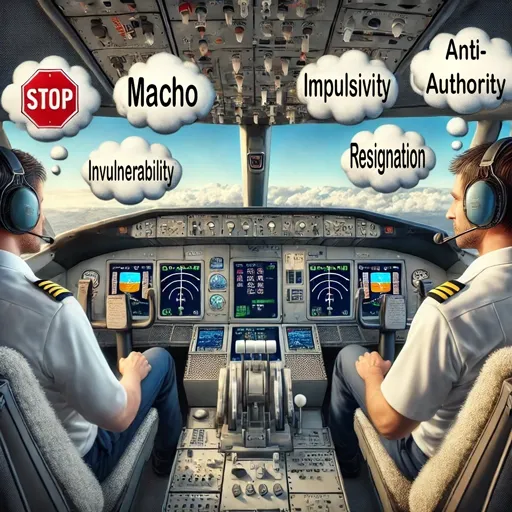
Aviation safety depends not only on technical skills but also on sound decision-making and attitude management. The FAA identifies five hazardous attitudes that can impair a pilot's judgment and increase the risk of accidents. Recognizing these attitudes and employing countermeasures is essential for safe operations.
The Five Hazardous Attitudes
-
Anti-Authority: "Don't tell me what to do!"
- Definition: Resentment or disregard for rules and regulations, believing they do not apply to the individual.
- Risks: Can lead to ignoring procedures and making unsafe decisions.
- Antidote: "Follow the rules. They are there for a reason."
-
Impulsivity: "Do something quickly!"
- Definition: Acting without thinking or considering the consequences of actions.
- Risks: Hasty decisions may overlook critical safety factors.
- Antidote: "Not so fast. Think first."
-
Invulnerability: "It won’t happen to me."
- Definition: Believing that accidents happen to others but not oneself.
- Risks: Underestimating risks can lead to complacency and unsafe behavior.
- Antidote: "It could happen to me."
-
Macho: "I can do it!"
- Definition: Trying to prove oneself by taking unnecessary risks.
- Risks: Can lead to dangerous or reckless behavior.
- Antidote: "Taking chances is foolish."
-
Resignation: "What’s the use?"
- Definition: Feeling powerless to make a difference, leading to inaction or giving up.
- Risks: Failure to take corrective actions in emergencies.
- Antidote: "I can make a difference."
Why Hazardous Attitudes Matter
Hazardous attitudes can impair a pilot’s ability to assess risks, make sound decisions, and respond effectively to changing situations. They are often a contributing factor in aviation accidents and incidents.
How to Mitigate Hazardous Attitudes
- Self-Awareness: Regularly assess your own attitudes and decision-making tendencies.
- Training: Participate in scenario-based training to recognize and counteract hazardous attitudes.
- Peer Feedback: Encourage open communication with peers and instructors to identify risky behaviors.
- Follow Procedures: Adhere to established protocols and rules, even when tempted to deviate.
Key Takeaways
- The five hazardous attitudes—Anti-Authority, Impulsivity, Invulnerability, Macho, and Resignation—can compromise aviation safety.
- Each attitude has a specific antidote to help pilots counteract its risks.
- Recognizing and mitigating hazardous attitudes is a critical part of a pilot’s responsibility.
- Ongoing self-assessment, training, and adherence to procedures help ensure safe operations.