
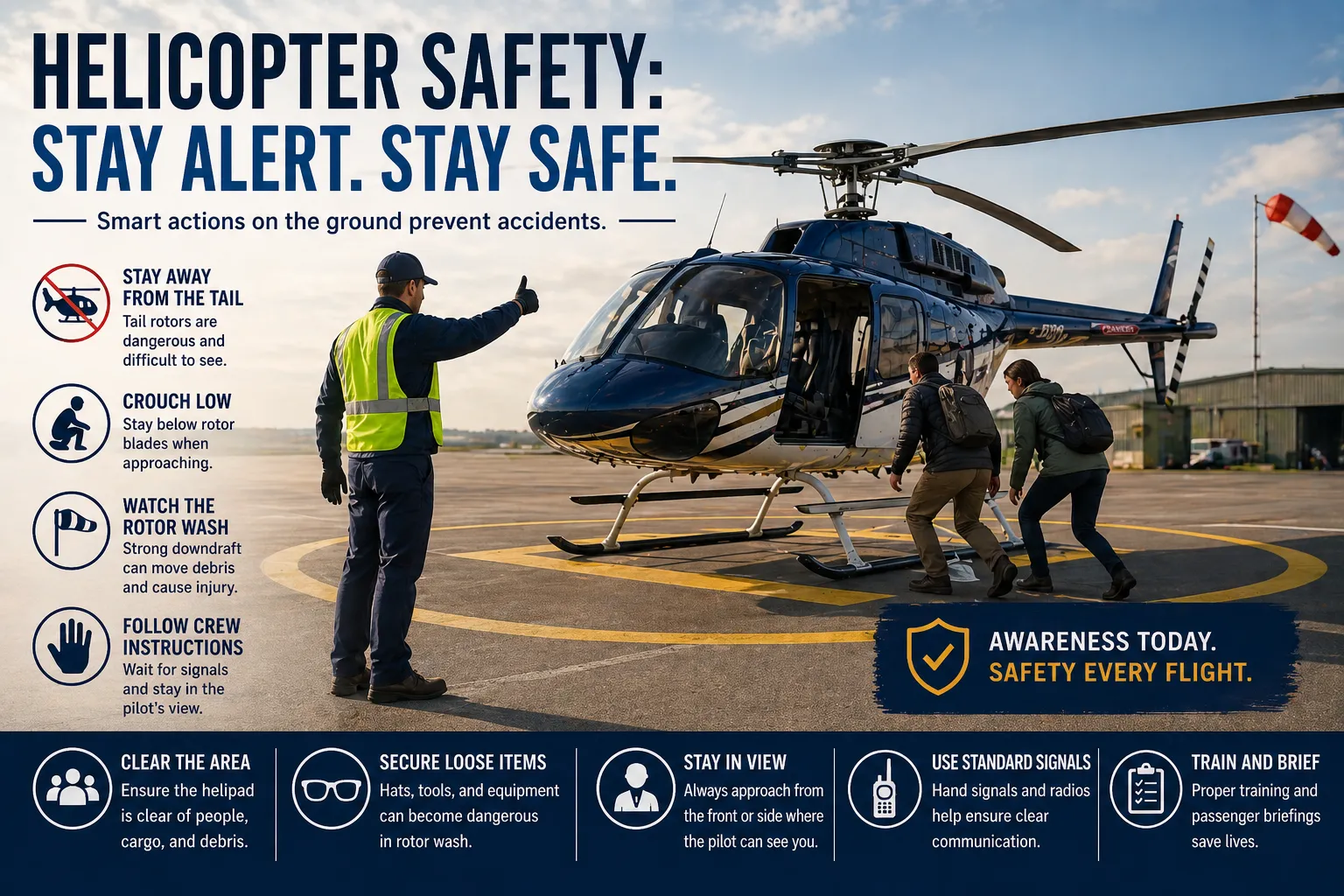
Helicopters are among the most versatile aircraft in aviation, capable of operating in environments that fixed-wing aircraft cannot. But that flexibility comes with unique risks, especially on the ground. Unlike airplanes, helicopters create powerful rotor wash, have low-clearance blades, and feature a tail rotor that can be nearly invisible in motion.
The FAA’s guidance makes one point clear: many helicopter accidents do not happen in flight. They happen on the ground, often involving passengers or personnel who are unfamiliar with the hazards. Understanding how to approach, operate around, and manage helicopter operations is critical to preventing injuries and saving lives. [oai_citation:0‡AC_91-32B Safety In and Around Helicopters.pdf](sediment://file_00000000e060722fbeded510971668ef)
Concept A: Unique Hazards Around Helicopters
- The tail rotor is one of the most dangerous components and is difficult to see when rotating.
- Main rotor blades can dip low enough to strike people or objects, especially on uneven terrain.
- Rotor wash can create strong winds that move debris, reduce visibility, and destabilize people.
- Loose objects on the ground can become hazardous projectiles during takeoff and landing.
- Passengers unfamiliar with helicopter operations are especially at risk without proper guidance.
Concept B: Safe Behavior Around Helicopters
- Always approach and depart from the front or side, staying within the pilot’s field of vision.
- Never walk toward the rear of the helicopter due to the tail rotor hazard.
- Crouch when moving near the aircraft to maintain clearance from rotor blades.
- Secure hats, loose clothing, and equipment to prevent them from being blown away.
- Follow all instructions from the pilot or crew and wait for a signal before approaching.
Key Differences
- Airplane vs. Helicopter: Helicopters operate with spinning rotors at all times, creating constant hazard zones.
- Visibility: Tail rotors are difficult to see, making awareness critical.
- Environment: Helicopters often operate in confined or unprepared areas, increasing risk.
- Passenger Role: Passenger behavior plays a much larger role in helicopter safety.
- Ground Operations: Many helicopter risks occur before takeoff and after landing.
How-To / Process
- Ensure the landing area is clear of debris, loose objects, and unnecessary personnel.
- Brief all passengers on safe approach and departure procedures before boarding.
- Approach the helicopter only when signaled and always remain in the pilot’s view.
- Move in a crouched position and avoid carrying objects above waist level.
- Keep a safe distance from the tail section at all times.
- Follow crew instructions during loading, unloading, and refueling operations.
- Remain alert to changing conditions such as wind, visibility, and rotor movement.
Why It Matters
Helicopter operations demand a higher level of situational awareness from everyone involved. The FAA notes that many serious accidents occur not because of mechanical failure, but because of simple mistakes on the ground. Proper training, communication, and discipline are essential to maintaining safety.
- Most preventable helicopter accidents involve ground operations.
- Passenger awareness and behavior are critical to reducing risk.
- Trained crew and standardized procedures significantly improve safety.
- Even routine actions, like approaching or exiting, can become dangerous without proper precautions.
Key Takeaways
- The tail rotor is one of the most dangerous and least visible hazards.
- Always approach from the front and stay within the pilot’s line of sight.
- Crouch low and secure loose items when near a helicopter.
- Passenger briefings are essential for safe operations.
- Most helicopter accidents on the ground are preventable with proper awareness.