
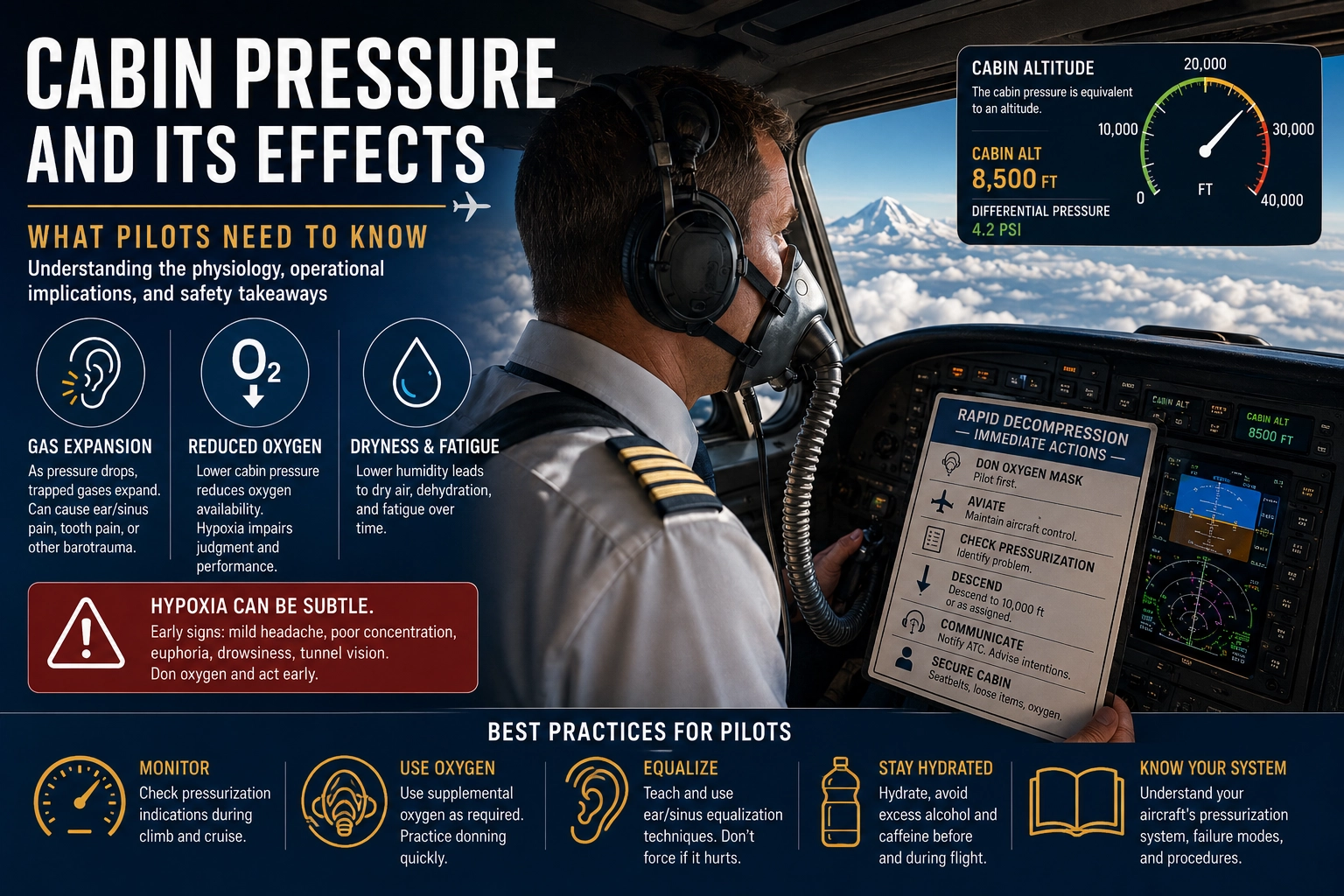
Cabin pressure is a fundamental factor in how passengers feel and perform during flight. For pilots, instructors, and aviation professionals, understanding cabin pressure means more than knowing how the pressurization system works. It means recognizing physiologic effects, operational limitations, and human factors that influence safety, passenger comfort, and decision making.
This article explains the mechanisms by which cabin pressure affects people, highlights the most relevant operational implications for flight crews, and offers practical training and safety takeaways. Whether you instruct in a piston single, fly a regional turboprop, or manage airline operations, these concepts help translate engineering and physiology into decisions you can use in the cockpit.
What cabin pressure is and how it changes in flight
Cabin pressure refers to the air pressure inside the aircraft cabin relative to outside ambient pressure. In unpressurized aircraft, cabin pressure falls with ambient pressure as altitude increases. In pressurized aircraft, environmental control systems regulate cabin pressure by controlling bleed air or conditioned air inflow and outflow to maintain a chosen cabin altitude, which is the equivalent atmospheric pressure expressed as an altitude.
Pressurization systems maintain a stable, livable environment while the aircraft operates at higher true altitude. Even when working normally, the cabin ambient pressure typically represents a lower atmospheric density than sea level. That difference is the root cause of most physiologic and comfort-related effects on passengers and crew.
Core ways cabin pressure affects passengers
Effects of reduced cabin pressure fall into three practical categories: gas behavior inside the body, reduced oxygen availability, and mechanical stress on body structures.
Gas expansion and contraction: Boyle's law governs the behavior of trapped gases as ambient pressure changes. As ambient pressure falls with altitude, gases expand. That affects the middle ear, sinuses, teeth with air-filled cavities, and any pneumothorax or other trapped air in the body. Expansion can cause pain or, in rare cases, injury.
Oxygen availability: As cabin pressure decreases, the partial pressure of oxygen in the cabin air falls. Reduced partial pressure can lead to hypoxia, which impairs cognitive and motor functions. The rate at which hypoxia symptoms appear depends on the cabin altitude, the individual, physical activity, and preexisting medical conditions.
Mechanical and thermal comfort: Lower pressure and lower absolute humidity contribute to dry mucous membranes, dehydration, and fatigue. Pressure differential across aircraft structure and between internal cavities and ambient air can produce discomfort and, in rare extremes, barotrauma.
Why this matters in real-world aviation
Cabin pressure influences many operational and training decisions. Flight crews need to anticipate passenger and crew medical responses, manage oxygen systems, train for rapid decompression events, and consider maintenance impacts on pressurization equipment.
Operationally, cabin pressure considerations affect route selection, altitude choices for single-pilot operations, and emergency decision-making. Training programs should ensure pilots recognize early symptoms of hypoxia in themselves and others, understand ear and sinus equalization techniques, and are proficient with depressurization checklists and emergency descent procedures.
How pilots should understand this topic
Pilots should approach cabin pressure as an integrated human factors and system management issue rather than a purely mechanical one. Key concepts to internalize:
- Cabin altitude is not the same as aircraft altitude. Cabin altitude expresses the pressure inside the cabin as an equivalent outside altitude.
- Physiologic effects develop even when pressurization is nominal. Subtle hypoxia, dehydration, and fatigue can degrade performance on long flights.
- Rapid decompression presents time-critical threats. Crews must be trained to don oxygen, initiate emergency descent, and secure the cabin while maintaining control of the aircraft.
Understanding pressurization annunciations, outflow valve behavior, and how system failures present in your specific aircraft type is part of practical preparedness. For example, recognize the difference between a gradual loss of pressurization and a sudden decompression and apply appropriate checklists without delay.
Common mistakes or misunderstandings
Pilots and instructors commonly underestimate incremental risks and misattribute symptoms.
One frequent mistake is dismissing early hypoxia signs as fatigue or jet lag. Hypoxia can impair judgment before more obvious symptoms appear. Another is assuming ear discomfort always resolves without intervention; persistent or severe pain may be a sign of sinus or middle ear barotrauma and, in rare cases, requires medical evaluation.
Operational misunderstandings include overreliance on automated pressurization without monitoring the pressurization instruments during climb and cruise and failing to brief passengers on equalization techniques for ears and sinuses. Maintenance gaps can also be overlooked; small leaks, malfunctioning outflow valves, or faulty pressurization controllers degrade cabin environment long before a visible system failure occurs.
Practical example
Scenario: A single-pilot IFR flight in a pressurized twin experiences a slow pressurization loss at cruise. The cabin rate-of-climb warning triggers but the aircraft remains controllable. The pilot notices mild headache and decreased attention. Procedural actions include donning the pilot oxygen mask, initiating the published pressurization or environmental control checklist, and descending to a lower altitude if the source cannot be immediately isolated. The pilot also notifies ATC, requests descent, and prepares the passengers by securing loose items and briefing them briefly on oxygen use if required.
This scenario highlights several practical points: recognize subtle physiological changes in yourself, execute immediate protective actions such as oxygen use, track system indications, and coordinate ATC communication and descent planning before symptoms worsen.
Best practices for pilots
Adopt these practical habits to reduce cabin pressure risks and maintain safety.
- Monitor cabin pressurization indicators periodically during climb and cruise rather than assuming automatic systems will always maintain proper conditions.
- Carry and use supplemental oxygen as required by your aircraft operating handbook and applicable regulations; practice donning masks quickly during training flights.
- Brief passengers on ear equalization techniques and the use of onboard oxygen systems when appropriate. Encourage hydration and avoidance of alcohol prior to and during flight.
- Recognize ear and sinus equalization cues and teach pupils simple techniques such as Valsalva or swallowing, while cautioning against forceful maneuvers if pain occurs.
- Maintain familiarity with the pressurization system layout, failure modes, and emergency descent procedures in the specific aircraft you fly.
Frequently Asked Questions
How does a pressurization failure typically present to the flight crew?
Failures can present as annunciator warnings, unusual cabin altitude indications, differential pressure loss, or environmental symptoms such as fogging, unusual noise, or airflow changes. Physiologic signs in crew or passengers, such as headache, lightheadedness, or reduced alertness, can also be early indicators.
What should I do if I suspect hypoxia in myself or a passenger?
Don oxygen immediately and follow the aircraft-specific emergency checklist. If symptoms do not resolve or if the pressurization problem persists, plan and execute a descent to a lower altitude while coordinating with ATC. Monitor the affected person and seek medical evaluation after landing if symptoms were significant.
Can ear pain or temporary hearing changes be serious?
Most ear and sinus discomfort is transient and resolves with proper equalization techniques. However, severe or persistent pain, bleeding from the ear, or prolonged hearing changes may indicate barotrauma and should prompt medical attention after flight.
Are children and elderly passengers more affected by cabin pressure changes?
Sensitivity varies by individual. Children, elderly passengers, and those with respiratory or cardiovascular disease may be more vulnerable to hypoxia, dehydration, or pressure-related discomfort. Preflight screening and appropriate oxygen or medical advice are prudent when these populations are carried on flights where pressurization may be compromised.
How should training programs include cabin pressure topics?
Include instruction on physiological effects of reduced pressure, recognition of hypoxia signs, ear and sinus equalization techniques, pressurization system operation and failure modes, and practical emergency procedures like rapid descent. Scenario-based training that simulates subtle onset and sudden decompression improves recognition and response skills.
Key Takeaways
- Practical takeaway: Monitor cabin pressure indicators and recognize early physiologic signs to protect performance in flight.
- Safety/operational takeaway: Don oxygen immediately when hypoxia is suspected and execute emergency descent procedures if pressurization cannot be restored.
- Training/regulatory takeaway: Include realistic pressurization failure and hypoxia recognition scenarios in pilot training and maintain currency in oxygen equipment use.