
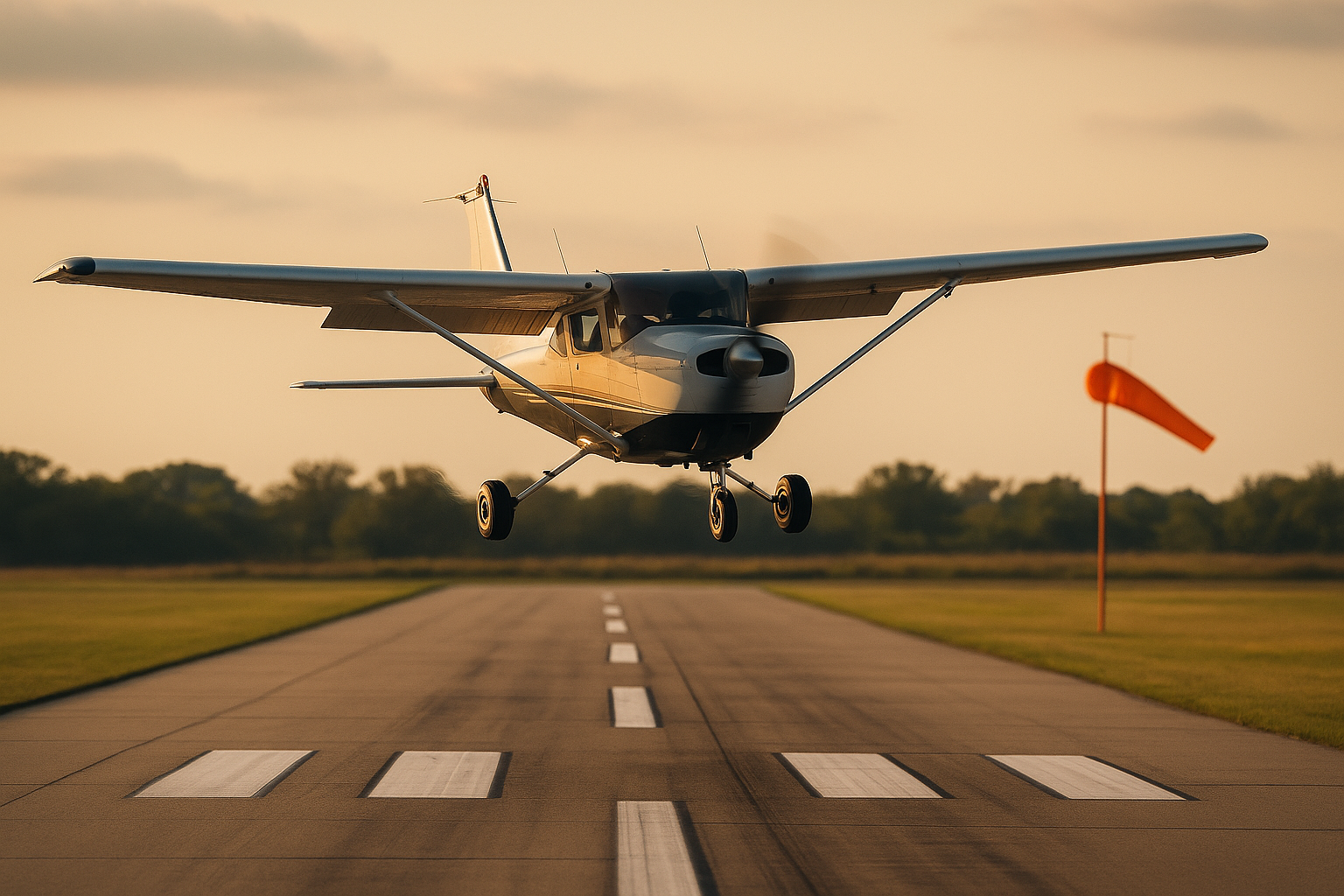
Landing in windy conditions is one of the most practical skills a pilot can develop. Landings in windy conditions challenge judgment, basic stick-and-rudder skills, and decision-making. Whether you are a student working toward a certificate, a returning pilot refreshing skills, or an instructor building a syllabus, strong technique and a methodical approach reduce workload and increase safety when the wind is a factor.
This article explains the aerodynamics behind crosswinds and gusts, offers pilot-level techniques for approach and touchdown, discusses common training gaps and mistakes, shows a realistic example scenario, and gives practical, operational takeaways instructors and pilots can use immediately. The guidance is focused on safe handling and sound decision-making. Specific aircraft performance and flap or speed settings are always governed by the pilot's airplane flight manual or POH; this article explains principles and training-relevant techniques rather than aircraft-specific limits.
Core concepts: what the wind does to an approach and touchdown
Wind affects an aircraft's ground track, airspeed, and energy on short final. A steady crosswind creates lateral drift that must be corrected to align with the runway. Gusts quickly change airspeed and lift, which alters the sink rate and flare timing. A tailwind increases groundspeed and reduces landing margin while a headwind reduces groundspeed and generally shortens the landing roll but may increase float during flare in some aircraft. Understanding those interactions is the first step in applying consistent technique.
Two basic control strategies are used to manage crosswinds: the crab and the sideslip. The crab keeps the fuselage pointed into the wind to prevent drift while using the rudder at touchdown to align with the runway. The sideslip, or wing-low method, keeps the longitudinal axis aligned with the runway while deflecting aileron into the wind and using opposite rudder to counter yaw, managing drift and drift rate right through touchdown. Each method is valid; selection depends on aircraft type, training, and runway conditions.
Why this matters in real-world aviation
Crosswind and gust management relate directly to safety and operational decision-making. A poor landing technique in wind increases the probability of runway excursions, hard landings, loss of directional control, or structural loads caused by abrupt control inputs. For commercial and business operations, consistent technique reduces wear on nosewheels and landing gear. In training, well-sequenced crosswind instruction builds confidence and prevents risky improvisation in gusty conditions.
Wind considerations also affect preflight choices. Runway selection, diversion planning, fuel reserves, dispatch decisions, and whether to file or accept a flight in marginal conditions flow from the pilot's assessment of wind strength, gustiness, and turbulence. The best technique in the cockpit cannot compensate for a decision to attempt a landing when operational margins are inadequate.
How pilots should understand the challenge
Break the task into predictable phases: approach planning and briefing, stabilized final approach, flare management and touchdown, and rollout. Each phase has distinct priorities.
Approach planning and briefing: review wind reports, METARs, ATIS, and tower or advisory information to determine the wind direction, speed, and gust spread. Visualize the approach path and expected drift. Brief the selected technique: crab-to-rudder, wings-level touchdown, or wing-low method, and state decision points for a go-around. Confirm touchdown zone and runway length margins for the expected groundspeed.
Stabilized final approach: aim for a stable attitude, power setting, and airspeed that account for gusts and the chosen method of wind correction. Fluctuating wind often requires a slightly higher approach speed to retain energy and control authority. Maintain a constant pitch attitude with fine power changes, and use aileron into the wind to prevent drift while coordinating rudder to preserve runway alignment.
Flare and touchdown: translate your plan into the landing technique selected during the brief. If using a crab, transition to aligned touchdown at the last moment using brisk, coordinated rudder and then neutralize the rudder while holding aileron into the wind. If using a sideslip, maintain the wing-low attitude and appropriate opposite rudder through touchdown, allowing the upwind main wheel to touch first if required by training or aircraft design. Be mindful of float caused by headwinds or gusts and avoid chasing the aircraft with abrupt control reversals.
Rollout and power: small, controlled use of power and prompt directional control inputs are essential after touchdown. Maintain a firm but smooth aileron into the wind to keep the upwind wing from lifting. Use brakes as needed, mindful that rapid braking with a cross-controlled configuration can increase the risk of a ground-loop in tailwheel aircraft and can stress nose-wheel assemblies on some tricycle gear types.
Practical control technique: managing crosswind and gusts
Use the following principles in the cockpit rather than memorizing a long checklist. The overriding goals are to keep sufficient energy, maintain runway alignment, and avoid abrupt control inputs.
1) Establish and fly a stabilized approach. Higher mental and physical workload in gusty conditions magnifies the cost of an unstabilized approach. If the aircraft is not stable by the final approach fix or at a pre-briefed point, go around early.
2) Adjust approach speed for gusts. Increasing approach speed preserves control margin and reduces the chance of an inadvertent sink. A commonly taught rule of thumb is to add half the gust spread to the approach speed, rounding to a safe value. Because aircraft responses and safe margins differ between types, verify any numeric adjustment against your airplane flight manual. This guidance is a training-level technique and should be reviewed against aircraft-specific operating guidance.
3) Use continuous aileron into the wind on final. Aileron into the wind prevents the upwind wing from rising. Avoid excessive aileron that would induce a wing-down roll tendency or cause the aircraft to be sideways relative to the runway during flare.
4) Coordinate rudder to maintain runway alignment. Apply only the rudder required to keep the nose aligned with the centerline. Overcontrol with rudder can cause skids and unpredictable yaw behavior on touchdown. Smooth, timely rudder corrections at the moment of touchdown are more effective than late, large pedal inputs.
5) Time the transition from crab to aligned touchdown deliberately when using the crab method. The conversion to runway alignment should happen close to the ground so drift is minimal, but allow enough altitude to make a clean, coordinated input. Practice this transition in training to find the right timing for your aircraft.
6) Commit to a go-around sooner rather than later. If alignment or energy is not recoverable without excessive control input, execute the missed approach. Executing a go-around from low altitude requires positive control and anticipation of the aircraft's response in the wind environment.
Common mistakes and misunderstandings
Pilots make repeated, predictable errors in windy conditions. Recognizing these errors helps instructors build targeted training and helps pilots self-diagnose poor outcomes.
Overcontrolling with rudder. Heavy pedal inputs, often a reaction to an unexpected gust, can cause skids and increase drift rather than reduce it. Brisk, coordinated rudder at the correct moment works better than repeated heavy pedal.
Restricting aileron in fear of wing drop. Some pilots stop using aileron near touchdown because they fear a wing strike. That choice sacrifices lateral control and often leads to stronger corrective inputs at touchdown. Continued aileron into the wind keeps the upwind wing from lifting, reducing the need for large, abrupt corrections.
Chasing the altimeter or airspeed. In gusty conditions pilots sometimes overreact to brief airspeed changes. Rapid, large power changes in response to momentary gusts destabilize the approach. Smoothing inputs, flying attitude, and trimming to the higher target speed help maintain energy.
Waiting too long to go around. The demand for a perfect landing causes some pilots to continue an approach that has become unsafe. A stabilized approach policy and strict go-around decision points reduce this tendency and are effective risk mitigators.
Misapplying training practices between aircraft types. Techniques that work well in a light single with limited crosswind capability may be inappropriate for a high-performance twin or a tailwheel airplane. Adapt technique to aircraft handling characteristics and the manufacturer's guidance.
Practical example: a gusty final into a short runway
Scenario: You are flying a light, low-wing single into a 3,000 foot runway. ATIS reports winds 270 at 18 gusting 28. The active runway is 27. The wind is a direct crosswind component of roughly 18 knots with gusts to 28. The runway length leaves little room for an extended rollout if the touchdown occurs long.
Pre-approach: Brief the landing. Decide on the wing-low method for touchdown, brief the aim point, and set a go-around decision point at 500 feet AGL if the approach is not stabilized or if you cannot maintain runway alignment with reasonable control inputs. Plan to add a modest speed increment to the normal approach speed to retain control authority. Confirm flap setting and refer to POH guidance for recommended landing configurations. Verify runway surface condition and braking expectations.
On final: Fly a stable descent with aileron into the wind and rudder as needed for alignment. Keep pitch attitude constant and use power to control the descent rate rather than chasing altitude with pitch changes. As you approach flare height, maintain the wing-low attitude and continue small, smooth corrections. Expect an increase in sink during a down gust and be ready with a modest power addition to prevent a hard touchdown while avoiding abrupt nose-up corrections that increase float in an up gust.
Touchdown and rollout: Allow the upwind main wheel to contact first if that is consistent with the aircraft's design and your training. Keep aileron into the wind and smooth, coordinated rudder to maintain centerline. Apply brakes progressively according to directional control needs. If the wind causes a sudden change in alignment, be prepared to use a go-around rather than imposing excessive control inputs on the ground.
Post-landing: Taxi with caution. Strong crosswinds can lift a wing while taxiing. Keep adequate aileron into the wind and be ready to add slight power to maintain control in gusts. Secure the aircraft properly when parked and consider using tiedowns earlier when winds are gusty.
Training progression and exercises
Effective crosswind training is incremental and scenario-based. Instructors should structure lessons that build fundamental skills and then introduce variations in wind strength and gustiness.
Initial exercises: practice basic crab and sideslip techniques at safe altitudes and in calm to moderate winds. Emphasize control harmony, view outside references, and brief go-around criteria for every sortie.
Advanced exercises: simulate gusts using power changes and intermittent control inputs while flying a stabilized approach, practice the crab-to-rudder transition, fly approaches to different touchdown points, and conduct short-field landings with crosswind correction. Incorporate runway contamination and reduced braking simulations when appropriate.
Scenario-based training: build sessions that include operational decision-making. Set up crosswind-plus-tailwind scenarios, weather system changes, or runway alternates. Include dispatch-style briefings and crew resource management where applicable. Practice go-arounds initiated at low altitude to develop automatic sequencing and confidence with positive control in wind.
Aircraft considerations and POH guidance
Every aircraft type has published limitations, recommended techniques, and handling characteristics. Pilots must use the airplane flight manual or POH for specific landing speeds, flap settings, and crosswind limitations. Where the POH includes crosswind limits, those numbers are the primary operational constraint. Training techniques should be adapted to each airplane's characteristics, including landing gear geometry, control authority, and susceptibility to float or porpoising during flare.
For tailwheel aircraft, the tolerance for crosswind and the technique for directional control after touchdown differ from tricycle-gear airplanes. Tailwheel pilots should emphasize energy control and be prepared to taxi with strong aileron inputs and precise rudder use to prevent ground looping. Conversely, jets and high-performance turboprops often require larger margins for crosswinds and may have higher approach speeds that change the pilot's touchdown timing and energy management strategies.
Weather awareness beyond wind direction and speed
Wind is not a single variable. Consider the vertical wind profile, turbulence, wind shear, and the effect of terrain and nearby obstacles. Mechanical turbulence from buildings, trees, and ridges can create extreme low-level gusts and sudden changes in wind direction on final. A calm wind at the airport does not always indicate calm conditions at pattern altitude. Likewise, high approach speeds can reduce the relative effect of gusts on the aircraft, but they also increase landing distance and reduce margins on short runways.
Low-level wind shear and microburst potential are particularly hazardous. Avoid attempting approaches when convective activity or reports indicate the possibility of significant wind shear. If you encounter sudden airspeed loss on final with an increasing descent rate, execute an immediate go-around and climb out of the shear layer.
Common risks and how to mitigate them
Risk: runway excursion due to loss of directional control on touchdown. Mitigation: brief and commit to a go-around when alignment or energy is not recoverable. Practice coordinated techniques and maintain energy buffer through correct approach speed and timely flare.
Risk: hard landing from downdrafts or gusts near the flare. Mitigation: maintain a stabilized approach, add a modest speed margin in gusty conditions, and be prepared to add power through the flare to avoid a hard sink.
Risk: inappropriate technique transfer between aircraft types. Mitigation: adapt and practice with the specific aircraft, cross-check POH guidance, and conduct type-appropriate training before flying in strong crosswinds.
Best practices for pilots
1) Brief every approach to windy conditions. State technique, approach speed adjustments, flare plan, and clear go-around criteria.
2) Fly a stabilized approach. Define your stabilized approach criteria and stick to them. If you cannot meet them, go around early.
3) Use controlled, continuous aileron into the wind and measured rudder for alignment. Train the timing of the crab-to-rudder conversion deliberately in practice flights.
4) Add controlled approach speed in gusty conditions, verifying aircraft-specific guidance. Allow the airplane to be flown on attitude first and throttle to control descent rate.
5) Execute the go-around decisively. Avoid slow, hesitant attempts to salvage a poor approach. A safe missed approach is the correct outcome more often than forcing a risky touchdown.
6) Practice frequently. Crosswind proficiency erodes without practice. Instructors should include routine crosswind work in syllabi and encourage recurrent practice flights.
Frequently asked questions
How much should I increase approach speed in gusty conditions?
A common instructional technique is to add a modest increment for gusts, often approximated as half the gust spread. For example, if the steady wind is 10 knots and gusts reach 20 knots, some pilots add 5 knots to the normal approach speed. This is a rule of thumb used in training. Always confirm any specific numeric adjustment against your airplane flight manual or POH and the operating procedures for your operation. When in doubt, prioritize energy management and a stabilized approach.
When should I use the crab method versus the wing-low sideslip?
Both techniques are standard. The crab is often favored on final to minimize drift and then converted to runway alignment near touchdown with coordinated rudder. The wing-low sideslip keeps the fuselage aligned during the full final and often results in the upwind main wheel touching first. Aircraft type, pilot training, runway surface, and personal proficiency determine which method feels most appropriate. Practice both and use the one that gives consistent, predictable results in your airplane.
Is it safer to land with a strong headwind or a tailwind?
Generally, a headwind reduces groundspeed and shortens landing roll, which is beneficial. A tailwind increases groundspeed and landing distance and reduces margin for deceleration, increasing runway excursion risk. If the tailwind component is significant for your aircraft, consider selecting an alternate runway, delaying the approach, or diverting. Always follow aircraft-specific limitations and operational procedures.
How do gusts affect flare timing?
Gusts complicate flare timing because they cause rapid changes in airspeed and lift. An up gust can increase lift and cause float; a down gust can increase descent rate. To manage this, fly the flare by attitude rather than by height cues only, and be prepared to add a small power correction during a downdraft to arrest a sudden sink. Avoid large, abrupt pitch changes in response to gusts that can increase float and lead to an overshoot of the touchdown point.
When is a crosswind too strong to attempt a landing?
Crosswind limits are airplane-specific and may be published in the POH or provided by operators. Where no published limit exists, pilots must use prudent judgment that considers runway length, surface condition, pilot proficiency, aircraft handling, and safety margins. If control requires excessive or aggressive inputs, or if the runway is marginal, choose an alternate runway or divert. Training and conservative decision-making guide safe choices.
Practical training drills instructors can use
1) Low-altitude control reversal drills at a safe altitude. Have the student fly a crab then transition to sideslip and back, focusing on smooth pedal and aileron coordination.
2) Gust simulation: request varying power changes and intermittent yaw inputs to mimic gusts while the student flies a stabilized approach. Emphasize power-first correction for altitude control and small control inputs for alignment.
3) Target practice: set multiple aim points on the runway to practice touchdown precision under crosswind conditions. Combine this with varying flap settings or short-field configuration to develop judgment about float and touchdown points.
Key Takeaways
- Practical takeaway: Brief and fly a stabilized approach, adjust approach speed for gusts, and commit to a go-around when alignment or energy is not recoverable.
- Safety takeaway: Continuous aileron into the wind and coordinated rudder at touchdown reduce the risk of loss of directional control and runway excursion.
- Training takeaway: Practice crab-to-rudder transitions and sideslip technique in the specific aircraft you fly, and verify any numeric speed adjustments against the POH.
If you are an instructor, integrate wind landing techniques into the recurrent training syllabus. If you are a student or pilot refreshing skills, schedule a crosswind-specific proficiency flight with a qualified instructor or flight school. Good technique, conservative decision-making, and recurrent practice are the best defenses against the unpredictable effects of wind on approach and landing.