
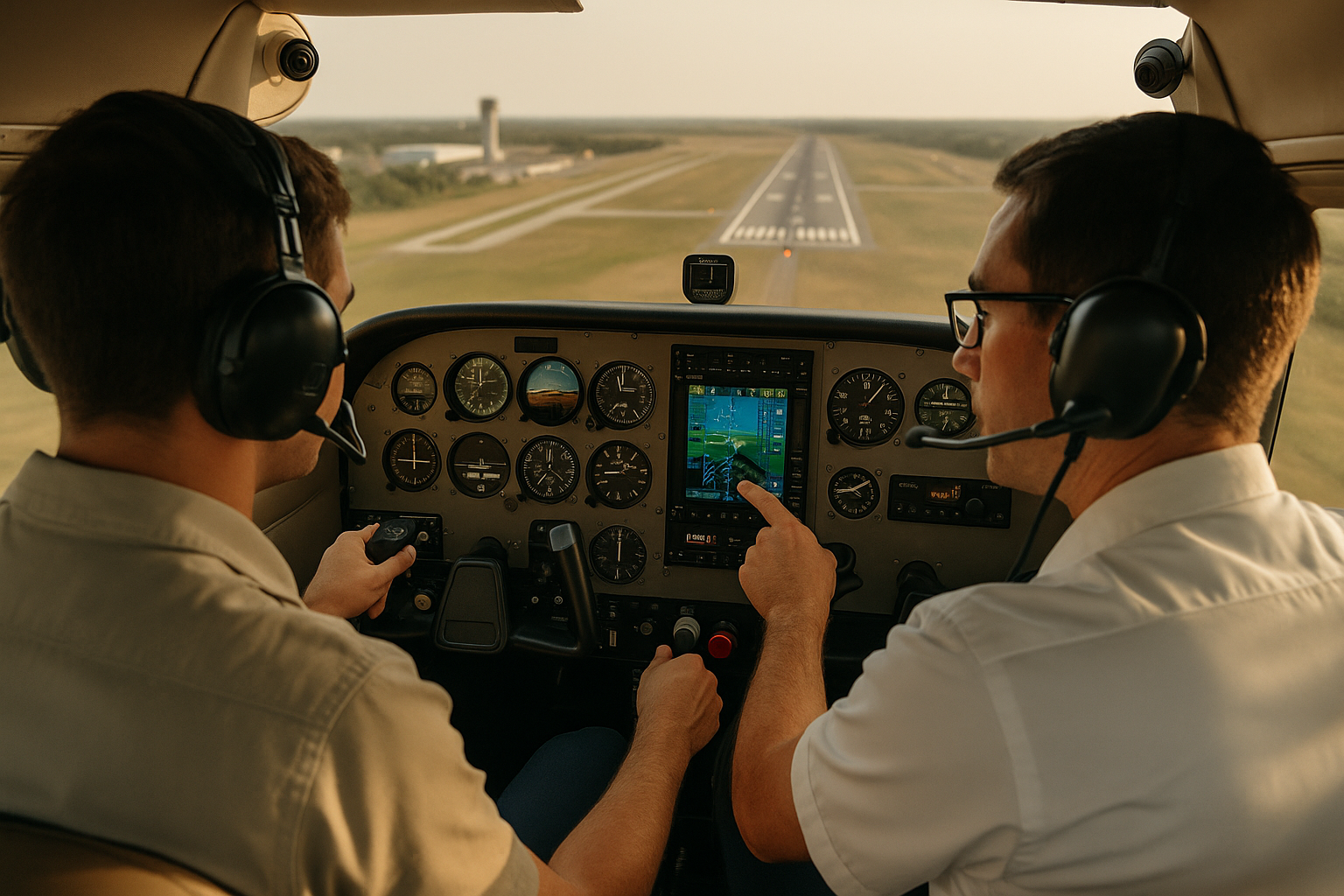
Pilot deviations are one of the most visible indicators of a breakdown in the safe integration between pilots, air traffic control, and the aircraft. A pilot deviation occurs any time a pilot's action departs from an air traffic control clearance, a published procedure, or an applicable regulation. For pilots, student pilots, flight instructors, and safety professionals, understanding why deviations happen and how to prevent them is essential to reducing risk and maintaining orderly operations.
This article explains the common causes of pilot deviations, translates technical and operational concepts into practical cockpit actions, and offers training-focused prevention strategies. You will find real-world examples, a realistic scenario to practice in training, common misunderstandings to watch for, and clear best practices you can adopt in everyday flying.
What a Pilot Deviation Means in Practice
At its core, a pilot deviation is a mismatch between what a pilot does and what the appropriate clearance, procedure, or regulation requires. That mismatch can take many forms: flying above or below an assigned altitude, straying outside lateral boundaries of assigned headings or routes, failing to hold short when instructed, taxiing onto an active runway without authorization, or misinterpreting an instrument procedure. In each case, the deviation can create conflict with other aircraft, reduce separation margins, or otherwise increase risk.
For operational pilots, the phrase "pilot deviation" is not an abstract label. It is the operational consequence of a chain of human, technical, or procedural factors that, if not recognized and interrupted, can escalate into a safety event. Framing deviations this way emphasizes prevention, detection, and recovery rather than blame.
Why This Matters in Real-World Aviation
Pilot deviations matter because they directly affect separation, traffic flow, and the predictability of aircraft behavior in controlled airspace. For flight instructors and training organizations, deviations are training opportunities. For operators and safety managers, deviations highlight vulnerabilities in procedures, communications, or technology. For air traffic controllers, deviations produce workload spikes and may require immediate mitigations. The operational stakes vary by environment - a deviation near a busy terminal has different consequences from one in a remote training area - but the underlying causes and remedies often overlap.
In everyday flying the consequences of a deviation can be subtle - a vector correction from ATC, an operational interruption, or an involuntary reporting process - or serious - near-miss, go-around, or enforcement action. Beyond regulatory outcomes, the most important consequence for a pilot should be the safety margin. Preventing deviations preserves separation and ensures predictable operations for all airspace users.
Core Causes of Pilot Deviations
Pilot deviations rarely result from a single factor. They are usually the end result of multiple interacting elements. Below are common causal categories with practical descriptions.
Communication and Readback Issues
Misheard or misunderstood clearances are frequent contributors. An incomplete or incorrect readback, or failure to request clarification, can leave ambiguity about altitude, heading, frequency changes, or hold-short instructions. Ambiguity in phraseology, nonstandard transmissions, or ATC workload can compound the problem. Practical risk increases when pilots accept an instruction despite uncertainty rather than confirming it.
Situational Awareness and Navigation Errors
Situational awareness is the pilot's mental model of where the aircraft is relative to airspace, other traffic, and procedures. Loss of that model occurs when attention shifts, when navigation systems are misprogrammed, or when pilots rely on a single source of positional information. Navigational deviations may stem from incorrect flight plan waypoints, wrong inbound courses, or mode confusion in the flight director or FMS.
Distraction and Task Saturation
High cockpit workload, non-essential conversations, troubleshooting, or personal distractions can divert attention. When pilots are task saturated, they are more likely to miss a clearance, forget a restriction, or make errors in procedure execution. The sterile cockpit concept exists precisely to reduce those distraction-driven risks during critical phases of flight.
Automation Misuse or Misunderstanding
Automation is a force multiplier for safety when used correctly and a source of error when misused. Misunderstanding autopilot mode logic, VNAV/FLCH behavior, or FMS sequencing can result in the aircraft flying a different profile than the crew believes. Mode awareness lapses and improper coupling between lateral and vertical guidance are recurring contributors.
Procedure Misinterpretation
Instrument approach procedures, departure procedures, or hold instructions require precise interpretation. Errors commonly arise from misreading altitude restrictions, misunderstanding crossing altitudes, or incorrectly flying a published course reversal. Pilots must translate written procedures into mental and physical actions accurately.
Taxi and Ground Movement Errors
Ground deviations include crossing a runway without clearance or entering movement areas without authorization. Contributing factors include unfamiliar airport layouts, poor signage, unfamiliar phraseology, low visibility, and inadequate airport diagrams or briefings. Surface movement demands a different kind of spatial awareness and communication discipline than en route flight.
Training Gaps and Experience Limitations
Inadequate training, infrequent practice of procedure-heavy operations, or insufficient emphasis on ATC communications all increase deviation risk. Even experienced pilots can develop complacency or drift from standard phraseology and procedures if recurrent training does not reinforce correct habits.
How Pilots Should Understand Pilot Deviations
Understanding pilot deviations is not solely about compliance. It is about recognizing the warning signs, applying defensive flying techniques, and using training to build robust habits. Think of deviations in three practical frames: prevention, detection, and recovery.
Prevention is the set of actions you take before and during flight to reduce the likelihood of a deviation. This includes preflight planning, briefings, checklist discipline, and mental rehearsal of critical phases. Detection is how you notice a deviation early - cross-checks, monitoring instruments, and listening for traffic alerts. Recovery is the immediate, safe action when a deviation happens - notify ATC, correct heading or altitude as appropriate, and prioritize separation.
Applying these frames means building cockpit routines that make prevention habitual, detection automatic, and recovery decisive. For example, a thorough taxi briefing reduces ground errors; a stringent sterile cockpit policy reduces workload-related deviations; and mandatory readback discipline reduces ATC/crew miscommunication.
Common Mistakes and Misunderstandings
Pilots often misjudge the small decisions that lead to deviations. Common misunderstandings include:
Assuming passive acceptance of a clearance: Pilots sometimes interpret silence or a curt transmission as permission to proceed. Explicit readback and positive confirmation are essential.
Overreliance on a single navigation source: Believing one instrument without cross-verification can hide a misprogram or failure.
Underestimating runway incursion risks during taxi: Visual cues change rapidly on complex ramp layouts; a plan and briefing are necessary to avoid mistaken entries.
Using casual phraseology or nonstandard terms: Clear, standard phraseology reduces ambiguity with ATC and other pilots.
Delaying challenge or query: Fear of appearing uncertain sometimes keeps pilots silent when they should ask for clarification.
Addressing these mistakes requires honest training scenarios, culture that encourages questions, and routine reinforcement of sterile cockpit and checklist habits.
Practical Example: A Realistic Scenario for Training
Imagine an IFR departure from a busy terminal airport. The pilot briefed a standard instrument departure and received an ATC clearance that included vectors after departure. After takeoff, the pilot accidentally leaves the autopilot in the wrong lateral mode. The aircraft begins to turn toward a different radial than expected. The first officer is cross-checking but is occupied with an abnormal checklist for a minor avionics warning. ATC issues a climb to altitude and a heading, but the pilot mishears the heading as "heading zero two zero" rather than "heading zero three zero." The aircraft is now carrying an incorrect heading and is not climbing to the assigned altitude.
In training, pause the scenario at the moment of misheard instruction. Ask the trainee to verbalize their understanding of the clearance and to perform an immediate cross-check: confirm FMS and autopilot mode, verify current heading against cleared heading, call out any mode mismatches, and repeat the readback if necessary. Debrief the factors that contributed: distraction from a secondary task, inadequate readback, and mode confusion. Repeat the scenario with emphasis on sterile cockpit discipline during critical phases and the habit of immediate verification when anything seems off.
This simple simulation teaches prevention (sterile cockpit, single-task priority), detection (mode awareness and cross-check), and recovery (immediate clarification and correction) in the context of a common operational environment.
Best Practices for Pilots to Prevent Deviations
Prevention focuses on practical routines and decision habits. The following best practices are designed to be operationally useful rather than prescriptive.
Treat readbacks as opportunities to confirm, not merely to comply. Use clear, unambiguous readback phrasing for critical items such as altitudes, headings, and hold-short instructions.
Use a two-source cross-check for navigation. Cross-verify GPS/FMS position with VOR, DME, or raw data, or use the moving map plus raw instruments to confirm position before critical transitions.
Apply sterile cockpit procedures during taxi, takeoff, climb, approach, and landing. Limit nonessential conversation and tasks when workload is high.
Brief taxi and runway crossings before action. Include expected taxi route, hold-short points, and any hot spots on the airport diagram.
Maintain autopilot and flight director mode awareness. Verbally call out autopilot mode changes and potential mode confusions in multi-crew operations.
When unsure, ask for clarification. A quick request for a readback correction is a small time cost compared with the consequences of being wrong.
Practice high-fidelity simulations of ATC communications and abnormal interruptions during training flights. Include scenarios with overlapping tasks and require trainees to prioritize.
Use technology to augment detection. Electronic flight bags, moving maps, and traffic displays are valuable tools, but they must be monitored and cross-checked.
These practices are applicable across aircraft types and operations. For single-pilot operations, adopt the most critical elements that fit workload constraints: explicit readbacks to ATC where required, careful mode management, and conservative task management during high workload phases.
Training and Organizational Measures
Preventing pilot deviations is partly an individual habit and partly an organizational responsibility. Flight schools and operators can reduce deviation risk through curriculum design, recurrent training, and a safety culture that encourages reporting and learning from near-misses.
In training, integrate communication drills, taxi-exercises at complex airports, and scenarios that simulate degraded situational awareness. Use scenario-based training to practice decision-making under pressure. Instructors should debrief not only the procedural error but also the cognitive and contextual factors that led to it.
Organizations should ensure that standard operating procedures reflect the operational reality of their fleet and environment. Encourage transparent reporting and nonpunitive discussion of deviations to identify systemic issues without blaming individuals. Regularly review SOPs, dispatch procedures, and training syllabi to close gaps that recurrently lead to deviations.
Recovery and Post-Event Actions
If a deviation occurs, prioritize safety: correct heading or altitude promptly when safe to do so, advise ATC of the corrective action as soon as possible, and accept ATC guidance to re-establish safe separation. After the flight, document the event accurately, reflect on contributing factors, and bring lessons to debrief sessions.
Use post-event analysis as a training opportunity. For instructors, replicate the contributing conditions in a lesson to help students practice the correct habits. For operators, aggregate reports to identify trends and systemic causes that training alone may not fix.
Frequently Asked Questions
What is the difference between a deviation and an incident?
A pilot deviation is a pilot action that departs from an ATC clearance, procedure, or requirement. An incident is a broader term describing events that affect or could affect safety. Not all deviations become incidents, but deviations can lead to incidents depending on context and consequences.
How should I handle an uncertain ATC clearance in IMC or busy airspace?
If you are uncertain about any clearance, request clarification immediately. Use simple, direct phrasing such as "Confirm cleared altitude is..." or "Say again heading assigned." Do not proceed on assumptions. If the uncertainty occurs during a high-work phase, declare you need a moment to reconfigure and then confirm the clearance before continuing.
Are there tools that help prevent deviations on the ground?
Yes. Airport diagrams, moving map displays, and runway incursion awareness systems are useful. Brief taxi routes before movement, use progressive taxi instructions from ATC if available, and practice situational scanning on the ramp. Still, technology supplements, but does not replace, proper briefings and communication.
What role does crew resource management play in preventing deviations?
CRM promotes clear communication, defined cross-checks, and assertive challenge-response behavior. In a multi-crew environment, enforce role clarity for handling clearances and mode changes. Encourage junior crewmembers to speak up early when something does not match their mental model.
How can student pilots practice preventing deviations?
Students should practice readbacks, briefings, and sterile cockpit behavior from the earliest lessons. Simulated taxi and radio work, instrument procedure briefings, and scenario-based check rides help embed habits. Use the training environment to simulate distractions and require correct prioritization.
Common Mistakes to Avoid
Many pilot deviations are preventable by avoiding a few recurring errors. Do not accept ambiguous clearances as "close enough." Do not trust a single navigation source without cross-checks. Avoid multitasking during critical phases. Do not allow informal phraseology to become routine. Finally, do not let concern about appearing unprepared prevent you from asking for clarification.
Key Takeaways
- Practical takeaway: Build simple, repeatable cockpit routines - readback, cross-check, brief - to make deviations less likely.
- Safety takeaway: Early detection and immediate, safe correction maintain separation and reduce escalation risk.
- Training takeaway: Use realistic scenarios that combine communication, automation, and distraction to train prevention, detection, and recovery.
Pilot deviations are indicators, not destiny. They reveal where cockpit habits, airport familiarity, automation understanding, or communication skills can improve. By shifting the emphasis from assigning blame to strengthening routines and training, pilots and organizations can reduce deviation frequency and preserve operational safety. Make prevention habitual: brief, verify, and confirm, and give yourself the time and margin to fly as cleared.