
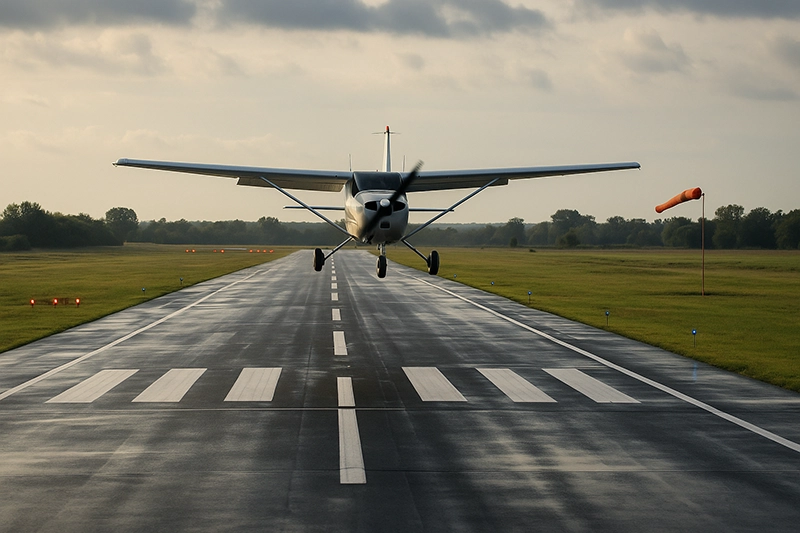
Airport operations shape every landing. From runway selection and approach planning to touchdown technique and rollout, good operational decisions reduce workload, lower risk, and produce more consistent landings. This article focuses on advanced airport operations for better landings and gives pilots, instructors, and aviation professionals practical, training-focused guidance you can apply on every flight.
Reading this will help you translate aerodynamic principles and operational data into decisions in the cockpit. The article covers how to use airport information, runway and weather analysis, approach stabilization, energy management, flare and touchdown technique, and go-around decision making. You will find real-world examples, common misunderstandings, and training recommendations designed to improve safety and landing quality.
Understanding the Core Idea
Airport operations for better landings means using airport-specific information and operational judgment to shape the approach and landing. It begins before taxi. Key elements include runway choice, runway surface and slope, wind and gust analysis, available approach types, obstruction and terrain considerations, and surface contamination. By integrating these variables into a consistent plan, pilots reduce surprises during the critical final phase of flight.
At its heart, this is risk management. The runway, airplane, and pilot combine to determine what is possible on a given day. Making conservative, well-informed choices about approach speed, flap selection, touchdown zone, and whether to accept an approach or execute a go-around leads to safer and more predictable landings.
Why This Matters in Real-World Aviation
Landings account for a large share of approach and landing incidents and accidents. Operational mistakes during airport-specific planning, poor runway assessment, and inadequate go-around discipline are recurring causal factors. Improving airport operations directly addresses those risks. Better planning reduces the probability of runway excursions, hard landings, bounced touchdowns, and stabilized approach deviations.
For instructors and training programs, emphasizing airport operations builds a decision-making mental model for students that extends beyond stick-and-rudder skills. Teaching a structured way to evaluate runways, wind, weather, and approach options develops judgment. For operators and professional pilots, consistent airport analysis supports safer dispatch and flight following choices, especially in single-pilot operations where workload management is critical.
How Pilots Should Understand Airport Operations
Think of airport operations as a layered checklist of contextual information that feeds a single, dynamic plan for final approach and landing. That plan contains five main elements: runway selection and touchdown zone, approach type and profile, energy and airspeed management, flare and touchdown execution, and contingency planning including a firm go-around criterion.
Runway selection is not automatic. Accepting the longest runway at an unfamiliar field might ignore crosswind components, obstacles, slope, or poor braking action. Conversely, choosing a shorter runway to avoid a complex approach may expose you to tailwind or obstacle constraints. Evaluate runway length in the context of aircraft performance, surface condition, reported braking action, and anticipated touchdown point.
Approach type matters. An ILS or precision approach reduces workload in low visibility and helps with stabilized energy management. Visual approaches can be efficient but require accurate runway alignment and clear sight picture early. RNAV approaches often offer predictable vertical guidance but can require steeper descent angles or specific obstacle mitigation. Cross-reference approach minima, circling requirements, and missed approach terrain when planning.
Energy management equals speed and descent path control. Approach speeds are set to allow for safe maneuvering while minimizing excess energy at flare. Use Vref or approach reference speed as your baseline. Adjust for gusts, contamination, and weight, but avoid persistent speed creep. Predict and manage energy early to avoid excessive float on flare or hard touchdowns caused by late flare attempts.
Finally, build a clear go-around criterion. A go-around is an expected, normal option. Establish precise criteria for when you will go around and communicate them to any crew or instructor. Common criteria include an unstabilized approach by a specified altitude, visual illusions that prevent safe touchdown, or runway contamination that reduces braking capacity below acceptable levels.
Common Mistakes or Misunderstandings
Pilots often confuse landing technique with airport operations. A perfect flare cannot compensate for poor runway selection or a late decision to arrest energy. Here are frequent mistakes that degrade safety and landing quality:
Neglecting runway surface condition. Failing to account for wet, icy, or contaminated surfaces increases stopping distance and the chance of excursions.
Accepting approaches that do not match the pilot or aircraft experience level. Complex circling approaches or steep visual approaches should be avoided when workload or weather is high.
Allowing approach speed to drift high under the assumption that excess speed can be bled off late. Excess energy increases float and the likelihood of hard landings.
Poor decision discipline on go-arounds. Hesitation or attempts to salvage an unstable approach are common precursors to runway incidents.
Underestimating the effect of runway slope, displaced thresholds, and runway surface friction on touchdown and rollout.
Training gaps exist too. Many pilots receive basic flare and crosswind instruction but are not coached on integrating airport-specific data into a single operational plan. Instructors should demonstrate how runway contamination reports and braking action influence both approach technique and the decision to divert or go around.
Practical Example
Imagine a midweight single-engine piston aircraft planning to land at a regional airport with a single 4,500 foot runway. The published surface reports indicate a wet runway and a steady crosswind from the right at 12 knots with gusts to 20 knots. You are single-pilot and flying day VFR with a passenger.
Start by assessing performance. Confirm current weight and balance and consult the POH for landing performance in wet conditions. If the POH provides no wet-runway adjustment values, plan for increased landing distance and reduced braking efficiency. Next, evaluate the wind. A strong gusting crosswind near or above your demonstrated crosswind capability reduces the margin for error on touchdown and rollout. If available, consider landing on a runway with less crosswind component even if it is slightly shorter.
Choose an approach that gives ample final segment to manage energy and align with the runway. A stabilized final approach at Vref plus gust increment gives a baseline speed to handle gusts. Brief yourself: touchdown zone target, maximum approach speed, touchdown profile, and firm go-around call. If the approach becomes unstable below the stabilized approach gate you set, execute a go-around early.
During flare, focus on energy bleed off rather than aggressive flairing. With a wet runway, expect more float if airspeed is slightly high. Aim for the intended touchdown zone and plan for a longer rollout. Apply progressive, smooth braking and crosswind control during rollout. If braking action is reported poor or runway contamination is heavy, be prepared to use aerodynamic braking and expedite the go-around if directional control is lost.
This example highlights how runway condition, winds, aircraft performance, and single-pilot workload interact. The safest decision may be to divert to a field with better braking action or less crosswind, or to delay the flight until conditions improve.
Best Practices for Pilots
Operational discipline before and during approach reduces errors. Adopt a consistent pre-landing routine that puts runway-specific variables into your plan. Recommended practices include:
Runway analysis: Evaluate runway length, slope, thresholds, and surface condition early. Think beyond raw length and consider available touchdown zone and rollout obstacles.
Stabilized approach criteria: Define clear stabilized approach parameters for each aircraft and flight condition. Common elements include target speed, descent rate, power setting, gear and flap configuration, and stable flight path by a specified altitude.
Energy management: Aim to arrive over the threshold with minimal excess energy. Use power adjustments and pitch control to manage descent rate rather than bleeding large amounts of speed late.
Go-around discipline: Pre-brief and rehearse go-around calls. Decide and state the reasons that will trigger a go-around and stick to them.
Crosswind technique: Practice proper crab-to-slip transition techniques and wing-down control during rollout. Manage aileron and rudder inputs deliberately to maintain runway alignment without overcorrecting.
Use available technology: When appropriate, use approach guidance and automation to reduce workload, but be prepared to hand-fly when required, especially in gusty conditions where automation may mask energy deviations.
For instructors, incorporate these elements into recurrent training scenarios. Teach students to build a landing plan that synthesizes weather, runway condition, aircraft capabilities, and personal currency. Emphasize early decision-making and reinforce that a go-around is a successful outcome when it protects safety margins.
Stabilized Approach: Practical Interpretation
Stabilized approach principles are essential to airport operations for better landings. A stabilized approach is one where the aircraft is configured, on the correct flight path, at the correct speed, and with power set for a normal landing. Pilots often ask what altitude to require stabilization by. That altitude depends on aircraft type, traffic, and regulatory or operator guidance. What matters operationally is that you set a clear gate and enforce it.
Operationally, a stabilized approach produces predictable energy at flare. If you are above the glide path, high, or fast, you create a situation where you must rapidly remove energy close to the ground, which can lead to hard landings or runway overshoots. Enforce your stabilized approach gate and go around early if it is not met.
Go-Arounds: Normalizing the Option
Psychologically, pilots sometimes view a go-around as a failure. That mindset increases risk because it encourages attempts to salvage marginal approaches. Treat the go-around as a routine, safe outcome. The decision should be binary and timely. If the approach becomes unstable below the gate or if visual cues are misleading, execute the go-around without hesitation. Communicate intentions clearly and manage the climb and configuration according to your training and the aircraft's published procedures.
Go-around practice should be part of recurrent training for all pilots. Practicing in different configurations, in crosswind conditions, and with simulated high workload makes the action feel normal and helps crews execute it smoothly when necessary.
Runway Surface, Contamination, and Braking Action
Runway friction and contamination materially change landing performance. Wet runways, snow, ice, or rubber buildup can increase landing roll and reduce directional control. Operational awareness starts with preflight planning and includes checking NOTAMs and surface condition reports. During approach, observe runway visual cues, like standing water or snow accumulation, and adjust the landing plan accordingly.
If braking action is reported as less than good, consider alternatives. Those may include selecting a runway with better reported friction, delaying the landing until conditions improve, or diverting when margins are marginal. In some cases, an approach to a longer runway with moderate crosswind is safer than a shorter runway with poor braking action.
Practical braking technique
On touchdown to a contaminated runway, allow the aircraft to settle and establish directional control before heavy braking. High-speed or abrupt braking can cause tire skidding and loss of control. Use moderate reverse thrust if available and appropriate for your aircraft, and combine aerodynamic braking through spoilers or pitch attitude when safe and effective.
Understanding Visual Illusions and Airport Lighting
Visual illusions can cause pilots to misjudge height and distance during final approach and flare. Up-slope runways, narrow runways, featureless terrain, and bright city lights can each create illusions that lead to high or low approaches. Learn to recognize the common illusions at airports you frequent and use instrument guidance or visual aids such as PAPI or VASI when available.
Airport lighting intensity and type also affect perception. Adjust your approach to avoid becoming fixated on bright lights that alter your perceived glide path. Cross-check instrument vertical guidance when available and rely on a stabilized approach philosophy to avoid overcorrecting late in the approach.
Crosswind Landings: Advanced Operational Considerations
Crosswind landings introduce an additional layer to airport operations. Pre-brief your crosswind technique. Decide whether a crab or sideslip method will be used and how you will transition to touchdown and rollout. Take into account gusts which require a gust factor to be added to approach speed and demand more aggressive control inputs during flare and touchdown.
Operationally, consider the following: if gusting winds push control authority close to the limits of the aircraft or pilot capability, choose a different runway or divert. If runway width or obstacles limit your ability to correct on rollout, be conservative in your choice of runway or landing technique.
Training Applications: Designing Effective Exercises
Design training exercises that combine technical flying with operational decision-making. Examples include scenario flights where the pilot must choose between multiple runways with differing lengths, wind components, and braking reports; or executing approaches where a go-around is introduced as an expected outcome. Use simulated failures, like sudden tailwind or braking action degradation, to force real-time decision making.
For instructors, use a debrief framework that reviews both the flying technique and the pre-landing operational choices. Ask students to explain why they chose a runway, how they managed energy, and at what point they would have gone around. This reinforces the link between airport analysis and stick-and-rudder execution.
Common Questions Pilots Ask
How do I select the best runway when multiple options are available?
Evaluate wind component, reported braking action, runway length and slope, obstacles, and available approach types. Prioritize runway characteristics that improve safety and reduce workload. If you must accept a runway with a strong crosswind, ensure your personal and aircraft crosswind capability is sufficient for safe rollout.
What is an operationally useful stabilized approach gate?
Choose a gate that matches your aircraft and experience level and that gives actionable time to correct the approach. For many light aircraft, setting a stabilized approach requirement by 500 to 1,000 feet above ground level is practical, but this depends on aircraft type, approach type, and operational guidance. The key is consistency and discipline in executing a go-around when the gate is missed.
When should I add a gust factor to approach speed?
Add a gust factor when winds are gusting enough to cause significant transient speed variations. A common operational practice is to add half the gust increment to your approach speed, but pilots must consult their aircraft operating handbook or operator guidance. If no specific guidance exists, err on the side of safer control margins while avoiding excessive excess speed that will increase float.
How do I handle a bounced landing?
Assess the bounce severity immediately. For small bounces, maintain control inputs and set up for a controlled touchdown. For larger bounces or if directional control is lost, execute a go-around. Train to recognize the signs of an unrecoverable bounce and perform the go-around decisively.
How should single-pilot operators adjust their decision-making?
Single-pilot operators must plan for higher workload and reduced redundancy. Simplify procedures, prioritize a conservative runway and approach choice, brief a go-around clearly, and avoid last-minute changes. If conditions exceed a single-pilot safe operating envelope, delay or divert.
Practical Checklist Elements (for personal use)
While this article is not a checklist, consider integrating the following into your personal pre-landing flow to reinforce airport operations thinking: runway analysis, braking action check, stabilized approach gate confirmation, approach speed and gust factor decision, crosswind technique brief, and explicit go-around criteria. Use these items as mental prompts, not a rigid list that interferes with flexible decision-making.
Key Takeaways
- Practical takeaway: Build a landing plan that integrates runway data, weather, aircraft performance, and personal capability before beginning the approach.
- Safety takeaway: Enforce a clear stabilized approach gate and treat the go-around as a normal, safe outcome if criteria are not met.
- Training takeaway: Incorporate scenario-based training that links airport-specific decisions to actual flare, touchdown, and rollout technique.
Frequently Asked Questions
Can I compensate for a short runway with a steeper approach?
Steeper approaches may reduce touchdown distance but can increase approach workload and make energy management more difficult. Also, steeper angles can change flare technique and may not be appropriate without specific training. Always consider whether the approach is compatible with the aircraft and your experience and whether published approach procedures allow it.
Is it better to land long or short on the runway when uncertain?
Landing long reduces braking margin and increases the risk of overrunning. Landing short and then rolling out gives more stopping distance but can expose you to obstacles before the runway threshold. The operational goal is to target the touchdown zone appropriate to the runway length and condition. If you are consistently long or short under current conditions, consider a go-around and reconfigure your approach.
How do I practice go-arounds safely during training?
Practice go-arounds in a structured environment with an instructor or mentor. Start at higher altitudes to rehearse the procedure, then gradually practice from lower altitudes when comfortable. Include scenarios with crosswinds and with simulated runway contamination to build competence and confidence.
Should I always divert if braking action is reported as poor?
Not always, but poor braking action is a serious operational factor. Evaluate runway length, aircraft performance on contaminated surfaces, and the availability of alternative airports. If margins are marginal, divert. If you proceed, accept that the landing will require conservative technique and a potentially longer rollout, and brief your contingency plans clearly.
What role does automation play in approach and landing operations?
Automation can reduce workload and help maintain a stable approach, particularly in instrument conditions. However, it can also mask energy deviations and delay manual correction. Use automation where it helps maintain stability but be prepared to disconnect and hand-fly when necessary, and maintain proficiency in manual landing skills.
Closing Thoughts
Advanced airport operations for better landings depend on disciplined planning, conservative decision-making, and consistent execution. Focus on integrating runway conditions, weather, and aircraft performance into a clear landing plan. Teach and practice go-arounds until they become routine. By treating airport analysis as a fundamental part of the landing process, pilots will improve safety margins and landings will become more predictable and less stressful.
Operational excellence is not a single technique but a pattern of choices. Pilots who learn to evaluate airports comprehensively and to enforce stabilized approach discipline will reduce risk and improve their landings across aircraft types and conditions.