
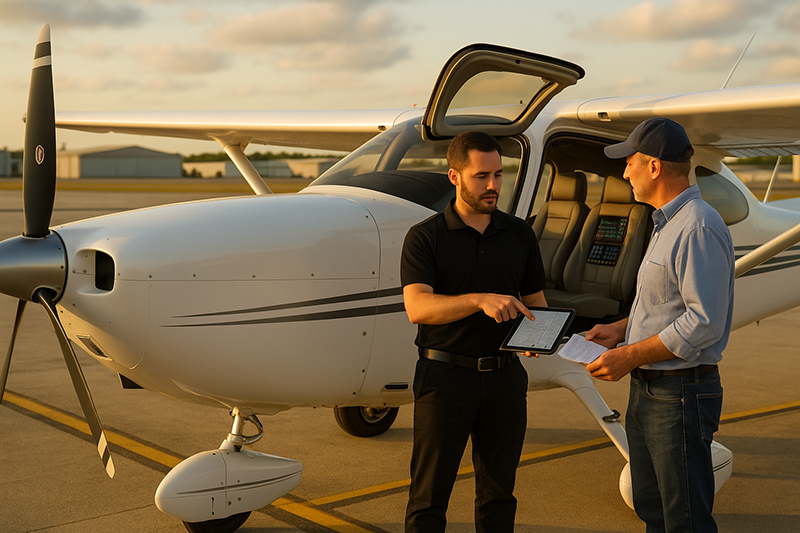
Advanced flight training can be one of the best investments a pilot makes, but only when it solves a real problem, builds durable skill, and improves judgment in the aircraft you actually fly. The phrase sounds impressive, yet pilots often use it to describe very different things: an instrument rating, tailwheel transition, upset prevention training, mountain flying, avionics training, multiengine work, commercial maneuvers, recurrent proficiency, or a focused course with an experienced instructor. Some of those choices may be excellent for your mission. Others may be interesting without adding much practical value.
The goal is not to collect certificates, endorsements, logbook entries, or course completion cards for their own sake. The goal is to become a safer, more capable, more adaptable pilot. That requires looking beyond the course title and asking better questions: What risk does this training reduce? What decision-making skill does it strengthen? What operating environment does it prepare me for? How will I know whether I improved? When advanced flight training is selected with that kind of discipline, it becomes more than professional development. It becomes a practical safety tool.
What Makes Advanced Flight Training Valuable?
Advanced flight training adds value when it meaningfully changes what a pilot can recognize, decide, and do. That sounds simple, but it is easy to mistake activity for progress. A pilot can fly several hours of interesting maneuvers and leave with little improvement if the training lacks structure, standards, and connection to real-world operations. A valuable course should make the pilot better at managing workload, energy, aircraft configuration, automation, weather risk, abnormal situations, or mission planning.
Value also depends on timing. A private pilot who flies locally in good weather may gain more immediate benefit from instrument training foundations, night currency practice, crosswind refinement, and weather decision-making than from a highly specialized course that does not match current flying. A pilot transitioning into a faster, heavier, or more complex aircraft may need systems knowledge, avionics proficiency, abnormal procedures practice, and scenario-based training more than another round of general airwork. A commercial pilot candidate may need not only maneuver accuracy, but also a sharper understanding of risk management, passenger expectations, and professional standards.
Good advanced training has three characteristics. First, it is mission relevant. It connects directly to the aircraft, airspace, weather, terrain, and operational decisions the pilot expects to encounter. Second, it is measurable. The pilot and instructor can describe what proficiency looked like at the beginning and what changed by the end. Third, it is transferable. The lessons should apply outside the training flight, not just during a rehearsed maneuver in ideal conditions.
This is why a thoughtful training plan begins with a pilot profile rather than a course catalog. A pilot who frequently flies family trips across several states has different training needs than a weekend aerobatic pilot, a new aircraft owner, a flight instructor, or a pilot preparing for professional operations. The right question is not, “What is the most advanced course available?” The better question is, “What training will most improve my next 100 hours of flying?”
Why This Matters in Real-World Aviation
Real-world flying rarely presents problems one at a time. A cross-country flight can combine marginal weather, unfamiliar airspace, a passenger delay, fuel planning pressure, changing winds, avionics workload, and fatigue. A technically legal flight may still be a poor decision if the pilot is task saturated or operating near personal limits. Advanced training has real value when it helps pilots manage that complexity before it becomes urgent.
For example, instrument training is not valuable only because it may lead to an instrument rating. It can also sharpen attitude instrument flying, weather interpretation, cockpit organization, communication discipline, and missed approach planning. Tailwheel training is not valuable only because it may satisfy a particular operating requirement for certain aircraft. It can improve rudder coordination, directional control awareness, and respect for crosswind technique. Mountain flying instruction is not valuable because mountains are dramatic. It is valuable because terrain, wind, density altitude, routing, and escape options demand disciplined planning and conservative judgment.
Advanced training also matters because many pilots experience long periods of stable routine. Routine can be useful, but it can also hide skill erosion. A pilot who flies the same local routes, approaches, airports, and aircraft configurations may become comfortable without being broadly proficient. Recurrent and advanced instruction can expose blind spots in a controlled environment, where the cost of discovery is a debrief instead of a serious in-flight surprise.
The best training does not simply add confidence. It calibrates confidence. A pilot should leave with a clearer sense of capability and limitation. Overconfidence after training is a real hazard when a course creates the feeling of mastery without enough context, repetition, or judgment. Valuable training should make a pilot more capable and more humble at the same time.
Start With the Mission, Not the Marketing
Aviation training is often marketed by course names: advanced avionics, upset prevention, backcountry, high-performance transition, instrument refresher, mountain flying, seaplane, multiengine, professional pilot development, and many more. These labels can be useful, but they do not automatically reveal whether the course is the right fit. The pilot’s mission should drive the choice.
Start by describing your actual flying. What aircraft do you fly, or plan to fly? What airports do you use? How often do you fly at night? How often do you cross weather systems? Do you carry passengers? Do you fly over water, mountains, remote areas, or congested airspace? Are you using modern glass cockpit avionics, legacy instruments, autopilot, datalink weather, or a mixture? Do you fly often enough to remain sharp, or do you need a training plan that accounts for gaps between flights?
Then identify the highest-consequence gaps. A gap is not just something you have not done. It is something you may reasonably need to do and may not be prepared to handle well. A pilot who never intends to fly floats may not need seaplane training for practical mission value, although it can still be excellent stick-and-rudder education. A pilot who frequently launches on long VFR cross-country flights near changing weather may gain more immediate value from weather avoidance strategy, instrument fundamentals, diversion planning, and personal minimums development.
Marketing often emphasizes excitement. Good training planning emphasizes exposure management. If the course helps you manage the most realistic risks in your flying, it likely has value. If it mainly sounds impressive, it may be optional enrichment rather than a priority.
Training That Often Adds Strong Practical Value
There is no universal ranking of advanced flight training because pilots have different aircraft, goals, and risk profiles. Still, several categories often provide strong practical value when matched to the right pilot and taught well.
Instrument Proficiency and Weather Decision-Making
Instrument training is one of the most practical ways to improve a pilot’s operating margin. Even pilots who do not plan to fly routinely in instrument conditions can benefit from better attitude instrument skills, communication discipline, airspace understanding, and weather decision-making. For instrument-rated pilots, recurrent training should go beyond completing familiar approaches. It should include realistic preflight weather analysis, route selection, alternates when applicable, missed approach planning, automation management, and recognizing when the safest decision is to wait or divert.
The most valuable instrument instruction is scenario-based. Instead of flying only predictable procedures in calm conditions, the instructor can build realistic workload: a reroute, a frequency change at an inconvenient time, a partial panel discussion, a late runway change, or a missed approach followed by a diversion. The point is not to overwhelm the pilot for entertainment. The point is to practice managing priorities while maintaining aircraft control and situational awareness.
Aircraft Transition and Systems Training
Moving into a different aircraft can change more than cruise speed. It may change checklist discipline, landing energy, avionics workflow, engine management, emergency procedures, fuel system awareness, maintenance considerations, and passenger expectations. Transition training can add significant value when it is tailored to the exact aircraft model and equipment rather than treated as a generic checkout.
A strong transition course should address normal operations, abnormal scenarios, performance planning, avionics use, aircraft limitations from the approved operating materials, and common pilot technique issues for that type. It should not rely on folklore. If the aircraft has a sophisticated autopilot, engine monitor, turbocharging system, retractable landing gear, constant-speed propeller, or advanced electrical architecture, the pilot should understand practical operation and failure modes well enough to avoid being surprised in flight.
Stick-and-Rudder Refinement
Advanced technology has not made basic aircraft handling less important. Crosswind landings, slow flight, energy management, go-arounds, rudder coordination, and stabilized approaches remain core skills. Some pilots benefit greatly from tailwheel instruction, aerobatic foundations, glider training, upset prevention concepts, or focused landing clinics, depending on their goals and the aircraft involved.
The key is to connect the training back to everyday flying. A pilot does not need to fly aerobatics to benefit from improved awareness of angle of attack, load factor, pitch attitude, and coordinated flight. A pilot does not need to own a tailwheel airplane to learn from the precision and discipline tailwheel flying demands. However, specialized training should be taught by appropriately qualified instructors in suitable aircraft with clear safety boundaries.
Decision-Making and Scenario-Based Recurrent Training
Many serious aviation risks are not caused by a lack of ability to manipulate the controls. They involve timing, judgment, planning, and willingness to change the plan. Scenario-based recurrent training can be extremely valuable because it makes pilots practice decisions, not just maneuvers.
A scenario might include deteriorating ceilings, a passenger who wants to continue, a fuel stop that becomes inconvenient, a runway closure, an unexpected maintenance concern, or an autopilot anomaly. The instructor’s job is not simply to test the pilot. It is to help the pilot verbalize options, evaluate risk, manage workload, and make a conservative decision while there is still time.
How Pilots Should Evaluate a Course Before Enrolling
Choosing advanced flight training should feel more like evaluating an aircraft maintenance provider than buying a recreational experience. Reputation matters, but specifics matter more. A high-value course should have a defined training objective, qualified instructors, appropriate aircraft or simulator resources, a practical syllabus, and a meaningful debrief process.
Ask what the course is designed to change. If the answer is vague, the course may still be enjoyable, but its training value is harder to judge. Good answers sound specific: improving instrument scan under workload, developing safe mountain route planning habits, building proficiency in a new avionics suite, practicing energy management in the traffic pattern, or preparing for a particular aircraft transition.
Ask how the course handles risk. Advanced training often involves operating near edges of normal comfort, whether that means unusual attitudes, weather decision-making, short-field technique, or abnormal procedures. A professional training provider should be able to explain safety practices, aircraft suitability, instructor qualifications, pre-briefing, weather limits for training, emergency planning, and how maneuvers are introduced progressively.
Ask how the instructor will assess proficiency. A certificate, rating, endorsement, flight review, instrument proficiency check, or insurance checkout may have specific requirements or standards depending on the situation, but valuable training should also include a practical assessment of pilot performance. That assessment should cover both aircraft control and aeronautical decision-making.
Finally, ask whether the training includes follow-through. A pilot may perform well during a concentrated course and then lose proficiency if the skill is not integrated into regular flying. The best training often concludes with a maintenance plan: what to practice next, what minimums to use, what flights to avoid until more experience is gained, and when to schedule recurrent instruction.
Common Mistakes or Misunderstandings
One common mistake is choosing training because it sounds advanced rather than because it addresses a real operational need. Aviation rewards curiosity, and there is nothing wrong with learning for its own sake. The problem arises when pilots treat a specialized course as a substitute for more urgent proficiency work. If crosswind landings are inconsistent, instrument scan is rusty, or preflight weather decisions are weak, those gaps deserve attention before adding a more exotic training objective.
Another mistake is equating completion with competence. Finishing a weekend course or receiving a logbook entry does not mean a pilot is fully prepared for every related scenario. Training is an introduction to better performance, not a guarantee. This is especially important after transition training, upset training, mountain flying instruction, or avionics training. The pilot may be safer than before, but still needs conservative personal minimums and continued practice.
A third misunderstanding is assuming that advanced aircraft require only advanced systems knowledge. Systems knowledge matters, but aircraft control, energy management, and workload management matter just as much. A pilot who understands every page of an avionics manual can still become task saturated during a busy arrival. A pilot who can brief an engine system may still mishandle a go-around if airspeed, trim, configuration, and power changes are not managed smoothly.
Some pilots also underestimate the importance of instructor fit. The best instructor for primary training may not be the best instructor for mountain flying, upset prevention, turbine transition, or advanced avionics. Advanced instruction often requires specialized experience, disciplined risk management, and the ability to teach judgment rather than simply demonstrate technique. A good instructor should be able to explain why a technique matters, when it applies, and where its limits are.
Another common problem is poor timing. Intensive training immediately followed by months without flying can lead to rapid skill fade. If possible, schedule advanced training so it can be reinforced soon afterward. A pilot transitioning into a new aircraft should plan follow-up flights while habits are still forming. An instrument pilot refreshing proficiency should plan realistic practice and conservative operating limits after the course, not assume the course itself solved everything permanently.
Practical Example: Choosing Training for a New Mission
Consider a private pilot with 350 total hours who has mostly flown local VFR trips in a familiar fixed-gear single-engine airplane. The pilot is now purchasing a faster aircraft with modern avionics and plans to fly weekend family trips across several states. The pilot is considering three options: a short aircraft checkout, an aerobatic upset-style course, or an instrument rating program.
All three may have value, but the best sequence depends on the mission. The immediate risk picture has changed. The pilot will be flying a faster aircraft, making longer decisions, managing more airspace, possibly encountering more weather variation, and carrying passengers who may influence schedule pressure. A simple checkout that focuses only on takeoffs, landings, and basic systems may not be enough. An aerobatic or upset-oriented course could improve aircraft handling and confidence, but it may not address the most likely operational pressures of family cross-country flying.
A strong plan might begin with a thorough aircraft transition course that includes avionics workflow, performance planning, fuel system management, normal and abnormal procedures, go-arounds, and realistic arrival scenarios. If the pilot is not instrument rated, beginning instrument training may add substantial long-term value, even if the pilot remains conservative about weather. If already instrument rated, an instrument proficiency and weather decision-making course in the new aircraft could be more relevant than generic airwork.
After that foundation, the pilot might add upset prevention concepts or tailwheel training as broader stick-and-rudder development. The sequence matters. By addressing the most mission-relevant risks first, the pilot gains practical operating margin where it is needed most. Specialized training then becomes enrichment layered onto a solid operational foundation.
Best Practices for Pilots Choosing Advanced Training
Start with an honest self-assessment. Review recent flights and identify moments when workload was high, decisions felt rushed, or aircraft handling was less precise than desired. Think about your next phase of flying, not just your past experience. If your mission is changing, your training should change with it.
Talk with an instructor who is willing to help you diagnose needs rather than simply sell a course. A valuable training conversation includes your aircraft, recent experience, comfort level, goals, airports, weather exposure, and schedule. If the instructor recommends the same solution for every pilot, keep asking questions.
Use a training objective that can be stated clearly. For example, “I want to be more comfortable with advanced avionics” is a start, but “I want to manage flight plan changes, holds, missed approaches, autopilot modes, and diversions without losing situational awareness” is much better. Clear objectives help the instructor build useful scenarios and help the pilot judge progress.
Prioritize training that improves judgment under realistic workload. Maneuvers matter, but aviation safety often depends on recognizing a trap early and choosing a better option. Courses that combine aircraft control with decision-making tend to produce more durable value than courses that isolate maneuvers without context.
Build a proficiency plan after the course. Advanced training should not end when the instructor signs the logbook. Decide what you will practice, what personal minimums will apply, what flights you will avoid for now, and when you will schedule recurrent training. If a course introduces a skill you will not use often, plan periodic refreshers before relying on it operationally.
- Choose training that matches your aircraft, mission, environment, and near-term goals.
- Look for instructors with relevant experience and a structured approach to risk management.
- Ask for measurable objectives and a meaningful debrief, not just flight time.
- Sequence training so foundational risks are addressed before specialized interests.
- Convert training outcomes into personal minimums, practice plans, and recurrent instruction.
How Instructors and Flight Schools Can Add More Value
Flight instructors and schools have an important role in making advanced training meaningful. The most effective providers resist the temptation to package every pilot into the same syllabus. A structured syllabus is valuable, but advanced training should still be adapted to the pilot’s experience, aircraft, and operational goals.
Instructors can add value by using pre-training interviews, scenario design, and guided debriefs. A pre-training interview identifies the pilot’s real mission and risk exposure. Scenario design turns abstract skills into practical decisions. A guided debrief helps the pilot understand not only what happened, but why it happened and how to improve.
Advanced training should also teach pilots how to continue learning after the course. This may include recommended practice profiles, reading assignments, simulator sessions when appropriate, aircraft manual review, avionics exercises on the ground, or follow-up flights. The instructor’s goal should be to create independent judgment, not instructor dependence.
For flight schools, quality control matters. Specialized courses should be taught by instructors who are trained in that specialty, familiar with the aircraft and equipment, and aligned on safety standards. Consistent briefing formats, weather minimums for training activities, emergency procedures, maintenance coordination, and student screening can help keep advanced training professional and productive.
Balancing Certificates, Ratings, Endorsements, and Proficiency
Some advanced training leads to a certificate, rating, endorsement, proficiency check, or other formal result. Those outcomes can be important and, in some cases, necessary for specific operations or aircraft. Pilots should always verify current regulatory requirements with the applicable regulations, an authorized instructor, examiner, or other qualified aviation professional.
At the same time, regulatory qualification and practical proficiency are not identical concepts. A pilot may be legally qualified but still wise to seek additional instruction before carrying passengers in challenging conditions, flying a new route, operating from a demanding airport, or using unfamiliar avionics. Conversely, a training experience may not produce a new certificate or rating but may still deliver excellent safety value.
The mature pilot respects both sides. Meet the applicable requirements, then ask whether your skill and judgment are truly ready for the mission. The airplane does not know whether the logbook looks complete. It responds to airspeed, attitude, configuration, power, trim, weather, terrain, and pilot decision-making.
Frequently Asked Questions
What is considered advanced flight training?
Advanced flight training is any instruction beyond basic qualification that builds higher-level capability, specialized skill, or mission-specific proficiency. It may include instrument training, aircraft transition, tailwheel instruction, multiengine training, mountain flying, upset prevention concepts, advanced avionics, commercial pilot preparation, recurrent instruction, or scenario-based decision-making.
How do I know if an advanced course is worth the cost?
A course is more likely to be worth the cost if it addresses a real risk in your flying, has clear objectives, uses qualified instructors, includes meaningful debriefing, and gives you a plan for continued practice. If you cannot explain how the training will improve your actual flying, ask more questions before enrolling.
Should I pursue an instrument rating before other advanced training?
It depends on your mission, but instrument training often provides broad value because it strengthens aircraft control, weather thinking, communication, navigation, and cockpit organization. Pilots who fly cross-country or face changing weather should seriously consider how instrument training or instrument proficiency fits into their development plan.
Is upset prevention or aerobatic training useful for non-aerobatic pilots?
It can be useful when taught by qualified instructors in appropriate aircraft with clear safety practices. The value is not that a typical pilot will perform aerobatics in normal operations. The value is improved awareness of aircraft attitude, energy, coordination, load factor, and recovery concepts. Pilots should choose programs that match their goals and experience.
How often should experienced pilots seek recurrent training?
The right interval depends on the pilot’s activity level, aircraft complexity, mission, recent experience, and applicable requirements. Many pilots benefit from recurrent instruction whenever their mission changes, proficiency declines, new equipment is installed, or they begin operating in more demanding environments. Regular instruction is often more useful than waiting until a requirement or concern forces the issue.
Can simulator training replace aircraft training?
Simulator or training device sessions can be very effective for procedures, avionics workflow, instrument practice, abnormal scenarios, and decision-making. They may not fully replace aircraft experience for handling, sight picture, landing technique, or aircraft-specific feel. The best solution often combines ground, simulator, and aircraft training according to the objective.
Key Takeaways
- Choose advanced flight training by mission relevance, not by how impressive the course title sounds.
- The most valuable training improves both skill and judgment under realistic workload, not just maneuver completion.
- Verify any regulatory requirement separately, then build proficiency beyond the minimum needed for the operation.