
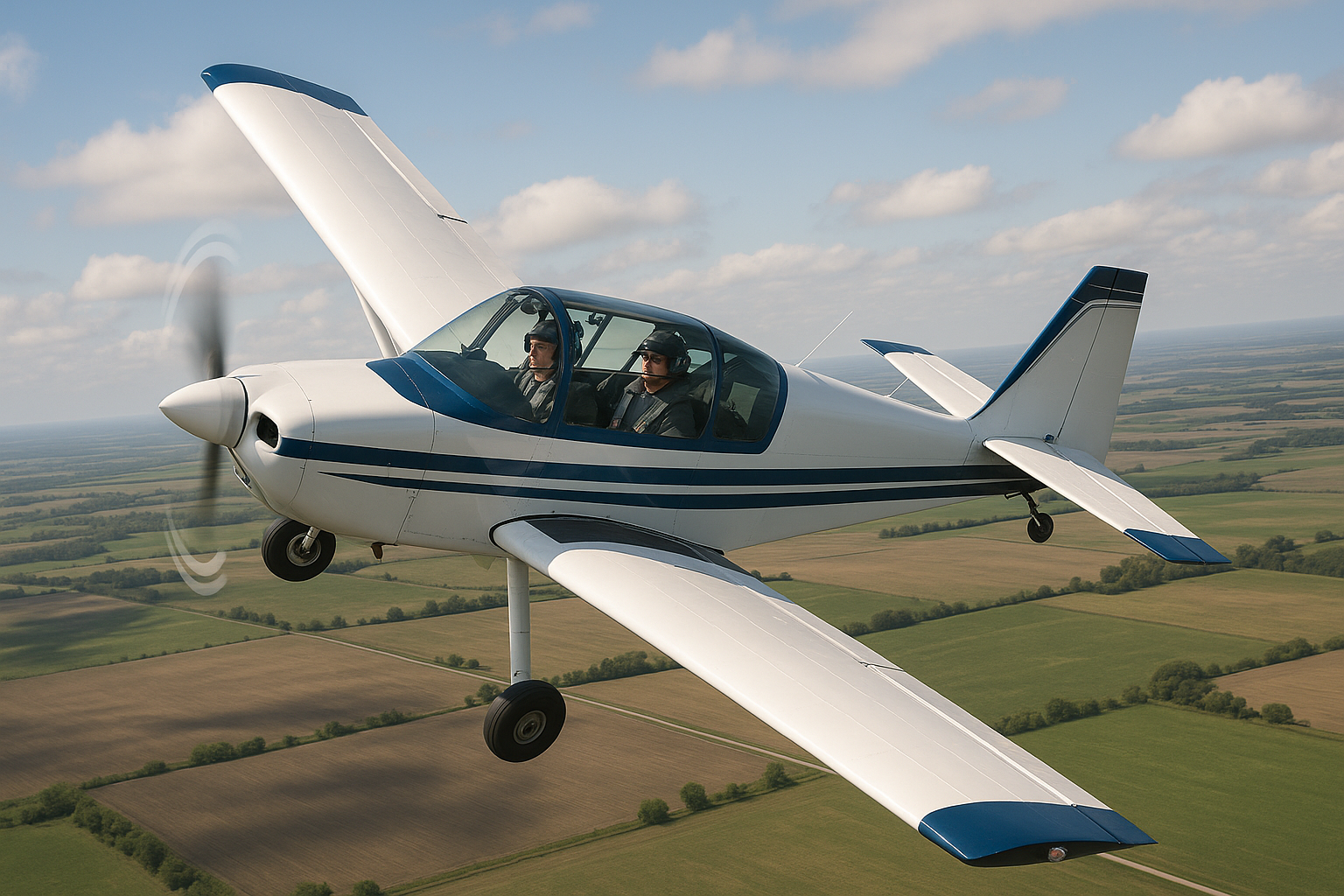
Aerobatic flying captures the imagination of many student pilots. Learning aerobatics improves stick-and-rudder skills, energy management, aircraft feel, and confidence in unusual attitudes. For a student pilot, aerobatic flying is not simply about thrills. It is structured training that builds precision, judgment, and recovery skills that translate directly to safer routine flying.
This article explains everything a student pilot should know about aerobatic flying: what aerobatics involves, how training progresses, operational and safety considerations, how to choose an aircraft and instructor, and common mistakes to avoid. The goal is practical guidance you can use to decide whether aerobatic training belongs in your progression, and how to pursue it with safety and professionalism.
What Aerobatic Flying Is and What It Teaches
Aerobatic flying refers to deliberate maneuvers that intentionally depart from straight and level flight to perform rolls, loops, spins, snap rolls, hammerheads, and other maneuvers. These maneuvers exercise aircraft control across all three axes, challenge energy management, and expose pilots to unusual attitudes and high load factors. Aerobatic practice emphasizes coordinated use of pitch, roll, yaw, and power to achieve precise flight paths.
For student pilots, the core value of aerobatic training is skill transfer. Proper aerobatic training improves: aircraft handling in stalls and near-stall conditions, recovery from unusual attitudes, visual scanning during high workload, spatial orientation, judgment about energy and margin, and the discipline of briefings and standardized procedures. Pilots who train aerobatically often report better control precision, improved approach stabilization, and faster, more disciplined decision-making under pressure.
Why This Matters in Real-World Aviation
Aerobatic training matters for everyday flying in several practical ways. Modern general aviation operations rarely require full aerobatics, but the skills developed during aerobatic instruction make pilots safer in unexpected situations such as inadvertent stalls, turbulence encounters, or when a go-around must be flown aggressively. Understanding energy management during a loop translates to better speed and descent control in a crosswind approach. Training to recognize and recover from unusual attitudes reduces the likelihood of loss of control accidents.
From a regulatory and operational perspective, aerobatics is conducted under specific airspace and local restrictions. Aerobatic practice in uncontrolled airspace or near airports can create risks to other traffic. Pilots must plan for airspace, altitude, and coordination with air traffic control when applicable. Insurance providers, aircraft owners, and flight schools may impose additional limits on aerobatic operations. Confirm these details before starting aerobatic training.
How Pilots Should Understand Aerobatic Training
Aerobatic training should be approached as a structured syllabus delivered by a qualified instructor in an appropriate aircraft. Training typically begins with fundamental aerodynamic concepts and moves to simple maneuvers before progressing to complex sequences. Important training pillars include thorough preflight briefings, clear definitions of safety margins, precise speed and attitude control, and standardized recovery techniques.
Key technical concepts students must understand include load factor, angle of attack, energy management, and the relationship between pitch, power, and airspeed. Load factor is the multiplier of weight experienced by the aircraft and occupant; it increases in turns and abrupt maneuvers. Higher load factors change stall speed and structural loads, so conservative margins and adherence to aircraft placards are essential.
Angle of attack is the fundamental aerodynamic parameter for stalls. Maneuvers that increase angle of attack beyond the critical value produce a stall independent of airspeed. Understanding the distinction between airspeed and angle of attack prevents misinterpretation of aircraft behavior in unusual attitudes.
Aircraft Selection and Equipment Considerations
Not every airplane is equally suited for aerobatic training. Aircraft designed for aerobatics have structural strength and control harmony to tolerate higher load factors and more dynamic control inputs. Many general aviation trainers are capable of limited aerobatics, commonly termed "utility" category maneuvers, while certified aerobatic aircraft are designed for a wider envelope.
Before practicing any aerobatic maneuver, verify the aircraft's approved operating category and any applicable limitations in the aircraft flight manual or placards. Confirm the aircraft is maintained to standards appropriate for aerobatic loading. Ensure seat harnesses, restraint systems, and emergency equipment are serviceable. If you lack direct documentation, discuss verification with the aircraft owner or maintenance provider.
Other equipment considerations include ensuring the aircraft has a reliable fuel system for inverted flight if required by the maneuvers, adequate cockpit ventilation and visibility, and that any loose items are secured. If radio or transponder service is needed during aerobatic practice, coordinate with ATC or a safety pilot as required.
Choosing an Instructor and Training Environment
Selecting the right instructor is critical. Look for an instructor with documented aerobatic experience, a clear syllabus, and a conservative safety philosophy. Ask about their training progression, emergency procedures, and how they instill margin awareness. Good instructors emphasize recovery technique early and insist on rigorous scene setting and briefings before every flight.
Training environment matters as much as instructor qualifications. Aerobatic practice should take place in a designated aerobatic box or in airspace where aerobatics are allowed, at altitudes that provide adequate recovery margin and beyond the reach of non-participating air traffic. Avoid crowded or uncontrolled areas around busy airports. When possible, coordinate with local flight service or ATC for traffic advisories.
Physiological and Human Factors
Aerobatic flying imposes physiological stresses that students must recognize and manage. Positive and negative g forces affect vision, cognition, and comfort. Typical symptoms from positive g forces include gray or black vision and tunnel vision if exposure is prolonged or intense. Negative g forces can cause disorientation and discomfort. Motion sickness is a common issue for new aerobatic students; gradual exposure and attention to breathing and hydration can help.
Other human factors include startle response, fixation, and task saturation. Effective training emphasizes small, controlled steps to expand a student's comfort zone. Briefings and debriefings help students process their experience and integrate lessons. A safety pilot or instructor hands-on during early flights prevents high-stress situations and models correct recovery procedures.
Safety Practices and Risk Management
Risk management for aerobatics begins on the ground with a deliberate briefing that covers the maneuver profile, entry and exit altitudes, recovery parameters, emergency plans, escape routes, and roles of each crewmember. Establishing minimum altitudes for recovery and committing to predetermined abort points prevents progression into unrecoverable situations.
Weight and balance, fuel state, and aircraft maintenance status are essential preflight checks. Aerobatic maneuvers change load distribution and create transient fuel system demands. Ensure the aircraft configuration is appropriate and that any necessary modifications for aerobatics have been performed by qualified maintenance personnel.
Operationally, maintain conservative weather minimums. Turbulence, wind shear, and low ceilings increase risk during aerobatic practice. Visibility and cloud clearance are critical because recovering from an unusual attitude near clouds or terrain reduces margin. Use a safety pilot when practicing over terrain or in congested environments.
Common Mistakes and Misunderstandings
Several recurring mistakes appear among students and less experienced aerobatic pilots. One common error is confusing airspeed with angle of attack. Pilots sometimes reduce speed to what feels slow for a maneuver and inadvertently approach a high angle of attack. Instruction should emphasize feel and pitch references rather than speed alone.
Another frequent misunderstanding is underestimating load factors. Aggressive control inputs can multiply weight forces, increasing stall speed and structural loads. Students must be taught to plan maneuvers to limit peak g and to respect structural placards. Overconfidence or trying to mimic advanced pilots before mastering fundamentals leads to loss of control incidents.
Failing to brief and rehearse recovery procedures is a critical training gap. Students should be fluent in immediate actions for spins, incipient spins, and engine-out scenarios during high angles of attack. Uncoordinated control coupling can transform a simple stall into a dangerous spin if not recognized and corrected promptly.
Practical Example: A First Aerobatic Lesson
Below is a realistic training scenario illustrating how a first aerobatic lesson might progress under a competent instructor. The scenario highlights briefing, incremental skill building, and safety margins.
Preflight briefing: Instructor and student review the day s weather, airspace, and aircraft status. They discuss objectives: positive-g loop entry at a moderate speed, recovery parameters, minimum recovery altitude, and abort criteria. The instructor explains the visual references and the timing cues for the maneuver.
Taxi and takeoff: The instructor emphasizes clean configuration, gentle control inputs, and energy awareness during climb to aerobatic practice altitude. They confirm harness tightness and secure loose items.
Familiarization: At altitude, the instructor demonstrates a gentle wingover or control harmony checks so the student can feel coordinated roll and pitch inputs without high g. The student practices smooth, coordinated aileron and rudder inputs while maintaining horizon references.
Simple maneuver: Instructor demonstrates a loop entry at an appropriate speed, describing the power and pitch lead required. Student executes first loop with instructor supervision, focusing on consistent back pressure, power reduction at top, and rolling out on heading. Instructor intervenes if airspeed or attitude deviates beyond prebriefed limits.
Debrief and incremental challenge: After each maneuver the pair debriefs, noting timing, control inputs, heading tracking, and g tolerance. The instructor increases the complexity slowly, adding rolls or discussing recovery from an incipient stall if the cadence is wrong. The lesson ends with a staged return to the traffic pattern and a thorough debrief covering human factors and next steps.
Best Practices for Pilots
Approach aerobatic training with discipline and a learning mindset. The following practical habits protect safety and maximize learning value.
- Train with a qualified instructor who uses a progressive syllabus and emphasizes recovery technique early.
- Verify aircraft suitability and limitations. Confirm maintenance status and any required modifications for aerobatics.
- Use conservative weather and altitude limits, and always establish firm abort criteria before each maneuver.
- Secure the cockpit and ensure all loose items are stowed. Use restraint systems correctly.
- Practice brief-debrief cycles after each flight. Use recorded video or instructor feedback to identify small corrective actions.
- Build physiological tolerance gradually. Address motion sickness proactively and stop training if symptoms impair judgment.
- Maintain precise power and attitude control. Emphasize smooth initial control inputs to avoid abrupt load spikes.
How to Integrate Aerobatics into a Training Plan
Incorporate aerobatic training as a complementary discipline rather than a detour from core training. Plan aerobatic lessons after a solid foundation in basic flight maneuvers, stall recognition and recovery, and instrument scans. Use aerobatic sessions to refine coordinated control and unusual attitude recovery skills. For flight instructors, integrate elements of aerobatics into upset prevention and recovery training to broaden students' exposure to energy management and spatial orientation tasks.
Set measurable learning objectives for each aerobatic lesson. Early objectives should focus on control harmony, smooth entries, and consistent recoveries. Intermediate objectives may include controlled rolls, precise heading control, and combination maneuvers. Advanced objectives involve aerobatic sequences and competition-style precision, but these should only be pursued after many hours of supervised practice and careful risk assessment.
Regulatory and Operational Notes
Aerobatic flying is subject to operational rules and local restrictions. Pilots must ensure they operate where aerobatics are permitted, maintain required distances from people and property on the ground, and comply with airspace restrictions. Flight schools, aircraft owners, and insurers may impose additional limitations. Verify all operational constraints before conducting aerobatics.
Because regulatory phrases and specific minimums differ by jurisdiction and by operation type, consult the appropriate regulatory materials and local authorities for precise requirements that apply to your operation. When in doubt, seek clarification from qualified regulatory advisors or local aviation authorities.
Common Training Progression and Syllabus Elements
A typical aerobatic syllabus expands from introduction and familiarization to precise maneuver work and scenario-based recovery training. While exact lesson plans vary by instructor and organization, students should expect the following progression items as a minimum learning framework: basic control checks and familiarization flights, loops and rolls under heavy instructor guidance, stall and spin awareness and recoveries, coordinated rolling maneuvers, and combination sequences. Emphasis stays on conservative margin, recovery proficiency, and consistent brief-debrief practices.
Common Mistakes or Misunderstandings
Students and some instructors occasionally make similar errors when integrating aerobatic training. Over-commitment to advanced maneuvers before mastering fundamentals is a typical mistake. Another is relying too heavily on airspeed readouts without cross-checking pitch and feel. Failing to secure passengers and loose equipment before maneuvers is a frequent oversight that can cause distraction or injury. Finally, assuming that a single demonstration equates to proficiency is dangerous; skill consolidation requires repetition with careful variation and instructor feedback.
Frequently Asked Questions
Can student pilots legally fly aerobatics?
Regulations about who may perform aerobatics vary by jurisdiction and operation type. Student pilots should confirm legal and insurance requirements before attempting aerobatics. Work with a flight instructor who understands local rules and can provide appropriate supervision.
How many lessons does it take to learn basic aerobatics?
Learning basic aerobatics depends on the student s aptitude, frequency of practice, and quality of instruction. Some students grasp fundamentals in a few lessons, while others require many sessions to build consistent control and g tolerance. Focus on mastering fundamentals rather than meeting a fixed number of lessons.
Is aerobatic training dangerous?
Like any advanced flight discipline, aerobatics carries inherent risks. The danger is managed through conservative training progressions, qualified instruction, suitable aircraft, strict maintenance, and adherence to safety margins. Proper preparation and disciplined practice reduce risk significantly.
Will aerobatic training damage a standard trainer aircraft?
Performing maneuvers outside an aircraft s certified envelope can cause structural damage. Always verify the aircraft s approved category and any placard limitations. If the aircraft is not rated for aerobatics, do not perform maneuvers that exceed its approvals. Confirm maintenance procedures for aerobatic operations with a licensed mechanic.
How does aerobatic training help in non-aerobatic flying?
Aerobatic training sharpens control precision, improves stall recognition and recovery, enhances energy management, and strengthens situational awareness. These skills directly reduce risk during unexpected or high-workload scenarios in normal operations.
Key Takeaways
- Practical takeaway: Aerobatic flying builds transferable aircraft control and recovery skills useful in everyday piloting.
- Safety takeaway: Always train with a qualified instructor, use appropriate aircraft, and maintain conservative margins for altitude and weather.
- Training and decision-making takeaway: Use structured briefings, firm abort criteria, and incremental skill progression to manage risk and improve proficiency.
Aerobatic flying is a disciplined, structured form of training with significant upside for pilot skill development. When pursued responsibly with the right instructor, aircraft, and operational planning, it enhances core airmanship and confidence. Approach aerobatic training as a series of deliberate skill-building steps, and let safety and conservative judgment guide progression.