
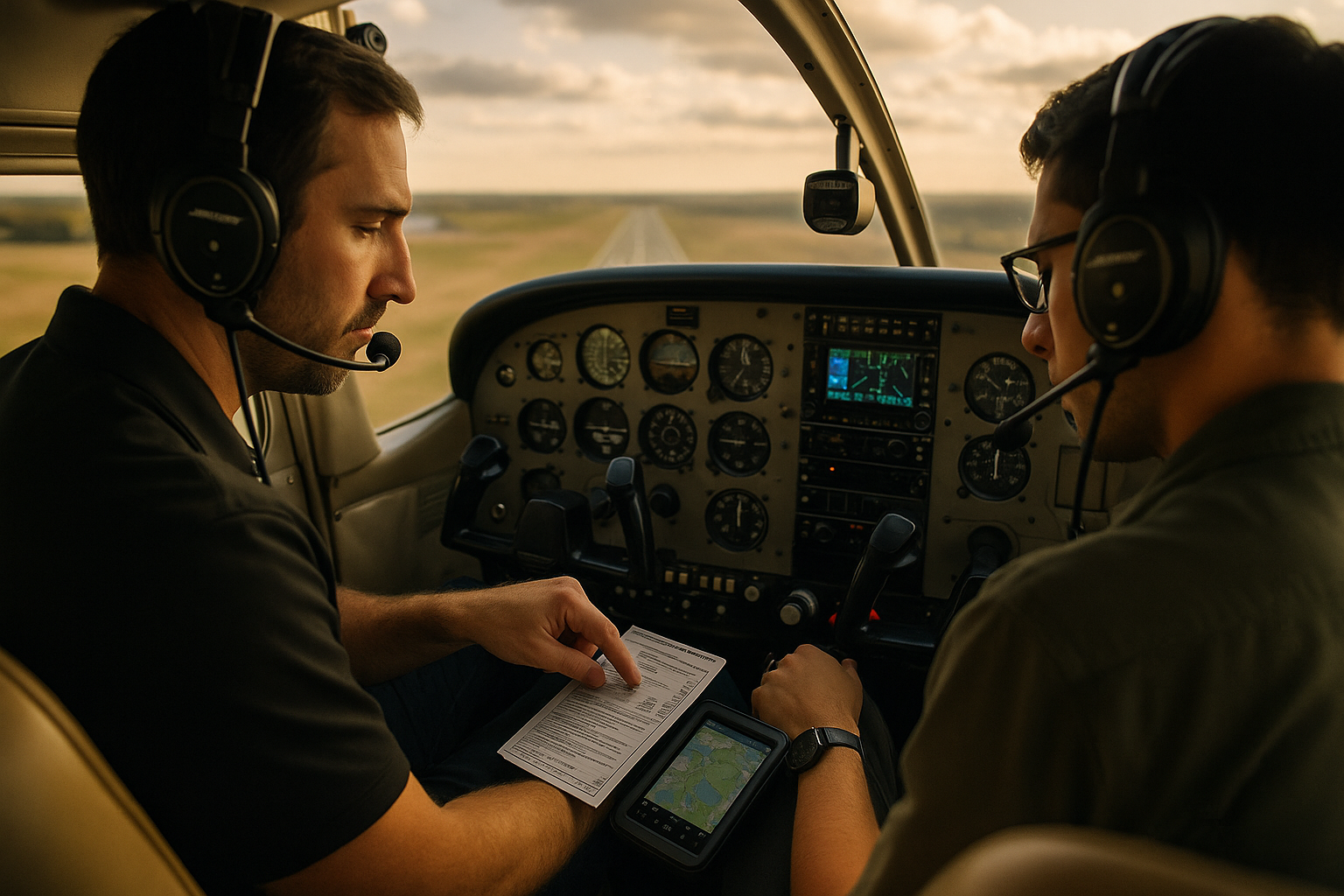
Aeronautical decision making is the mental process pilots use to choose actions before and during flight. Understanding the psychology behind those choices is essential for pilots, student pilots, flight instructors, and aviation professionals because human factors shape risk perception, information processing, and the choices that follow. This article focuses on practical psychological concepts that influence pilot judgment and shows how to apply them to real-world flying and training.
The practical value here is straightforward. Better awareness of how pilots think and decide improves safety margins, strengthens teaching methods, and supports more effective crew coordination. Read on to learn how attention, stress, heuristics, biases, and social dynamics affect decisions in the cockpit and how to translate psychological insight into concrete habits, training priorities, and in-flight actions.
Core ideas: What is aeronautical decision making?
Aeronautical decision making combines procedural knowledge, situational awareness, risk assessment, and judgment under uncertainty. It is not a single skill. It is a layered process where perception, memory, experience, and expectations interact. The psychology of decision making explores how mental shortcuts, emotional states, workload, and environment shape the choices pilots make.
At its simplest, a pilot’s decision flow moves from detecting cues, to evaluating options, to choosing and executing a plan, and finally to monitoring outcomes. Each step is vulnerable to cognitive limitations. Detecting cues depends on attention and sensory inputs. Evaluation depends on mental models and training. Choice often uses heuristics, or rules of thumb. Execution depends on skill and resources. Monitoring depends on fatigue, distraction, and feedback quality.
Why this matters in real-world aviation
Pilot decisions determine whether a flight remains within acceptable risk boundaries. Psychological factors have a direct influence on accident chains, procedural deviations, runway incidents, and operational errors. For instructors and operators, understanding these human factors helps design training that targets common judgment failures and builds resilient behaviors that reduce error likelihood.
Instructors see the outcomes of psychological patterns during training flights. For example, a student who has succeeded several times in marginal conditions may develop overconfidence. A professional pilot returning to single-pilot VFR after a period of multi-crew flying may have degraded scan patterns. Airline and corporate operators need to manage group dynamics and command authority. Maintenance teams and dispatchers also make decisions that affect flight safety, and their choices are shaped by similar psychological drivers.
How pilots should understand the psychology involved
Break psychological influences into practical categories: attention and perception, mental models and memory, heuristics and biases, workload and stress, emotion and motivation, and social dynamics. For each category, here is what matters in the cockpit.
Attention and perception
Attention is limited. Pilots cannot monitor every instrument, every outside cue, and every radio call simultaneously. Focus narrows under high workload, sometimes to the point of task fixation. That narrowing is natural, but dangerous if critical cues are missed. Perceptual errors can arise from poor scan patterns, lighting conditions, or ambiguous instrument indications. Maintaining a structured scan and using automation selectively helps preserve the information flow you need to make sound judgments.
Mental models and memory
Mental models are internal representations of how systems and situations work. They guide expectations and interpretations. When a situation fits an existing model, decision making is quick and often effective. Trouble starts when the situation violates the model. Pilots must recognize when a model no longer applies and be willing to update it. Memory limitations mean that checklists and written procedures remain critical safeguards when complex tasks exceed reliable recall.
Heuristics and biases
Heuristics are useful shortcuts like ‘‘fly the airplane first’’ or ‘‘land as soon as practicable.’' Biases are systematic errors that come with shortcuts. Examples include confirmation bias where pilots seek information that confirms an initial judgment, and optimism bias where pilots underestimate risk. Recognizing common biases and deliberately seeking disconfirming information reduces the chance of following a wrong solution path.
Workload, stress, and fatigue
Stress reshapes priorities. Under stress, pilots favor familiar tasks and familiar procedures. Performance on complex tasks deteriorates earlier than on simple tasks. Fatigue reduces vigilance and slows information processing. Time pressure shortens the window for analysis and increases the attractiveness of quick, but risky, fixes. Operationally, crews should manage workload by delegating tasks, using checklists, and maintaining realistic timelines.
Emotion and motivation
Emotions influence risk tolerance. Frustration can lead to aggressive decisions, while fear can cause freezing or indecision. Motivation to complete a flight—whether financial pressure, schedule commitments, or peer expectations—can bias risk assessment. Pilots should cultivate reflective awareness of their emotional state and use established mitigations such as conservative personal minimums and preflight risk assessment tools.
Social dynamics and authority
Crew interactions shape decisions. In a multi-crew environment, authority gradients can silence useful input from less senior crewmembers. In single-pilot operations, social expectations from passengers or company culture can distort judgment. Training that explicitly practices challenge and response, and phrasing for assertive communication, reduces the risks associated with poor crew resource management.
Common mistakes and misunderstandings
Several recurring themes appear in training and incident reviews. Understanding them helps instructors target weak points and pilots avoid common traps.
Overreliance on automation
Automation can reduce workload but invites complacency and skill decay. Pilots who rely on automation may miss subtle cues, misinterpret system behaviors, or be ill prepared to fly manually in abnormal situations. Regular manual flying practice and scenario-based training that includes automation failures help maintain essential manual skills and decision protocols.
Fixation and task saturation
Task fixation is a common error where a pilot focuses on a single problem to the exclusion of other priorities. This frequently occurs during malfunctions or unusual situations when pilots concentrate on troubleshooting and neglect basic airmanship such as maintaining attitude, airspeed, and safe altitude. Training should reinforce the priority structure: fly the aircraft, navigate, communicate, then troubleshoot.
Normalization of deviance
When crews repeatedly bypass procedures without immediate negative consequences, that behavior may become normalized. Over time, the crew accepts a higher level of risk as routine. Instructors and safety managers should look for patterns of tolerated deviation and address the underlying causes such as time pressure or ambiguous procedures.
Confirmation bias and premature closure
Pilots often make an early diagnosis of a problem and then unconsciously favor information that supports that diagnosis. This can lead to premature closure where alternative causes are not considered. A disciplined approach that explicitly lists alternative hypotheses and checks disconfirming evidence reduces this risk.
Underestimating environmental influences
Weather, terrain, and airport environment exert psychological pressure. For example, a deteriorating weather forecast may create time pressure that pushes pilots toward a continued approach rather than diversion. Recognize environmental drivers and establish clear personal and operational decision points that prompt diversion or cancellation.
Practical example: a realistic training scenario
Scenario: A single-pilot IFR cross-country in a piston twin. Mid-flight, the pilot notices a small oil pressure fluctuation followed by an amber caution light. The weather is forecast to deteriorate at the destination in two hours. The pilot is current and experienced on the route, the flight is on schedule, and there are a handful of alternates along the route.
How psychology matters: The pilot’s first task is to maintain aircraft control and stable flight parameters. The initial suspicion will likely match an oil system anomaly. Confirmation bias might lead the pilot to focus on oil pressure checks and ignore other system cues. Time pressure from the impending weather can bias the pilot toward continuing to the planned destination. If the pilot has a personal or commercial incentive to complete the flight, that may further push against conservative decision making.
Actionable steps for the pilot: stabilize the aircraft, cross-check instruments for secondary evidence, and fly toward the nearest suitable airport if instability persists. Explicitly consider alternatives: continue to destination with plan to land on first sign of degradation, divert to a closer airport for inspection, or declare abnormal and request priority handling. Use the available communications to consult maintenance or company operations if applicable. If uncertainty persists, prefer the option that preserves time and options, typically diverting earlier rather than later.
Training application: Use this scenario in a simulator or dual-simulated cockpit to practice recognition, information-gathering, and decision-making under evolving conditions. Debrief with an emphasis on cognitive traps encountered, particularly any tendencies toward task fixation or normalization of risk.
Best practices for pilots: translating psychology into habits
Psychological insight is only useful when converted into actions and habits. The following practical practices help pilots reduce cognitive error and improve decision quality.
- Preflight risk assessment: Use a written or electronic risk checklist that evaluates pilot fitness, weather, aircraft status, and operational pressures. A formal risk calculation reduces reliance on optimistic intuition.
- Set clear personal minimums: Define go/no-go and diversion criteria before flight. Personal minimums remove ambiguity and reduce in-flight pressure to accept higher risk.
- Practice manual flying: Regularly fly without automation to maintain basic handling skills and situational awareness.
- Use decision protocols: Adopt structured processes such as identify-options-evaluate-select-monitor. Structured thinking reduces cognitive load in time-pressured situations.
- Debrief and reflect: After flights, discuss decisions openly with instructors or peers, focusing on mental processes and bias rather than only technical outcomes.
- Manage fatigue and stress: Arrange rest and break routines and recognize when internal state degrades your judgment. Ground a flight or hand it over when you are not fit to decide.
- Train for edge cases: Scenario-based training that intentionally introduces conflicting cues prepares you to recognize and resolve ambiguity in real flights.
- Encourage assertive communication: In multi-crew or training settings, practice structured challenge and response so that concerns are surfaced regardless of rank.
Integrating psychology into training syllabi
Flight schools and instructors should design lessons that scaffold decision-making skills. Early training emphasizes procedural mastery and attitude control. As students progress, scenarios should add ambiguity, imperfect information, and competing priorities. Use realistic scenarios that force trade-offs, require diversion planning, and produce time pressure. Include explicit discussion of cognitive biases, attention management, and emotion regulation. Teach both declarative strategies and procedural habits so students can act correctly when cognition is strained.
For advanced students and professional pilots, recurrent training should include cross-disciplinary exercises that involve dispatchers, maintenance personnel, and even passengers. These exercises help pilots manage social and organizational pressures that influence decisions away from the flight deck.
Common training exercises to build resilient decision-making
Use guided scenarios, interrupted flows, and stress inoculation drills. Examples include simulated partial panel work while conducting a diversion, planned automation failure during a controlled approach, or time-pressured planning when faced with consecutive weather updates. After each exercise, debrief focusing on what cues were noticed, what assumptions guided choices, and what alternatives were considered but rejected.
Frequently Asked Questions
What is the difference between ADM and CRM?
Aeronautical decision making focuses on individual and team choices about aircraft operation, risk, and judgment. Crew resource management (CRM) emphasizes communication, leadership, and teamwork in multi-crew environments. Both overlap; ADM applies to all pilots, while CRM is specifically concerned with optimizing team performance.
How can I recognize when bias is affecting my judgment?
Look for signs such as premature conclusions, ignoring contradictory data, emotional reactions that push toward a single option, or an unwillingness to consider alternatives. Use deliberate cross-checks: ask what would disprove your current hypothesis and actively search for that information.
Can checklists fix decision-making errors?
Checklists are important but not a complete solution. They reduce memory load and ensure procedural consistency. Decision-quality also requires skill, situational awareness, and mindset. Combine checklists with scenario practice, explicit risk assessment, and reflection to reinforce good judgment.
How do I train to avoid task fixation?
Practice the priority of flying the airplane first in scenarios where a malfunction demands attention. Use training scenarios that force you to stabilize flight first, then allocate time to troubleshooting. Develop a habit of verbalizing priorities out loud when a task threatens to dominate your attention.
What role does company culture play in ADM?
Company culture sets implicit expectations about risk tolerance and operational discretion. Cultures that reward schedule adherence over safety or that tacitly encourage cutting corners increase the likelihood of poor decisions. Organizations should promote open communication about safety and protect individuals who make conservative operational choices.
Common mistakes or misunderstandings
It is common to misunderstand the role of psychology as purely academic. In reality, psychological concepts translate directly into operational risk. Another misunderstanding is believing that experience alone inoculates pilots against cognitive error. Experience helps but also creates patterns that can lead to entrenched biases. Finally, pilots sometimes assume that checklists and automation remove the need for training in judgment; they do not.
Key Takeaways
- Practical takeaway: Use structured decision protocols and written risk assessment to reduce reliance on intuition in critical situations.
- Safety takeaway: Preserve basic airmanship under stress by prioritizing flying the aircraft before troubleshooting.
- Training takeaway: Integrate psychological awareness, scenario-based ambiguity, and crew communication practice into recurrent training.
Improving aeronautical decision making requires more than awareness. It takes disciplined practices, recurrent scenario training, honest debriefs, and organizational support for conservative choices. Psychology informs how pilots interpret information and choose actions. When pilots and instructors apply psychological understanding to training design, operational procedures, and personal habits, decision-making becomes more reliable and aviation becomes safer.
Final recommendations for instructors and pilots
Instructors: incorporate biased-based debriefs where students identify what mental shortcuts they used and how those shortcuts helped or hurt outcomes. Emphasize reflective practice and create an environment where admitting uncertainty is acceptable.
Pilots: develop a compact personal risk checklist, practice manual flying under varying conditions, and adopt explicit diversion decision points. When operating with others, encourage clear, assertive communication and structured challenge to reduce authority gradient effects.
If you want to deepen your training curriculum, build scenario libraries that escalate in ambiguity and incorporate crew, maintenance, and dispatch roles so that decision-making becomes an integrated, organization-wide skill.