
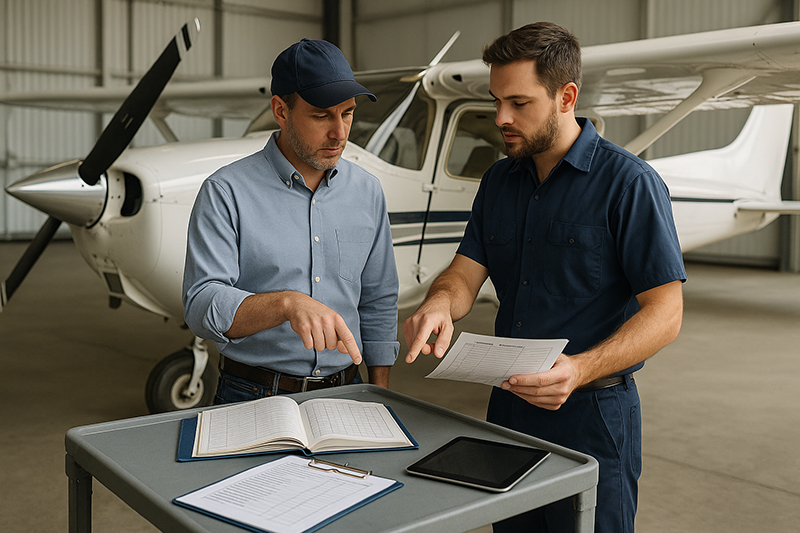
Aircraft ownership responsibilities begin long before the first flight after purchase. For pilots, flight instructors, and aviation professionals, owning an aircraft is not simply a financial decision or a convenience upgrade. It is an ongoing operational commitment that touches maintenance, records, airworthiness, insurance, training, dispatch decisions, and risk management every time the aircraft leaves the ramp.
Many pilots understand the freedom that comes with aircraft ownership: predictable access, familiar avionics, consistent aircraft handling, and the ability to tailor equipment to a mission. Fewer pilots fully appreciate how much ownership changes the pilot’s role. The aircraft owner becomes a manager of airworthiness, documentation, compliance, maintenance planning, operating costs, and safety culture. Even when professional mechanics, maintenance shops, aircraft managers, or flying clubs assist with those tasks, the owner still needs enough aviation knowledge to ask good questions and make sound decisions.
This article explains aircraft ownership responsibilities in practical aviation terms. It is written for pilots considering their first aircraft, current owners who want a better management system, instructors advising aircraft buyers, and aviation professionals who work around privately owned aircraft. The goal is not to turn ownership into a checklist. The goal is to help owners think like responsible aircraft operators.
What Aircraft Ownership Really Means
Owning an aircraft means accepting responsibility for the aircraft as an operating system, not just as a piece of equipment. The airframe, engine, propeller, avionics, instruments, emergency equipment, documents, inspections, limitations, and logbooks all matter. A well-owned aircraft is managed continuously, not just repaired when something breaks.
In everyday language, aircraft ownership includes three overlapping responsibilities. The first is legal and regulatory responsibility. The owner or operator must ensure the aircraft is maintained in an airworthy condition and that required inspections and applicable airworthiness directives are addressed. The second is operational responsibility. The aircraft must be suitable for the planned flight, properly equipped, and operated within its limitations. The third is stewardship. A good owner preserves the aircraft’s condition, records, value, and safety margin over time.
These responsibilities do not require every aircraft owner to become a mechanic, lawyer, or insurance specialist. They do require a working understanding of how aircraft are maintained and operated. Owners should know what questions to ask, what records to review, when to stop a flight, and when to involve qualified maintenance personnel.
The best aircraft owners develop a professional rhythm. They know when the annual inspection is due, how many hours remain before recurring maintenance items, whether an avionics database is current for the intended operation, what equipment is required for the flight, and whether a squawk is a minor inconvenience or an airworthiness concern. They do not wait until the day of departure to discover an expired inspection, missing logbook entry, or unresolved discrepancy.
Core Aircraft Ownership Responsibilities
The most visible part of aircraft ownership is paying for the aircraft, fuel, hangar, insurance, and maintenance. The more important part is managing the aircraft so that it remains legal, safe, and mission-ready. That management role includes several major areas.
Airworthiness and inspections
Airworthiness is more than the aircraft looking clean and starting normally. In practical terms, an aircraft must conform to its approved design and be in a condition for safe operation. For a typical general aviation owner, that means paying attention to inspections, maintenance records, required equipment, placards, limitations, and unresolved discrepancies.
Owners should understand the difference between a scheduled inspection and a condition check before flight. An aircraft may have a current annual inspection and still be unairworthy on a particular day if an essential system is inoperative, a required document is missing, or a defect affects safe operation. Conversely, not every minor cosmetic issue makes an aircraft unairworthy, but the decision must be made carefully and, when appropriate, with qualified maintenance input.
For many privately operated aircraft, the annual inspection is the most familiar recurring inspection. Aircraft used for certain operations may require additional inspections, such as 100-hour inspections when applicable. Transponder, altimeter, static system, emergency locator transmitter, and other equipment checks may apply depending on the aircraft equipment and type of operation. Owners should not rely on memory alone. A maintenance tracking method, even a simple spreadsheet reviewed with a mechanic, can prevent expensive and unsafe surprises.
Maintenance planning and discrepancy management
Maintenance planning is one of the clearest differences between renting and owning. A renter reports a squawk and walks away. An owner must decide how the discrepancy will be evaluated, whether the aircraft can be flown, who will perform the work, how parts will be obtained, and how the repair will be documented.
Good owners distinguish between deferring a convenience item and ignoring a safety issue. A worn seat latch, intermittent alternator indication, rough magneto check, unreliable fuel quantity indication, or unusual engine vibration deserves prompt attention. These are not merely maintenance costs. They are operational signals. The airplane is communicating through symptoms, and the owner must listen.
Owners should also plan for preventive maintenance and predictable wear. Tires, brakes, batteries, hoses, spark plugs, vacuum system components, alternators, starters, and avionics cooling issues often become more manageable when tracked early. Waiting until a component fails away from home may create higher costs, schedule disruption, and pressure to make poor go or no-go decisions.
Aircraft records and logbooks
Aircraft records are part of the aircraft’s safety system and value. Logbooks tell the story of the airframe, engine, propeller, installed equipment, inspections, repairs, alterations, and compliance history. Incomplete or poorly managed records can complicate maintenance, reduce resale value, delay insurance claims, and create uncertainty about airworthiness.
Owners should know where the records are, how they are protected, and what they contain. Original logbooks are often irreplaceable. Many owners keep digital copies as a backup while preserving the originals in a secure location. When maintenance is performed, the owner should verify that the entry is present, legible, and associated with the correct aircraft, engine, propeller, or component record.
Major repairs, major alterations, supplemental type certificate installations, field approvals, equipment removals, and avionics upgrades can all affect the aircraft’s future operation. A pilot may love a new panel, but the paperwork must be as complete as the installation. The next mechanic, buyer, insurance adjuster, or instructor may need to understand exactly what was installed and how it is approved for use.
Operating limitations and required documents
Every aircraft owner should be familiar with the aircraft’s operating limitations. These may be found in the aircraft flight manual, pilot’s operating handbook, placards, supplements, weight and balance data, and equipment documentation. The owner does not need to memorize every page, but must know where the information is and how it applies to real flights.
A common ownership gap is failing to update practical operating knowledge after a modification. Installing new avionics, adding speed modifications, changing interior equipment, replacing an engine, or updating the weight and balance can change how the aircraft is planned and operated. A panel upgrade, for example, may improve situational awareness, but it also introduces new procedures, failure modes, software updates, and training needs.
Required aircraft documents and records should be reviewed periodically. Pilots often learn document acronyms in training, but ownership requires a more durable habit. The aircraft’s registration, airworthiness certificate, operating limitations, and weight and balance information must be treated as operationally important, not as paperwork buried in a side pocket and forgotten.
Why This Matters in Real-World Aviation
Aircraft ownership responsibilities matter because small administrative failures can become real operational hazards. An expired inspection can ground a planned trip. An unresolved maintenance discrepancy can develop into an in-flight abnormality. A missing logbook entry can delay a sale or create uncertainty about whether a component was legally returned to service. Poor maintenance planning can pressure a pilot into continuing a flight with a problem that should have been addressed earlier.
Real-world aviation rarely fails in neat categories. Maintenance, weather, pilot proficiency, schedule pressure, passenger expectations, and cost all interact. Aircraft ownership places the owner closer to that interaction. The owner may be the person deciding whether to depart with a marginal battery, whether to postpone a family trip for a rough-running engine, or whether to spend money on training after installing unfamiliar avionics.
Ownership also changes pilot psychology. A pilot who rents may reject an aircraft because another airplane is available. An owner may feel pressure to use the aircraft because money has already been spent on fuel, insurance, hangar rent, and maintenance. That pressure can be subtle. It may sound like, “It flew fine last time,” “The shop looked at it recently,” or “We really need to get home today.” Responsible ownership means recognizing those pressures before they influence aeronautical decision-making.
For instructors, ownership affects training quality. A student training in a family-owned aircraft may benefit from consistency, but only if the aircraft is maintained, equipped, and documented appropriately for the training environment. A technically advanced aircraft may provide excellent learning opportunities, but it may also demand structured avionics training, clear procedures, and disciplined cockpit management.
How Pilots Should Understand Ownership in Practical Terms
The simplest way to understand aircraft ownership is to think of the owner as the aircraft’s safety manager. That does not mean the owner performs every task personally. It means the owner ensures that qualified people are involved, records are maintained, deadlines are tracked, and operational decisions are made with safety and compliance in mind.
A practical owner knows the aircraft’s maintenance status before planning a mission. That includes inspection currency, known discrepancies, deferred items, recurring service intervals, and any limitations that affect the planned operation. For example, an aircraft that is suitable for a local day VFR flight may not be properly equipped, inspected, or current for an IFR cross-country. The difference is not just pilot certification. It is aircraft capability and equipment status.
Owners should also understand the relationship between maintenance and flight planning. A tire showing cord, a weak battery, low brake effectiveness, contaminated fuel, or an intermittent radio is not a separate maintenance issue once the pilot is planning a flight. It becomes part of the go or no-go decision. The aircraft’s condition, the environment, and the mission must be considered together.
Financial planning is also a safety issue. Aircraft maintenance can be expensive, and unexpected costs are normal in ownership. If an owner budgets only for fuel and hangar rent, the temptation to delay needed maintenance increases. A realistic reserve for inspections, engine work, avionics service, consumables, and unscheduled repairs helps protect decision-making. The safest maintenance decision is easier when the owner planned for the possibility that the aircraft would need attention.
Training belongs in the ownership discussion as well. A pilot who buys a faster, heavier, more complex, high-performance, tailwheel, or technically advanced aircraft should plan for transition training appropriate to the aircraft and the pilot’s experience. Insurance may require specific training, but the deeper reason is proficiency. Aircraft ownership should increase familiarity, not complacency.
Maintenance Relationships and Owner Communication
A strong relationship with an appropriately certificated mechanic or maintenance organization is one of the most valuable assets an aircraft owner can develop. The best maintenance relationships are built on clear communication, realistic expectations, and respect for the mechanic’s responsibility to perform work properly.
Owners should describe discrepancies with operational detail. “The engine ran rough” is less useful than “During run-up at 1,700 RPM, the left magneto drop was higher than normal and the engine felt rough until power was reduced.” Details such as phase of flight, power setting, temperature, fuel tank selected, instrument indications, sound, vibration, odor, and whether the issue was repeatable can help maintenance personnel troubleshoot efficiently.
Owners should also avoid pressuring mechanics for convenience. Asking whether an aircraft can be made available safely is reasonable. Pressing for a quick signoff because passengers are waiting is not. Maintenance decisions must not be shaped by travel plans. A responsible owner treats a grounded aircraft as an inconvenience, not an injustice.
At the same time, owners should be active participants. Ask what was found, what was corrected, what remains to be monitored, and whether any operational limitations or follow-up inspections apply. Maintenance conversations are not a substitute for logbook entries, but they help the owner understand the aircraft more deeply.
Insurance, Risk Management, and Operational Discipline
Aircraft insurance is part of ownership risk management, but it is not a safety program by itself. Insurance may address financial exposure after a loss, while operational discipline helps prevent the loss from occurring. Owners should understand policy requirements, approved pilots, training provisions, storage expectations, deductibles, exclusions, and claims reporting procedures. Because policy language varies, owners should review specific insurance questions with a qualified aviation insurance professional.
Operational discipline includes setting personal and aircraft-specific minimums. A newly minted instrument pilot in a newly purchased complex aircraft should not use the same weather minimums as an experienced pilot in a familiar aircraft. A pilot returning to flying after a long break should account for rust, avionics familiarity, and aircraft performance. A well-equipped airplane does not automatically make a pilot current, proficient, or ready for demanding conditions.
Owners should also manage who flies the aircraft. If other pilots are authorized to use it, the owner needs a clear system for checkout requirements, scheduling, fuel procedures, squawk reporting, cleaning, documents, and post-flight security. Shared ownership and partnerships can work well, but only when expectations are written clearly and followed consistently.
Common Mistakes or Misunderstandings
One common mistake is assuming that a current annual inspection means the aircraft is automatically ready for every flight. An annual inspection is important, but it does not eliminate the pilot’s responsibility to evaluate the aircraft before operation. Tires wear, batteries weaken, avionics fail, and discrepancies can appear between inspections.
Another misunderstanding is treating aircraft ownership as a purely personal matter. Even a privately owned airplane operates in a regulated aviation environment. Maintenance entries, airworthiness directives, equipment requirements, pilot qualifications, and operating limitations are not optional details. Owners who approach the aircraft casually may create avoidable risk for themselves, passengers, mechanics, instructors, and future buyers.
Some owners underestimate the importance of logbooks. Missing records can create uncertainty about inspections, modifications, component times, or compliance history. This does not always mean the aircraft is unsafe, but it does mean more research may be required. Good record stewardship prevents confusion later.
A fourth mistake is upgrading equipment without upgrading training. Modern avionics can reduce workload when used correctly, but they can increase workload when the pilot is programming under pressure, troubleshooting automation, or trying to interpret unfamiliar alerts. Owners should build training time into any major avionics change.
Cost-driven delay is another risk. Aircraft owners naturally want to control expenses, but delaying maintenance for financial reasons can create larger expenses and greater safety risk later. A small oil leak, intermittent charging problem, or stiff control may be an early warning. The decision to investigate promptly is part of responsible ownership.
Finally, many owners do not fully brief passengers about privately owned aircraft operations. Passengers may not understand why a trip is delayed for weather, why a minor mechanical concern cancels a flight, or why baggage must be reduced. Owner-pilots should set expectations early. Safety decisions are easier when passengers understand that schedule flexibility is part of general aviation.
Practical Example
Consider a private pilot who recently purchased a four-seat single-engine airplane for regional business and family travel. The aircraft has a current annual inspection, an upgraded GPS navigator, and a clean interior. The pilot plans a 350-nautical-mile IFR trip with two passengers the following week.
During preflight planning, the owner notices several details. The IFR database subscription is not current. The transponder check date needs verification. The weight and balance paperwork reflects the avionics installation, but the pilot has not practiced loading scenarios since the upgrade. The engine log shows a recurring note about slightly elevated oil consumption, and the previous owner mentioned that one fuel gauge reads lower than actual in level cruise.
None of these details automatically means the trip is impossible, but each one requires attention. The owner contacts the avionics shop about the database, reviews inspection status with the mechanic, calculates weight and balance with actual passenger and baggage weights, and discusses the oil consumption note before departure. The pilot also schedules an instructor flight to practice IFR procedures using the upgraded avionics before carrying passengers in instrument conditions.
The result is a more professional ownership decision. Instead of treating the airplane as “mine, therefore ready,” the pilot treats it as an aircraft that must be verified for a specific mission. The flight may still proceed, but it proceeds with better information, fewer assumptions, and a stronger safety margin.
Best Practices for Aircraft Owners
Responsible ownership is built on consistent habits. The habits do not need to be complicated, but they must be reliable. A well-managed aircraft usually has an owner who tracks dates, listens to maintenance concerns, preserves records, trains regularly, and resists schedule pressure.
A practical ownership system should include a maintenance tracking method. Some owners use professional tracking software, while others use a spreadsheet reviewed regularly with a mechanic. The system should capture inspection due dates, recurring equipment checks, component time considerations, known discrepancies, scheduled maintenance, and upcoming service needs. The exact tool matters less than the discipline of keeping it current.
Owners should conduct periodic aircraft status reviews separate from normal preflight inspections. A monthly or pre-trip review can catch issues that a walkaround will not, such as expiring inspections, missing documents, insurance changes, database status, or unresolved logbook questions. This habit is especially valuable before long cross-country flights, instrument operations, mountain flying, night trips, or flights with passengers.
Owners should also keep a clean squawk process. A squawk is a reported aircraft discrepancy or abnormal condition. It should include enough detail to help troubleshooting, and it should remain visible until resolved. A verbal comment made in passing is easy to forget. A written discrepancy record makes follow-up more reliable.
- Review aircraft documents, inspection status, and known discrepancies before committing to a mission.
- Protect original logbooks and maintain digital backups when possible.
- Use qualified maintenance personnel and avoid pressuring them for convenience.
- Budget realistically for scheduled and unscheduled maintenance.
- Plan transition and recurrent training when aircraft equipment, performance, or mission profile changes.
- Set personal minimums that reflect both pilot proficiency and aircraft status.
The best practice is not perfection. It is disciplined awareness. Aircraft ownership becomes safer when the owner knows the aircraft’s condition, respects limitations, and makes decisions early enough to avoid pressure.
Ownership Partnerships, Clubs, and Shared Aircraft
Aircraft ownership is often shared through partnerships, flying clubs, limited liability structures, or informal arrangements. Shared ownership can reduce cost and increase utilization, but it also adds communication challenges. The aircraft still needs one coherent management system.
Shared owners should agree on maintenance decision authority, scheduling rules, fuel policies, cleaning expectations, approved pilots, training requirements, cost sharing, upgrades, and discrepancy reporting. Without clear expectations, small frustrations can become safety problems. For example, if one partner notices a weak brake and forgets to record it, another partner may discover the issue during a short-field landing. A simple reporting system can prevent that.
Partnerships also need a plan for major expenses. Engine overhaul, avionics repair, paint, corrosion treatment, propeller work, and unexpected discrepancies can strain relationships if owners did not agree in advance how costs will be handled. A written agreement reviewed by appropriate professionals is often a wise investment.
Flying clubs and training organizations should pay particular attention to standardization. Multiple pilots operating the same aircraft can produce inconsistent cockpit setups, fuel levels, squawk descriptions, and checklist habits. Standard procedures help protect the aircraft and improve safety for everyone who uses it.
Pre-Purchase Responsibility: Ownership Begins Before Closing
One of the most important aircraft ownership responsibilities begins before the aircraft is purchased. A pre-purchase evaluation by qualified maintenance personnel can identify concerns that may affect safety, cost, insurability, and suitability. The scope of a pre-purchase evaluation can vary, so buyers should clearly define what will be inspected and documented.
Aircraft buyers should consider the aircraft’s mission fit. A beautiful airplane is not necessarily the right airplane. Useful load, runway performance, maintenance support, avionics capability, fuel burn, hangar availability, parts availability, insurance requirements, and pilot experience all matter. Buying more airplane than the pilot is prepared to manage can create training, financial, and operational pressure.
Records review is equally important. Buyers should look for continuity in airframe, engine, and propeller logs, evidence of inspections, major repairs or alterations, damage history if known, equipment approvals, and recurring maintenance themes. If anything is unclear, the buyer should ask before closing. Ownership is much easier when uncertainty is resolved before money changes hands.
Frequently Asked Questions
What is the most important responsibility of an aircraft owner?
The most important responsibility is ensuring the aircraft is maintained in an airworthy condition and operated appropriately for each flight. In practical terms, that means tracking inspections, resolving discrepancies, preserving records, following limitations, and involving qualified maintenance personnel when needed.
Does a current annual inspection mean the aircraft is airworthy today?
Not necessarily. A current annual inspection is essential for many operations, but the aircraft must also be in a condition for safe operation on the day of flight. New discrepancies, inoperative equipment, missing documents, or damage discovered during preflight may affect airworthiness.
Should aircraft owners keep digital copies of logbooks?
Digital copies are a smart backup, but they should not be treated casually. Original records should be protected, and copies should be kept secure and current. Good record management supports maintenance decisions, resale value, and continuity if original records are damaged or lost.
How much maintenance knowledge should a pilot-owner have?
A pilot-owner does not need to be a mechanic, but should understand the aircraft’s systems, inspection status, common failure modes, operating limitations, and discrepancy reporting process. The owner should know when a concern requires maintenance evaluation before further flight.
Is aircraft ownership a good idea for student pilots?
It can be, but only with careful planning. A student-owned aircraft must be suitable for training, properly insured, maintained, and supported by an instructor familiar with the aircraft. The student should also have help managing maintenance, records, scheduling, and operating costs.
What should owners do after installing new avionics?
Owners should verify that the installation records and aircraft documents are complete, update weight and balance information when applicable, learn the new equipment thoroughly, and complete practical training before relying on the avionics in demanding conditions.
Key Takeaways
- Aircraft ownership responsibilities include airworthiness, maintenance planning, records, operating limitations, insurance awareness, and pilot proficiency.
- A current inspection does not replace disciplined preflight judgment, discrepancy management, or mission-specific aircraft status review.
- Responsible owners use qualified maintenance support, preserve accurate records, budget for unscheduled repairs, and make conservative decisions before schedule pressure builds.