
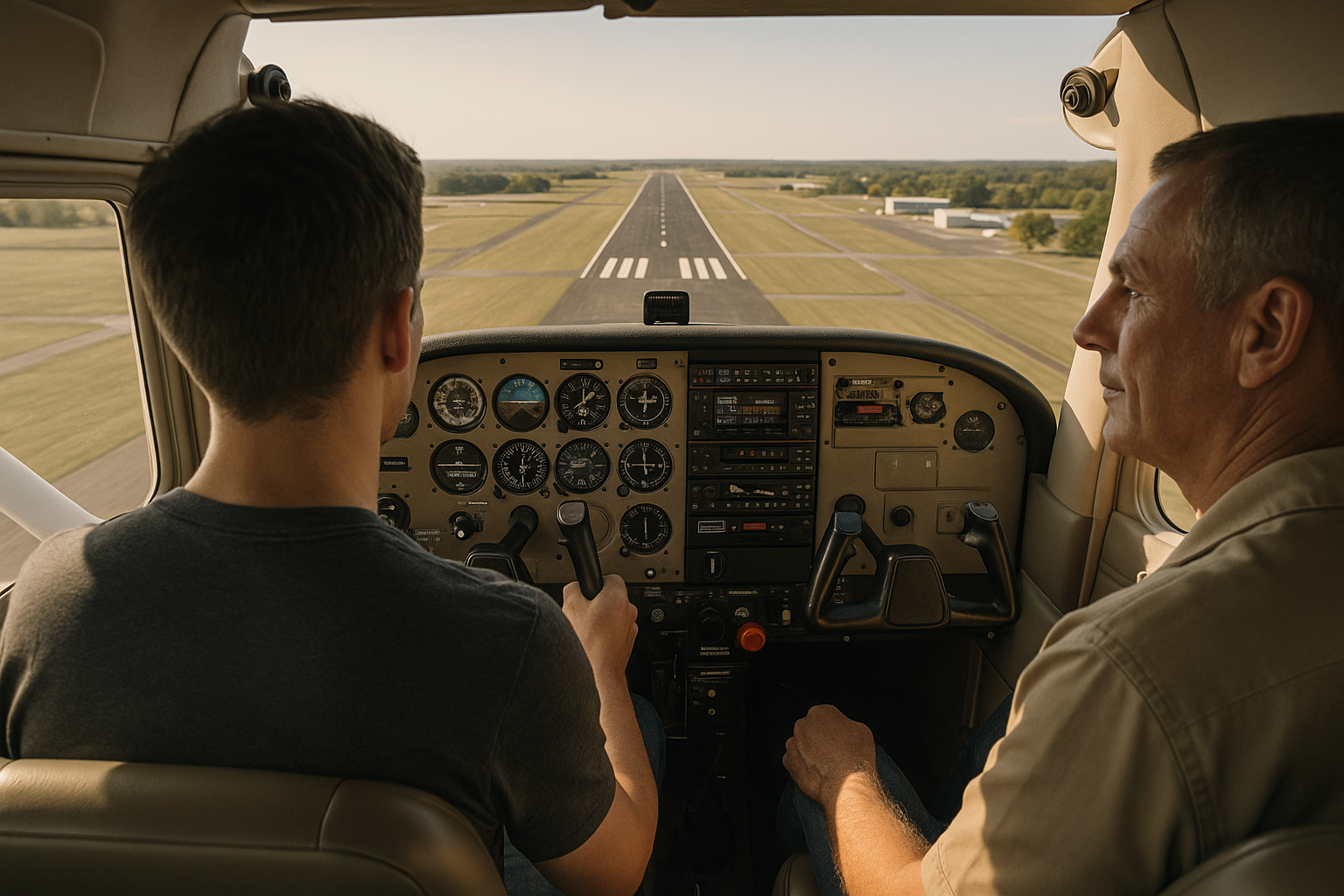
Aircraft systems have a direct impact on landing performance, handling, and safety. For student pilots, flight instructors, and any pilot working to improve touchdown consistency, understanding how systems interact with aerodynamics and pilot technique is essential. This guide focuses on practical, operational knowledge you can apply in the cockpit to produce safer, more predictable landings.
Read on to learn the aircraft systems that matter most at and near the runway, what each system does in practical terms, how failures or misuses change the landing profile, and the training habits that build correct instincts. The primary keyword, aircraft systems, appears early because systems knowledge translates directly into better landings.
Clear Main Section
When we talk about aircraft systems for better landings, we mean the mechanical, electrical, and aerodynamic components that change airplane attitude, lift, drag, and energy during approach, flare, and rollout. The most relevant systems include flaps and high-lift devices, lift and drag control (speed and power management), trim, landing gear and brakes, steering and anti-skid systems, flight controls and cables, avionics and glidepath guidance, and key sensors such as the pitot-static system and angle of attack indications.
Understanding each system requires two perspectives. First, know what the system does physically: how it changes lift, drag, control forces, or ground handling. Second, know how the system affects pilot decisions: when to deploy it, what to expect after deployment, and how to recognize a system fault that requires a change in technique or a go-around.
Why This Matters in Real-World Aviation
Landings are where energy management, precise control, and system reliability converge. Training environments often isolate maneuvering, but a real flight can combine gusty winds, partial system failures, or unfamiliar automation behavior. When pilots understand system responses, they can make timely decisions and avoid common landing hazards such as floating long, hard landings, runway excursions, or landing with insufficient energy.
From a safety perspective, many incidents near the runway are the result of poor energy management or misinterpreting a system's state. For example, using excessive flap on a short final in gusty conditions can reduce the margin for wind-induced sink and lead to a late touchdown or a bounce. Likewise, failing to detect an inoperative flap or sticky gear can force last-second configuration changes that increase workload and risk. Training that links systems knowledge with approach technique reduces these risks.
How Pilots Should Understand This Topic
Approach and landing are phases of flight where the aircraft is intentionally slowed and configured to transfer energy into lift and drag in planned ways. Systems alter that transfer. Treat each system as a lever on energy and control. When you change flaps, you change lift and drag. When you change trim, you change control forces and pitch stability. When you apply brakes, you change ground deceleration and directional control. When automation provides glidepath guidance, you adjust your energy to match a commanded path and be aware of the automation limits.
Use mental models: flaps increase lift while adding drag; trim stores a pitch force so you can fly hands-off at a target attitude; landing gear increases drag and modifies aircraft sink behavior. Combine those models with performance knowledge from the pilot operating handbook or POH for your aircraft, and practice in training to internalize the feel and timing of each system.
Systems That Directly Affect Landings
Below are the systems that most directly influence landing outcome, with practical explanations that connect system behavior to pilot technique and decision-making.
Flaps and High-Lift Devices
Flaps change the wing camber and sometimes wing area to increase lift at lower speeds while usually increasing drag. Practical effects on landing: lower approach speed for a given glidepath, steeper approach angle without increasing speed, and reduced stall margin if used correctly. However, each flap setting alters the pitch attitude and may change the required trim. If flaps are extended too late or retract unexpectedly, expect a sudden sink or pitch change and be ready to add power or conduct a go-around.
Trim
Trim takes control forces off the pilot by setting an aerodynamic force that holds a desired pitch or roll. On final and during flare, correct trim reduces the need for continuous backpressure or control inputs and helps you fly a consistent approach attitude. Untrimmed conditions increase workload and make precise pitch control during flare more difficult, which can cause high sink rates or float.
Powerplant and Propeller Controls
Throttle and propeller settings control thrust and engine response. In piston singles, a small power change on short final affects sink rate and airspeed quickly. In turboprops or jets, spool delays and propeller pitch changes affect the timing and magnitude of thrust. Pilots must know the expected engine response for the aircraft they fly. Use power as the primary energy-management tool; when encountering a surprise sink, add power smoothly and transition to a go-around if stabilization cannot be regained.
Landing Gear and Ground Handling Systems
Landing gear changes aircraft drag and alters the pitch and sink behavior if extended late. A gear that fails to extend necessitates a different landing technique and a possible diversion. On rollout, brakes, parking brake systems, anti-skid, and nose-wheel steering determine directional control. Familiarize yourself with the feel and stopping distances for brake settings and anti-skid engagement in your aircraft; practice directional control in training scenarios where runway surface or contamination changes braking effectiveness.
Brakes and Anti-Skid
Effective braking depends on tire friction and anti-skid systems preventing wheel lockup. For aircraft with anti-skid, braking aggressively is safer on wet or icy surfaces because the system modulates brake pressure to maintain traction. For aircraft without anti-skid, pilots should use progressive braking and avoid sustained hard braking that could cause tire bursts or directional instability.
Avionics, Glidepath Guidance, and Flight Director
Modern avionics provide vertical guidance tools that help stabilize approach energy and path. An ILS or vertical guidance from GPS approaches reduces the need to guess the glidepath but may mask underlying energy issues if pilots rely solely on automation without monitoring airspeed and configuration. Know the annunciations and limits of your flight director, autopilot, and approach mode. If the automation behaves unexpectedly on final, be prepared to disconnect and hand-fly the approach while maintaining a stabilized approach profile or go around.
Pitot-Static System and Sensors
Pitot-static errors or blocked sensors can give misleading airspeed and altitude indications. Misleading airspeed during approach often results in unstable approaches and incorrect power settings. Confirm pitot heat use in icing conditions and monitor backups such as the attitude indicator and outside visual cues. If instruments are unreliable on final, prioritize aircraft control, consider a missed approach, and use basic flying skills to maintain a safe profile.
Angle of Attack (AoA) Systems and Stall Warnings
AoA indicators and stall warning systems give direct information about the wing's loading relative to stall. When available, angle of attack is one of the most useful tools for approach and landing because it shows the wing margin regardless of weight or configuration. If an AoA indicator is not installed, use a combination of airspeed, pitch attitude, and pitch control feel to maintain margin above stall. If the stall warning activates on final, apply maximum safe power and execute a go-around promptly.
Anti-Ice and Deice Systems
Ice contamination changes wing aerodynamic characteristics and increases stall speed. Anti-ice systems often affect engine performance and pitot temperature, so activating them may change power settings and airspeed behavior. In icing conditions, consider higher final approach speed and longer approach distances, and plan for increased landing distances. If ice is suspected on final, prioritize safety by executing a missed approach and selecting an alternate with better conditions if necessary.
Common Mistakes or Misunderstandings
Many pilots make predictable errors when system knowledge is incomplete. Below are common misunderstandings that increase risk during landings.
Assuming all aircraft behave the same. Each model has different flap effectiveness, stall characteristics, and control feel. Relying on familiarity with one aircraft can be dangerous when transitioning to another.
Relying solely on automation. Pilots can become complacent when using flight directors or autopilots. Automation can mask energy trends or give the illusion of stability while airspeed decays. Always cross-check airspeed, vertical speed, and visual cues.
Delaying configuration changes. Extending flaps, lowering landing gear, and trimming too late on final increases workload and reduces time to correct surprises. Practice timely configuration as specified in the POH and in training scenarios.
Ignoring trim. Not trimming to the expected approach attitude forces continuous control inputs and increases the chance of a poor flare. Teach students to set trim early and fine-tune during final.
Mishandling engine-out or power loss scenarios. Pilots sometimes try to salvage a landing rather than execute a missed approach after losing expected thrust on final. A controlled go-around is often safer than continuing an unstable approach.
Practical Example
Scenario: Student pilot flying a light single-engine airplane on a gusty spring afternoon. Final approach shows a 10-knot gust spread with crosswind. Student plans a normal landing with flaps full, but during final the airplane balloons and floats down the runway, then bounces on touchdown.
Systems analysis: The key systems involved are flaps, trim, powerplant, and pilot inputs. Full flaps reduce the approach speed but increase sensitivity to gusts. If approach speed is reduced to the POH flap speed without adding gust allowance, the gust induced sink and lift changes increase float risk. The student likely allowed the airspeed to decay near stall margin and did not add adequate gust correction speed. Improper trim or delayed pitch control during flare amplified the bounce.
Training intervention: Instructor demonstrates adding a gust correction (commonly half the gust spread added to flap reference speed), holding a slightly higher approach speed, and using reduced flap if the gust spread is large. Use of trim to maintain attitude and a firm but smooth flare reduces float. Emphasize that if the touchdown is not assured, execute a go-around immediately and set a different configuration or approach technique.
Operational takeaway: Systems decisions are not isolated. A flap selection that lowers speed increases sensitivity to gusts. The pilot must integrate environmental conditions and system configuration into the approach plan and be ready to abandon the landing if the approach becomes unstable.
Best Practices for Pilots
Below are practical habits and decision rules that improve landing outcomes across different aircraft and conditions.
- Know your POH/AFM. Understand recommended approach speeds, flap schedules, and landing distances and how systems affect those numbers.
- Stabilized approach philosophy. Establish target configuration, airspeed, descent rate, and power well before the runway and commit to a go-around if the approach becomes unstable.
- Use trim proactively. Set trim early to the recommended final approach setting and make small adjustments, not large corrections, during final and flare.
- Add gust correction speed when appropriate. Consider wind gusts, turbulence, or wind shear when choosing approach speed and flap setting.
- Practice system failures in simulators or with instructors. Train for partial flap, landing gear issues, and avionics failures so responses feel practiced not improvised.
- Monitor sensors and backup instruments. Cross-check airspeed with groundspeed trends, pitch attitude, and visual references, especially if pitot-static or AoA indications are suspect.
- Plan the go-around. A timely missed approach is a safety tool; brief and practice go-around procedures so they become an automatic, confident response.
Frequently Asked Questions
How do flaps affect touchdown point and float?
Flaps increase lift and usually increase drag. More flap typically reduces approach speed and allows a steeper approach, which can shorten the touchdown point. However, at lower speeds the aircraft is more affected by wind gusts and pilot control inputs, which can increase float, especially in turbulent or gusty conditions. Adjust flap selection based on aircraft type, runway length, and wind conditions.
When should I execute a go-around related to system issues?
Execute a go-around if the aircraft is not stabilized by the altitude or distance specified in your SOPs or POH, if a required system fails (for example, a landing gear or flap failure that materially affects approach performance), or if an instrument or sensor gives unreliable or confusing information on final. If your workload is too high to maintain safe control and landing configuration, go around.
Can I rely on angle of attack indicators to improve my landings?
Angle of attack indicators are valuable because they show wing loading regardless of weight or configuration, making them especially useful for consistent approaches. When available, use AoA as a primary reference for flare and approach margin. If not installed, maintain a safe margin using published approach speeds plus adjustments for conditions and pilot technique.
How do anti-skid systems change braking technique after touchdown?
Anti-skid systems allow more aggressive braking without wheel lockup because they modulate brake pressure when wheels approach skid. For aircraft equipped with anti-skid, apply firm and steady pedal pressure while allowing the system to cycle. For aircraft without anti-skid, use progressive and controlled braking to avoid locking wheels and losing directional control.
What should I do if I notice inconsistent airspeed on final?
If indicated airspeed fluctuates unexpectedly, confirm pitot heat status and cross-check with attitude, power setting, and ground references. If airspeed indications are unreliable and the aircraft is not stabilized, execute a missed approach and troubleshoot once clear of the runway environment. In IMC or marginal weather, prioritize aircraft control and consider diverting if instruments remain unreliable.
Key Takeaways
- Practical takeaway: Learn how each system changes lift, drag, and control forces so you can plan approach configuration and energy management before final.
- Safety takeaway: Use a stabilized approach philosophy and be prepared to execute a prompt go-around if systems or energy state deviate from the plan.
- Training and decision-making takeaway: Practice system failures and gusty-weather landings in training so system responses and recovery actions become automatic under stress.
Understanding aircraft systems is not academic. It is a pilot skill set that directly improves the predictability and safety of every landing. Integrate system knowledge with good judgment, consistent briefings, and practiced go-around discipline to reduce risk and increase proficiency.
Final Notes for Instructors and Students
Instructors should frame landing lessons around systems interactions rather than isolated maneuvers. Create scenarios that combine wind, configuration changes, and minor system malfunctions so students learn to prioritize aircraft control, configuration, and timely go-arounds. For students, focus practice on consistent approach speeds, timely configuration, and using trim to reduce unnecessary control forces. Regular debriefs that connect system behavior to pilot inputs make the learning durable.