
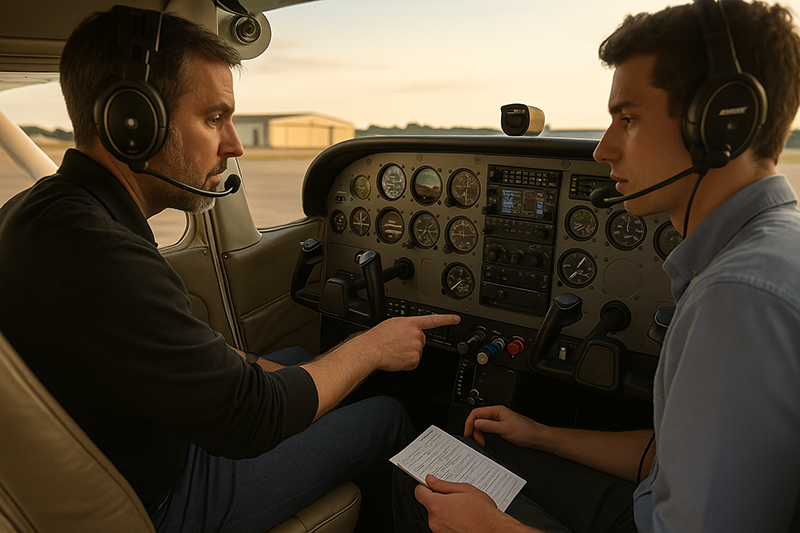
Aircraft systems knowledge is one of the most practical forms of aviation knowledge a pilot can develop. It is not just something to memorize for an oral exam or recite during a flight review. It is the working understanding that helps a pilot recognize what the airplane is telling them, manage abnormal situations with less confusion, and make better decisions before, during, and after a flight.
For student pilots, systems knowledge turns cockpit switches, gauges, annunciators, circuit breakers, and checklists into a connected picture. For certificated pilots and flight instructors, it supports risk management, scenario-based training, and more disciplined aircraft operation. For aviation professionals, it is part of the bridge between procedures and judgment. The goal is not to become an aircraft mechanic unless that is your profession. The goal is to understand the aircraft well enough to operate it intelligently, ask better questions, and avoid being surprised by predictable system behavior.
What Aircraft Systems Knowledge Really Means
Aircraft systems knowledge is the pilot’s practical understanding of how the major systems in an aircraft function, interact, fail, and recover. It includes the fuel system, electrical system, powerplant, lubrication, cooling, ignition, flight controls, landing gear, brakes, pitot-static instruments, vacuum or pressure systems where installed, avionics, autopilot, environmental systems, and emergency equipment. In more advanced aircraft, it may also include pressurization, anti-ice or deice equipment, hydraulic systems, oxygen systems, turbine engine systems, and integrated flight deck architecture.
The word “practical” matters. A pilot does not need to draw every wire in the airplane from memory, but a pilot should understand what happens when an alternator fails, which instruments or avionics depend on electrical power, how long continued operation may be reasonable based on the aircraft documents and conditions, and what checklist actions should be taken. A pilot does not need to rebuild a fuel selector, but should know the fuel feed arrangement, usable fuel considerations, tank selection procedures, fuel venting concept, and symptoms that may point toward fuel starvation, contamination, or mismanagement.
Good systems knowledge answers several operational questions. What is normal? What is abnormal? What indications confirm the condition? What immediate actions are appropriate? What actions should be avoided? What information is found in the aircraft flight manual or pilot’s operating handbook? What maintenance follow-up may be needed? These questions are more useful in the cockpit than memorized descriptions that never connect to decisions.
Systems knowledge also helps pilots understand the limits of cockpit information. A gauge, warning light, display message, or annunciator is not the system itself. It is an indication of system status, and it may have its own power source, sensor limitations, or failure modes. A pilot who understands this is less likely to chase one indication while ignoring the broader aircraft condition.
Why Systems Knowledge Matters in Real-World Aviation
In real-world flying, aircraft systems rarely matter at convenient times. A rough-running engine may appear during climb when workload is already high. A low-voltage indication may appear at night, in weather, or in busy airspace. A landing gear indication may become questionable when the pilot is already managing traffic, altitude, and communications. Systems knowledge does not eliminate stress, but it reduces the unknowns.
Many pilots first encounter systems as an academic subject. They learn enough to pass a knowledge test, complete a practical test, or answer an instructor’s questions. That is a necessary beginning, but it can create a false sense of mastery if the pilot never connects the knowledge to cockpit use. Knowing that an alternator charges the battery is helpful. Understanding how an alternator failure changes the flight plan, electrical load, radio strategy, navigation options, and landing decision is far more valuable.
Systems knowledge also strengthens preflight planning. A pilot who understands the fuel system is more likely to think carefully about fuel quantity, fuel quality, tank selection, and fuel balance. A pilot who understands pitot-static instruments is more likely to protect the pitot tube and static ports during preflight and interpret conflicting airspeed, altitude, or vertical speed indications more thoughtfully. A pilot who understands the electrical system is more likely to notice an abnormal ammeter, loadmeter, voltage indication, or annunciator before it becomes a larger problem.
Flight instructors benefit because systems knowledge supports better scenario-based training. Instead of asking a student to merely name the parts of an electrical system, an instructor can ask what happens after takeoff if the low-voltage light illuminates, which equipment might be preserved, what the checklist says, and what landing options make sense. This kind of instruction builds both knowledge and judgment.
Aircraft owners and operators also benefit. Better pilot understanding can lead to more accurate maintenance write-ups. “Radio failed” is less useful than a careful description of when the failure occurred, what other electrical equipment was operating, whether a circuit breaker was found open, what voltage or load indication was observed, and whether the problem repeated after reset procedures allowed by the aircraft guidance. Pilots should not troubleshoot beyond their role or authority, but clear observations help maintenance personnel diagnose problems more effectively.
How Pilots Should Build a Working Systems Model
The most useful way to learn aircraft systems is to build a mental model. A mental model is a simplified but accurate picture of how the system normally works and how it behaves when something changes. It does not replace the aircraft flight manual, pilot’s operating handbook, checklist, training, or maintenance guidance. It helps the pilot use those resources more intelligently.
Start with energy flow. Many aircraft systems are easier to understand if you ask where the energy, fluid, pressure, air, or signal starts, where it goes, what controls it, and what indication shows the result. In a simple electrical system, energy may come from the battery and alternator, pass through switches, buses, circuit protection, and wiring, then power radios, lights, instruments, flaps, trim, or other equipment depending on the aircraft. In a fuel system, fuel moves from tanks through vents, lines, selectors, strainers, pumps, and metering components before reaching the engine. In a pitot-static system, air pressure is sensed and delivered to instruments or air data equipment.
Next, identify the pilot controls. These are the switches, levers, selectors, circuit breakers, knobs, and touchscreen selections that allow the pilot to configure or manage the system. A pilot should know which controls are used routinely, which are used only in abnormal or emergency situations, and which should not be manipulated casually. For example, fuel selectors demand deliberate handling. Electrical switches may affect multiple pieces of equipment. Autopilot mode selections can create unexpected aircraft behavior if the pilot does not understand what the system is commanding.
Then identify the indications. These may include gauges, warning lights, annunciators, engine monitor data, trim indications, gear lights, flap position indicators, fuel quantity indications, pressure indications, and messages on an integrated display. Pilots should understand what the indication normally looks like, what trend matters, and what cross-check is available. A single abnormal indication may be meaningful, but a pattern of indications is often more useful.
Finally, identify failure consequences. Instead of trying to memorize every possible failure, focus on operational questions. If this component fails, what do I lose? What still works? Is the failure immediate, gradual, or intermittent? Is there a backup? Does the checklist require load shedding, alternate procedures, a diversion, or a landing as soon as practical? What aircraft-specific limitations or procedures apply?
This approach is especially useful when transitioning between aircraft. Two airplanes may look similar but have different fuel selector arrangements, electrical bus architecture, flap systems, autopilot behavior, or engine instrumentation. A pilot who asks system-based questions during transition training is less likely to carry assumptions from one aircraft into another.
The Major Aircraft Systems Pilots Should Understand
Every aircraft has its own design, but most pilots benefit from a structured review of the same broad system families. The level of detail should match the aircraft, mission, and certificate or training goal. A primary training airplane requires one depth of knowledge. A high-performance piston, complex aircraft, turboprop, jet, or technically advanced aircraft requires more.
Fuel System
The fuel system deserves disciplined study because fuel problems are often unforgiving. Pilots should understand tank capacity, usable fuel, fuel grade, venting, drains, fuel selector positions, boost pump use if installed, fuel pressure indications if available, and any aircraft-specific procedures for takeoff, landing, cruise, switching tanks, and abnormal operations. Fuel quantity indications should be treated as part of a broader fuel management plan, not as the only source of truth. Time, known fuel burn from approved or aircraft-specific performance information, visual verification where possible, and conservative planning all matter.
Fuel system knowledge also includes understanding contamination risks. Water, sediment, incorrect fuel, or improper fueling can create serious hazards. A thoughtful preflight fuel inspection is not a ritual. It is a systems check that confirms the aircraft has the correct fuel in the expected quantity and condition for the planned operation.
Electrical System
Electrical systems range from simple to highly integrated. At a basic level, pilots should understand the roles of the battery, alternator or generator, voltage regulator, buses, circuit protection, master switch, avionics switch if installed, and electrically powered equipment. In more advanced aircraft, essential buses, standby batteries, backup alternators, and load-shedding logic may be present.
The practical question is not simply “does the airplane have electricity?” The better question is “what equipment depends on which source, and what is my plan if that source is degraded?” A low-voltage indication, alternator failure, or electrical smoke event can affect communications, navigation, lighting, flaps, trim, landing gear, engine instruments, or flight displays depending on the aircraft. The correct response is aircraft-specific, so pilots should study the checklist and know where to find supporting guidance quickly.
Powerplant, Ignition, Cooling, and Lubrication
Engine knowledge should go beyond naming cylinders and spark plugs. Pilots should understand the basic principles of engine air, fuel, ignition, compression, exhaust, oil, and cooling. In piston aircraft, this includes mixture control where applicable, carburetor heat or alternate air where installed, fuel injection concepts where applicable, magneto operation, oil pressure and temperature, cylinder head temperature or exhaust gas temperature if displayed, and the meaning of roughness, power loss, abnormal temperatures, or abnormal pressures.
The key cockpit skill is trend recognition. A developing oil pressure problem, abnormal temperature trend, rough engine, or unexplained power change requires disciplined attention. Pilots should use the checklist, avoid improvised actions that conflict with aircraft guidance, and make conservative landing decisions when engine reliability is in doubt.
Pitot-Static and Flight Instruments
The pitot-static system supplies pressure information used by airspeed, altitude, and vertical speed indications, or by air data computers in some aircraft. Pilots should understand the difference between pitot pressure, static pressure, and how blocked sources may affect instrument indications. They should also understand the aircraft’s alternate static source procedure if one is installed.
This knowledge matters because unreliable airspeed or altitude information can quickly increase workload. The pilot must maintain aircraft control using reliable references, compare available instruments, and follow aircraft-specific procedures. In instrument flying, pitot-static understanding is especially important because the pilot may have fewer outside visual cues.
Flight Controls, Trim, Flaps, and Landing Gear
Flight control systems may be cable, pushrod, hydraulic, electric, fly-by-wire, or some combination depending on the aircraft. In typical training aircraft, pilots should understand how primary controls move, how trim reduces control forces, how flaps change lift and drag, and what abnormal indications or control feel may suggest. In complex aircraft, landing gear systems require particular attention, including normal operation, indications, warning systems, emergency extension, and limitations published for the aircraft.
Good pilots do not treat gear and flap systems as switch-only devices. They verify indications, respect speeds and procedures, and understand how configuration changes affect aircraft performance, trim, workload, and go-around planning.
Avionics, Autopilot, and Integrated Flight Decks
Modern avionics can reduce workload when pilots understand them, but increase confusion when pilots rely on them without a clear mode awareness habit. Pilots should know what the autopilot is controlling, what mode is active, what mode is armed, what data source is being used, and how to disconnect the system promptly. Integrated displays require knowledge of power sources, reversionary modes if available, sensor inputs, and backup instruments.
Automation knowledge is part of systems knowledge. The autopilot is not a substitute for hand-flying skill or aircraft control. It is a system that must be monitored. A pilot who cannot explain what the automation is doing should be ready to reduce automation level, disconnect if appropriate, and fly the aircraft manually.
Common Mistakes and Misunderstandings
One common mistake is memorizing system descriptions without connecting them to cockpit action. A pilot may be able to describe an alternator but still fail to notice a discharge indication or delay a diversion after electrical power becomes uncertain. Knowledge becomes useful only when it changes how the pilot monitors, decides, and acts.
Another mistake is assuming similar aircraft behave the same way. Even within the same aircraft family, equipment options, modifications, avionics upgrades, supplemental systems, and model-year differences can change procedures and indications. A fuel selector, flap system, autopilot mode controller, circuit breaker layout, or emergency checklist may not match the aircraft a pilot flew last month. Transition training should include aircraft-specific systems review, not just airspeeds and normal procedures.
A third misunderstanding is treating checklists as a substitute for understanding. Checklists are essential, but they work best when the pilot understands the reason behind the steps. In a time-sensitive situation, a pilot must first maintain aircraft control, manage the flight path, and then use the appropriate procedure. Understanding the system helps the pilot avoid distractions, recognize whether the checklist is producing the expected result, and decide what to do if the condition does not resolve.
Pilots also sometimes over-troubleshoot. Curiosity is valuable on the ground, but in flight the priority is safety. Repeatedly resetting circuit breakers, cycling switches without understanding the consequences, or experimenting with system configurations can create additional risk. Aircraft-specific guidance, training, and conservative decision-making should guide any troubleshooting in the cockpit.
Another risk is ignoring small abnormalities because the aircraft still appears to be flying normally. A fluctuating electrical indication, intermittent fuel pressure issue, unusual odor, abnormal engine temperature trend, or inconsistent gear indication may be an early warning. Not every abnormality is an emergency, but every abnormality deserves attention, a plan, and often maintenance review before further flight.
Finally, many pilots underestimate how systems knowledge supports communication. A clear report to air traffic control, a flight instructor, maintenance technician, or another crewmember depends on accurate observation. Saying “I have a low-voltage indication and am reducing electrical load while returning to land” is more useful than saying “something electrical is wrong.” Good systems vocabulary helps the pilot get help faster and communicate risk more precisely.
Practical Example: A Low-Voltage Indication After Departure
Consider a pilot departing a non-towered airport in a single-engine training aircraft on a day VFR cross-country. Shortly after leveling at cruise altitude, the pilot notices a low-voltage annunciation and an ammeter or load indication that does not look normal. The radios still work, the engine continues to run normally, and the weather is good. A pilot with weak systems knowledge may be tempted to continue because the airplane “feels fine.”
A pilot with better systems knowledge thinks differently. The engine may continue running because, in many piston training aircraft, magnetos provide ignition independent of the main electrical system. However, that does not mean the electrical problem is harmless. Radios, transponder, navigation equipment, lights, electrically driven flaps or trim if installed, some engine instruments, and digital displays may depend on electrical power. If the alternator is not charging, the battery may become the only remaining electrical source, and its useful duration depends on aircraft condition, battery state, equipment load, and aircraft-specific information.
The pilot’s first task is still to fly the airplane. Then the pilot confirms the indication, uses the approved checklist, reduces nonessential electrical load if directed or appropriate for the aircraft, and considers communication and navigation needs. Because the flight is day VFR with good weather, the pilot may have several safe options, but continuing deep into the cross-country is usually harder to justify than returning or diverting to a suitable airport. The pilot should also consider airspace requirements, the need to communicate before losing radio capability, and whether the destination creates additional electrical dependency.
This example shows why systems knowledge matters. The pilot does not need to diagnose the exact failed component in flight. The pilot does need to understand the operational consequence: electrical generating capability may be degraded, and the safe plan should preserve options rather than wait for the situation to become more urgent.
How Flight Instructors Can Teach Systems More Effectively
Flight instructors can improve systems learning by moving beyond the “name the component” style of questioning. A better teaching method connects each system to a flight phase and a decision. For example, instead of asking only how the fuel system works, ask the learner to plan a flight and explain tank selection, fuel verification, fuel burn monitoring, and what indications would cause concern. Instead of asking only what the pitot tube does, present a scenario with an airspeed indication that does not match pitch, power, and performance.
Scenario-based systems instruction should be realistic, not theatrical. The point is not to overwhelm the learner with multiple failures. The point is to help the learner build habits: notice, verify, maintain control, use the checklist, communicate when needed, and make a conservative plan. Instructors should also emphasize that aircraft-specific documents control the details. General knowledge helps the pilot ask the right questions, but the aircraft’s approved information and installed equipment determine the correct procedure.
Ground lessons are more effective when paired with the actual airplane. Walk around the aircraft and trace system components that are visible. Identify fuel vents, drains, antennas, static ports, pitot tube, brake lines where visible, inspection panels, oil access, cowl openings, control surfaces, hinges, and trim tabs. In the cockpit, point to switches, circuit breakers, annunciators, gauges, and alternate controls. When a student sees how the preflight inspection connects to cockpit indications, systems knowledge becomes tangible.
Instructors should also teach humility. A pilot may understand the operational meaning of an abnormality without knowing the maintenance cause. That distinction matters. The pilot’s role is to operate safely, follow procedures, document observations, and seek qualified maintenance help when needed. Guessing at mechanical causes can distract from the more important question: what is the safest course of action now?
Best Practices for Developing Better Aircraft Systems Knowledge
The best systems learners are consistent. They do not wait until a checkride, recurrent training event, or equipment failure to study the airplane. They make systems review part of normal proficiency.
Begin with the aircraft flight manual or pilot’s operating handbook for the specific aircraft you fly. Study the systems descriptions, limitations, normal procedures, abnormal and emergency procedures, performance information, placards, and equipment supplements that apply to installed avionics or optional systems. Then sit in the airplane and connect the written information to the cockpit layout. A systems diagram is useful only if you can relate it to real switches, indications, and procedures.
Use “what if” questions regularly. What if the alternator fails at night? What if the fuel pressure fluctuates after switching tanks? What if the landing gear indication is not normal? What if the autopilot begins doing something unexpected? What if the airspeed indication disagrees with pitch and power? These questions should lead back to the checklist, aircraft guidance, and conservative operational planning.
Develop a habit of trend monitoring. Systems often provide hints before they demand action. Engine temperatures, oil pressure, electrical load, fuel quantity trends, fuel pressure, vacuum or pressure indications where installed, and annunciator behavior should be part of the pilot’s instrument scan at appropriate times. A pilot does not need to stare at systems indications, but should know what normal looks like.
Keep aircraft-specific notes if allowed by your training program or operating environment. Many pilots benefit from a personal study sheet that summarizes system architecture, key limitations, abnormal indications, and checklist locations. This should not replace the approved checklist or aircraft documents. It is a learning tool that helps organize the pilot’s understanding.
Review maintenance discrepancies and squawks thoughtfully. If a system had an issue, ask what the pilot observed, what maintenance found, and what operational lesson can be learned. Respect the boundary between pilot knowledge and maintenance authority, but use real aircraft history as a learning opportunity.
Finally, practice reducing workload. If you fly technologically advanced aircraft, know how to simplify the automation. If you fly with an autopilot, practice recognizing active modes and disconnecting when appropriate. If you fly with integrated avionics, understand the backup plan for display, sensor, or electrical failures. The best systems knowledge supports calm simplification when the cockpit becomes complex.
Using Systems Knowledge for Better Preflight Planning
A strong preflight is not just a walkaround. It is a systems evaluation before the airplane leaves the ground. The pilot is confirming that the aircraft is properly configured, fueled, serviced, and apparently airworthy for the intended operation. Systems knowledge gives meaning to each observation.
During exterior inspection, the pilot should understand why fuel caps, vents, drains, static ports, pitot tubes, tires, brakes, control surfaces, hinges, antennas, lights, oil quantity, and visible fasteners matter. The purpose is not to perform maintenance. The purpose is to detect conditions that may affect safe operation or require maintenance attention.
During cockpit setup, the pilot should verify required documents, equipment status, switch positions, circuit breaker condition, avionics database status where relevant to the operation, fuel selector position, trim setting, flap configuration, and annunciator tests according to the aircraft checklist. A pilot who understands the systems is less likely to rush through these steps as a memorized ritual.
Preflight planning should also account for system dependency. A night flight depends heavily on electrical reliability and lighting. An instrument flight depends on navigation, communication, pitot-static integrity, flight instruments, and backup capability. A hot day departure may require careful engine temperature management and performance planning. A cold weather operation may require attention to preheating, battery performance, frost, oil temperature, and aircraft-specific procedures. The more demanding the flight, the more important systems knowledge becomes.
Systems Knowledge and Aeronautical Decision-Making
Aircraft systems knowledge strengthens aeronautical decision-making because it improves the pilot’s ability to recognize changing risk. Decision-making is not only about weather, fuel, and personal minimums. It also includes the aircraft’s mechanical and equipment status.
A pilot who understands systems can better decide when to continue, divert, return, delay, or cancel. For example, an inoperative landing light may have different operational implications depending on day or night, airport lighting, aircraft requirements, and the planned environment. A questionable alternator indication may be more concerning before a night instrument flight than before a short day VFR reposition flight, although both require proper evaluation. A minor avionics issue may be manageable in familiar visual conditions but unacceptable for a more complex IFR operation.
This is where practical judgment matters. A system abnormality should be evaluated in context: aircraft type, weather, terrain, airspace, pilot proficiency, available airports, daylight, maintenance availability, and the specific equipment required for the flight. The safest pilots avoid forcing a flight to fit the airplane’s condition. They adjust the plan to match the aircraft’s actual capability.
Frequently Asked Questions
How much aircraft systems knowledge does a private pilot need?
A private pilot should understand the systems of the aircraft they fly well enough to conduct a meaningful preflight, operate normal procedures correctly, recognize abnormal indications, use the appropriate checklist, and make conservative decisions. The required depth depends on the aircraft’s complexity and installed equipment. A pilot flying a simple trainer needs a different level of detail than a pilot flying a complex, high-performance, or technically advanced aircraft.
Is aircraft systems knowledge the same as maintenance knowledge?
No. Pilots and maintenance technicians have different roles. A pilot needs operational knowledge: how the system works from the cockpit perspective, what normal and abnormal indications look like, and what procedures apply. Maintenance knowledge involves inspection, repair, approval for return to service, and technical troubleshooting that generally belongs to appropriately qualified maintenance personnel.
What is the best way to study aircraft systems for a checkride?
Start with the specific aircraft’s flight manual or pilot’s operating handbook, then connect each system to cockpit controls, indications, limitations, and emergency procedures. Practice explaining systems in plain language and answering scenario questions. A good answer should show that you understand not only what the component is, but how it affects safe operation.
Why do pilots forget systems knowledge after training?
Systems knowledge fades when it is learned only for a test and not used in regular flying. Pilots retain it better when they review aircraft documents, discuss realistic scenarios, monitor system trends during flight, and connect preflight observations to cockpit indications. Recurrent training is also an opportunity to refresh knowledge before it is needed under pressure.
How should pilots handle system abnormalities in flight?
The priorities are to maintain aircraft control, manage the flight path, use the appropriate checklist, communicate when needed, and make a safe plan. Pilots should avoid improvising beyond their training or the aircraft guidance. If the system abnormality creates uncertainty about continued safe flight, a conservative diversion or landing decision is often the better risk management choice.
Do modern avionics reduce the need for systems knowledge?
No. Modern avionics can improve situational awareness, but they also add system dependencies, modes, sensors, databases, and failure considerations. Pilots using integrated flight decks or autopilots should understand power sources, mode awareness, backup instruments, and how to simplify or disconnect automation when appropriate.
Key Takeaways
- Aircraft systems knowledge is most valuable when it connects components, cockpit indications, checklists, and real pilot decisions.
- Understanding system dependencies helps pilots recognize abnormal conditions earlier and preserve safer options in flight.
- Aircraft-specific documents, transition training, and recurrent scenario practice are essential because similar aircraft may have different systems and procedures.