
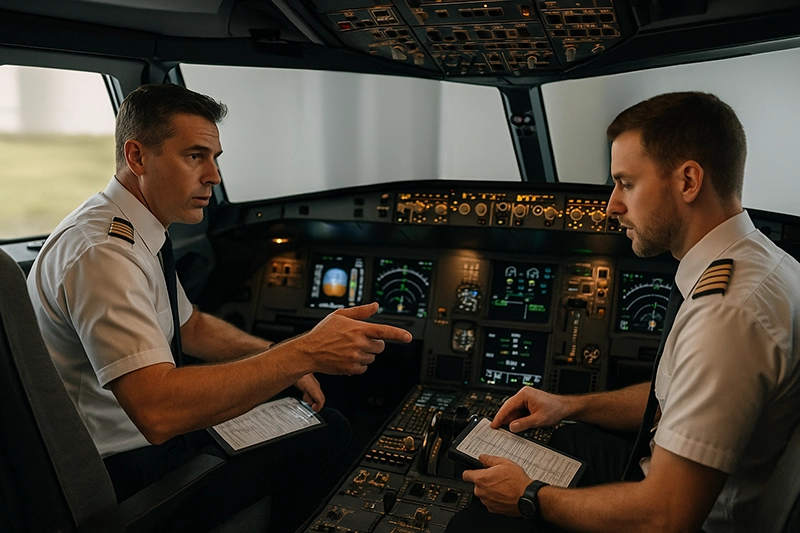
Pilot candidates and line pilots often ask a practical question: how do airline training programs evaluate pilots? Whether you are a newly hired first officer, a captain seeking upgrade, or an instructor designing a syllabus, understanding how airlines measure competency helps you prioritize the right skills and prepare effectively for simulator checks, line checks, and recurrent training.
This article explains the common methods airlines use to evaluate pilots, what trainers look for beyond stick-and-rudder skills, and how evaluation practices relate to safety, decision-making, and real-world operations. The aim is to give pilots, student pilots, instructors, and aviation professionals a clear, practical view of evaluation objectives and what successful performance looks like in an airline environment.
Main ways airline training programs evaluate pilots
Airline training programs combine several assessment methods to form a holistic picture of a pilot's competence. These methods typically include simulator-based assessments, ground knowledge checks, line checks, crew resource management evaluations, and continuous monitoring during normal operations. Each method targets different competencies: technical handling, procedural compliance, judgment, communication, and threat and error management.
Simulator assessments are the backbone of training evaluations because they recreate rare, high-risk, and system-failure scenarios safely. During an initial or transition course, instructors will observe aircraft control, systems knowledge, adherence to standard operating procedures, and crew coordination. Recurrent simulator sessions focus on maintaining proficiency with abnormal procedures, manual flying under degraded conditions, and maintaining judgement under pressure.
Ground knowledge checks and oral exams ensure pilots understand system logic, company SOPs, performance calculations, and operational limitations relevant to their aircraft and routes. Line checks and observed line operations place formal evaluation in the actual operational environment, often assessing the pilot's ability to apply training in routine and non-routine situations while managing time pressures, ATC interactions, and operational complexity.
Crew Resource Management, or CRM, evaluation is woven through simulator and line assessments. Instructors watch for effective communication, workload distribution, assertiveness from the non-flying pilot, use of briefings, and the ability to manage interruptions and distractions. Increasingly, programs assess Threat and Error Management, TEM, which focuses on identifying, mitigating, and recovering from operational threats and errors before they develop into unsafe outcomes.
Why this matters in real-world aviation
Evaluation in airline training is not an academic exercise. It directly affects safety, operational reliability, and the airline's ability to deliver scheduled services. Well-designed evaluations identify competence gaps before pilots fly revenue flights, reduce the risk of mishandled abnormal events, and ensure consistent application of SOPs across crews.
For pilots, knowing how evaluations work helps in prioritizing training time. Technical proficiency matters, but how you apply procedures, manage interruptions, and communicate with your crewmate often determines the outcome of an event. In modern multi-crew operations, a technically flawless approach that lacks coordination or sound decision-making still poses risk. Evaluations aim to capture both technical and non-technical performance.
From a training-manager perspective, evaluation data feed into continuous improvement. Patterns of errors, recurrent misunderstandings about systems, and common CRM weaknesses guide modifications to syllabi, scenario design, and instructor development. A robust evaluation program thus becomes a feedback loop that lifts safety margins across the operation.
How pilots should interpret evaluation criteria
Pilots preparing for airline evaluation should understand three things: what is being measured, why it matters, and how performance is judged. Evaluators look for correct actions, timely decision-making, clear communication, and adherence to SOPs. They also judge whether a pilot applies sound risk management and whether they recover appropriately from deviations.
Technical skills include aircraft control, energy management, use of automation, checklist discipline, and systems troubleshooting. Non-technical skills include briefing discipline, clear and timely callouts, assertiveness where needed, and the ability to prioritize tasks under time pressure. Evaluators typically score both observable actions and the outcomes those actions produce; a correct outcome achieved by unsafe methods may still be debriefed critically.
Remember that consistency matters more than perfection. Evaluators expect pilots to use the airline's prescribed processes reliably. A pilot who follows SOPs, communicates clearly, and makes conservative, well-documented decisions typically scores better than a pilot who sometimes improvises successfully but otherwise shows variable behavior.
Assessment methods and what they evaluate
Simulator assessments
Full flight simulators let instructors introduce system failures, adverse weather, and high workload without putting the aircraft at risk. Evaluators look for procedural memory under stress, appropriate use of automation, manual flying technique when needed, and effective CRM. Scenario design often layers several concurrent threats to challenge the crew's prioritization and error recovery skills.
Line checks and observed line operations
Line checks bring evaluation into the operational environment. Observers assess how a pilot performs in a normal operating day, including briefings, dispatch decisions, fuel management, time-pressure decisions, and interactions with ground and cabin crew. Line checks reveal how training translates into practice and whether pilots sustain safe, efficient behavior over a sequence of flights.
Ground oral and knowledge checks
Ground assessments verify understanding of aircraft systems, limitations, performance planning, and company procedures. They are also where some subtle deficiencies surface, such as shallow system knowledge or poor preflight planning routines. Clear, practical knowledge is essential because it supports correct decisions in abnormal situations.
Behavioral and CRM evaluations
Behavioral markers are observable actions tied to CRM standards, such as effective briefing, speaking up when safety concerns arise, and demonstrating leadership under stress. Evaluators note whether the non-flying pilot challenges the commander appropriately and whether the commander accepts input constructively. CRM evaluations are less about finding fault and more about ensuring the crew functions as a resilient team.
Data-driven monitoring
Many airlines use flight data monitoring, line operations quality assurance, and reporting systems to identify trends. While these systems are not always direct pass/fail evaluations, they provide objective insight into handling of flight parameters, SOP deviations, and potential hazards. Pilots may be evaluated based on patterns identified in these systems, supplemented by simulator or line checks.
What evaluators focus on during a session
During any evaluation, instructors observe several core areas simultaneously. These include aircraft handling, systems management, procedural discipline, decision-making, communication, and threat and error management. Evaluators form judgments from a combination of performance indicators rather than a single mistake.
Practical examples of focus include the quality of preflight briefings, the timing and clarity of callouts, the priority given to aviate-navigate-communicate when faced with an emergency, and whether pilots use available resources instead of relying solely on individual effort. Evaluators also look at whether pilots learn from mistakes during debriefs and adjust behavior accordingly.
Common mistakes and misunderstandings
Pilots often misinterpret evaluation criteria in ways that harm performance. A common misunderstanding is treating simulator sessions as adversarial tests to be 'beaten' rather than realistic training opportunities. This mindset can lead to over-controlling, poor communication, or attempts to shortcut procedures.
Another frequent mistake is failing to prioritize tasks under pressure. For example, pilots may focus on debugging a system while neglecting basic aircraft control or energy management. Evaluators penalize such errors because a fix that leaves the aircraft unstable is not acceptable.
Misunderstanding CRM expectations is also common. Some pilots believe CRM is only about politeness; in reality, it is a structured set of behaviors for managing workload, information flow, and decision-making. Failing to assert safety concerns, hesitating to make necessary callouts, or not using briefings effectively are typical CRM weaknesses flagged during evaluation.
Practical example: transition training for a narrowbody type rating
Imagine a first officer has completed type rating academics and arrives for transition training on a popular narrowbody jet. The program includes systems training, procedure drills, simulator sessions, and an initial line indoctrination. Evaluators use simulator scenarios to test electrical and bleed-air failures, engine malfunctions, and approach go-arounds under instrument meteorological conditions.
During a simulator session, an electrical bus failure is introduced while the crew is on approach. The pilot flying focuses on maintaining stable approach path and airspeed while the pilot monitoring follows the abnormal checklist and communicates with ATC. Evaluators observe whether the crew executes the memory items correctly, uses appropriate checklists, communicates the situation clearly, and returns the aircraft to a stable configuration or calls for a missed approach if criteria are not met.
If the pilot flying diverts attention to troubleshooting and allows the approach to become unstable, the scenario becomes a debrief focal point. Evaluators will discuss decision-making: was the missed approach called early enough, were the memory items performed promptly, and did the crew maintain airmanship while managing systems? The debrief is where corrective learning happens, and a pilot's ability to accept feedback and demonstrate improvement often weighs heavily in final judgment.
Best practices for pilots preparing for airline evaluations
Preparation for airline evaluation is both technical and behavioral. Technical preparation includes thorough systems study, routine practice of abnormal procedures, and simulator time focused on manual handling skills. Behavioral preparation emphasizes briefing habits, communication clarity, and decision-making frameworks.
Develop a pre-brief routine that covers roles, anticipated threats on the route, and when the non-flying pilot should intervene. Practice concise callouts and standard phraseology. In the simulator, rehearse time-critical memory items until they become automatic so you can focus on higher-order tasks when degraded systems demand attention.
On the day of evaluation, manage fatigue, eat appropriately, and arrive with up-to-date flight planning materials and company documentation. During scenarios, verbalize your thinking concisely so the instructor and your crewmate can follow your reasoning. If you make an error, acknowledge it promptly and use the debrief as a reflective learning opportunity rather than a defensive monologue.
How training programs measure improvement
Airlines track performance across several data points to see meaningful improvement. Short term, improvement appears during debriefs and repeated simulator scenarios. Over the medium term, improvement shows in fewer SOP deviations, better CRM ratings, and more consistent metrics in flight data monitoring. Training departments combine subjective instructor observations with objective data to determine whether a pilot meets standards for operations, upgrade, or remedial training.
Keep in mind that evaluation outcomes vary by airline culture and aircraft type. Some carriers place stronger emphasis on manual flying in reduced automation environments; others emphasize adherence to automation management and system logic. Pilots should align preparation with company expectations while retaining broad-based competence across primary skill sets.
Preparing for common evaluation events
Below are practical preparations for typical evaluation elements.
- Simulator failures: Practice memory items until they are reflexive. Work on scan discipline and crosscheck habits so you maintain aircraft control while your crewmate runs checklists.
- CRM scenarios: Run through briefings and role definitions in normal flights. Practice assertive communication and structured challenge-response patterns for important callouts.
- Line checks: Keep accurate logbooks and perform routine duty-hour and dispatch calculations carefully. Demonstrate calm, methodical decision-making under schedule pressure.
- Oral exams: Be ready to explain system logic and performance calculations in plain language. Use simple diagrams or memory aids if allowed by the airline in training.
Frequently asked questions
What is the difference between a simulator check and a line check?
A simulator check is a controlled assessment in a full flight simulator where instructors create specific failures or high-workload scenarios. A line check occurs during actual revenue flights or line operations, where an observer evaluates a pilot in normal operational conditions to ensure training translates into real-world practice.
Do airlines only evaluate technical flying skills?
No. While technical proficiency is essential, airlines evaluate a broader set of competencies including procedural discipline, systems knowledge, CRM, decision-making, and threat and error management. Non-technical skills often determine whether technical skills are applied safely under stress.
How should I handle a mistake during an evaluation?
Acknowledge the error promptly, follow the appropriate procedures to restore a safe state, and demonstrate learning during the debrief. Instructors value pilots who accept feedback and show a clear plan for corrective action more than those who become defensive.
Can I fail an evaluation and what happens next?
Evaluation outcomes vary by airline. Failing a segment often leads to remedial training focused on observed deficiencies and a re-check. The goal is corrective action and return to standard rather than punitive outcome. Specific remedial paths depend on the airline's training policy.
How important is SOP adherence compared to manual handling skill?
SOP adherence is critical because it creates predictable, repeatable responses in a multi-crew environment. Manual handling skill is equally important, especially in abnormal and contingency situations. Evaluators look for both: correct procedures executed consistently and good airmanship when manual control is necessary.
Common misunderstandings about airline evaluations
Some pilots assume that creativity or improvisation is rewarded. In airline operations, predictable, documented, and crew-coordinated solutions are preferred because they reduce miscommunication. Another misunderstanding is that automation absolves pilots of manual flying responsibility. Automation is a tool; safe pilots understand its limits and maintain manual proficiency to intervene when automation fails or encounters limitations.
Finally, pilots sometimes think evaluations are one-time hurdles. Effective airline training treats evaluation as part of a continuous learning culture. Successful pilots use each assessment as information to refine decisions, crosscheck habits, and CRM behavior.
Key Takeaways
- Practical takeaway: Focus on consistent SOP application, clear briefings, and predictable callouts as much as technical flying skills.
- Safety takeaway: Prioritize aviate-navigate-communicate when abnormal events occur. Stabilize the aircraft first, then troubleshoot.
- Training takeaway: Treat simulator sessions as realistic scenarios for practicing decision-making, not as games to be beaten by improvisation.
Final thoughts for pilots and instructors
Understanding how airline training programs evaluate pilots helps you prepare more effectively and align your habits with operational expectations. Evaluations are not merely tests; they are learning events designed to reveal gaps and build resilient crews. Prioritize consistent procedures, honest communication, and continuous reflection on your practice. Instructors should craft scenarios that stress realistic threats and allow trainees to demonstrate both technical skill and sound decision-making.
For training managers, the evaluation program should be a closed loop: assessment informs syllabus design, instructor standards, and operational policy. For pilots, each evaluation is an opportunity to demonstrate safe, predictable behavior that contributes to the reliability of the operation.