
Aviation safety reporting is a practical skill every pilot, instructor, and training program should master to improve landing outcomes. When pilots report hazards, near-misses, procedural gaps, and operational surprises in a clear, timely way, the data becomes fuel for safer training, better procedures, and fewer landing incidents.
This article explains how safety reporting connects directly to landing safety, what good reports look like in operational terms, and how pilots and instructors can turn reporting into improved judgment and technique. The guidance is written for pilots, student pilots, flight instructors, and aviation professionals who want to make reporting an effective tool rather than an administrative chore.
What aviation safety reporting means in practical terms
Safety reporting is the act of documenting and communicating operational information that could affect safety. In everyday flying this includes events such as unstabilized approaches, runway incursions, unexpected wind shear on final, missed approach decision points reached without a safe landing assured, mechanical anomalies discovered after landing, and any near-miss between aircraft or vehicles on the airport surface.
Practical reporting focuses on who, what, where, when, and why. Who was involved and what aircraft type or call sign was affected? What happened and what was observed? Where did the event occur and what were the environmental conditions? When did the event take place relative to flight or training sequence? Why did the event occur as far as contributors can reasonably determine?
Why safety reporting matters for better landings
Landings concentrate risk. They combine energy management, precise control inputs, judgment under changing conditions, and interaction with other traffic and ground services. When reporting captures the signal of what went wrong or nearly went wrong on approach or touchdown, that signal can be analyzed and fed back into training syllabi, standard operating procedures, airport operations, and weather briefings.
Reporting improves landings in several ways. It surfaces recurring procedural gaps or ambiguous callouts that degrade stabilized approach discipline. It reveals environmental patterns such as crosswind shear at a runway that may not be obvious from routine weather reports. It identifies human factors trends such as decision-making under time pressure or distraction during approach briefings. By making these patterns visible, operators and schools can change training focus, update briefings, retrain instructors, adjust standard callouts, and modify checklists to reduce landing risk.
How pilots should understand and approach safety reporting
Start by recognizing reporting as a professional habit rather than paperwork. A high-quality report is accurate, concise, and focused on operational facts and possible contributing factors. Avoid speculation presented as fact. Make a clear distinction between observation and interpretation. For example, say "aircraft floated two seconds longer than expected at 10 knots above the reference speed" rather than "the student flared late." The first statement documents measurable observations, the second assigns blame without context.
Timing matters. Submit reports while details remain fresh. If you prefer to debrief verbally with an instructor or safety officer first, do so, but do not delay filing a formal report for days. Many operational details fade quickly, and delayed reports reduce usefulness.
Use objective measurements where possible. Airspeed, vertical speed, pitch attitude references, altitudes, autopilot or flight director status, runway remaining, and callout timings provide anchors that safety analysts and instructors can use to reconstruct events. When objective data are not available, explain what was observed, including visual cues and pilot workload at the time.
What to include in a clear, useful safety report
A concise and practical structure helps receiving analysts and instructors act on reports quickly. Useful elements include:
- Operational context: flight purpose (training flight, cross-country, commercial operation), aircraft type, and crew composition.
- Timeline: key timestamps such as approach brief, final approach fix, touchdown or go-around initiation.
- Observed facts: airspeed, descent rate, flare behavior, wind direction and gusts, runway condition, and ATC instructions.
- Human factors: distractions, communication breakdowns, fatigue, or unfamiliar cockpit setup.
- Outcome: safe landing, hard landing, go-around, bounced landing, runway excursion, or other deviations.
- Suggested follow-up: immediate training reinforcement, equipment inspection, or airport operations notification.
Keep narrative portions concise. Use bullet points or numbered lists in the report form when allowed so safety managers can extract key facts quickly.
Why this matters in real-world aviation
Operational change follows evidence. When flight schools, operators, and airports receive consistent reports showing the same problem, they can test solutions. For example, if multiple pilots report strong shear on final to runway X at sunset, the airport authority can investigate obstacles or terrain effects, and operators can emphasize specific crosswind training. If instructors notice repeated unstabilized approaches during a particular maneuver in a specific make and model, they can revise the training syllabus to add a technique or decision gate that reduces risk.
Reporting also supports organizational safety cultures. Teams that treat reporting as a learning tool rather than a finger-pointing exercise get better participation and higher-quality reports. When reports lead to concrete training changes or operational fixes, crews see the value and continue to report. That cycle reduces the number of unreported near-misses that later become incidents.
How pilots should understand this topic in training and operations
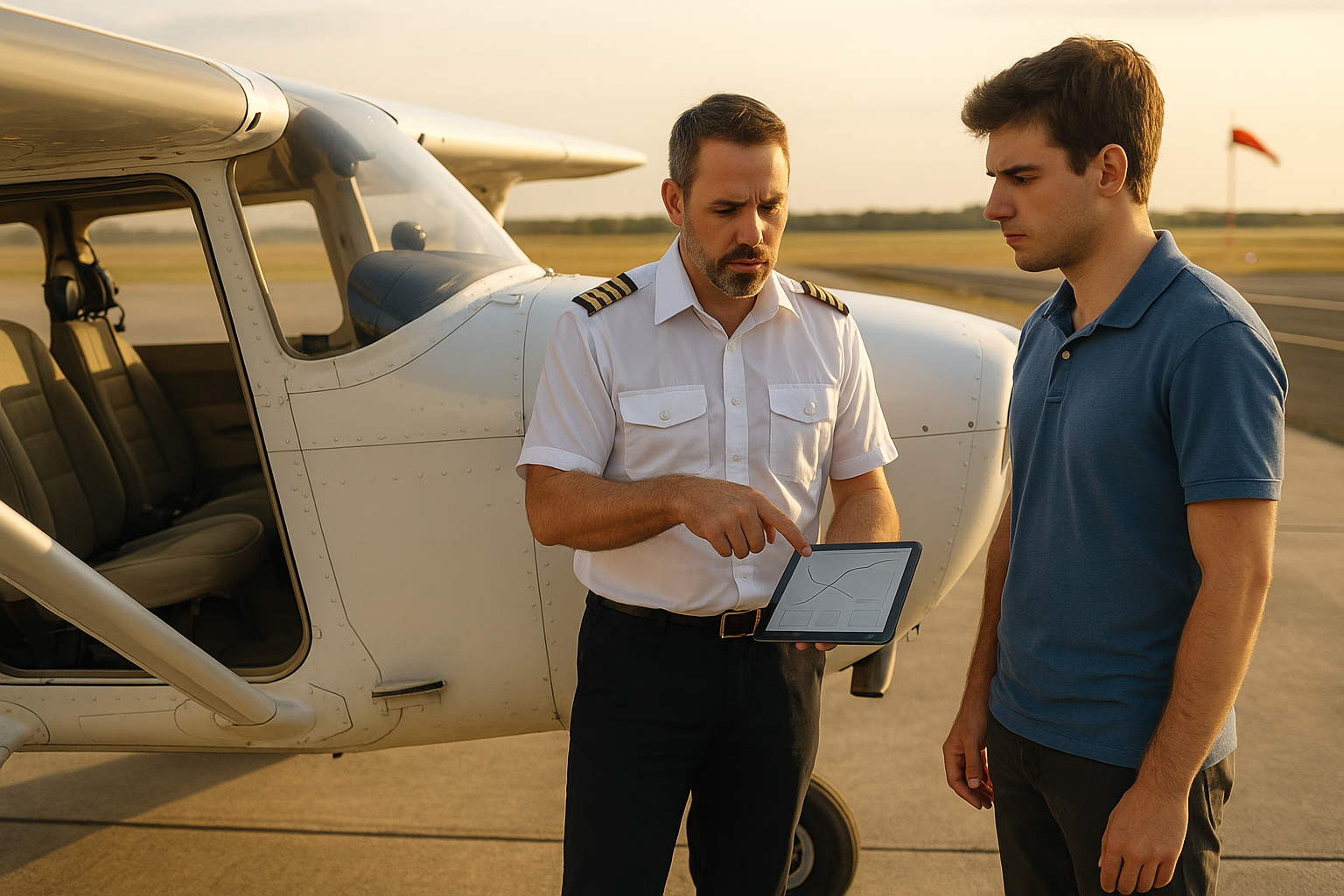
Translate reporting into training actions. After filing a report, follow up with a focused debrief. Use the reported facts to recreate the sequence of events, identify alternative decisions, and practice those alternatives in a simulator or dual flight. For instructors, incorporate anonymized examples from actual reports into lesson plans to teach recognition of developing unstabilized approaches and reinforce go-around decision making.
Understand that reporting does not replace immediate safety actions. If a hazard is observed that requires immediate attention, act first. For example, if runway contamination is noted that poses a serious risk to arriving traffic, notify airport operations or ATC immediately and file a report afterward documenting the hazard and response.
Common mistakes and misunderstandings
Poor reporting practices can reduce the value of otherwise useful observations. Common mistakes include:
- Vagueness. Reports that say "bad approach" without quantifying the problem provide little for analysts to act on.
- Blame-first language. Assigning fault prematurely discourages participation and rarely helps corrective action.
- Delay. Waiting days to submit a report means key details are lost and follow-up is harder.
- Overloading with unnecessary detail. Long narratives filled with irrelevant facts obscure the critical elements that require action.
- Failure to suggest plausible mitigations. Reports that identify problems but offer no context about what might help leave safety managers to guess.
A related misunderstanding is thinking reporting is only for serious incidents. Near-misses and minor deviations often contain the earliest indicators of patterns that lead to incidents. Encourage reporting of low-consequence events if they reveal a potential safety trend.
Practical example: a training flight that improved landing outcomes
Scenario: A flight school observed three separate training flights in one month where students on solo approaches into a busy airport floated long on final and touched down well beyond the intended touchdown zone. In each case, crosswind and a late application of round-out were reported. The school collected concise reports describing airspeed at final, gust conditions, and student comments on workload.
Analysis: The reports showed a consistent pattern: students were maintaining slightly higher than recommended approach speeds, anticipating gusts by holding speed, and applying a round-out late because they expected ground effect that did not materialize due to runway slope. Additionally, the runway had a reputation among local pilots for a deceptive optical illusion that made the threshold appear closer.
Action taken: The school used the reports to adjust the training syllabus. Instructors emphasized stabilized approach criteria, required an earlier round-out cue during dual training, and added a simulated crosswind landing session in the flight simulator focusing on energy management and early recognition of a float. The school also shared an anonymized brief with the airport operations team describing the trend, which prompted a runway surface inspection and a recommendation for an updated visual brief for transient pilots.
Outcome: Within two months of these changes, instructors reported fewer long landings in the affected class of students. The reporting process transformed isolated observations into targeted training and operational responses.
Best practices for pilots and instructors
Adopt habits that make reporting quick, useful, and actionable. The following practices help integrate reporting into daily flight operations:
- Report immediately or document details while still fresh. Use a phone memo or cockpit note pad for timestamps and numbers if a full report will be filed later.
- Keep reports fact-based. Separate observation from judgment and label opinions as such.
- Include objective measures when available: indicated airspeed, vertical speed, touchdown point, and runway remaining.
- Use consistent terminology. Agree on common callouts and definitions within your organization to avoid ambiguity.
- Promote a just culture. Encourage reporting by emphasizing learning and corrective action rather than blame.
- Follow up. If a report leads to a procedural or training change, communicate that outcome to those who reported and to the wider flying community when appropriate.
For flight instructors, adding a short debrief checklist after each landing sequence that includes a rapid assessment for potential reportable items will increase reporting consistency without adding significant time to training flights.
How to handle sensitive information and confidentiality concerns
Pilots often worry that reporting will trigger punitive action. A functioning safety culture uses reports to learn, not to punish. When you raise a safety concern, describe the facts and, if you believe confidentiality is warranted, use the reporting channels available within your organization that allow anonymity. If you are unsure which channel to use, discuss it with your chief pilot or safety officer in private before filing.
Be aware that some regulatory or legal contexts may require specific actions or notifications. This article avoids prescribing legal procedures. When in doubt about legal or regulatory obligations, consult your organization’s safety officer or legal counsel.
Technology tools that support better reporting
Modern reporting systems vary from simple online forms to integrated safety management software that accepts narrative reports, uploads flight data, and tracks corrective actions. When choosing tools, prioritize ease of use, clarity of report fields, the ability to attach objective data such as flight data recorder or GPS track logs, and mechanisms to track follow-up.
For pilots with access to flight data monitoring, attach data extracts that corroborate reported observations. For example, a GPS track showing ground speed and touchdown position can validate a reported long landing and make corrective recommendations more precise.
Common misconceptions to avoid
Misconception: "Only accidents need to be reported." Reality: Near-misses and small deviations are often the earliest indicators of systemic risk. Early reporting can prevent escalation.
Misconception: "Reporting is accusatory." Reality: Reports framed as operational observations protect the reporter and focus attention on systems and training rather than personal blame.
Misconception: "I need perfect data to file a report." Reality: Good reports often combine imperfect observation with clearly stated uncertainty. State when you are estimating and describe what you are unsure about.
Frequently asked questions
When should I file a safety report after an unstable approach?
File a report as soon as practical after the flight, once you have documented key facts. If the unstable approach required a go-around or was followed by a hard landing, prioritize immediate operational actions, then submit the report. Prompt filing while details are fresh increases usefulness.
Can I submit a report anonymously?
Many organizations provide anonymous reporting options. If anonymity is important, use those channels. Keep in mind that anonymous reports may limit the ability of safety managers to follow up with clarifying questions, which can reduce the value of the report.
How specific should my report be about pilot actions or errors?
Focus on observable actions and outcomes rather than attributing motives or intent. If you need to comment on pilot technique, describe the behavior in operational terms and note any contextual factors such as distractions, fatigue, or training stage.
Will filing a report lead to disciplinary action?
That depends on the organization's policies and the severity of the event. Many organizations adopt a just culture approach where reporting honest mistakes or near-misses leads to learning rather than punishment. If you are concerned about consequences, speak privately with your safety officer to understand the policy before filing.
What if the report identifies a problem with airport infrastructure?
Notify airport operations or ATC immediately if the problem has immediate safety implications. Follow up with a formal report describing the observed condition, how it affected operations, and any suggested mitigation.
Implementation tips for training programs
Training programs that want to use reporting to improve landings should do three things: simplify reporting, actively analyze trends, and close the feedback loop. Simplify reporting by providing an easy form focused on landing-specific data fields. Analyze trends by reviewing reports at regular safety meetings and extracting common causal themes. Close the loop by publishing anonymized summaries of findings and the corrective actions taken so pilots see the value of reporting.
Instructors should incorporate anonymized incident narratives into briefings and use them as scenarios for simulated practice. That practice helps students recognize precursors to unstabilized approaches and rehearse timely go-around decisions.
Key Takeaways
- Practical takeaway: File safety reports promptly and include objective facts such as airspeed, descent rate, and touchdown position.
- Safety takeaway: Reporting near-misses and minor deviations reveals trends that reduce landing risk when analyzed and acted upon.
- Training and decision-making takeaway: Use anonymized reports to update training syllabi and reinforce timely go-around decision making.
Safety reporting is not an end in itself. It is a tool to focus training, change procedures, and improve judgment. Pilots who adopt clear reporting habits, and organizations that treat reports as learning opportunities, create safer approaches and landings for everyone.