
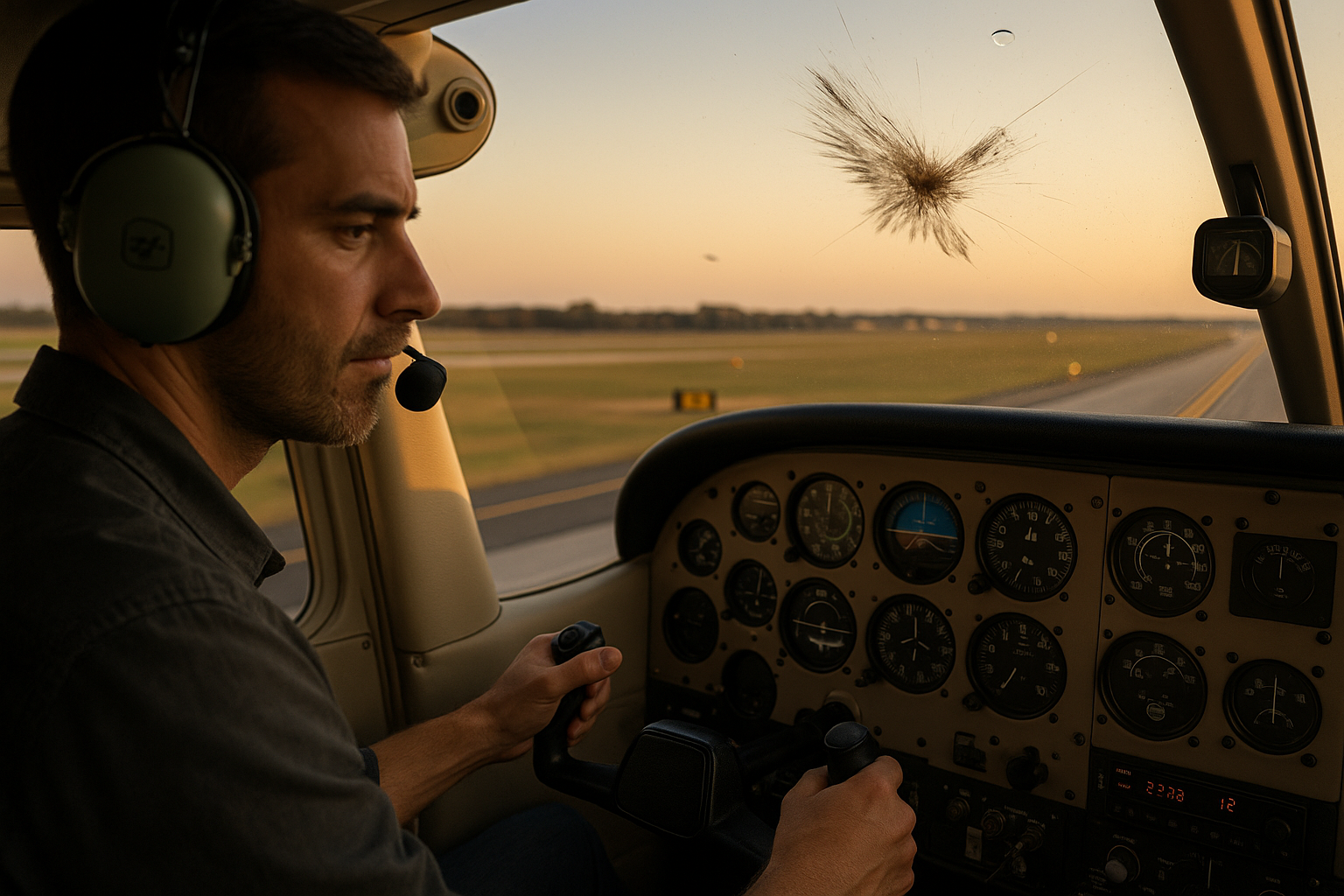
Bird strikes are an ever-present operational hazard for pilots. Whether you fly a light single, a turbine transport, or a rotorcraft, understanding bird strikes, recognizing the risk environments, and preparing to respond are essential pilot skills. This article explains bird strikes in practical aviation terms, focusing on pilot decision making, flight training implications, aircraft handling, and post-impact procedures.
We cover what happens when birds impact an aircraft, why strikes are most likely at certain flight phases, how to detect and manage system damage, what to expect from maintenance inspections, and how to balance safety with operational pressures. Read on for real-world examples, common mistakes to avoid, and pilot-centered best practices you can use in the cockpit and in training.
Understanding Bird Strikes: The core concept
At its core, a bird strike is an impact between a bird and an aircraft that causes damage, system interruption, or creates a hazard to flight safety. For pilots, the important part is not only that the strike happened, but how that strike interacts with aircraft structures and systems. Impacts can affect windscreens, radomes, flight controls, landing gear, and engines. The severity depends on bird size, number of birds, closure rate or relative speed, and point of impact.
Bird strikes are most consequential when they produce engine ingestion, windscreens compromises, or structural damage that degrades flying qualities. Engine ingestion remains one of the highest-risk outcomes because it can cause thrust loss, compressor damage, or internal engine failure. Windshield or canopy damage can create severe distraction, visibility loss, or in extreme cases, structural failure of the glazing. Surface impacts to leading edges, propellers, and landing gear can generate vibrations, control anomalies, or fracture critical components.
Why this matters in real-world aviation
Bird strikes directly affect safety, flight planning, and maintenance. For operators and pilots, strikes add risk to critical phases of flight. Airports with nearby wildlife attractors can increase the frequency of events during takeoff and landing. In training, bird strike scenarios test prioritization: fly the airplane, assess the systems, and make timely decisions about continuing, diverting, or returning to airport. From a maintenance and operational readiness perspective, a strike can put an aircraft out of service for inspection and repair.
For single-pilot operations and small flight crews, a bird strike can rapidly create high workload situations. Pilots must manage aircraft control while diagnosing engine instruments, communicating with ATC, and preparing for possible abnormal or emergency landing. For multi-crew operations, coordination and clear delegation accelerate decision-making and safety actions.
How pilots should understand bird strike mechanics and risk factors
Risk varies with phase of flight. Most strikes occur at low altitudes during takeoff, initial climb, approach, landing, and during traffic pattern operations. Birds are concentrated where food, water, and shelter exist. Key risk factors pilots should note include time of day, seasonal migration periods, nearby agricultural or landfill operations, and weather conditions that concentrate avian activity.
Aircraft-specific vulnerability matters. Propeller-driven aircraft and jets have different exposure profiles: propellers and spinner strikes can fragment birds into the airframe, while jet engines can ingest birds into the fan and compressor. Glass damage affects both types of aircraft. Turbofan engines are designed and certified to tolerate a degree of bird ingestion, but ingestion beyond design conditions can still cause failures. Pilots should understand their aircraft manufacturer guidance and normal indication trends for engines and systems so they can detect subtle changes after an impact.
Detection is partly sensory and partly instrument-based. Pilots may hear a thump, feel vibration, notice sudden yaw, see birds strike the windshield, or detect abrupt instrument changes such as drops in torque, manifold pressure, N1 or N2, ITT or EGT indications, abnormal oil pressure or temperature, or engine vibration warnings. If you see or suspect ingestion, use flight deck cues promptly to assess engine health and remain prepared to execute an appropriate procedure.
Immediate cockpit priorities after a bird strike
When a bird strike occurs, pilots should prioritize aircraft control first and then system assessment. The memory items for an engine failure or fire, if present, take precedence over other actions. Clear communication between crew members and concise radio calls to ATC reduce workload. If single-pilot, maintain control, communicate your intentions, and seek help from ATC for traffic and vectors to the nearest suitable runway.
Key immediate actions are:
- Stabilize the aircraft and maintain safe flying speed and attitude.
- Trim and control any sudden changes in trim, power asymmetry, or vibration.
- Scan instruments for engine parameters, structural warnings, and system advisories.
- Make a timely and clear radio call that includes your situation and intentions.
- Prepare for an expedited landing if engine performance is degraded or if visibility is compromised.
Avoid premature configuration changes during an unstable situation unless required to maintain control. For example, retracting flaps or gear should only be considered when you are in stable flight and when the action reduces risk, not adds to workload.
Decision making: continue, return, or divert
Deciding whether to continue the flight, return to the departure airport, or divert to an alternate is a judgment that balances aircraft controllability, system indications, terrain, weather, and available airports. Use these practical considerations:
- Aircraft controllability: If the aircraft handles normally and systems show no abnormal indicators, a conservative decision can be to complete the planned flight to a suitable airport with maintenance facilities. However, that decision should factor in the time until landing, distance to suitable fields, and probability of further deterioration.
- Engine performance: If engine instruments show trends that indicate a loss of thrust, surges, or persistent vibration, an immediate diversion or return is prudent.
- Visibility and structural damage: If windshield integrity is compromised, or visibility is impaired, seek the nearest appropriate runway. Structural damage that changes control feel or effective authority demands landing as soon as practical.
- Environmental and operational context: At night, over water, or in IMC, the threshold to divert should be lower because options and margins are reduced.
Where possible, choose an airport with instrument approach capabilities, fire and rescue services, and maintenance resources. Coordinate with ATC to obtain priority handling, expedited vectors, and ground services upon landing.
Handling specific strike outcomes
Engine ingestion or power loss
If a strike results in engine performance loss or abnormal indications, follow published abnormal procedures for your aircraft and the fundamental airmanship rule to fly the airplane first. For multi-engine aircraft, apply standard engine failure management and consider feathering, securing, or shutting down the affected engine only when necessary and in accordance with the appropriate procedures. Monitor for secondary system failures such as electrical or hydraulic impacts related to engine damage.
Engine damage can be progressive. Instruments may look nominal initially and then degrade. Keep a close scan and be prepared to commit to a diversion if any trend suggests worsening performance.
Windscreen or canopy damage
Windshield damage may range from cosmetic cracks to loss of transparency or penetration. Minor cracks can expand under pressurization or temperature changes. If the windshield is cracked but retains structural integrity and visibility is acceptable, stabilize the aircraft and land as soon as practical at a suitable airport. If penetration occurs and cockpit environment is compromised, depressurization or control surface interference could follow; treat this as an emergency and prepare for immediate landing.
Propeller or spinner strikes
Propeller impacts can unbalance the assembly, cause severe vibration, or fracture blades. If you experience sudden, strong vibration after a prop strike, reduce power to a safe level and follow engine-out procedures while prioritizing a landing. Propeller damage often requires a thorough maintenance inspection even if flight parameters appear normal after the initial event.
Airframe, control surface, and landing gear damage
Leading-edge damage to wings or tail surfaces can change stall characteristics, control effectiveness, and drag. If you notice unusual trim, reduction in control authority, or unexpected stall behavior, slow to a safe handling speed, avoid abrupt control inputs, and plan a landing that keeps energy and control margins. Landing with damaged gear may require special handling; consult emergency procedures and coordinate with ATC and emergency services.
Maintenance and inspection considerations
After landing, crews should follow their operator procedures for reporting and maintenance action. Most bird strikes require inspections that may be limited or extensive depending on the systems affected. Checklists and manufacturer maintenance manuals provide the appropriate scope of inspection for engines, propellers, windshields, radomes, flight controls, and landing gear.
Pilots should provide maintenance with as much detail as possible: phase of flight, altitude, airspeed, number and size of birds observed, cockpit indications, and any actions taken. Photographs of visible damage are helpful. Even when the aircraft appears flyable, hidden damage such as compressor blade nicks, hydraulic component contamination, or structural skin punctures can exist and should be assessed by qualified technicians.
Be cautious about returning to service without a documented inspection from qualified maintenance personnel. Aircraft certification standards require structural and engine inspections when specific damage scenarios occur, and operators should follow manufacturer and maintenance organization guidance rather than pilot judgment alone.
Prevention and risk reduction: what pilots can do
Pilots have limited direct control over wildlife hazards, but they can reduce exposure through operational choices, coordination, and reporting. Prevention steps include:
- Briefing and route planning: Avoid known high-risk areas during times of heavy bird activity when feasible. Adjust routing, altitudes, or timing to reduce exposure when options exist.
- Runway and pattern discipline: Stay alert in the traffic pattern and be prepared for go-arounds if birds are present on final. Use timely power adjustments and stable, predictable approaches.
- Communicate hazards: Report bird activity to the tower, UNICOM, or airport management. Timely reports help other pilots and the airport response team.
- Use lighting thoughtfully: At some airports, appropriate use of landing lights during approach and after sunset can reduce arrivals into areas of bird activity by increasing visibility. Consider aircraft lighting recommendations for bird detection, but follow airport and operator guidance.
- Operator-level mitigation: Encourage your operator or FBO to work with airport wildlife managers to identify attractants, manage habitat, and deploy proven deterrents. Pilots can support these efforts with accurate reports and participation in wildlife hazard assessments.
While pilots should avoid taking on wildlife management responsibilities themselves, collaboration with airport authorities increases overall safety. Reporting strikes and near-misses contributes to data collection and hazard mitigation programs.
Training and preparedness recommendations
Incorporate bird strike scenarios into recurrent training, simulator sessions, and VFR maneuver practice. Emphasize the following training outcomes:
- Recognition: Ensure pilots can recognize bird strike cues and quickly diagnose engine or structural impacts.
- Workload management: Practice single-pilot resource management, effective communication, and automation use under the increased workload of a strike event.
- Decision-making: Train pilots to weigh options for diversion and to practice conservative judgment under uncertainty.
- Systems knowledge: Review aircraft systems likely to be affected and understand the limitations of in-flight checks versus maintenance inspections.
Simulated bird ingestion exercises in a full flight simulator for turbine aircraft help crews rehearse engine failure procedures, asymmetric thrust control, and time-critical decision-making. For piston aircraft, practicing forced landings, off-field considerations, and communication skills remains valuable.
Common mistakes and misunderstandings
Pilots and operators can make errors of judgment after a bird strike. Common mistakes include:
- Underestimating progressive damage. An engine or system that looks normal immediately after impact can fail later. Monitor systems for trends and be conservative when deciding to continue flight.
- Prioritizing schedule over safety. Pressure to meet timelines can bias decisions to continue when diversion is the safer option.
- Incomplete reporting. Failing to report strikes denies airports and wildlife managers critical data needed to mitigate hazards.
- Assuming minor airframe damage is negligible. Small punctures or leading-edge damage can alter aerodynamics. Professional inspection is essential.
- Poor communication with ATC and the company. Vague or delayed information can hinder support and put responders at risk.
Practical example: a realistic flight scenario
Imagine a single-pilot, twin-engine turboprop departing a regional airport in daylight. Shortly after liftoff and positive rate, the pilot hears a sharp thud on the left side, followed by moderate vibration and a drop in the left engine torque indication. The aircraft remains controllable, altitude is low, and runway remaining is limited.
Immediate actions focus on flying the airplane. The pilot establishes a positive climb at a speed that maintains control and reduces the risk of a stall, while trimming and adjusting to asymmetric thrust. With the aircraft stabilized, the pilot notifies ATC of an engine problem and requests return for landing. The pilot runs the engine failure checklist, but refrains from shutting down the engine unless checklist guidance or worsening instrument trends require it. ATC provides vectors for an expedited return and clears the active runway. The pilot configures for landing with full crew coordination, briefed emergency services, and lands uneventfully. On the ground, maintenance discovers bird ingestion damage in the left engine and performs a detailed inspection before releasing the aircraft back to service.
This scenario emphasizes three pilot priorities: maintain control, communicate clearly, and make conservative decisions about landing and maintenance. It also highlights the need to follow maintenance guidance before resuming flight operations.
Best practices for pilots
Adopt these practical habits to reduce risk and improve outcomes when strikes occur:
- Know your aircraft: Review manufacturer guidance on post-impact procedures and engine ingestion tolerances. Understand which indications require immediate diversion.
- Fly first, troubleshoot second: Stabilize the aircraft before running checklists or making non-critical switches.
- Communicate early: Inform ATC, company operations, and maintenance as soon as practicable. Early coordination reduces response time on the ground.
- Document details: Note time, phase of flight, altitude, airspeed, number of birds, and instrument trends. Take photos if it is safe to do so after landing.
- Train regularly: Practice bird strike scenarios in simulators or brief tabletop exercises. Emphasize crew coordination and conservative decision-making.
Frequently asked questions
What should I say to ATC after a bird strike?
Make a brief initial transmission that includes your call sign, nature of the event (bird strike), whether you have control and any immediate system impairments, and your intentions (return, divert, or continue). Use standard phraseology where applicable and ask for priority handling if you need it. Keep communications concise to reduce workload and let ATC assist with traffic and routing.
Do I always have to land immediately after a bird strike?
Not always. The decision depends on aircraft controllability, system indications, visibility, and operational context. If controls and systems are normal and there is little risk of progressive failure, it may be appropriate to continue to a suitable airport with maintenance. However, when in doubt, choose the conservative option and land as soon as practical. A lower threshold for an immediate landing is appropriate at night, in IMC, over water, or when engine indications suggest damage.
Will a bird strike always damage an engine?
No. Engines are tested and designed to tolerate ingestion of small birds up to a design limit, and many strikes cause no significant engine damage. Larger birds, multiple birds, or ingestion at high power settings increase the risk of damage. Even when an engine appears to operate normally after an ingestion event, it should be inspected by maintenance before further flights.
How should I document and report a bird strike?
Document the event in your aircraft log and submit required reports according to your operator procedures. Provide maintenance with detailed observations including phase of flight, altitude, airspeed, and instrument trends. Prompt reporting to airport operators or ATC helps protect subsequent arrivals and supports wildlife hazard mitigation. If your organization has a safety reporting system, use it to capture the event for analysis.
Can lighting or speed changes reduce the risk of strikes?
Certain operational choices can reduce exposure. Adjusting routing or timing to avoid high-risk areas, and maintaining situational awareness in the traffic pattern, are practical steps. Lighting can improve pilot ability to see birds at night or dawn, but lighting policies and effectiveness vary. Avoid abrupt speed reductions in the pattern that could increase collision risk due to stall or reduce maneuverability when avoiding birds.
Common mistakes or misunderstandings
Earlier we highlighted errors operators make following strikes. To summarize, pilots often fall into these traps: underestimating hidden damage, delaying diversion because of schedule pressure, failing to monitor for progressive engine degradation, and underreporting incidents. Training and a conservative, safety-first mindset prevent many of these mistakes.
Key Takeaways
- Practical takeaway: After a bird strike, fly the airplane first, then assess systems and make a conservative decision about landing or diversion.
- Safety takeaway: Even minor, apparently superficial damage can hide progressive failures; require qualified maintenance inspection before further flight.
- Training and decision-making takeaway: Practice bird strike scenarios regularly and emphasize early communication, crew coordination, and conservative judgment.
Bird strikes are a manageable but persistent hazard. Pilots who understand the mechanics, recognize the cues, and use disciplined decision making reduce risk and improve outcomes. Maintain good communication with ATC and maintenance, document details carefully, and support airport wildlife hazard management. Conservative choices protect your passengers, crew, and aircraft.