
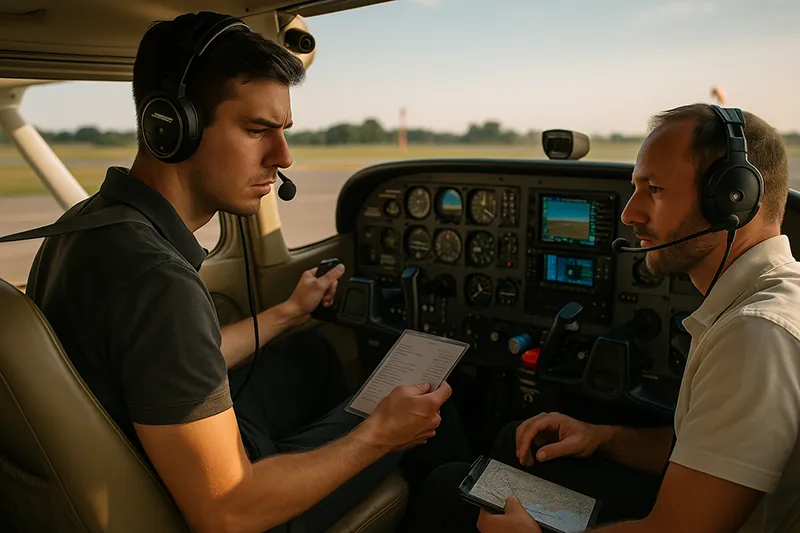
Building confidence as a new pilot is essential for safe, effective flying and sound aeronautical decision making. New pilots often feel a gap between what they know on paper and what they can do reliably in the cockpit. This article explains how to build confidence as a new pilot through targeted training, deliberate practice, judgment development, and safety-focused habits.
The practical value is immediate: confident pilots execute procedures more consistently, manage workload better, and make clearer decisions under pressure. Confidence is not the same as bravado. Real pilot confidence is based on skills, experience, honest self-assessment, and a structured approach to learning and risk management. Read on for operational techniques instructors and students can use to accelerate competence and reduce the kinds of errors that lead to incidents.
Core Idea: What Does Confidence Look Like in the Cockpit?
Confidence in aviation shows up as consistent execution of procedures, clear communications, and calm task management when conditions change. Practically, that means smooth preflight briefings, precise control inputs, reliable radio exchanges, and a habit of scanning for hazards. Confidence is the product of competence plus judgment. Competence is the knowledge and motor skills; judgment is the ability to apply those skills to the circumstances at hand.
For new pilots the goal is to replace nervousness and hesitation with a repeatable sequence of actions and decisions. That transformation happens through repetition, scenario practice, and structured reflection so each flight becomes a lesson rather than just an experience.
Why This Matters in Real-World Aviation
Pilot confidence affects safety, training efficiency, and operational outcomes. A pilot who lacks confidence may delay decisions, fail to communicate clearly, or attempt maneuvers outside their capability. Conversely, overconfidence can cause pilots to accept risks without adequate mitigation. Real-world flying requires a balanced approach that encourages steady skill growth while maintaining conservative decision thresholds during the early stages of a career.
During flight training and early solo operations, the environment is intentionally controlled to build skills. As pilots move into less predictable environments such as cross-country flights, night operations, or marginal weather, the quality and structure of prior training determines how well they will manage workload and risk. Confidence built on practice and deliberate exposure to complexity reduces the likelihood of poor decision making when pressures rise.
How Pilots Should Understand Confidence
Think of confidence as a set of measurable behaviors rather than an internal feeling. A confident pilot performs thorough preflight preparation, uses checklists reliably, manages energy and workload, and communicates proactively. Confidence manifests in risk control: briefing alternates, setting conservative fuel reserves, and making timely diversions. It also shows in the ability to articulate limitations and to seek help or training when needed.
There are three practical dimensions to develop: technical skill, procedural fluency, and judgment. Technical skill is aircraft control and systems knowledge. Procedural fluency is accurate checklist use and radio phraseology. Judgment is scenario assessment, risk mitigation, and decision making. Training programs that integrate all three will produce the most robust confidence.
Common Mistakes or Misunderstandings
New pilots often confuse confidence with comfort. Comfort means low perceived anxiety, while confidence is demonstrated ability under stress. Mistakes include relying on a small set of good flights as proof of readiness, skipping scenario-based training, or interpreting occasional success as mastery. Another common error is failing to practice edge-case scenarios such as partial-panel operations, emergency descent, or unusual attitudes; these events are rare but critically important to rehearse so the first exposure does not occur during an actual emergency.
Other misunderstandings come from technology. Glass cockpits and advanced avionics can give a false sense of security. Pilots must retain fundamental airmanship such as basic navigation, attitude control, and energy management. Overreliance on automation can erode manual handling skills and the ability to recover from automation anomaly. Balance advanced systems training with manual and basic instrument flying practice.
Practical Example: From Solo Anxiety to Confident Cross-Country
Consider a student who has completed solo circuits but feels anxious about the first cross-country. A structured progression helps. Start with a dual cross-country where the instructor leads planning, then switch to the student flying while the instructor coaches. Add a simulator session replicating likely deviations such as diversion, low-altitude weather, or simulated radio failure. Debrief using a short written self-assessment that identifies where the pilot felt workload spike and what actions reduced it. The combination of staged exposure, simulator rehearsal, and reflective debriefing creates a predictable learning arc from anxiety to practical confidence.
During the actual student solo cross-country, require conservative go/no-go criteria and a clear diversion plan. Emphasize that the objective is completing the mission while maintaining safe margins rather than avoiding every deviation. When the student successfully manages a diversion or communicates effectively with ATC, that single event becomes a durable confidence-building memory.
Best Practices for Pilots
The following practices help build practical confidence without encouraging risky behavior:
- Deliberate, focused practice — practice specific tasks to mastery, such as steep turns, stall recognition and recovery, or short-field landings. Break complex maneuvers into components and practice each element until it is consistent.
- Scenario-based training — fly realistic scenarios that combine tasks, communications, and decision points. Simulate realistic disruptions such as unexpected weather or partial panel to practice prioritization and checklist execution.
- Use the simulator effectively — inexpensive desktop or flight-sim hours can improve procedural fluency and cockpit flows. High-fidelity simulators are valuable for emergency practice because they allow safe repetition of low-probability events.
- Structured reflection and debrief — after each flight spend five to ten minutes writing what went well, what increased workload, and one action to improve on the next flight. Short targeted reflection accelerates learning.
- Progressive exposure — increase complexity in steps. Move from local flights to short cross-countries, then to night or marginal weather with an instructor, then to longer flights with increasing autonomy.
- Maintain conservative personal minimums — establish and adhere to personal weather minima and operational limits until you have proven capability in varied conditions.
- Choose instructors carefully — work with instructors who emphasize decision making, scenario training, and constructive debriefs rather than only logging maneuvers.
Training Techniques and Tools
Several training approaches reliably speed confidence building. Deliberate practice requires specific training goals for each flight. Instead of saying you will "practice landings," set a target such as 10 stabilized approaches with a specific touchdown zone and a brief debrief on each. Block practice increases retention: repeat the same maneuver in multiple flights rather than practicing many maneuvers shallowly in a single flight.
Scenario-based training integrates tasks in a context that mimics real flying. For example, practice an emergency descent while on a cross-country profile with realistic communications and diversion planning. This approach helps build the higher-order skill of prioritizing tasks and makes automatic the actions that should come first in an emergency.
Peer flying and mentoring accelerate confidence. Flying with slightly more experienced pilots exposes you to new techniques, alternative decision strategies, and different perspectives on risk. Debrief those flights in a candid, nonjudgmental way.
Using Simulation
Simulators are powerful when used properly. They allow repeated exposure to failures and high-workload events without safety risk. Use simulation for procedural flows, instrument scan, and emergency checklists. When training in a simulator, set clear objectives for the session, such as practicing partial-panel approaches or troubleshooting avionics failures. Treat simulator sessions as formal training, with prebrief, execution, and debrief.
Decision Making and Risk Management
Confidence grows when pilots can identify hazards and apply consistent mitigation strategies. Adopt a simple decision framework that you apply before and during flight. Start with a preflight risk assessment that includes weather, fuel planning, alternate airports, pilot physiological readiness, and aircraft status. During flight, continually reassess conditions and be prepared to divert, return, or land if the risk profile changes.
One useful habit is to define two go/no-go triggers before flight. A trigger is a measurable or observable condition that will cause you to change the plan. Examples include specific cloud ceiling, forecasted crosswind components, or cockpit workload limits. Triggers remove ambiguity and keep decisions timely.
Handling Anxiety and Performance Pressure
Many new pilots experience anxiety that can degrade performance. Practical approaches help reduce its impact. First, maintain physical readiness: adequate sleep, hydration, and nutrition. Second, use preflight and in-flight breathing and scanning techniques to manage acute stress. Third, focus on task sequencing: identify the next action and execute it instead of ruminating on potential failures. Finally, normalize mistakes as part of learning. A culture that treats errors as learning opportunities rather than evidence of failure encourages pilots to seek feedback and remediation early.
Instructor Roles and Effective Feedback
Good instructors accelerate confidence by providing clear expectations, modeled behavior, and incremental challenges. Effective feedback is specific, timely, and focused on one or two improvements rather than a long list. Coaches should praise correct behaviors to reinforce them, then identify one targeted area for practice. Instructors who share their own early career mistakes help students understand the learning curve and set realistic expectations.
Maintaining and Growing Confidence Over Time
Confidence is not static. After initial gains, proficiency can atrophy without consistent practice. Maintain currency and proficiency by scheduling regular practice flights, using simulators, and flying with mentors. Add complexity gradually: night flying, IFR practice, and operations at unfamiliar airports build capability only when introduced after baseline mastery of day VFR operations.
Set measurable progress markers such as achieving a consistent crosswind landing performance or completing a cross-country with no checklist omissions. Track these milestones in your logbook or training journal to create a positive feedback loop.
Common Mistakes to Avoid
Avoid these common pitfalls that can undermine confidence or create safety risk:
- Skipping emergency practice. Treating emergencies as theoretical rather than rehearsing them makes the first real event high-risk.
- Overreliance on avionics. Always retain basic skills to navigate and control the aircraft without automation assistance.
- Ignoring personal minimums. Pressure to complete a flight can erode prudent personal or operational limits.
- Delayed debrief. Waiting days to review a poor flight reduces learning impact; debrief while memory is fresh.
- One-size-fits-all training. Each pilot has different strengths; tailor practice to your individual gaps rather than imitating others exactly.
Frequently Asked Questions
How quickly can I expect to feel confident as a new pilot?
Confidence varies by individual and training structure. Expect steady improvement when you practice deliberately, fly regularly, and receive scenario-based instruction. Focus less on a timeline and more on performance milestones such as consistent landings, accurate navigation, and calm handling of unexpected events.
Should I use a simulator to build confidence?
Yes. Simulators are valuable for procedural practice, emergency drills, and instrument scan training. Use simulated scenarios to rehearse rare but critical events so the first real exposure will not coincide with high stress. Combine simulator work with real-world flying to maintain manual handling skills.
How do I stop feeling anxious before solo flights?
Preparation reduces anxiety. Conduct thorough preflight planning, rehearse communications and emergency procedures, run through a mental checklist, and start with conservative personal minimums. A short preflight breathing routine and a clear plan for weather and diversion options also help focus attention.
Can confidence be taught or is it just experience?
Both. Confidence grows from experience but training shapes how that experience is gained. Structured, reflective, and scenario-based training produces more transferable confidence than passive experience. Instructors and mentors can accelerate the process by designing appropriate challenges and providing targeted feedback.
How should I measure my progress?
Use objective measures where possible: stabilized approach percentages, touchdown within a planned zone, time to complete checklists, or number of successful simulated emergencies. Combine those metrics with subjective reflection on workload and stress during flights.
Practical Checklist for a Confidence-Building Flight
Use this as a framework rather than a rigid checklist. Before the flight, set one technical goal and one decision-making goal. During the flight, keep a running mental note of workload triggers. After the flight, debrief with a written note on what improved and one action for the next flight.
Instructor and Student Partnership
Confidence is best built when instructors and students align on objectives. Students should be candid about areas of discomfort. Instructors should design flights that provide a balanced mix of success and controlled challenge. Establishing trust allows the instructor to apply corrective pressure and the student to accept feedback without defensive behavior.
Key Takeaways
- Practical takeaway: Build confidence through deliberate practice, scenario training, and staged exposure to complexity.
- Safety takeaway: Maintain conservative personal minimums, rehearse emergencies, and avoid overreliance on automation.
- Training and decision-making takeaway: Use objective performance markers, targeted feedback, and repeated reflection to accelerate learning.
Building confidence as a new pilot is not a single event but a training strategy. It requires structured practice, realistic scenarios, effective debriefs, and a culture that treats mistakes as opportunities to learn. When confidence is grounded in skill and sound judgment, pilots are safer, more decisive, and better prepared for the demands of real-world flying.