
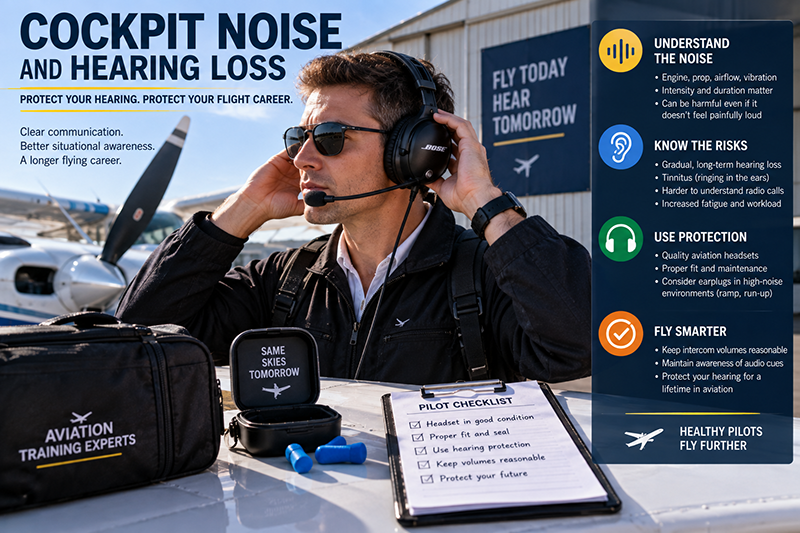
Cockpit noise and hearing loss deserve serious attention early in a pilot's career, not after the first signs of ringing ears, muffled speech, or fatigue after a long flight. Aviation is a communication-intensive environment. Pilots depend on hearing for radio calls, intercom coordination, engine and propeller cues, abnormal sounds, passenger communication, and cockpit workload management. When hearing protection is treated as optional comfort equipment instead of safety equipment, small decisions made over many flights can become a long-term occupational health problem.
This article explains cockpit noise in practical aviation terms: where it comes from, how it affects pilots, why hearing protection matters, and how to build habits that support a full flying career. The goal is not to alarm pilots or prescribe medical advice. The goal is to help student pilots, flight instructors, aircraft owners, and professional aviators think about hearing conservation the same way they think about sun exposure, hydration, fatigue, and risk management. If you fly regularly, teach in piston trainers, commute in turbine equipment, work around ramps, or spend time near running aircraft, your hearing deserves deliberate protection.
Understanding Cockpit Noise in Aviation
Cockpit noise is not one sound. It is a mixture of engine vibration, propeller or fan noise, airflow, exhaust, airframe vibration, avionics audio, intercom feedback, ventilation, landing gear or flap airflow, environmental control systems, and sometimes cabin or passenger noise. In piston airplanes, much of the sound energy may come from the engine, propeller, exhaust, and airframe vibration. In helicopters, rotor systems, transmission components, turbine noise, and vibration add their own signature. In turbine airplanes, the cockpit may be quieter than many piston trainers, but pilots may still be exposed to meaningful noise during ground operations, open-window taxiing, ramp activity, and long duty periods.
Noise exposure is influenced by intensity, duration, frequency content, and distance from the source. A short exposure to very loud sound can be harmful, but so can repeated exposure to moderate cockpit noise over months and years. Pilots often focus on whether a sound is painfully loud. That is a poor standard. Noise does not have to be painful to contribute to hearing damage over time. A cockpit can feel familiar and tolerable while still being loud enough to justify consistent hearing protection.
The pilot's ear is also working hard in ways that are easy to overlook. The brain has to separate useful sounds from background noise. It filters radio transmissions, engine tone, ATC instructions, instructor comments, passenger questions, and warning tones. When background noise is high, listening becomes more effortful. That effort can add to fatigue, especially during instruction, instrument training, high-workload airspace, night flying, or long cross-country operations.
How Noise-Induced Hearing Loss Develops
Noise-induced hearing loss occurs when delicate structures in the inner ear are damaged by excessive sound exposure. In practical terms, pilots may first notice difficulty understanding speech in noisy rooms, trouble distinguishing similar-sounding words on the radio, a need to increase intercom or headset volume, or ringing in the ears after flying. Some people notice tinnitus, which is the perception of ringing, buzzing, hissing, or other sound when no external sound is present. Others do not notice a problem until a hearing test shows a change.
One of the challenges is that noise-related hearing changes can be gradual. A pilot may adapt without realizing it. The headset volume slowly creeps upward. Radio calls seem less crisp. A student says the intercom sounds fine while the instructor hears distortion. A pilot blames a weak transmission, an old audio panel, or a noisy airplane when the underlying issue may be a combination of aircraft noise, equipment, and hearing acuity.
Hearing loss can also affect different frequencies in different ways. Speech understanding depends on more than loudness. It depends on clarity, timing, and frequency discrimination. Aviation communication often occurs through radios that may already limit audio quality. Add wind noise, an instructor speaking quickly, a busy frequency, or nonstandard phraseology, and small hearing deficits can become operational distractions.
Why This Matters in Real-World Aviation
Hearing is part of situational awareness. Pilots are trained to look outside, scan instruments, manage energy, verify configuration, and communicate clearly. Hearing supports all of those tasks. A change in engine sound may prompt a pilot to check power settings, mixture, carburetor heat, fuel flow, engine instruments, or vibration. A change in propeller sound may indicate an RPM change or configuration effect. A warning tone, stall horn, gear warning, trim alert, autopilot disconnect, or traffic advisory must be recognizable in the acoustic environment of that cockpit.
Communication is another major safety connection. Student pilots learn to listen for call signs, clearances, traffic advisories, runway assignments, hold short instructions, and other operationally critical information. Flight instructors divide attention between teaching, monitoring the aircraft, listening to radio traffic, and protecting the learning environment. Charter, corporate, airline, EMS, agricultural, and utility pilots may operate in noise environments that vary widely by aircraft and mission. In every case, reduced hearing clarity can increase workload.
Noise can also contribute to fatigue. A pilot who has flown a long instructional day in a high-noise cockpit may not describe the problem as hearing exposure. The pilot may simply feel drained, irritable, or less sharp. Noise is not the only cause of fatigue, but it can be part of the fatigue picture. Good headsets, good cockpit audio discipline, and sensible ramp habits can reduce unnecessary strain.
There is also a career-management dimension. Pilots invest heavily in training, medical certification, experience, and proficiency. Protecting hearing is one of the simpler long-term investments a pilot can make. It is easier to protect hearing before damage occurs than to compensate after hearing has declined.
How Pilots Should Understand Cockpit Noise
Pilots do not need to become acoustical engineers to make better decisions. A useful starting point is to view cockpit noise as an exposure, not merely an annoyance. Exposure accumulates through flight time, ground time, ramp time, and maintenance or preflight activity around operating aircraft. The more frequently you fly in noisy aircraft, the more important it becomes to use protective equipment consistently.
There are two broad categories of aviation headsets: passive noise reduction and active noise reduction. Passive noise reduction relies on physical barriers, ear seals, clamping force, ear cup design, and sometimes in-ear tips to reduce sound reaching the ear. Active noise reduction, often called ANR, uses electronics to reduce certain low-frequency noise components by generating opposing sound waves. ANR headsets can be very effective in many aviation environments, but they are not magic. Fit, seal, battery condition, headset condition, aircraft audio quality, and cockpit noise profile all matter.
In-ear aviation headsets use ear tips that seal the ear canal, often with lightweight microphone assemblies. Some pilots find them comfortable for long flights, especially in hot cockpits or when wearing sunglasses. Others prefer over-ear designs because of familiarity, perceived durability, or compatibility with specific aircraft and helmets. The best headset is one that provides effective noise reduction, clear communications, comfort, and reliable use in the aircraft you actually fly.
Fit is more important than many pilots realize. A high-quality headset with a poor seal may perform poorly. Sunglass temples, hats, hair, oxygen cannula tubing, hood devices, and headset wear can all break the ear seal. Ear cups that are hardened, cracked, or compressed may not seal well. Microphone placement also matters. A poorly positioned microphone can force pilots to increase volume or repeat transmissions, increasing workload and frustration.
Volume control is another practical issue. A headset protects against cockpit noise, but the pilot can still create unnecessary exposure by turning intercom or radio volume too high. The correct volume is loud enough for clear communication without being excessive. If a pilot routinely needs high volume, the better response is to troubleshoot the system: headset fit, ear seals, microphone gain, audio panel settings, radio quality, intercom squelch, aircraft grounding issues, or personal hearing changes.
Noise Sources Pilots Often Underestimate
Many pilots associate hearing risk only with the cruise portion of flight, but several common aviation activities can involve significant sound exposure. Engine start and run-up place pilots, instructors, line personnel, and passengers near operating aircraft. Preflight on a busy ramp may occur near taxiing aircraft, auxiliary power units, turbine starts, helicopters, or maintenance run-ups. Open doors or windows during taxi can increase the cockpit's noise level and reduce the effectiveness of cockpit hearing protection if the headset seal is disturbed or if the pilot removes the headset to talk.
Flight instructors may have more exposure than their students. A student may fly one lesson and leave. The instructor may fly multiple lessons, conduct ground operations around running aircraft, and spend more total time in the noise environment. This is one reason instructors should model hearing protection habits from the first lesson. When an instructor treats headsets, earplugs, and ramp awareness as routine, students are more likely to adopt the same attitude.
Aircraft owners and maintenance-involved pilots should also think beyond flight time. Ground runs, troubleshooting, propeller balancing, engine break-in, and post-maintenance checks may expose people to aircraft noise outside the normal headset environment. Hearing protection should be considered during those activities, with appropriate coordination and awareness of safety responsibilities.
Training Implications for Student Pilots and Instructors
Hearing protection should be introduced as a normal part of cockpit professionalism. Student pilots are already learning checklists, radio phraseology, sterile cockpit discipline, collision avoidance, and aeronautical decision-making. Hearing conservation fits naturally into that training. Before engine start, the instructor can help the student adjust the headset, set a reasonable intercom volume, position the microphone, and verify that radio audio is clear. These small details improve both training quality and safety.
During early lessons, students may be reluctant to speak up if the intercom is distorted or if they cannot hear ATC clearly. They may assume confusion is their fault. Instructors should ask specific questions such as, "Is the radio clear enough to understand without straining?" or "Is the intercom volume comfortable?" Clear audio helps students learn faster because they are not wasting mental energy decoding poor sound.
Instrument training adds another layer. Under the hood or in actual instrument conditions, the pilot relies heavily on procedural communication, ATC instructions, callouts, and cockpit coordination. Noise that interferes with audio clarity can increase workload when workload is already high. A pilot practicing holds, approaches, missed approach procedures, or clearances in busy airspace benefits from a headset and audio system that reduce strain rather than add to it.
Multi-crew and advanced training environments also require disciplined communication. Callouts should be audible, concise, and standardized for the operation. If one pilot repeatedly asks for repeats, the crew should not simply talk louder and continue. They should address headset settings, intercom configuration, audio panel selection, and possible hearing or fatigue issues.
Common Mistakes or Misunderstandings
One common mistake is assuming that hearing protection is only necessary in exceptionally loud aircraft. In aviation, repetition matters. A training aircraft that feels normal after several flights can still produce enough noise to justify consistent protection. Familiarity is not a safety standard.
Another misunderstanding is thinking that any aviation headset automatically solves the problem. Headset performance depends on fit, condition, correct use, and suitability for the aircraft. A worn-out headset with leaking ear seals may provide much less protection than the pilot assumes. An ANR headset with weak batteries or a poor seal may leave the pilot exposed to more noise than expected. A headset that is uncomfortable may be loosened, shifted, or removed, which defeats the purpose.
Pilots also sometimes confuse loud audio with clear audio. Turning up the radio does not fix distortion, poor squelch settings, microphone problems, electrical interference, or frequency congestion. Excessive volume can add stress and may mask subtle cockpit sounds. A well-managed audio environment should be clear, balanced, and comfortable.
Ramp complacency is another issue. Pilots may protect their hearing in flight but remove headsets immediately after shutdown while another aircraft is starting nearby. They may walk across a busy ramp without earplugs, stand near a running helicopter, or talk beside an operating aircraft. Good ramp awareness includes hearing protection when conditions warrant it, along with propeller and rotor safety, eye contact with operators, and attention to marshalling or local procedures.
A final mistake is waiting for symptoms. Ringing ears after flight, muffled hearing, or difficulty understanding speech in noise are signs worth taking seriously, but prevention should not wait for those signs. Pilots should consider periodic hearing evaluation, especially if they fly frequently, instruct full time, work around loud aircraft, or notice changes in communication clarity.
Practical Example: The Busy Training Day
Consider a flight instructor scheduled for three primary training flights and one instrument lesson in a single day. The morning begins with a preflight on a busy ramp. A nearby aircraft starts while the instructor and student brief the lesson outside. During taxi, the student opens the side window for ventilation, and the instructor notices more noise but says nothing. In cruise, the student's headset microphone is too far from the mouth, so the instructor increases intercom volume. The radios sound harsh in the pattern, and both pilots are tired by the end of the lesson.
By the second flight, the instructor's ears are fatigued. The student misses several radio calls, not because of poor motivation, but because the intercom squelch is clipping the first syllable of transmissions. The instructor talks louder. During the instrument lesson later in the day, ATC issues a revised clearance, and the pilot under the hood asks for a repeat. The repeat is handled safely, but the workload rises unnecessarily.
A better approach would start before engine start. The instructor helps each student fit the headset, checks microphone position, sets intercom volume at a comfortable level, and verifies squelch. The crew closes the window before high-power operation unless operationally necessary. The instructor uses earplugs or other hearing protection during ramp exposure when appropriate. If the audio quality is poor, the instructor treats it as a training and safety issue, not an inconvenience. The result is less fatigue, clearer instruction, and better cockpit communication throughout the day.
Best Practices for Pilots
Hearing conservation should be simple enough to use every flight. The most effective habits are usually the ones pilots can apply consistently without slowing down the operation. Start with a quality aviation headset that fits your aircraft, mission, and head shape. Inspect it periodically. Ear seals, microphone muffs, cables, plugs, battery compartments, and headband tension are not cosmetic details. They affect communication and protection.
Set cockpit audio deliberately. After engine start and before taxi, confirm that intercom and radio audio are clear. Use the lowest comfortable volume that allows reliable understanding. If you must keep increasing volume, look for the reason. Check headset fit, audio panel settings, squelch, microphone placement, and equipment condition. If the aircraft's audio system is consistently poor, document the problem and have it evaluated through the appropriate maintenance process.
Protect yourself on the ramp. If you spend time near operating aircraft, use appropriate hearing protection when it is safe and practical to do so. Maintain situational awareness. Earplugs can reduce environmental sound, so pilots and ground personnel must still watch for moving aircraft, vehicles, propellers, rotors, and hand signals. Hearing protection is not a substitute for visual vigilance.
For flight instructors and operators, make hearing protection part of the culture. Encourage students to invest in a suitable headset if they will fly regularly. Keep spare ear seals or sanitary covers when practical. Teach microphone placement and audio panel use. Brief passengers on headset use before engine start so they are not surprised by cockpit noise or tempted to remove headsets during high-noise phases.
- Use a properly fitting aviation headset for every flight, including short local flights.
- Inspect ear seals, microphone position, cables, and ANR power before relying on the headset.
- Keep radio and intercom volume clear but not excessive.
- Use appropriate ramp hearing protection around operating aircraft when conditions warrant.
- Take ringing, muffled hearing, or difficulty understanding speech seriously and seek professional evaluation when needed.
Special Considerations for Different Aviation Roles
Student pilots should treat hearing protection as part of learning to operate professionally. Early training builds lifelong habits. If you cannot hear clearly, say so. Asking to adjust the intercom or repeat a clearance is better than pretending to understand. Good pilots manage communication quality actively.
Flight instructors face repeated exposure and should be especially disciplined. Teaching in small aircraft can involve long days, multiple engine starts, high cockpit workload, and frequent communication. Instructors should avoid normalizing poor audio, shouting, or excessive volume. Students learn from what instructors tolerate.
Aircraft owners should include headset and audio quality in overall aircraft care. A clean windshield improves visibility, reliable brakes improve ground handling, and a well-maintained audio system improves communication. If an aircraft is unpleasantly noisy inside, the owner may want to evaluate seals, interior condition, exhaust leaks, vibration, headset compatibility, and intercom performance through appropriate maintenance channels. Any suspected exhaust or carbon monoxide concern should be treated as a separate safety matter requiring immediate attention.
Professional pilots may fly quieter aircraft than piston trainers, but they are not automatically free from hearing concerns. Long duty days, ramp exposure, ground operations, headset use, and repeated communications still matter. Company procedures, personal protective equipment policies, and occupational health programs may apply depending on the operation. Pilots should follow their employer's procedures and seek qualified medical advice when hearing changes are suspected.
Medical and Certification Considerations
Pilots should understand that hearing is relevant to aviation medical certification and operational safety, but specific certification standards and acceptable testing methods should be confirmed with an Aviation Medical Examiner or the applicable regulatory authority. The practical point is straightforward: do not ignore hearing changes. If you notice persistent tinnitus, muffled hearing after flights, increasing difficulty with radio communications, or a need to raise volume beyond normal levels, speak with a qualified medical professional.
Hearing evaluation can help distinguish between cockpit noise exposure, age-related changes, earwax, infection, medication effects, previous injuries, and other medical factors. Some issues are temporary or treatable. Others require long-term management. Early evaluation gives pilots better information for protecting both health and flight safety.
Pilots who use hearing aids or other assistive devices should receive individualized guidance from their medical examiner, hearing professional, and flight operation as appropriate. Compatibility with headsets, cockpit audio, batteries, feedback, and emergency communication should be considered carefully. Avoid relying on informal advice when medical certification or operational communication is involved.
How to Choose a Hearing Protection Strategy
The best hearing protection strategy depends on aircraft type, cockpit environment, flight duration, budget, comfort, and mission. A student flying a few hours per month may start with a reliable passive headset and upgrade as training increases. A full-time instructor may find that a high-quality ANR or in-ear headset is worth the investment because it reduces fatigue across repeated flights. A helicopter pilot may need equipment suitable for rotorcraft noise and helmet or mission requirements. A pilot operating in both open-cockpit and enclosed-cockpit aircraft may need more than one solution.
When comparing equipment, focus on real-world use. Can you wear it comfortably for the longest flight you normally make? Does it seal well with your sunglasses? Is the microphone stable when you turn your head? Does the headset work properly with the aircraft's audio system? Are replacement ear seals, cables, batteries, and microphone muffs easy to obtain? Does the headset remain effective after a year of actual use?
Try not to make the decision only on brand reputation or cockpit fashion. A headset that works beautifully for one pilot may not fit another. Comfort influences compliance. If a headset causes headaches, hot spots, jaw pressure, or poor microphone position, the pilot may loosen it or avoid using it properly. Effective hearing protection is a combination of performance and consistent use.
Frequently Asked Questions
Can cockpit noise really damage a pilot's hearing over time?
Yes, repeated exposure to loud cockpit, ramp, and aircraft operating noise can contribute to hearing damage over time. The risk depends on the aircraft, exposure duration, protection used, individual susceptibility, and other noise exposure outside aviation. Pilots who fly often should treat hearing protection as a normal part of risk management.
Are active noise reduction headsets always better than passive headsets?
Not always. ANR headsets can be very effective in many cockpits, especially for reducing certain low-frequency noise, but fit and condition still matter. A well-fitting passive headset may outperform a poorly sealed or poorly maintained ANR headset in some situations. The right choice depends on the aircraft, pilot comfort, audio quality, and mission.
Should pilots wear earplugs under a headset?
Some pilots use earplugs under a headset in especially noisy environments, but doing so must still allow clear communication and recognition of important cockpit sounds. If earplugs make radio or intercom audio unclear, the setup needs adjustment. Pilots should test any combination in a safe, controlled setting before relying on it operationally.
Why do my ears ring after flying?
Ringing after flying may indicate that your ears were exposed to more noise than they tolerated well, but tinnitus can have several causes. Persistent or recurring ringing should be evaluated by a qualified medical professional. From an aviation standpoint, it is also a signal to review headset fit, cockpit volume, and ramp exposure habits.
How often should pilots have their hearing checked?
There is no single interval that fits every pilot. Pilots with frequent noise exposure, instructors, professional aviators, and anyone noticing hearing changes should discuss testing frequency with a qualified medical professional or Aviation Medical Examiner. Baseline and periodic evaluations can help identify changes earlier.
Does turning down cockpit volume reduce hearing risk?
Reasonable volume control helps, but it is only one part of the solution. Pilots also need effective noise reduction from the headset, a good ear seal, clear intercom settings, and appropriate ramp protection. If the audio must be loud to understand, troubleshoot the system rather than simply accepting high volume.
Key Takeaways
- Cockpit noise and hearing loss are long-term aviation concerns, so pilots should use effective hearing protection consistently from the beginning of training.
- Clear cockpit audio improves safety by reducing fatigue, supporting radio communication, and helping pilots recognize important aircraft sounds.
- Headset fit, volume discipline, ramp awareness, and timely medical evaluation are practical decisions that support both hearing health and pilot performance.