
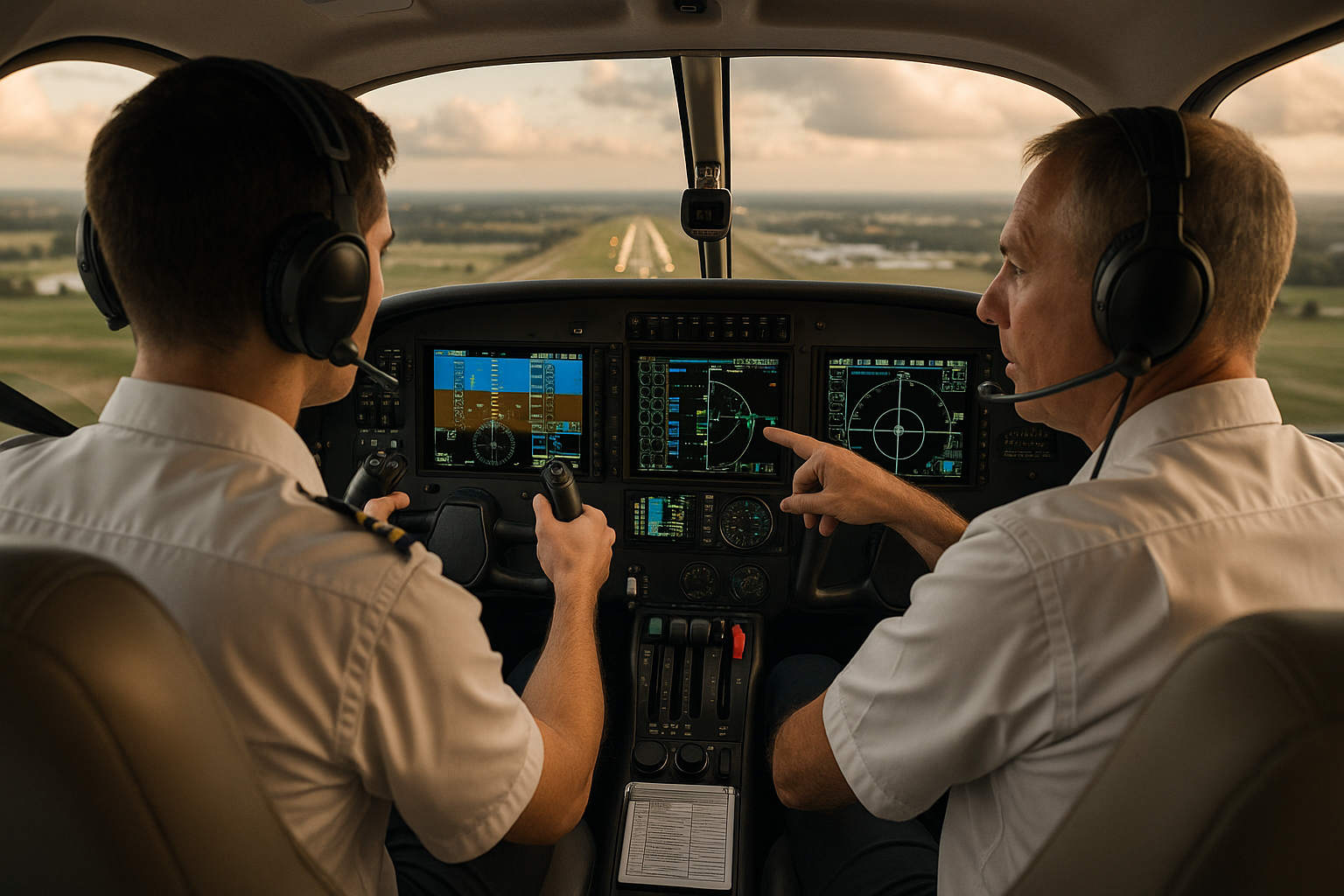
Commercial pilot training is the pathway many pilots follow to move from recreational flying to airline operations. For airline aspirants, understanding the sequence of certificates, ratings, operational skills, and professional habits that compose commercial pilot training is essential to make informed decisions about course selection, flight school, career routes, and safety priorities.
This article explains the practical components of commercial pilot training, what airline recruiters and training departments typically evaluate in applicants, and how pilots and instructors can focus training to create better aviators. The goal is operational clarity: help students, instructors, and aviation professionals translate training activities into reliable piloting skills, sound judgment, and safer outcomes in both single-pilot and multi-crew environments.
What Commercial Pilot Training Means in Practice
Commercial pilot training prepares a pilot to exercise commercial pilot privileges. Practically, that means developing higher standards of aircraft control, systems knowledge, instrument competence, navigation, risk management, and professionalism than private or recreational flying alone requires. Training emphasizes consistent procedure discipline, accurate aeronautical decision making, advanced aircraft performance understanding, and a professional approach to preparation and crew coordination.
Commercial training is not a single course. It is a progression through certificates, ratings, and experience-building that includes both foundational skills and industry-specific elements. Core elements include higher-precision maneuvering, complex aircraft operations, instrument flying, cross-country efficiency, passenger and cargo operations, and exposure to multi-crew dynamics. For airline aspirants, additional emphasis falls on crew resource management, systems knowledge, avionics proficiency, and human factors.
Why This Matters in Real-World Aviation
Airline operations are unforgiving of inconsistent procedure and weak systems knowledge. Commercial pilot training builds the competencies that reduce risk during critical phases of flight such as takeoff, approach, and landing, and improves a pilot's capacity to manage abnormal situations. Pilots who progress through deliberate, scenario-based commercial training arrive at airline training programs with a stronger foundation for simulator sessions, line indoctrination, and type-rating courses.
From a safety perspective, the shift from private to commercial mindset is significant. Commercial pilots must prioritize operational risk management, passenger safety, and regulatory compliance as part of routine flying. That means more rigorous preflight planning, conservative weather decision making, and reliable adherence to company procedures once employed. Training that emphasizes these behaviors reduces error chains and improves the pilot's capacity to work effectively in multi-crew environments.
How Pilots Should Understand the Training Pathway
Think of commercial pilot training as layered preparation. The first layer is solid basic airmanship: stick-and-rudder skills, consistent traffic pattern discipline, and dependable landings. The second layer is instrument and navigation proficiency: flying solely by reference to instruments, managing partial-panel scenarios, and accurate cross-country flight planning. The third layer is complex aircraft operation: systems management, high-performance handling, and multi-engine procedures. The fourth layer is professional development: crew coordination, communications, and operational decision making under pressure.
Each layer builds on the previous one. For example, a student who can consistently fly an instrument approach while managing radios and navigation is far better prepared for complex systems training. Similarly, a pilot who practices clear callouts, sterile cockpit discipline, and standard operating procedures will adapt more quickly to an airline environment. Training should integrate these layers rather than treating them as isolated skills.
Key Components of Commercial Pilot Training
Commercial training typically concentrates on the following practical areas. The list describes training focus rather than regulatory requirements or fixed hour totals.
- Advanced aircraft control. Precision in takeoff, climb, approach, and landing; energy management; and recovery from unusual attitudes.
- Instrument proficiency. Accurate instrument flying in IMC-like conditions, approach plate interpretation, and instrument approach procedures execution.
- Navigation and flight planning. Efficient cross-country routing, fuel planning, alternates selection, and contingency planning.
- Systems and emergency procedures. Managing electrical, fuel, and pressurization systems; practicing engine failures and abnormal checklists in a realistic manner.
- Multi-engine operations. Asymmetric handling, Vmc awareness, propeller and engine-out procedures, and performance planning for multi-engine aircraft where applicable.
- Professionalism and CRM. Clear communication, task-sharing, sterile cockpit discipline, and decision-making frameworks for time-critical scenarios.
- Advanced avionics. Mastery of glass cockpits, flight management systems, VNAV/LPV procedures, and advanced autopilot modes.
- Human factors and safety culture. Threat and error management, fatigue mitigation, and adherence to company procedures.
Why Airlines Value Certain Training Attributes
Airlines seek pilots who demonstrate system thinking, consistent procedures, and the right attitude. System thinking means understanding how aircraft systems, weather, airspace, and human performance interact. Consistent procedures reduce variability and make pilot actions predictable to other crewmembers and dispatchers. A professional attitude reflects in preflight preparation, training discipline, and the willingness to learn and accept structured oversight.
Airlines also pay attention to training that reduces risk. Pilots who have practiced scenario-based instrument work, abnormal checklist execution, and multi-crew communication generally adapt faster in airline training environments. Training that focuses only on meeting minimum requirements without integrating decision-making and safety principles often leaves gaps that appear during airline type-rating simulators.
Common Misunderstandings and Training Gaps
There are recurring misconceptions among students and even some flight schools that can create operational risk if left unaddressed. One common misunderstanding is treating commercial certification as simply a set of new maneuvers to pass an exam. In reality, commercial training should increase consistency, reduce variability, and strengthen judgment.
Another gap is insufficient emphasis on abnormal and emergency procedures. Some training programs run emergency drills as isolated items rather than integrating them into realistic scenarios. Practicing abnormal procedures under pressure, while managing flight path and communications, creates a more resilient pilot than practicing memory items in calm conditions.
A third issue is limited exposure to advanced avionics and automation management. Glass cockpits and flight management systems are standard in commercial operations. Pilots who lack hands-on experience with managing flight plans, VNAV, LNAV, and coupled approaches can struggle during airline transition training.
Practical Example: From Flight School to First Airline Interview
Consider a student named Maya. She completed basic private pilot training with solid stick-and-rudder skills. As she moved into commercial training, her instructor emphasized consistent approach profiles, stabilized approaches, and instrument approaches flown with minimal deviations. Rather than rushing to meet the next exam, Maya used scenario-based sorties that combined an instrument approach, an in-flight abnormal (simulated partial electrical failure), and a diversion to an alternate airport.
When Maya later applied for an airline entry-level assessment, she was able to demonstrate not only the required certificates but also a track record of disciplined procedures, clear radio communications, and scenario-based decision making. In the interview and simulator assessment, her ability to articulate risk mitigation, go/no-go decision points, and contingency planning distinguished her from applicants who had purely checklist-focused training.
Best Practices for Pilots Pursuing Commercial Training
Good training practices accelerate skill acquisition and reduce safety risk. The following recommendations focus on what pilots and instructors can do to get the most value from commercial training.
- Train for consistency. Practice stabilized approaches, consistent callouts, and standard traffic pattern behavior until they become automatic.
- Use scenario-based flights. Combine instrument approaches, system failures, and diversions into integrated sorties to build workload management skills.
- Emphasize automation management. Learn the FMC, autopilot modes, and approach coupling to anticipate how automation affects flight path and pilot monitoring roles.
- Prioritize CRM and communication. Even during single-pilot flights, use structured briefings, concise radio communications, and assertive decision making.
- Practice decision frameworks. Use a consistent risk assessment model for weather, fuel, and dispatch considerations so decisions remain defensible under scrutiny.
- Log purposeful experience. Seek cross-country, night, and complex aircraft time with clear training objectives to build a portfolio of purposeful experience.
Training Practicalities: Choosing a Flight School or Path
When selecting a training provider or career pathway, evaluate specific factors that influence training quality and operational readiness. Look for schools with experienced instructors who emphasize scenario-based training and CRM. Inspect training aircraft for modern avionics where possible, because familiarity with contemporary systems eases later transitions.
Also consider the structure of experience-building. Some programs offer integrated multi-engine and instrument syllabi that mirror airline training sequences. Others separate certificates into discrete blocks. Neither approach is intrinsically better but assess how the program ensures the integration of decision making, systems knowledge, and high-workload scenarios into real flights.
Common Mistakes and Misunderstandings
Below are recurrent mistakes trainees and early-career commercial pilots make that create operational risk or slow progression.
- Overfocusing on checklists without context. Memorizing procedural steps is necessary, but understanding the underlying system behavior and expected flight path outcomes is critical.
- Under-practicing failures in realistic settings. Running memory items at rest is not the same as managing an engine failure while maintaining flight path and communications.
- Neglecting automation limitations. Accepting autopilot or FMS inputs without cross-check increases the chance of mode confusion or descend/altitude deviations.
- Poor aeronautical decision-making under time pressure. Relying on intuition rather than structured assessment often results in late or risky decisions.
- Weak single-pilot CRM. Single-pilot operations still benefit from self-briefing, sterile cockpit use, and structured scanning to emulate multi-crew discipline.
How Instructors Can Improve Commercial Training Outcomes
Instructors should prioritize the development of judgment, not just the completion of tasks. That means using realistic training scenarios that introduce interruptions, abnormal conditions, and time pressure. Provide actionable feedback that separates execution errors from decision-making weaknesses. Encourage students to verbalize their risk assessment and why they selected a particular course of action.
Record simulated emergencies and debrief them with focused analysis. Highlight the link between flight path deviations and procedural mistakes. Reinforce the importance of standard phraseology, clear callouts, and sterile cockpit enforcement during critical phases of flight.
Transitioning to Multi-Crew and Airline Training
Airline operations rely on predictable behavior from each crewmember. Pilots used to flexible or informal habits must adapt to systems and command structures that prioritize standardized action. Familiarize yourself with basic crew resource management concepts, sterile cockpit practices, and the flow of multi-crew checklists. Practicing role reversals during training flights helps prospective airline pilots understand both pilot flying and pilot monitoring responsibilities.
Another important adjustment is professional documentation. Companies expect neat logbook entries, clear training records, and accurate summaries of flight experience. Prepare for airline assessments by curating your experience to emphasize complexity, instrument work, multi-engine time if applicable, and scenario-based training achievements.
Practical Example: Handling an In-Flight Partial Electrical Failure
Scenario: During a cross-country instrument flight in IMC, the pilot notices partial electrical failure with intermittent radio and avionics display flicker. The pilot must maintain control, restore required navigation, communicate with ATC, and select an appropriate diversion airport.
Practical steps applied in training: first, fly the aircraft and maintain desired flight path. Stabilize the approach or hold if necessary. Run the immediate memory items for electrical isolation while confirming essential systems remain available. If communications degrade, use transponder codes and attempt relays through ATC or nearby traffic. Prioritize a safe diversion to a nearby airport with instrument capability if systems remain unreliable. Debrief should focus on task prioritization, crosscheck of remaining instruments, and timely decision to divert before workload becomes unmanageable.
This example shows how combining systems knowledge, instrument skill, and decision frameworks reduces cascading failures. Practicing such scenarios repeatedly in training builds confidence and improves outcome consistency.
Frequently Asked Questions
How does commercial pilot training differ from private pilot training?
Commercial training raises the standard for precision, proficiency, and professional conduct. It integrates more complex aircraft operations, higher expectations for instrument competence, and scenario-based decision making that mirrors professional operations.
Do I need multi-engine experience to pursue an airline career?
Multi-engine experience is valuable and often preferred for airline candidates because it exposes pilots to asymmetric handling, engine-out procedures, and more complex systems. However, requirements vary by employer and pathway. Verify hiring preferences and training pathways with specific operators.
How should I prepare for airline assessments or interviews?
Prepare by building scenario-based experience, documenting purposeful flight time, practicing simulator assessments, and refining clear communication skills. Be ready to describe your decision process in specific scenarios and to demonstrate consistent procedural discipline.
What role does instrument proficiency play in commercial training?
Instrument proficiency is central. Commercial pilots routinely operate in marginal weather and must manage approaches, diversions, and navigation under high workload. Strong instrument skills also reduce mental workload when learning advanced avionics or transitioning to airline simulators.
How can flight instructors help students become airline-ready?
Instructors can emphasize scenario-based training, incorporate abnormal and emergency procedures into routine lessons, teach automation management, and coach strong communication and CRM behaviors that scale to multi-crew operations.
Key Takeaways
- Practical takeaway: Build integrated skills by practicing instrument approaches, systems failures, and diversions together rather than in isolation.
- Safety takeaway: Prioritize stabilized approaches, conservative decision-making, and realistic emergency practice to reduce error chains.
- Training/regulatory takeaway: Focus on demonstrable competence and professionalism; verify regulatory qualifications and airline hiring criteria directly with authorities or employers.
Commercial pilot training is a measured step toward a professional flying career. It requires deliberate practice across aircraft control, instrument proficiency, systems knowledge, and professional behaviors. For airline aspirants, the most valuable investments are scenario-based experience, thorough avionics familiarity, and consistent standard operating discipline. These skills shorten learning curves in airline training and, more importantly, reduce operational risk.
Use the guidance in this article to structure your training plan and discussions with instructors. Keep the focus on consistent performance and decision-making under realistic conditions. That approach will make you a safer pilot and a stronger candidate for professional flying opportunities.