
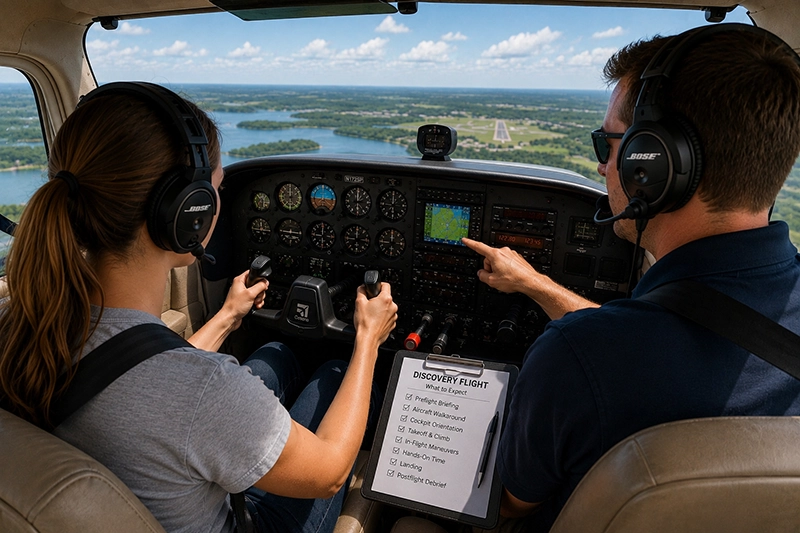
Discovery flight is the phrase most pilots use for an introductory flight that gives a prospective student a hands-on look at general aviation and basic aircraft handling. For anyone curious about flying, a discovery flight answers the core question: what does flying actually feel like, and is flight training right for me? This article walks through what happens during a typical discovery flight, why each element matters, and how to get the most value from the experience.
If you are a student pilot, an instructor, an aviation professional coordinating introductory flights, or a serious enthusiast evaluating training options, understanding the structure and goals of a discovery flight helps you set expectations, prioritize safety, and make informed decisions about next steps in training or operations.
What a Discovery Flight Is—and What It Isn't
A discovery flight is an introductory flight designed to demonstrate basic aircraft handling, aeroplane systems, and the feel of flight while keeping safety and instruction front and center. It is not a full flight lesson intended to complete a training milestone, nor is it an evaluation flight used to assess certificate eligibility. Instead, it is a structured, time-limited session that combines ground briefing, a supervised preflight inspection, a short flight with demonstration and hands-on control, and a postflight debrief.
Typical Structure: Step by Step
While each flight school and instructor will have their preferred flow, most discovery flights follow a similar sequence. The goal of this sequence is to introduce concepts progressively, manage risk, and maximize the student’s learning and enjoyment.
Preflight briefing. The instructor covers the flight’s objectives, basic aerodynamic concepts (lift, control surfaces, power), safety rules for the aircraft and airport, expected duration, and how the student may handle the controls. This is also the time to discuss weather, clothing, hearing protection, and any health or mobility considerations.
Aircraft familiarization. The student and instructor walk around the aircraft together. The instructor points out primary parts of the airplane—the wings, ailerons, flaps, rudder, elevator, propeller, fuel locations, and inspection points—explaining what the pilot checks on a preflight inspection and why those checks matter for safety.
Getting into the cockpit and systems briefing. Inside the cockpit, the instructor explains the main flight instruments and avionics in plain aviation language: attitude indicator, airspeed indicator, altimeter, heading indicator or HSI, turn coordinator, and the engine instruments. The instructor also reviews how the dual controls work and what the student can and cannot do during the flight.
Taxi, takeoff, and demonstration maneuvers. The instructor usually keeps a close hand on the controls during taxi and takeoff. Once airborne and established at a safe altitude and in suitable airspace, the instructor demonstrates gentle maneuvers: straight-and-level flight, coordinated turns, climbs and descents, and possibly a simple stall demonstration if appropriate for the aircraft and the student’s comfort level.
Hands-on time. Under instructor supervision, the student is typically allowed to move the controls and feel the airplane’s response. Common hands-on activities include maintaining heading and altitude, gentle turns, simple climbs and descents, and an approach or two if conditions and policy allow. The instructor will emphasize the primary control inputs and how small, coordinated inputs produce predictable results.
Return, landing, and postflight debrief. The instructor handles or closely supervises the approach and landing. After shutdown, the debrief reviews what the student experienced, answers questions about training pathways, and outlines cost, scheduling, and what to expect should the student choose to continue with formal training.
Why This Matters in Real-World Aviation
A discovery flight serves multiple practical roles in aviation. For aspiring pilots it reduces uncertainty—people make better decisions about committing time and money when they know what training will involve. For flight schools, these flights are an essential orientation tool that helps match students to appropriate aircraft and instructors. For instructors and operators, a well-run discovery flight is a low-risk environment to demonstrate standards of safety, aeronautical decision-making, and communication style.
From a safety perspective, discovery flights expose new students to critical preflight thinking: how to assess weather, how aircraft configuration affects performance, and how the pilot handles abnormal sensations in flight. Early exposure to these topics builds situational awareness and reduces the likelihood that a new student will adopt unsafe misconceptions.
How Pilots Should Understand This Topic
Think of a discovery flight as an experiential interview. The prospective student assesses whether they enjoy flying and can work with a particular instructor, while the instructor assesses the student’s aptitude, attitude, and any potential limitations that could affect future training. This mutual assessment helps both parties set realistic goals.
Technically, a discovery flight is also a demonstration of primary flight controls and basic aerodynamic effects. For example, the instructor might show how the ailerons and rudder work together to coordinate turns, how pitch and power affect climb and descent, and how flaps change the wing’s lift and drag characteristics. Understanding these cause-and-effect relationships is foundational to future training and safe operation.
Operationally, discovery flights introduce real-world constraints. Weather minima, airport traffic, aircraft availability, and maintenance status all influence whether a flight proceeds and what maneuvers are performed. A discovery flight is your first lesson in how aviation decision-making balances training goals with operational realities.
Common Mistakes or Misunderstandings
Misunderstanding the purpose of the flight. Some students expect a discovery flight to be a complete lesson that progresses them toward a certificate. That expectation can cause disappointment. A discovery flight is designed to inform—not to certify progress toward a pilot certificate.
Underestimating preflight importance. Because the flight is short, some people are tempted to skip the walkaround or rush the briefing. That step is where critical safety information is conveyed. Skipping it reduces the value of the experience and misses an early safety lesson.
Assuming you will become a pilot after a single flight. The discovery flight can feel exhilarating, but training requires sustained practice, study, and incremental skill building. Treat the flight as an introduction, not a conclusion.
Confusion about logging time. Whether and how flight time from a discovery flight can be logged depends on who is manipulating the controls, how the flight is conducted, and current regulatory guidance. Students and instructors should discuss time-logging policies before the flight and consult applicable regulations or a flight school’s standard operating procedures.
Choosing a flight solely based on cost. While price matters, quality of instruction, instructor experience, safety culture, and aircraft maintenance records are more important factors for long-term training success.
Practical Example: A Typical 45-Minute Discovery Flight in a Cessna 172
Scenario: A prospective student arrives at a local flight school on a clear morning for a 45-minute discovery flight in a four-seat, single-engine piston airplane. After meeting the instructor, they begin with a 15-minute briefing that includes aircraft basics, the day's weather, airport traffic procedures, and an overview of maneuvers the student will experience. The instructor asks about the student’s medical status, comfort with small spaces and motion, and any relevant prior experience.
Walkaround and preflight. The student assists with the walkaround inspection under the instructor’s guidance. They identify fuel selectors, oil check, tires, and aileron hinges. The instructor explains why fuel sump checks and securing control locks matter for safety.
Cockpit orientation. The instructor shows the panel: how to interpret the airspeed indicator, altimeter, and attitude indicator. The student practices a mock startup checklist on the ground and dons headset and seatbelt.
Taxi and takeoff. With the instructor in command, they taxi to the active runway. The student feels the airplane accelerate and climb into the pattern. At pattern altitude, the instructor demonstrates straight-and-level flight and coordinated turns. The student then takes the controls to maintain heading and altitude for a few minutes, receiving real-time coaching on hand position, sight picture, and gentle control inputs.
Maneuvers and demonstration. For instructional value, the instructor demonstrates a gentle stall and recovery at a safe altitude so the student can feel the buffeting and hear the power and attitude changes. The demonstration is carefully controlled and explained to avoid surprise. On return to the airport, the instructor explains how approach configuration and pitch control set landing attitude, then lands the airplane safely.
Debrief. After taxiing back and shutting down, the instructor debriefs the flight, suggests next steps for formal training, and answers questions about time commitment, recommended study materials, and medical certification pathways if the student is interested in continuing.
Best Practices for Pilots and Students
Prepare questions in advance. Think about what you want to learn—aircraft handling, instrument displays, or training pathways. Specific questions lead to targeted demonstrations.
Listen during the preflight briefing. A thorough walkaround and briefing are the best places to learn about safety margins, fuel planning, and typical operational constraints.
Be honest about health and comfort. If you are prone to motion sickness, anxious in small spaces, or have mobility limitations, tell the instructor. They can adapt the experience or recommend alternatives that still provide useful exposure.
Observe safety culture. Notice how the instructor talks about maintenance, preflight checks, and decision-making about weather and aircraft status. A strong safety culture at a school is a long-term advantage.
Ask about next steps and costs up front. If you think you may pursue training, get clear information about pricing structure, scheduling, and what the first few lessons will look like.
Safety Considerations and Operational Limits
Discovery flights are low-risk by design, but they require the same attention to safety and regulation as any other flight. The instructor assesses aircraft airworthiness and performance, checks weight and balance, and confirms operational weather minima for the flight. Certain demonstrations, like intentional stalls or steep turns, are limited by aircraft type, training policy, and the student’s comfort level. The instructor will not perform maneuvers that exceed safe operating limits or the flight school’s policies.
Decision-making about whether to fly depends on current conditions: crosswinds at the airport, visibility, and air traffic congestion. An instructor may cancel or shorten the flight for safety reasons; that decision is part of the demonstration—you observe how instructors prioritize safety over entertainment.
Common Questions Students Ask During a Discovery Flight
Typical topics include: how long to get a private pilot certificate, what the medical requirements are, how often training must be scheduled, and what aircraft are best for training. The instructor should provide honest, practical answers tailored to the student’s goals and circumstances.
Frequently Asked Questions
How long does a discovery flight usually last?
Discovery flights commonly range from 30 to 60 minutes. That window provides enough time for a full briefing, a short flight with hands-on control, and a debriefing. Some schools also offer shorter orientation flights or longer introductory packages that include ground instruction or additional flying time.
Will I get to fly the airplane?
Yes. Under close instructor supervision, students are typically allowed to manipulate the controls and practice basic maneuvers. The instructor retains responsibility for safety and will intervene as needed. The amount of hands-on time depends on the student’s comfort and the training environment.
Can I log the flight time from a discovery flight?
Whether you can log time depends on who was manipulating the controls and applicable regulations or school policies. If you manipulate the controls while a competent pilot is acting as safety pilot or instructor, some of that time may be logged under certain circumstances. Confirm with your instructor and consult the relevant flight time logging guidance before assuming any flight time counts toward certification.
Is a discovery flight safe for someone with little aviation experience?
Yes. Discovery flights are designed for beginners and are conducted with emphasis on safety and comfort. Instructors are trained to explain procedures clearly and to avoid surprising the student. If you have health concerns or motion sickness, mention it during the booking or briefing so the instructor can plan accordingly.
How much does a discovery flight cost?
Costs vary widely depending on aircraft type, location, and flight school. Rather than choosing purely on price, compare instructor qualifications, maintenance practices, and safety culture when selecting a school. Ask the school what the discovery flight includes so you can compare value across providers.
Key Mistakes to Avoid When Booking or Taking a Discovery Flight
Choosing the cheapest option without confirming instructor or aircraft standards, failing to ask about cancellation policies related to weather, and neglecting to discuss any physical limitations beforehand are common mistakes. Also avoid assuming the discovery flight is a substitute for structured lessons; treat it instead as an informative first step.
How Instructors and Flight Schools Should Structure Discovery Flights
For instructors, clarity and consistency matter. A professional discovery flight includes a standardized briefing, a structured walkaround, careful introduction to the cockpit, a planned sequence of demonstrations, and a thorough debrief. Schools should document their procedures and ensure instructors follow a safety-focused script while leaving room for student questions and hands-on experience.
Real-World Training and Operational Takeaways
A discovery flight is a small but potent opportunity to evaluate a flight school’s training environment. Observe how instructors teach basic concepts, how they communicate about risks, and whether safety margins are clearly explained. These signals predict the quality of future training and operational professionalism.
Key Takeaways
- Discovery flights introduce students to basic aircraft handling, systems, and aviation decision-making in a supervised, low-risk environment.
- Safety and preflight procedures are central; pay attention to the briefing, walkaround, and how the instructor manages weather and operational limits.
- If you plan to continue training, use the flight to assess the instructor's teaching style, the school’s safety culture, and practical next steps for scheduling and study.
Discovery flights are where many pilots begin their aviation journeys. They are educational, evaluative, and should leave you with a clear sense of whether flight training fits your goals. Go prepared, ask questions, and treat the flight as an opportunity to learn not only about flying but about how professional pilots manage aircraft and decisions in the real world.