
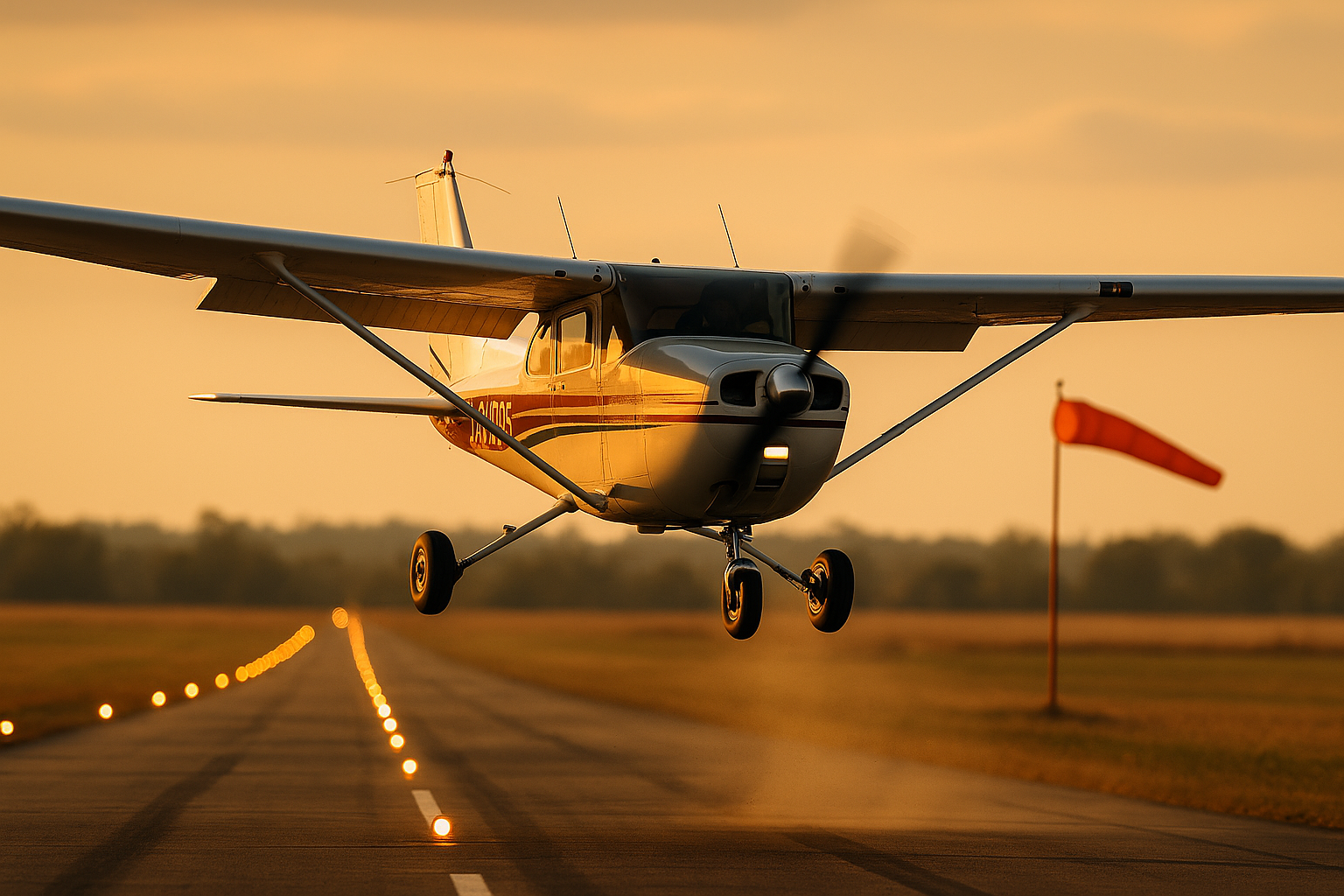
High winds change the way an airplane behaves in every phase of flight. For pilots, student pilots, and flight instructors, learning how to fly efficiently in high winds means balancing performance, safety, and sound judgment so the airplane completes the mission with acceptable risk and predictable results.
This article explains wind effects on aircraft performance and handling, translates those effects into practical cockpit techniques, and outlines training and decision-making priorities. The guidance emphasizes pilot actions that reduce workload, improve energy management, and maintain safety when winds are strong, gusty, or varying with altitude.
Understanding the Core Idea
Flying efficiently in high winds starts with recognizing that wind is an external energy source that alters groundspeed, lift, control inputs, and required power. Efficiency is not only about saving fuel. It also means choosing speeds, altitudes, profiles, and maneuvers that minimize risk, reduce repeated corrections, and maximize predictability. A pilot flying efficiently will manage airspeed and energy to reduce exposure to sudden wind disturbances while keeping the aircraft within safe operating margins.
Why This Matters in Real-World Aviation
Strong winds affect flight planning, fuel calculations, takeoff and landing performance, en route fuel consumption, and risk of go-arounds or diversions. For flight training, high-wind operations are a core skill set: they test judgment, crosswind control techniques, and the ability to manage surprise events like gusts or low-level wind shear. For commercial and GA operators, efficient high-wind flying reduces unnecessary delays, conserves fuel, and lowers wear on airframes and brakes caused by repeated go-arounds or heavy braking after fast wind-driven touchdowns.
From a safety perspective, winds produce turbulence, rotor, and shear zones that can make approaches unstable, complicate runway alignments, and mask performance limits. Organizing a flight with wind in mind reduces the chance of an unstable approach, excessive sideslip, or landing long because of ground-speed misjudgment.
How Pilots Should Understand Wind Effects
Break the wind problem into components: direction relative to the runway or flight track, steadiness versus gustiness, and wind gradient with altitude. Headwind reduces groundspeed for a given airspeed and improves climb gradients during departure. Tailwind increases groundspeed and lengthens landing roll. Crosswind requires control inputs to maintain runway alignment and increases runway distance if correction techniques are imperfect.
Gusts add transient changes to the effective angle of attack and require the pilot to manage energy instead of chasing instantaneous flight-path deviations. A steady strong wind is easier to manage than a gusty, variable one because you can plan and trim. A wind gradient, where wind speed or direction changes with altitude, is especially relevant near the surface and during approach and departure; it can produce sudden sink or airspeed changes.
Efficient flying in these conditions hinges on three practical, interrelated principles: choose appropriate airspeed for energy margins, fly a simple and consistent control technique that minimizes corrections, and plan altitudes/routes that avoid the worst wind layers when that provides an operational benefit.
Aircraft Handling and Energy Management
Airspeed is the primary tool for managing energy in gusty or strong wind conditions. Holding a little extra airspeed increases the margin above stall, reduces the probability that a sudden gust will produce a large buffet or sink, and makes the airplane less sensitive to turbulence. That extra speed costs fuel, but it pays in control predictability and safety.
Trim is your friend. In sustained strong winds, use trim to relieve control forces so you can focus on flight path and power. Avoid constant, small control pressures that cause fatigue and increase the chance of overcorrection. When turbulence is expected for a period, a stable trimmed configuration reduces pilot workload.
Control strategy differs by phase. In cruise, aim for a steady power setting and small, measured pitch or power changes to correct groundspeed or altitude deviations. On approach, resist the urge to chase every gust with big control deflections. Instead, aim for a stabilized approach profile with a consistent descent rate and speed management that anticipates gusts rather than reacting to them.
Planning and Route Selection
Efficient planning starts with a realistic assessment of winds aloft and surface forecasts. Where possible, select altitudes that give the best tradeoff between headwind or tailwind and turbulence. Sometimes a higher altitude with stronger tailwind reduces flight time, but if those winds are turbulent or cause a strong wind shear risk on descent, the short time savings are not worth the added hazards.
When you can choose routing, favor tracks that align with runways at your destination or alternate airports, especially if crosswinds are a limiting factor. If diversion is a reasonable possibility because of shifting winds, pre-plan alternates that have runways aligned with expected winds or that offer lower exposure to rotor and turbulence.
Takeoff and Departure Considerations
During takeoff, strong headwind reduces ground roll and improves climb performance. Crosswind at the ground requires precise control during the ground roll and initial climb. Use directional control inputs smoothly and avoid aggressive rudder or brake inputs that can lead to loss of control on the ground.
Vigilance on rotation speed and climb attitude is crucial. If gusting, rotate decisively at the target airspeed rather than trying to hold the nose down against short-term variations. Once airborne, establish a stable climb attitude and trim so that you can focus on flying the departure path. If a wind shear or rotor area is suspected near the surface, consider a different runway or delay departure until conditions are safer.
Approach and Landing Techniques
Approach and landing are the phases where many high-wind mishaps occur. Efficient technique emphasizes a stabilized approach, energy management, and a single, practiced method for crosswind correction. There are two primary methods to align the airplane with the runway: the crab method and the sideslip method.
With the crab method, you point the aircraft nose into the wind to maintain runway track, then transition to a drift-correcting control input close to the ground so the airplane touches down aligned with the runway. With the sideslip method, you apply aileron into the wind and opposite rudder to maintain runway alignment during the landing roll, touching down on the upwind main gear first. Both are valid; choose the method you and your aircraft are trained for, and practice it under instructor supervision before using it in strong winds.
Maintain a firm, consistent approach speed. Fluctuating speeds invite instability. If the wind is gusty, a modest increase in approach speed provides a margin above stall while avoiding excessive float. Remember that the correct approach speed varies by aircraft and configuration; always consult the aircraft flight manual and practice the technique in training.
Expect that ground effect and sudden wind changes near the surface can alter landing behavior. Be prepared to execute a go-around promptly if the approach becomes unstable, if the touchdown will be long, or if the runway alignment requires uncomfortable or unsafe corrections.
Crosswind Control: Practical Guidance
Keep control inputs smooth. Anticipate that rudder will be required to maintain runway heading while aileron counters drift. Coordinate rudder and aileron so the airplane remains controllable through touchdown and rollout. Avoid large, rapid control reversals that can induce oscillations and increase the risk of veering off the runway.
When landing in strong crosswind, use braking progressively and steer with rudder to maintain directional control. If your airplane is equipped with differential braking or nosewheel steering, practice their coordinated use at safe speeds in training environments rather than learning them for the first time in gusty conditions.
Turbulence, Rotors, and Wind Shear
Mountain wave, rotor, and shear zones create severe turbulence and sudden energy changes. These phenomena are localized and can be surprisingly strong even when general winds are moderate. Avoid known rotor areas, lee sides of ridges, and narrow valleys with strong winds unless you have specific mountain flying training and the airplane is suitable for that environment.
When encountering turbulence, maintain power and speed to the recommended turbulence penetration speed if provided in your aircraft guidance. That speed reduces structural stress and minimizes the amplitude of altitude excursions. Keep control inputs measured and accept some altitude and speed variation rather than over-controlling. If turbulence becomes severe, consider diverting or delaying the flight if a safe recovery is not possible.
Fuel and Time Efficiency Considerations
Wind directly affects groundspeed and therefore fuel burn per mile. A headwind reduces groundspeed and increases time aloft for a given distance, while a tailwind does the opposite. Flying efficient in high winds is therefore a matter of choosing altitudes and tracks that give the best fuel-time tradeoff while keeping the flight safe and stable.
Do not sacrifice a stable, safe approach for a small fuel saving. A diversion that avoids gusty or crosswind conditions may increase direct costs but reduce operational risk and potential for damage or accidents. For scheduled commercial operations, wind-driven delays and go-arounds can cascade into higher costs and passenger inconvenience. Efficient flying must factor in these operational realities rather than pure fuel economy.
Training and Decision-Making
High-wind operations should be introduced progressively in training. Start with moderate, steady winds and build to gusty and crosswind practice under an instructor. Simulators are useful for rehearsing scenarios that would be risky to try in a real airplane, such as strong shear on final or engine-out during a gusty departure.
Decision-making is central. Establish personal minimums anchored in training and experience, and review them with an instructor or chief pilot. Personal minimums are not regulatory requirements, but they are a practical tool to maintain safety margins. Review the airplane's performance data before flight, and be conservative when winds are gusty, forecast to increase, or when alternates offer safer runway orientation.
Common Mistakes and Misunderstandings
Pilots often make the mistake of flying reactively instead of proactively. Reacting to each gust with aggressive control inputs increases workload and can produce overcorrections. Another common error is underestimating the wind gradient near the surface during approach and landing; pilots may calculate approach speed for a steady wind and then be surprised by a sudden loss of headwind near the runway, resulting in a high sink rate.
Some pilots also rely on textbook numbers for gust increments without checking the aircraft's flight manual or considering the specific conditions. An approach speed that is safe for one aircraft or weight and flap configuration may be inappropriate for another. Finally, choosing a method for crosswind correction without practicing it until it becomes a disciplined reflex is a training gap; improvisation during a gusty final often leads to unstable approaches.
Practical Example
Imagine a short cross-country in a single-engine trainer to a field where winds are steady aloft but gusty at the surface. Prior to departure, you brief alternates with runways aligned into the expected wind and choose an altitude that reduces time in the gusty surface layer while minimizing fuel burn. In cruise, you maintain a slightly higher indicated airspeed to smooth the ride and reduce susceptibility to turbulence. On descent, you request updated wind information and plan a downwind leg that provides an aligned base leg to the runway, so the final approach minimizes cross-track corrections.
As you turn final, you establish the chosen crosswind technique and fly a stabilized approach with a modest speed increment to maintain margin. If a strong shear or rotor causes a sudden sink or drop in airspeed on short final, you commit to a go-around immediately. The diversion to an alternate with a runway aligned to the wind is always available in your plan, and you are not pressured to land on an unstable approach for convenience or savings.
Best Practices for Pilots
First, incorporate wind briefings into every flight plan. Know surface winds, winds aloft, and the probability of gusts or shear. Second, choose conservative speeds and trim early so you are not continuously fighting the controls. Third, practice a single, well-rehearsed method for crosswind landings with an instructor until it becomes reliable.
Fourth, prioritize stabilized approaches. If your approach meets instability criteria at the decision altitude or a defined point on final, execute a go-around without hesitation. Fifth, plan alternates in advance and set personal minimums based on demonstrated ability and training. Finally, debrief every high-wind flight with an instructor or peer to identify small technique adjustments that improve safety and efficiency.
Frequently Asked Questions
How should I adjust approach speed in gusty winds?
Increase approach speed to provide a margin above stall and to make the airplane less sensitive to gusts. The exact increment varies by airplane, weight, and flaps configuration. Consult your flight manual and practice the increment in training with an instructor. Avoid guessing numbers; use training-derived, aircraft-specific guidance whenever possible.
When should I choose a go-around in high winds?
Execute a go-around if the approach becomes unstable, if the aircraft is not configured and stabilized by the predetermined point, if a sudden loss of airspeed occurs on final, or if control inputs required to maintain the approach exceed your trained capability. In very gusty conditions, lower the threshold for a go-around and treat it as a normal procedure rather than an emergency.
Which crosswind technique is best?
Both crab and sideslip techniques are valid. The better technique is the one you and your crew have trained and practiced under supervision. Sideslip allows continuous runway alignment to touchdown, while crab can be easier to manage during long final and requires a coordinated conversion to a slip or rudder-aligned touchdown. Train both under instruction and follow the method that gives the most consistent, predictable results in your airplane.
Are there wind conditions I should never fly in?
There is no universal numeric answer because acceptability depends on pilot experience, aircraft capability, and operational context. Avoid environments with suspected severe turbulence, rotor, or wind shear if you lack appropriate training or the airplane is not suited. Also, be cautious when winds are gusty with rapid directional changes near a runway or when crosswind components exceed your practiced and demonstrated ability.
How do winds affect fuel planning and alternates?
Strong headwinds increase time aloft and fuel burn, while strong tailwinds lower it for a given route. Plan alternates that reduce exposure to crosswind or gusty conditions at the destination. Factor potential wind-related delays or diversion fuel into your fuel plan so you do not feel pressured to attempt a marginal approach to save fuel.
Key Takeaways
- Practical takeaway: Use airspeed and trim to manage energy and reduce the need for continual control corrections in high winds.
- Safety takeaway: Prioritize stabilized approaches and be willing to execute a go-around; do not accept unstable landings to save time or fuel.
- Training/decision-making takeaway: Build high-wind skills progressively with an instructor and establish personal minimums tailored to your aircraft and experience.
Flying efficiently in high winds is a discipline of selecting the right energy state, applying consistent control techniques, and making conservative operational decisions. Strong winds amplify pilot errors, so efficiency should be measured in predictable, safe outcomes rather than only fuel savings. Practice under supervision, brief contingencies, and keep decisions simple: fly a stable approach, maintain margins, and divert when conditions exceed your prepared capability.