
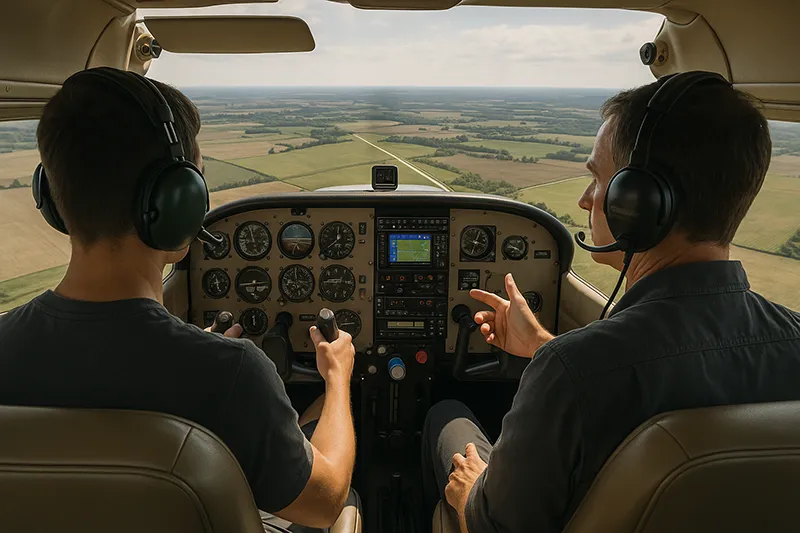
Engine failure training is one of the most consequential areas of pilot instruction because it teaches pilots how to make rapid, safe decisions when a critical system that provides thrust and electrical power no longer works as expected. For student pilots, flight instructors, and experienced aviators, realistic and well-structured engine failure training builds the mental models, aircraft control skills, and decision-making processes needed to handle an engine-out event under pressure.
This article explains what effective engine failure training looks like in practical terms, why it matters in real-world operations, common misunderstandings that reduce training value, and how instructors and pilots can design recurring practice that transfers to safe outcomes in actual emergencies. The primary keyword engine failure training appears early to reflect the focus on practice and operational readiness.
What Engine Failure Training Really Means
At its core, engine failure training is not only about memorizing a checklist or pulling a checklist from memory. The discipline has three interlocking goals: physical aircraft control, system diagnosis, and high-quality decision making. Physical control covers the fine points of maintaining attitude, airspeed, and configuration so the airplane remains controllable and positioned to maneuver safely. System diagnosis covers recognizing the signs of partial or total power loss and distinguishing between engine failure, induction problems, fuel starvation, or instrument issues. Decision making addresses where to fly, whether to restart, when to accept a forced landing, and how to manage risk for passengers and people on the ground.
Good training integrates these goals into scenarios that reflect likely operational contexts. That means practicing during takeoff, climb, cruise, and approach phases, and under varying environmental conditions such as light turbulence, high density altitude, and differing traffic or airspace constraints. The objective is to make correct pilot responses habitual, so when stress narrows attention, pilots still perform the essential tasks first: fly the airplane, analyze the problem, and take appropriate action.
Why This Matters in Real-World Aviation
Engine failures remain high-consequence events. Even with successful outcomes, they often expose weaknesses in a pilot's training: slow recognition, poor energy management, or decisions that increase risk, such as attempting low-altitude restarts when options for a safe landing are limited. Real-world flying brings complexity that simulation or sterile practice flights do not replicate: passengers who react emotionally, variable terrain, traffic, and regulatory constraints. Effective engine failure training prepares pilots for complexity rather than for tidy textbook sequences.
For flight instructors and training organizations, the safety value is twofold. First, it reduces the likelihood that a pilot will compound an engine problem with poor control inputs or bad decision making. Second, it teaches pilots to manage the environment and people on board, including communicating with passengers, ATC, and other aircraft while maintaining control and making timely safety decisions.
How Pilots Should Understand Engine Failure Training
Pilots should think of engine failure training as the practice of high-leverage tasks that must succeed under stress. High-leverage tasks are those that, when performed correctly, yield the greatest practical safety benefit: maintaining control, configuring the airplane for best glide or controlled flight, selecting and navigating to a landing area if required, and communicating priority information. Training should sequence these tasks by priority rather than by a rigid checklist order when time or altitude is limited.
Training should also emphasize the limits of quick fixes. An immediate restart may be appropriate in some cases, but the pilot must weigh restart attempts against the time and altitude available, the likelihood of success, and the consequences of delaying a forced landing. Properly trained pilots make that calculus quickly and conservatively.
Training Design: Practical Elements That Transfer
Designing engine failure training that transfers to real flight involves several practical elements. Scenarios should be representative of the operations the pilot conducts: training in a busy traffic pattern for frequent short-field operators, and cruise scenarios for cross-country pilots. Each scenario should include constraints such as simulated passenger distraction, communication tasks, and system ambiguity (for example, a partial power loss versus a total loss).
Good training exercises incorporate staged realism. Start with clearly staged, low-stress failures at safe altitudes to teach the required motor skills: turning toward a chosen landing site, maintaining appropriate pitch and airspeed without overcorrecting, and handling configuration changes. Move progressively to higher fidelity scenarios with lower altitudes, crosswind, and competing tasks. Integrate judgment calls like whether to accept a forced landing to an off-field site, attempt a restart, or return to the airfield while considering obstacles and wind.
Use of flight simulation and partial-panel training complements in-aircraft practice. Simulation allows repetition and exposure to rare combinations of failures, but it does not replace the kinesthetic and sensory learning that occurs in the aircraft. Training that pairs simulator practice with in-flight scenarios produces better retention and confidence.
Recognition and Diagnosis: The First Seconds
The first few seconds after an engine problem demand rapid recognition. Pilots should train to pick up both direct cues and secondary indicators. Direct cues include loss of felt thrust, decreasing airspeed if power is not maintained, and observable changes in engine instruments. Secondary indicators are things like a sudden drop in manifold pressure, unexpected engine temperature changes, abnormal sounds, or electrical anomalies that may accompany alternator or magneto issues.
Train to verbalize what you see and feel. A short mental script—what some instructors call a callout—helps keep attention oriented. For example, a concise recognition callout might be: "power loss, best glide, identify." Verbalizing the state anchors the pilot's attention to the right priorities under stress.
Energy Management and Aircraft Control
Maintaining proper energy state is often the difference between a recoverable emergency and a forced landing with poor outcomes. That means controlling airspeed and attitude before attempting diagnostic or procedural tasks. Training should emphasize the concept of energy management: keeping enough airspeed to maintain controllability while not committing to an excessive descent that eliminates landing options.
Pilots should practice configuring the airplane for the safest glide or approach profile given their aircraft type and operating context. Because specific speeds and configurations vary by make and model, pilots must learn and train with the airplane's performance data from the pilot operating handbook and validated training material. Where documentation is not prescriptive, training should emphasize how to determine a safe glide attitude and how to maintain it under workload.
Decision Making Under Constraint
Decision making in engine failure scenarios frequently involves constrained time, diminishing altitude, and partial information. Teach deliberate decision strategies that scale with time and altitude. When altitude is plentiful, crews or single pilots can spend more time diagnosing, attempting restarts, and communicating. When altitude is low, the decision window shrinks and pilots must prioritize a safe landing over diagnosing every possible cause.
Introduce a decision framework that categorizes available options and their outcomes, such as continuing flight to a runway, landing straight ahead, or selecting an off-field site. Training should reinforce conservative choices when uncertainty is high. For many pilots, the safest decision in low altitude events is to configure the airplane for landing and commit to a suitable landing area rather than spending time on restarts that may not succeed.
Common Mistakes and Misunderstandings
Several recurrent errors reduce the effectiveness of engine failure training and increase operational risk. First, practicing failures only at high altitude gives a false sense of security. Pilots can perform many tasks at altitude that are impossible at pattern altitude. Training should include low-altitude, high-workload scenarios that force prioritization.
Second, a narrow focus on memorized checklists can mislead pilots who face ambiguous problems. If a pilot rigidly follows a long checklist without preserving aircraft control, the result can be a loss of control. Training must emphasize the hierarchy of tasks: fly, analyze, and then act. Memorized lists are useful, but they must be subordinate to flying the airplane.
Third, poor communication can undermine an otherwise successful outcome. In multi-crew or passenger-carrying operations, failure to communicate intentions quickly creates confusion and delays. Training should include passenger briefings and short, decisive communications with ATC when time allows.
Finally, a common misunderstanding is overconfidence in restarts. Some pilots spend too much time and altitude attempting complex restarts, when a quick commitment to a safe landing would have been the better choice. Training should cultivate realistic expectations about restart likelihood and encourage conservative judgment.
Practical Example: A Low-Altitude Loss on the Downwind
Consider a scenario in a single-engine trainer operating in a local traffic pattern. The aircraft is on downwind with a moderate crosswind when the engine coughs and settles to idle power. The pilot feels deceleration and notes a reduction in engine sound and climb performance. Altitude is limited and traffic is present.
Good training prepares the pilot to respond immediately: maintain control and a safe airspeed, establish a glide attitude appropriate for the airplane, and briefly scan instruments to confirm the nature of the power loss. The pilot decides whether to land on the remaining runway or accept a forced landing to a nearby field depending on distance, wind, and obstacles. They inform the instructor or ATC with a short, clear callout, configure the airplane for landing, and brief passengers if time allows.
If the engine sputter indicates a transient issue and altitude is adequate, the pilot may attempt a quick restart using the most likely corrective action based on the aircraft's usual failure modes, but only if doing so does not compromise the glide toward a selected landing area. Training should practice both paths so the pilot is comfortable switching from diagnosis to landing and back if conditions permit.
Best Practices for Pilots and Instructors
Effective practices that improve real-world outcomes are practical, repeatable, and conservative. Below are succinct best practices that instructors and pilots can apply.
- Train for the phase of flight you fly most often. Pattern work, short hops, and cross-country operations each require different focus areas.
- Prioritize aircraft control. Keep attitude and airspeed stable before anything else, then work the problem.
- Practice staged realism. Progress from high-altitude, low-workload scenarios to low-altitude, high-workload events with distractions.
- Use verbal callouts to anchor priorities. Short, consistent phrases help under stress.
- Validate restart procedures and limits against the pilot operating handbook for your make and model before relying on them in flight.
- Include passenger management in scenarios so pilots learn to brief and calm occupants while flying the airplane.
- Review and rehearse off-field landing planning: quick assessment of surface, wind, obstacles, and approach angle.
Training Frequency and Recurrency
Repetition is essential to retain high-stress skills. How frequently pilots should practice engine failure training depends on experience, recent exposure, and the operational environment. Short, regular practice sessions that reinforce fundamental control skills and decision patterns are generally more effective than infrequent long sessions. Instructors should assess a pilot's proficiency and design recurring training to address observed weaknesses.
Simulators, if available, are excellent for repeating rare or complex failures safely. However, in-aircraft training is still needed to build the sensory and kinesthetic cues that inform real-world recovery. A blended approach enhances retention and confidence.
What Instruments and Systems Teach You
Instrument indications can aid diagnosis but they can also confuse when they reflect secondary failures. For example, an alternator or electrical failure can look like a broader power problem when instruments lose reliability. Training should cover basic systems reasoning so pilots can separate engine mechanical issues from electrical or fuel system anomalies. Simulated partial-panel exercises are useful to train this diagnostic skill under workload.
Pilots should resist treating any single instrument as definitive in isolation. Cross-checks, correlation with sound and performance, and a prioritized approach to troubleshooting yield better outcomes than overreliance on any single gauge.
Human Factors: Stress, Startle, and Decision Biases
Human factors play a major role in success or failure during engine incidents. Startle effect can delay recognition and response. Stress narrows attention and increases the likelihood of tunnel vision on secondary tasks like trying to restart while airspeed bleeds off. Training that includes time-pressure, sensory distraction, and staged startle helps pilots build resistance to these effects.
Decision biases also appear repeatedly in post-incident analyses. Examples include commitment bias, where a pilot remains committed to a plan that is no longer safe, and optimism bias, where a pilot overestimates restart success. Instructors should teach metacognitive techniques that prompt pilots to question their assumptions and make conservative choices when uncertainty is high.
Maintenance and Operational Considerations
Engine failure training often reveals patterns that point to maintenance or operational causes. For organizations, recurring in-flight failures during training or operations should trigger inspections and a review of maintenance records. Pilots and operators should also ensure fuel management practices and preflight checks reduce the chance of fuel-related power loss.
Operationally, planning for an engine-out event includes route selection that maximizes safe landing options, avoiding low-level terrain when practicable, and briefings that prepare occupants for the possibility of an off-field landing. These considerations are part of prudent risk management and should be incorporated into normal operational planning.
Frequently Asked Questions
How often should I practice engine failure procedures?
Practice frequency depends on your experience level and the types of flights you fly. Short, regular sessions that reinforce control skills and decision patterns are usually more effective than infrequent, long sessions. Discuss a tailored recurrent practice plan with a qualified instructor who understands your aircraft and operations.
Should I always attempt an engine restart?
Not always. The decision to attempt a restart depends on altitude, time available, aircraft performance, and the likelihood of success. If altitude is low or a safe landing area is within reach, configuring for landing and committing to it may be the safer choice. Training should emphasize conservative judgment under uncertainty.
Can simulators replace in-aircraft engine failure practice?
Simulators are a powerful tool for exposing pilots to a wide range of failures safely and repeatedly. They should be used to complement, not replace, in-aircraft practice, which provides essential sensory and control cues that simulators may not reproduce fully.
How do I choose the best landing spot during an off-field landing?
Choose an area that offers the longest uninterrupted distance into the wind with the fewest obstacles and the most level surface. Prioritize avoiding populated areas and hazards. Training should include rapid assessment techniques to make these choices under pressure.
What are common maintenance issues that lead to engine failure?
Maintenance-related causes can include fuel contamination or exhaustion, induction blockages, ignition system failures, or improper maintenance procedures. Any recurring in-flight failures should prompt inspection and review by qualified maintenance personnel. If you suspect a maintenance cause, ground the airplane until it is inspected.
Putting It Into Practice: A Training Session Outline
An effective training session begins with a briefing that sets objectives, safety margins, and the staged realism to be used. Begin with high-altitude recognition and restart drills to practice motor skills and callouts. Move to pattern work and low-altitude simulated failures, including scenarios with passenger distraction or ATC communication tasks. Finish with a debrief focused on decision-making rationale, task prioritization, and any habitual tendencies that need correction.
The debrief is the training heart. It should be specific: identify what the pilot did correctly, where they hesitated, and what cues were missed. Use video or audio recording if available to highlight subtle deviations and to support deliberate practice plans between sessions.
Key Takeaways
- Practical takeaway: Prioritize aircraft control and energy management first, then diagnose and act.
- Safety takeaway: Train under realistic constraints, including low-altitude scenarios, to avoid overconfidence from high-altitude-only practice.
- Training/decision-making takeaway: Use staged realism, verbal callouts, and conservative judgment; validate any restart or procedural specifics against the airplane's POH and applicable guidance.
Engine failure training is an investment in skills that rarely occur but always matter. By focusing on realistic scenarios, prioritizing aircraft control, and teaching conservative decision-making, instructors and pilots can reduce risk and increase the likelihood of safe outcomes when an engine problem occurs in real-world flying.
If you are planning curriculum changes or recurrent training, consult qualified instructors, flight school leadership, and maintenance personnel to customize scenarios to your fleet and typical operations. Safe training translates directly to safer flights.