
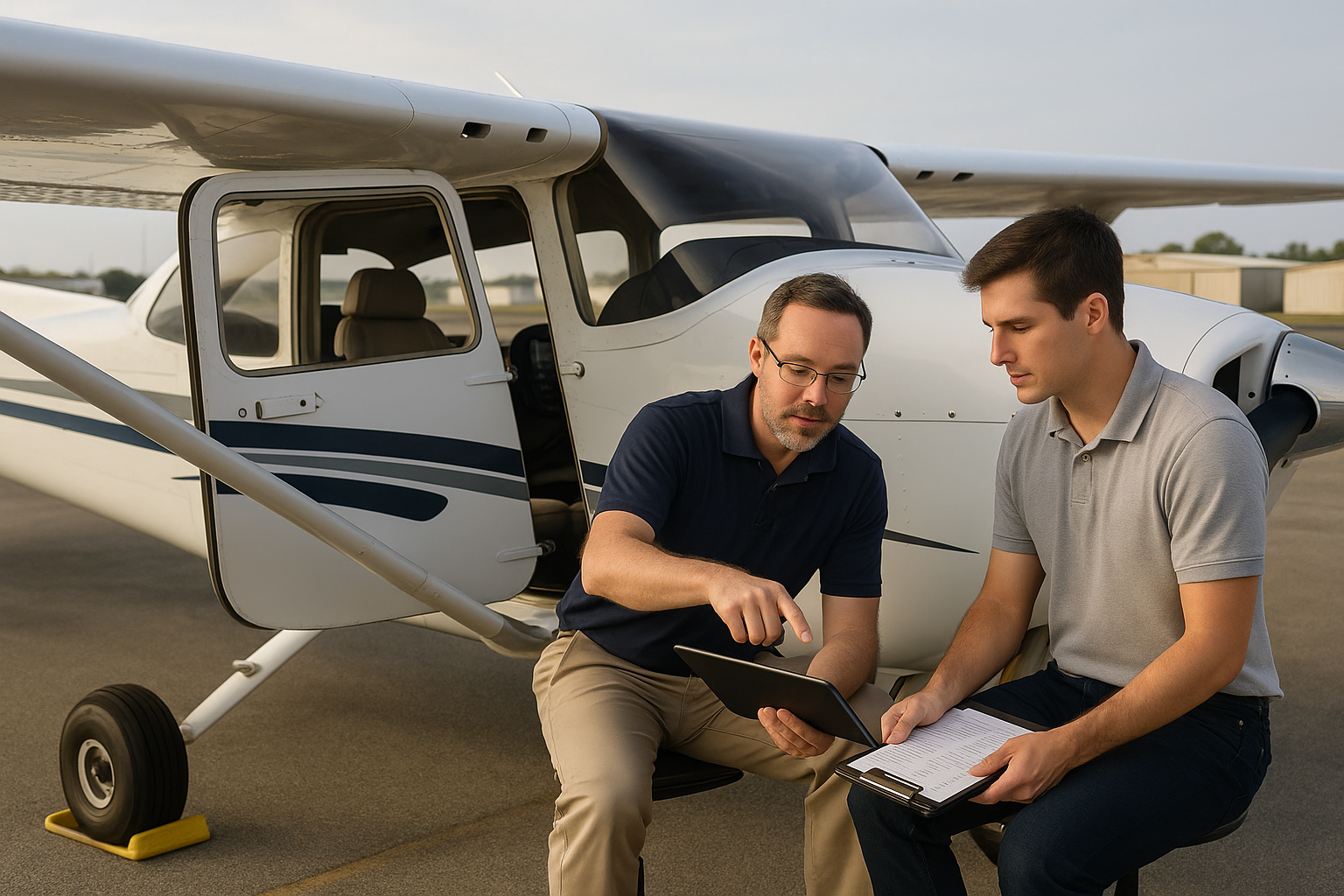
Flight review preparation is a high-value activity for pilots, instructors, and aviation organizations. As the general aviation community adopts new training technology, revised instructional techniques, and data-driven performance feedback, the way pilots approach recurrent proficiency checks is changing. This article examines how pilots should prepare for the modern flight review and what the evolving landscape means for safety, judgment, and training effectiveness.
The practical value of improving flight review preparation is straightforward. A well-prepared review demonstrates baseline competence, reduces surprises during the flight portion, and creates meaningful learning opportunities instead of a rote pass-fail interaction. The primary keyword "flight review preparation" appears naturally in this introduction because it captures the central topic pilots and instructors search for before scheduling a review.
What Flight Review Preparation Means Today
At its core, flight review preparation is about aligning pilot knowledge, flight proficiency, and decision-making with the expectations of the evaluating instructor or checking authority. Preparation covers three domains: knowledge, skill, and judgment. Knowledge includes aircraft systems, performance, regulations, and operational procedures. Skill covers normal and emergency flying tasks and functional handling of the aircraft. Judgment covers risk management, weather assessment, and go/no-go decision-making. Modern preparation emphasizes integrating these domains rather than treating them separately.
Preparing effectively now increasingly requires familiarity with technology. Electronic flight bags, aviation apps, synthetic training devices, and advanced flight-data tools offer pilots ways to rehearse procedures, build scenario-based experience, and document proficiency. The future of flight review preparation will rely more on these tools to create focused practice and objective evidence of skills.
Why This Matters in Real-World Aviation
Poor or superficial preparation can convert a productive review into a missed training opportunity. Conversely, strong preparation reduces risk for the pilot and the instructor during the flight portion. The flight review is not merely an administrative waypoint. It is a chance to identify gaps, refine procedures, and reinforce safety-critical habits.
Operationally, good preparation improves outcomes in several ways. In-flight workload is lower when maneuvers and procedures are practiced beforehand. Decision quality improves when pilots rehearse scenario-based contingencies before being put under pressure. For flight instructors and operators, robust preparation makes the review more efficient and supports targeted training that addresses real weaknesses rather than one-size-fits-all checks.
How Pilots Should Understand Flight Review Preparation
Think of preparation as staged and evidence-driven practice rather than last-minute cramming. Structure your preparation around the likely elements of a review: a preflight briefing, demonstration of normal procedures, handling of abnormal or emergency scenarios, and postflight discussion of risk management and limitations. Use training devices to rehearse procedures, and use real flights to refine aircraft handling and scan techniques.
A modern preparation plan has three practical components. First, a knowledge refresh. Review your aircraft flight manual or POH, approach plates you commonly use, and current regulations that affect your operation. Second, targeted flight practice. Use a mix of real flights and simulator practice to rehearse specific maneuvers, approaches, and emergency procedures. Third, scenario practice. Build realistic scenarios that require decision-making under time pressure, such as an unexpected weather deviation or a partial-panel electrical failure. Scenario-based training improves judgment more than isolated maneuver practice.
Common Mistakes or Misunderstandings
Pilots often make preparation errors that reduce the value of the flight review. One common mistake is treating the review as an exam to pass instead of a training opportunity. This mindset leads to surface-level rehearsal that may not translate into deeper competency. Another mistake is reliance on memory for performance numbers. Aircraft performance varies with weight, configuration, and density altitude. Pilots should calculate expected takeoff, climb, and landing distances as part of preparation rather than reciting numbers from memory.
Overconfidence is another risk. Pilots who have not practiced emergency procedures recently may believe they could handle them but find their skills degraded under actual pressure. Conversely, pilots sometimes undervalue their procedural knowledge because they have not organized it for efficient retrieval. Preparation should include practicing checklists and callouts until they become reliable under workload.
Finally, misunderstandings about the role of technology can cause problems. Electronic tools and autopilots enhance situational awareness but can also create reliance. For a flight review, be ready to demonstrate hand-flying competence and fundamental navigation without overdependence on automated systems. Similarly, if you present logged electronic evidence of proficiency, ensure the data is accurate and representative of your skills rather than cherry-picked or incomplete.
Practical Example: A Modern Flight Review Preparation Plan
Scenario: A private pilot flying a single-engine, four-seat aircraft schedules a flight review with a designated pilot examiner. The pilot has been flying intermittently and wants a focused preparation plan.
Step one: Knowledge refresh. The pilot spends two evenings reviewing the aircraft POH for weight and balance, emergency procedures, and normal operating speeds. The pilot also reviews current sectional charts and the local airport procedures, and confirms currency of personal documents and any applicable endorsements.
Step two: Simulated practice. Using an affordable synthetic training device and an aviation app that simulates instrument approaches, the pilot rehearses a short cross-country with a practice diversion and an emergency engine-out procedure on the ground. The objective is to rehearse flow and checklist discipline rather than reach perfect handling.
Step three: Focused dual flight. The pilot schedules a 90-minute flight with a certificated flight instructor to rehearse takeoffs, landings, steep turns, slow flight, and a power-off approach to simulate an engine failure. The instructor introduces two scenario-based events: an unexpected low ceiling forcing an instrument approach, and an electrical failure requiring partial-panel flying. The instructor coaches decision-making, checklist usage, and threat assessment. The session concludes with a debrief highlighting strengths and areas for refinement.
Step four: Documentation and briefing. Before the review, the pilot prepares a concise briefing packet for the examiner that includes a summary of recent flight time, specific items practiced, and any training device sessions. The briefing demonstrates intentional preparation and helps focus the review on meaningful evaluation items.
Best Practices for Pilots
Adopt a consistent preparation process that scales with your experience and flight activity. The following practices help make flight review preparation efficient and effective:
- Plan forward. Set training objectives at least two weeks before the flight review and schedule rehearsal flights and simulator time accordingly.
- Use blended training. Combine ground study, synthetic devices, and real flight time. Each environment produces different learning outcomes.
- Practice high-workload scenarios. Simulate diversions, system failures, and deteriorating weather so decision-making is exercised under stress.
- Document training. Keep concise logs of what you practiced and what remains a weakness. Presenting objective evidence of deliberate practice can shift the review from a test to a coaching conversation.
- Prioritize fundamentals. Master basic aircraft control, scan technique, and checklist discipline. These skills transfer across aircraft and systems more than any memorized number.
- Prepare for manual flying. Practice hand-flying approaches and pattern work without automation so you can demonstrate stick-and-rudder skills if needed.
The Role of Technology in Future Flight Review Preparation
Technology is changing how pilots prepare and how instructors assess performance. Synthetic training devices have become more accessible and realistic, allowing pilots to rehearse instrument procedures and emergency scenarios at low cost. Mobile apps provide performance calculators, interactive checklists, and scenario-based quizzes. Flight-data tools and wearable sensors can quantify control inputs, approach stability, and adherence to procedures.
These tools offer advantages. Objective data can identify subtle control deficiencies that are hard to spot in a single flight. Digital records enable pilots to demonstrate structured practice and measurable improvement. Scenario-driven modules foster decision-making skills by presenting realistic pressures and forcing trade-offs similar to real flight.
At the same time, technology introduces new considerations. Data can be misinterpreted without expert context. Recorded metrics do not always equate to underlying judgment or situational awareness. Pilots and instructors must use technology as a training aid rather than a substitute for sound instruction and practical experience.
Training and Assessment Trends That Affect Preparation
Several training trends are shaping how pilots will prepare for flight reviews. Scenario-based training emphasizes real-world decision-making and threat management rather than isolated maneuver proficiency. Competency-based assessment focuses on observable behaviors and practical outcomes. Blended learning models combine interactive e-learning for knowledge with device practice and in-aircraft training for tactile and perceptual skills. All these trends encourage a more individualized and evidence-based approach to preparation.
For pilots, this means demonstrating integrated competence. Rather than performing a series of discrete maneuvers, be ready to show how you manage cross-country planning, in-flight decision-making, and emergency responses coherently. Instructors will likely emphasize risk-based scenarios that reflect typical general aviation operations, so prepare accordingly.
Common Preparation Tools and How to Use Them
Not all tools are equal, and their value depends on how they are used. Here are practical ways to apply common tools in flight review preparation:
Synthetic Training Devices
Use affordable devices to rehearse instrument procedures, cockpit flows, and cockpit resource management. Practice degraded-visibility approaches and partial-panel flying. Treat device sessions as rehearsal for the tactile and procedural aspects of a task, not as a replacement for practicing actual aircraft control.
Performance and Flight Planning Apps
Use apps to calculate weight and balance, takeoff and landing distances, and fuel planning. Run a sensitivity analysis for density altitude effects. Practice creating concise, accurate flight plans and diversion strategies so you can discuss these items during the review.
Flight Data and Video Recording
Use video or flight-data recording for debrief. A short cockpit video of a practice approach is a powerful tool to reveal scan distribution, control inputs, and procedural discipline. Use recorded data for self-critique and to provide objective evidence of deliberate practice to the evaluating instructor.
How Instructors Should Adapt Assessment and Feedback
Flight instructors and examiners can increase the value of the flight review by adopting clear expectations and offering actionable feedback. Provide pilots with a pre-review brief that explains the review scope and the objectives. Use scenario-based evaluation to assess judgment and risk management, and provide specific guidance on remediation steps when deficiencies appear.
Feedback should be evidence-based. When possible, use recorded data or documented practice to highlight trends rather than focusing solely on a single performance snapshot. Encourage pilots to view the review as an opportunity to develop a targeted training plan rather than as a pass-or-fail event.
Common Mistakes in the Review Process
Beyond pilot preparation errors, the review process itself can suffer from common pitfalls. One is the lack of clarity about expectations. If the evaluating instructor does not explain what will be evaluated, pilots can be left uncertain about priorities. Another problem is treating the review as purely summative. When assessment focuses only on grading, there is less incentive to build long-term competency.
To avoid these problems, set clear objectives before the flight, balance evaluation with coaching, and follow the flight with a prioritized remediation plan. The most effective reviews identify one or two high-impact areas for improvement and provide immediate steps to address them.
Practical Safety Considerations
Safety should guide every element of preparation. Do not trade safety margins for demonstration. If recent practice reveals unresolved deficiencies, schedule additional instructional time before attempting the review. If weather or aircraft condition casts doubt on a safe conduct of the review flight, reschedule. Use the review to reinforce conservative decision-making and consistently demonstrate threat assessment skills.
When using performance calculators, apply conservative assumptions and verify calculations with the aircraft POH or POI. If operating at high density altitude or near runway length limits, include contingency planning in the briefing and demonstrate go/no-go decision discipline.
Frequently Asked Questions
How far in advance should I start flight review preparation?
Begin planning at least two weeks ahead so you can schedule focused practice flights, simulator time if available, and a knowledge refresher. More intermittent flyers should plan for several sessions to rebuild consistent skills.
Can I use a simulator or training device to prepare for the flight review?
Yes. Simulators and training devices are effective for rehearsing procedures, instrument work, and emergency scenarios. Use them to build confidence and procedural fluency, but complement device practice with actual flight time to validate hand-flying and tactile skills.
What should I include in the preflight briefing to the examiner or instructor?
Provide a concise summary of recent flight experience, what you practiced, specific scenarios you rehearsed, and any concerns you want to address. A brief plan that outlines objectives for the flight helps the examiner focus the evaluation and coaching.
How should I document my preparation?
Keep short training notes listing the date, duration, objectives, and key outcomes of each practice session. If you used a simulator or device, note the scenarios practiced. Objective records help you and the instructor track progress and tailor post-review training.
What are the most common deficiencies found during reviews?
Common deficiencies include poor checklist discipline, unstable approaches, inadequate planning for weight and balance and performance, and weak emergency procedure recall. Many of these are remediable through structured practice and scenario-based training.
How to Turn a Flight Review into Ongoing Development
The most effective flight reviews lead to a continuing training plan. After the review, prioritize one to three development areas. Schedule routine practice flights or simulator sessions to address those items. Use technology to monitor progress and revisit areas that remain fragile. Treat the review as a baseline and a planning tool for continuous improvement.
Key Takeaways
- Practical takeaway: Structure your flight review preparation across knowledge, skill, and judgment with blended training methods for best results.
- Safety takeaway: Never trade safety margins for demonstration. If skills are degraded, schedule remediation before the review flight.
- Training takeaway: Use scenario-based practice and objective documentation to convert a review from a test into meaningful ongoing training.
Flight review preparation is evolving. Pilots who adopt deliberate, evidence-based practice and use technology as a training aid will be better positioned to demonstrate sustained competence and make safer decisions in real operations. Instructors who emphasize scenario-based evaluation and clear feedback will increase the educational value of the review process. Both sides stand to benefit from a future that focuses on performance, safety, and continuous improvement.