
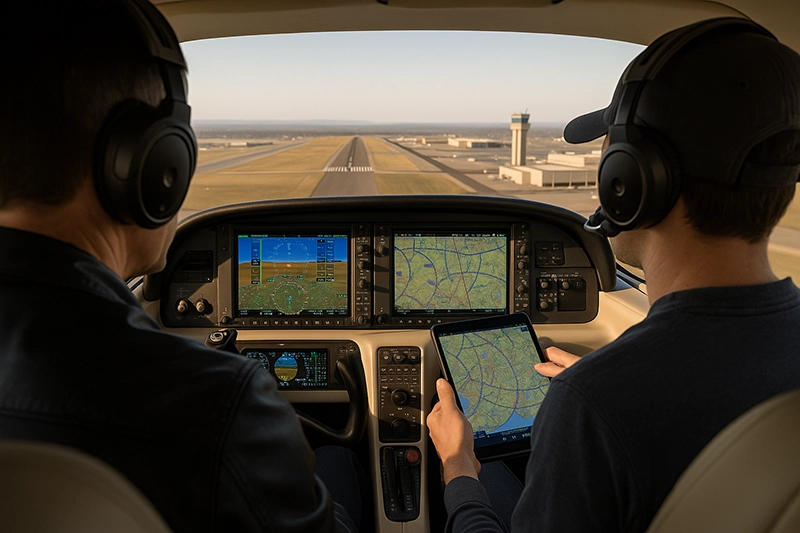
Controlled airspace is a central part of how modern aviation manages risk, traffic flow, and pilot decision-making. As traffic density, aircraft types, and technologies change, the future of controlled airspace will shape how pilots plan flights, interact with air traffic services, and maintain safety margins. This article examines emerging concepts in controlled airspace and translates them into practical guidance for pilots, student pilots, flight instructors, and aviation professionals.
Read on to understand operational implications, training priorities, and safety-focused changes that influence everyday flying. You will find explanations of emerging airspace concepts, how they may affect cockpit procedures and pilot judgment, a realistic scenario that ties theory to practice, and clear takeaways you can use during preflight planning and in-flight decision-making.
What the Future of Controlled Airspace Means
At its core, the future of controlled airspace is about making the managed portion of the airsystem more adaptive, data-rich, and performance-oriented. That includes better information flow between aircraft and controllers, more granular and flexible boundaries tuned to traffic and operations, and new tools for managing diverse users such as traditional general aviation, commercial operators, drones, and advanced air mobility vehicles. The objective is the same as today: preserve safe, efficient separation and predictable traffic flows while accommodating a broader spectrum of aircraft and operations.
Technologies and operational concepts often discussed in this context include dynamic or conditional airspace, performance-based separation, improved surveillance and data sharing, and integration of unmanned aircraft into controlled environments. Each of these can alter pilot-controller expectations, radio procedures, and risk management choices in the cockpit.
Why This Matters in Real-World Aviation
Controlled airspace affects everyday flying in several direct ways. For student pilots and private pilots, it determines where you need a clearance, when you must be in contact with ATC, and what equipment and procedures are expected. For instructors and flight schools, airspace design influences training syllabi, pattern operations, and how you teach airspace communication and decision-making. For operators and aviation professionals, changes in controlled airspace can alter route structure, operating costs, and runway throughput.
Critically, changes to controlled airspace can affect safety margins. Better surveillance and data sharing can enhance controller situational awareness, reducing the risk of incursions and conflicts. Conversely, more complex, conditional, or dynamic boundaries can increase pilot workload if the operational rules are unclear or if training has not kept pace with the new procedures. The practical safety outcome depends on design, training, and human factors, not just technology.
Core Concepts Pilots Should Understand
To act safely in an evolving controlled airspace environment, pilots need a working understanding of several core ideas that connect design, procedures, and human performance.
Controlled Airspace Basics
Controlled airspace is where air traffic services are available and aircraft must comply with specified rules to operate. Pilots should know the operational implications of being inside controlled airspace: who provides separation, what clearances are required, and what minimum equipment or communication standards apply. When boundaries become dynamic or conditional, the operational implication is that the control status of a given volume of air may change depending on time, traffic, or mission type.
Performance-Based and Data-Driven Operations
Performance-based operations prioritize predictable behavior and reliable navigation, surveillance, and communication. For pilots, this often translates to requirements for navigation accuracy, timely position reporting, and the ability to fly predictable trajectories. When separation standards depend on performance, pilots must be comfortable with how their aircraft and avionics actually perform—not just what the POH states.
Dynamic and Conditional Airspace
Dynamic airspace refers to control areas that can change status or configuration in near real time. Conditional airspace might open or close depending on traffic demands, weather, or specific operations such as military activity or unmanned traffic. Pilots will need to monitor NOTAMs, flight planning tools, and real-time notifications and be prepared for last-minute changes in clearance requirements or communications points.
Integration of New Users
Urban air mobility, delivery drones, and advanced unmanned systems will increasingly share controlled airspace. Integration requires clear rules for separation, surveillance, and identification and will push pilots to adapt to new traffic types and possibly new radio or data exchange protocols.
How Pilots Should Understand and Prepare
Preparation is both technical and human. Technically, pilots should maintain proficiency with core navigation and surveillance equipment, such as GPS, ADS-B (where available or required), transponders, and data link communications if their operation uses them. From a human perspective, pilots must remain adept at radio communications, read and interpret changing airspace status, and make timely decisions when a clearance, frequency change, or reroute is issued.
Practical preparation steps include incorporating dynamic airspace checks into preflight planning, practicing phraseology and rapid clearance readbacks, and using flight simulators to rehearse scenarios where airspace status changes midflight. Instructors should integrate airspace variability into cross-country lessons and scenario-based training so students get realistic exposure to changing ATC expectations.
Common Mistakes and Misunderstandings
As controlled airspace evolves, several predictable errors and misconceptions tend to arise. Recognizing these can prevent routine incidents and improve overall safety.
One common mistake is assuming airspace boundaries are static. Boundaries that can be activated or deactivated require pilots to verify status close to departure and en route. Relying solely on outdated charts or printed briefings increases the chance of a clearance violation.
Another misunderstanding is confusing equipment capability with operational permission. Having surveillance or navigation equipment does not automatically grant access to a controlled volume or a particular operation. Permission and the applicable procedures still come from the controlling authority.
Pilot complacency about traffic mix is another risk. Expecting only traditional GA or commercial traffic and not preparing for high-volume unmanned or performance aircraft in the same airspace can increase conflict risk and surprise workload.
Practical Example: A Cross-Country with Dynamic Airspace Activation
Imagine a VFR cross-country from a regional airport to a medium-size terminal airport 180 nautical miles away. During preflight, you note that the usual arrival corridor passes adjacent to a restricted area that is currently inactive. Your route requires transition through Class C or D airspace near your destination.
En route, two operational changes occur: the restricted area becomes active due to training activity, and the approach control triggers a temporary reconfiguration of arrival paths to handle a surge of airline traffic. As you approach the terminal area, you receive a reroute and a frequency change mid-approach. The controller offers a visual approach clearance to expedite traffic, but you have potential unmanned traffic in the outer portion of your arrival corridor being actively managed by a separate data-link system.
In this scenario, safe handling requires a few concrete steps. First, confirm your current position and any reroute instructions using your navigation avionics and cross-check pilotage or GPS fixes. Second, when given a visual approach clearance, assess whether you can accept it with adequate separation and safe maneuvering space. Third, communicate any traffic or operational constraints to ATC, including inability to accept the visual approach or any concern about conflicts. Finally, be prepared to execute a missed approach or hold if the traffic picture becomes uncertain.
This example highlights how dynamic airspace activation and mixed traffic types can combine to create unexpected workload and require decisive pilot judgment.
Best Practices for Pilots
Maintaining safety in changing controlled airspace rests on habits, training, and treating airspace as an operational parameter that deserves continuous attention. The following practices help pilots adapt.
- Include real-time airspace checks in preflight planning. Use digital briefing tools, NOTAMs, and datalink services when available.
- Keep communications crisp and proactive. Read back critical clearances, confirm frequency changes, and ask for clarification early if a clearance is not clear.
- Practice performance-based flying. Know your aircraft's navigation and position-keeping accuracy in realistic conditions, and plan buffers rather than relying on theoretical minima.
- Train for conditional operations. Incorporate unexpected frequency changes, dynamic reroutes, and mixed traffic scenarios into simulator or real-world training flights.
- Maintain currency with surveillance and avionics systems. If your operation benefits from ADS-B, TCAS, or data link, make sure those systems are functioning and you understand their operational limitations.
- Teach and learn human factors. Emphasize workload management, sterile cockpit concepts during high-workload segments, and decision thresholds for accepting or rejecting clearances.
Operational and Training Implications
For flight instructors and training providers, the evolution of controlled airspace means training syllabi should include scenario-based modules on dynamic boundaries, data-driven ATC interactions, and mixed-traffic management. Students should graduate competent in standard radio discipline and confident in managing changing controller instructions and airspace transitions.
A training emphasis on systems knowledge is also important. As operations lean on surveillance, navigation performance, and data exchange, pilots should be able to interpret and act on the output of avionics displays rather than simply treat them as black boxes. That includes understanding what position accuracy and update rates mean for maintaining separation when ATC relies on those systems.
Human Factors and Controller Coordination
Airspace changes do not exist in a vacuum. The human factors aspects—controller workload, pilot situational awareness, and communication clarity—determine whether a theoretically safer airspace design yields real safety benefits. Pilots should expect that controllers will need clear, consistent information on intent and position. Be mindful that new procedures may require additional readbacks, flight data uplinks, or adherence to published trajectories.
Coordination is two-way. If a pilot detects potential conflicts, missing surveillance, or uncertain instructions, proactively inform ATC. Controllers can resolve many issues with minor reroutes or altitude adjustments when they have timely information from flight crews.
Common Questions Pilots Ask About Controlled Airspace Evolution
Will dynamic airspace make flying more complicated for VFR pilots?
Dynamic airspace can add complexity if pilots do not routinely verify status and plan for contingencies. However, when well-implemented and accompanied by clear notifications and user-friendly tools, it can also reduce unnecessary restrictions by opening controlled volumes only when needed. The key for VFR pilots is to check airspace activation status before departure and remain prepared for last-minute changes in route or communications.
How does performance-based separation affect small aircraft?
Performance-based separation relies on predictable navigation and surveillance performance. For many small aircraft, the practical impact is that accurate navigation and timely position reporting become more important. Pilots flying aircraft with limited navigation accuracy should understand how their systems compare to the performance expected in busier airspace and consider whether route adjustments or additional equipment are appropriate.
Will unmanned aircraft increase airspace conflicts?
Introducing unmanned aircraft into controlled airspace increases the diversity of traffic, which can raise the potential for conflicts if management systems do not provide clear separation strategies. Well-designed integration, combined with reliable identification and deconfliction tools, can mitigate these risks. Pilots should be alert to new traffic types and report any suspicious or uncooperative traffic to ATC.
How should I train students for future airspace?
Teach scenario-based exercises that include dynamic airspace, mixed traffic, and reliance on surveillance systems. Emphasize decision-making and communication skills. Include cross-country flights where students must adapt to unexpected conditional airspace activations and reroutes.
Frequently Asked Questions
What is controlled airspace and why should I care?
Controlled airspace is airspace where air traffic services are offered and where certain rules apply to protect separation and manage traffic. Pilots should care because operating in controlled airspace carries specific communication and equipment expectations and because controller services affect how you plan and execute flights.
How will real-time airspace activation be communicated to pilots?
Communication methods may include NOTAMs, flight planning services, datalink messages, in-cockpit notifications, and routine ATC radio transmissions. Pilots should use all available tools and verify with ATC if unsure about a current activation.
Do I need new certifications or equipment to fly in future controlled airspace?
Specific equipment or qualification requirements depend on the operation and the airspace rules in effect at the time. Pilots should monitor regulatory guidance and plan upgrades when their operation would benefit from better navigation, surveillance, or datalink capabilities. Always confirm regulatory and airport-specific requirements before assuming equipment is optional.
How do controllers manage a mix of manned and unmanned aircraft?
Controllers use separation standards, traffic management tools, and procedural segregation where necessary. Integration strategies may include dedicated corridors, altitudinal separation, or data-driven deconfliction. Pilots should be prepared to accept vectors or reroutes to maintain safe separation when mixed operations are present.
What should I do if I encounter unfamiliar traffic or a sudden airspace change en route?
Prioritize flying the aircraft, maintain control, and immediately inform ATC of your position and intentions. If a clearance is unclear or you cannot accept it safely, state your constraints and request alternatives. Use basic airmanship: maintain visual separation when possible, and execute a missed approach or hold if the approach becomes unstable.
Key Takeaways
- Practical takeaway: Treat airspace status as an operational variable; check it preflight and monitor changes en route.
- Safety takeaway: Clear, timely communication and conservative decision-making prevent conflicts when airspace boundaries or traffic mix change.
- Training takeaway: Integrate dynamic-airspace scenarios, mixed-traffic management, and systems proficiency into recurrent and initial training.
Controlled airspace will continue to evolve as technology, traffic, and operational needs change. As pilots and instructors, the best defense is preparation: stay current with tools and procedures, practice decision-making in realistic scenarios, and prioritize communication. With those habits in place, pilots can turn complex airspace design into predictable, manageable operational routines that preserve safety while enabling efficient use of the airspace.