
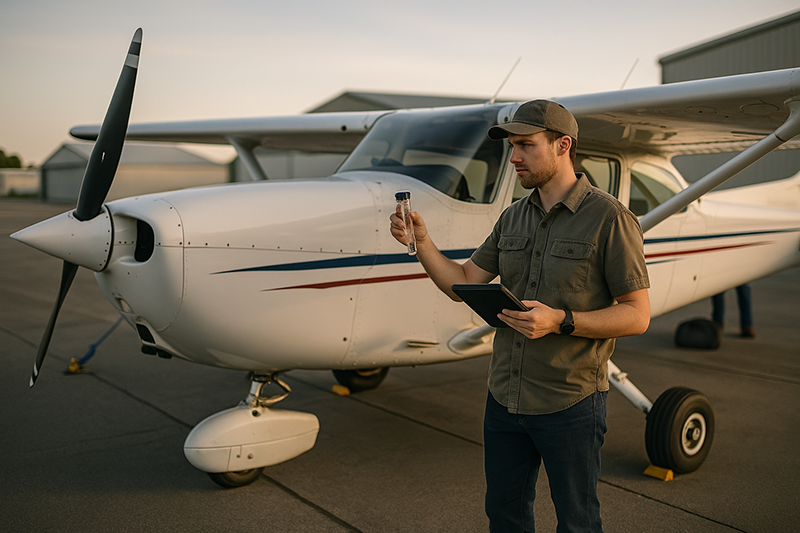
General aviation risk factors are not always the dramatic threats pilots talk about in the hangar. Thunderstorms, engine failures, icing, and low ceilings deserve respect, but many of the most important hazards develop quietly before the aircraft ever leaves the ramp. They show up as a rushed preflight, an optimistic fuel assumption, a passenger who changes the pilot’s priorities, a maintenance item that feels minor, or a flight instructor who lets familiarity replace disciplined risk management.
For pilots, student pilots, flight instructors, aircraft owners, and aviation professionals, the overlooked risks matter because they often hide inside normal operations. A local flight on a clear day can still contain meaningful risk if the pilot is fatigued, underprepared, distracted, out of recent practice, or operating with weak personal minimums. The goal of this article is not to make general aviation feel unsafe. The goal is to help pilots recognize the subtle factors that can erode safety margins and to build habits that keep routine flights from becoming high-workload surprises.
What Makes a Risk Factor Overlooked?
An overlooked risk factor is not necessarily unknown. Most pilots have heard about fatigue, weather, fuel planning, aircraft performance, and decision-making. The problem is that these topics can become background noise. A pilot may intellectually understand a hazard but fail to treat it as active risk on a particular day.
In general aviation, risk is rarely caused by one isolated decision. It often accumulates through a series of small allowances. The pilot accepts a slightly later departure, a little less fuel cushion, a more challenging crosswind than expected, a passenger delay, a marginal weather trend, or a maintenance discrepancy that deserves more thought. Each item may appear manageable by itself. Together, they can reduce options and increase workload.
Overlooked risks also tend to be familiar. A pilot may be more careful flying into an unfamiliar mountain airport than departing from a home field used every week. A student may focus intensely on a first solo cross-country but become casual during the tenth practice-area flight. An aircraft owner may know the airplane so well that small changes in starting behavior, brake feel, radio performance, or engine indications become easy to rationalize.
The central lesson is simple: risk management is not only about identifying obvious hazards. It is about detecting changes in context. The same pilot, aircraft, route, and airport can represent different risk levels depending on weather, fatigue, recency, aircraft loading, passenger expectations, runway conditions, maintenance status, and operational pressure.
The Human Factors Pilots Underestimate
Human factors are among the most overlooked general aviation risk factors because they are personal and variable. Pilots are trained to evaluate aircraft systems and weather data, but evaluating one’s own performance capability can be harder. A pilot may admit that a runway is short or that a ceiling is low, but it takes more discipline to admit, “I am not sharp enough for this flight today.”
Fatigue is a good example. It does not always feel like falling asleep. It can appear as slower mental math, reduced patience, weaker scan discipline, increased fixation, and a tendency to skip steps. A fatigued pilot may still be legal and experienced, yet less able to manage a radio problem, unexpected weather, passenger anxiety, or a late runway change.
Stress can have a similar effect. Personal stress, work pressure, schedule pressure, financial pressure, and family obligations can follow a pilot into the cockpit. The airplane does not know whether the pilot had a difficult week, but the pilot’s judgment, attention, and tolerance for workload may be affected. Good aeronautical decision-making requires the pilot to consider not only the airplane and environment, but also the person operating the aircraft.
Another underestimated human factor is confidence drift. This occurs when repeated successful outcomes make a pilot more comfortable with weaker margins. A pilot who has completed several flights with minimal fuel reserves may begin to view that planning style as normal. A pilot who has repeatedly flown through lowering weather without difficulty may gradually raise personal risk tolerance without making a deliberate decision to do so. The absence of a bad outcome is not proof that the decision was sound.
Weather Risks That Do Not Look Dramatic
Many pilots are appropriately cautious around thunderstorms, freezing conditions, and widespread instrument meteorological conditions. The more overlooked weather risks are often quieter: haze, lowering visibility, subtle wind shear, gust spread, density altitude, convective buildup early in the day, smoke, low sun angle, temperature-dew point spread trends, and localized terrain effects.
Marginal VFR can be especially deceptive. A flight may begin legally and appear manageable, but visibility, ceilings, terrain, and pilot workload can combine quickly. A pilot flying visually in reduced visibility has less time to see traffic, terrain, towers, and changing weather. Navigation tasks may take more attention. If the pilot is not instrument-current, not proficient, or flying an aircraft with limited equipment, the margin may narrow faster than expected.
Wind is another commonly underestimated factor. Pilots often look at the reported crosswind component but may pay less attention to gusts, mechanical turbulence, runway contamination, runway width, surrounding obstacles, and the pilot’s own recent crosswind practice. A crosswind that is acceptable on paper may feel very different in a light aircraft at a narrow runway with gusty conditions and a high workload pattern.
Density altitude is frequently discussed in training, but it is still easy to underappreciate because it affects performance invisibly. A warm day, high field elevation, heavy loading, and an upslope or obstacle environment can make an otherwise familiar departure require more runway and more disciplined performance planning. Pilots should avoid treating performance charts as academic exercises. They are practical tools for answering whether the aircraft, runway, loading, and environment provide a comfortable margin.
Fuel Planning Assumptions That Reduce Options
Fuel risk is not limited to running out of fuel. It includes poor fuel awareness, inaccurate assumptions, inadequate reserves for changing conditions, failure to verify usable fuel, misunderstanding fuel system operation, and reluctance to divert when fuel margins shrink.
One overlooked factor is the difference between planned fuel and actual fuel. Pilots may plan using expected winds, expected power settings, expected routing, and expected taxi time. Real flights often include deviations, climbs, vectors, holds, stronger headwinds, longer taxi, or an approach that takes more time than planned. A conservative fuel plan recognizes that uncertainty is normal.
Another common risk is relying too heavily on memory or habit. A pilot who usually flies the same aircraft may assume the tanks are at a familiar level, that a previous pilot refueled as expected, or that the fuel gauges are telling the whole story. Good fuel management starts with direct verification where practical, a clear understanding of the aircraft’s fuel system, and a plan for when to switch tanks, compare actual burn to expected burn, and make a diversion decision.
Fuel planning also interacts with pride and pressure. Diverting for fuel can feel inconvenient, especially with passengers or a schedule. Yet the earlier a pilot makes a fuel stop decision, the more choices remain. A late fuel decision can turn a simple stop into an urgent situation with fewer airports, less daylight, worsening weather, or increased stress.
Aircraft Performance and Loading Are Not Just Math
Weight and balance, takeoff performance, climb performance, landing distance, and obstacle clearance are sometimes treated as paperwork items rather than operational decisions. This is especially true in aircraft that are flown frequently with similar loading. Familiarity can lead pilots to assume the airplane will perform as it always has.
The risk is that aircraft performance is sensitive to combinations of conditions. A few extra passengers or bags, warmer air, a shorter runway, grass surface, tailwind, high density altitude, or reduced engine performance can change the picture. None of those factors needs to be extreme to matter. The pilot’s responsibility is to compare the actual conditions with realistic aircraft performance expectations before committing to the operation.
Loading is also a handling issue, not just a legal or mathematical issue. A center of gravity near a limit can affect stability and control feel. A heavier aircraft may accelerate slower, climb slower, and require more runway. A pilot who has not recently practiced operations near higher weights may be surprised by the difference in aircraft response, particularly during takeoff, go-around, and landing flare.
Performance planning should be practical. Pilots should consider runway length, surface, slope, wind, temperature, pressure altitude, aircraft condition, pilot technique, and obstacles. They should also ask a plain-language question: if the airplane does not perform as expected, what is the plan? That question often reveals whether the operation has enough margin.
Maintenance and Airworthiness Signals Pilots Rationalize
Maintenance-related risk is often overlooked because pilots may separate flying decisions from maintenance decisions. If the aircraft started, taxied, and passed a basic preflight, the pilot may feel ready to go. But airworthiness is not just a paperwork concept, and mechanical clues deserve attention.
Small changes can matter. A rougher start than usual, an unfamiliar vibration, a brake that feels soft, a tire that appears more worn than expected, an intermittent radio, a weak alternator indication, a sticky fuel cap, or an unusual smell should not be casually dismissed. Not every discrepancy grounds an aircraft, but every discrepancy deserves deliberate evaluation by the pilot and, when appropriate, qualified maintenance personnel.
Aircraft owners face a special version of this risk. Familiarity can create normalization. When a minor issue has been present for several flights, it may begin to feel acceptable. The fact that an aircraft completed the last flight does not prove the issue is benign. A disciplined owner-pilot maintains a clear boundary between known acceptable conditions and unresolved defects.
Rental and training aircraft have a different challenge. Multiple pilots may fly the same airplane in a short period. Squawks, logbook entries, deferred items, and communication between pilots, instructors, dispatch, and maintenance become important safety barriers. A student pilot should never feel embarrassed about asking an instructor or mechanic to explain a discrepancy. Understanding the aircraft’s condition is part of learning to be pilot in command.
Recency, Proficiency, and the Illusion of Being Current
Currency and proficiency are related but not identical. A pilot may meet a legal recency requirement yet still be rusty in the specific skills needed for a demanding flight. Conversely, a pilot may be highly proficient in one environment but less prepared for another. The overlooked risk is assuming that being current automatically means being ready.
Proficiency is context-specific. A pilot who regularly flies local day VFR may not be sharp for night cross-country operations. A pilot who flies mostly from long paved runways may be less prepared for short-field technique. An instrument-rated pilot who has not recently flown in actual or simulated instrument conditions may need practice before launching into a complex IFR environment. A flight instructor who teaches primary students daily may still need dedicated practice for personal instrument proficiency, advanced avionics use, or aircraft-specific emergency procedures.
Recency also affects cockpit flow. Rusty pilots spend more mental energy on basic tasks. Radio work, navigation, checklist usage, configuration changes, and energy management may take longer. That leaves less capacity for weather decisions, traffic avoidance, system malfunctions, or passenger management.
The best pilots treat proficiency as a living condition, not a certificate or logbook entry. They ask, “What have I actually practiced recently?” and “Does that match the flight I am about to conduct?”
Passenger Pressure and Social Pressure
General aviation pilots often underestimate passenger pressure because it may be subtle. Passengers may not demand that a flight continue. They may simply be excited, anxious, late for an event, eager to return home, or unaware of the operational significance of weather, fuel, or fatigue. The pilot can internalize that pressure without anyone saying a word.
Social pressure can also come from other pilots. A pilot may feel reluctant to cancel when others are flying, hesitant to ask for help, or embarrassed to admit discomfort with wind, weather, or aircraft performance. This is particularly relevant for newer pilots transitioning from structured training to independent operations. Without an instructor in the right seat, the pilot must build a personal standard that does not depend on appearing confident.
A simple passenger briefing can reduce pressure. Before departure, the pilot can explain that aviation decisions may change, that diversions are normal, and that safety decisions are not signs of failure. When passengers understand that delays, fuel stops, and cancellations are part of responsible flying, the pilot is less likely to feel trapped by expectations.
Automation, Avionics, and Task Saturation
Modern avionics can significantly improve situational awareness, navigation accuracy, and cockpit capability. The overlooked risk is assuming that more information always reduces workload. In reality, avionics can increase task saturation if the pilot is not proficient with the equipment or if attention shifts from aircraft control to screen management.
Common automation-related risks include programming during high-workload phases, misunderstanding flight plan sequencing, following magenta-line guidance without verifying terrain and airspace, overmanaging the autopilot, and failing to recognize when automation is not doing what the pilot expects. In training aircraft, the problem can appear when students learn button sequences without fully understanding navigation fundamentals.
Good avionics use begins before engine start. Pilots should load routes, review procedures, confirm databases as appropriate for the operation, set up radios and navigation sources, and brief how the equipment will be used. In flight, the pilot should maintain a simple priority: aviate, navigate, communicate, and manage systems in that order. If avionics management interferes with aircraft control or traffic awareness, it is time to simplify.
Airspace, Traffic, and Communication Gaps
Airspace risk is often overlooked on familiar routes. Pilots may become comfortable skirting controlled airspace, flying near training areas, or operating around non-towered airports without revisiting the details. Yet airspace boundaries, temporary restrictions, special use areas, traffic patterns, and communication expectations require active attention.
Traffic risk is not limited to busy airports. Quiet airports can create complacency. Pilots may make fewer position reports, listen less actively, or assume there is no conflicting traffic because the radio is quiet. Not all aircraft have the same equipment, not every pilot communicates perfectly, and visual scanning remains essential.
Communication gaps can also create risk. A pilot who is uncertain about an instruction, runway assignment, taxi route, or traffic advisory should clarify rather than guess. At non-towered airports, clear and concise position reports help other pilots build a mental picture, but they do not replace looking outside. At towered airports, instructions should be understood before action, especially during taxi and runway operations.
Training Gaps After the Checkride
The private pilot certificate, instrument rating, commercial certificate, or flight instructor certificate is not the end of learning. One overlooked general aviation risk factor is the training gap that can appear after a practical test. During training, flights are structured, supervised, and frequently debriefed. After certification, pilots may fly less often, receive less feedback, and gradually narrow their experience to comfortable missions.
Skill decay does not announce itself. A pilot may still remember how to perform a maneuver but lose precision, timing, or judgment. Emergency procedures may become less immediate. Weather decisions may become less conservative as a pilot gains confidence but not necessarily broader experience. Instructors have an important role here by encouraging scenario-based training, recurrent practice, and honest post-flight review.
For certificated pilots, the best recurrent training is not limited to meeting a requirement. It should be tailored to actual flying. A pilot who flies family trips should practice passenger briefings, diversion decisions, night operations if applicable, cross-country weather planning, and realistic fuel management. A pilot who owns a technically advanced aircraft should regularly practice avionics failures, autopilot mode awareness, and hand-flying skills.
Why This Matters in Real-World Aviation
In real-world general aviation, pilots rarely operate under perfect laboratory conditions. A weekend trip may involve family expectations, changing weather, aircraft scheduling, fuel availability, unfamiliar airports, and the desire to make the trip work. A training flight may involve a student eager to progress, a busy practice area, gusty winds, and a maintenance squawk that needs evaluation. A business flight may involve time pressure and a pilot who is qualified but tired.
Overlooked risks matter because they affect decision quality before they affect aircraft control. By the time a pilot is low on fuel, scud running, unstable on final, or troubleshooting a system problem in busy airspace, the best opportunities for prevention may have passed. The most effective risk management often occurs early, while options are still plentiful.
This is why flight instructors should teach risk as a continuous process rather than a preflight formality. A risk assessment worksheet can be useful, but it is not enough by itself. The pilot must keep reassessing during taxi, takeoff, climb, cruise, descent, approach, landing, and post-flight. Conditions change, and risk management should change with them.
How Pilots Should Understand This Topic
Pilots should understand overlooked risk as margin erosion. Every flight begins with a certain amount of safety margin based on the pilot, aircraft, environment, and operation. Good planning increases margin. Poor assumptions reduce it. The key is to notice when several small reductions are stacking together.
A useful way to think about risk is through four broad areas: pilot, aircraft, environment, and external pressures. The pilot area includes fatigue, proficiency, health, stress, and decision-making. The aircraft area includes airworthiness, performance, fuel, equipment, and loading. The environment includes weather, terrain, runway conditions, airspace, traffic, and lighting. External pressures include schedules, passengers, costs, expectations, and social influence.
The value of this model is that it prevents tunnel vision. A pilot may focus on weather while ignoring fatigue. Another may focus on aircraft performance while ignoring passenger pressure. A complete risk picture considers all areas together.
Pilots should also distinguish between risk identification and risk control. Identifying a risk is only the first step. If crosswinds are increasing, the pilot can choose a different runway, delay, divert, take an instructor, or cancel. If proficiency is weak, the pilot can practice first, reduce mission complexity, fly with another qualified pilot, or adjust personal minimums. If fuel margins are shrinking, the pilot can stop early rather than hoping the original plan remains valid.
Common Mistakes or Misunderstandings
One common misunderstanding is that a legal flight is automatically a wise flight. Regulations establish important boundaries, but personal minimums and sound judgment must account for pilot experience, aircraft capability, local conditions, and mission complexity. A pilot can be legal and still decide that the safer choice is to wait, practice, take an instructor, or choose a simpler plan.
Another mistake is treating checklists as substitutes for thinking. Checklists help ensure critical items are completed, but they do not evaluate the whole situation. A checklist may confirm that fuel selector position, flaps, trim, and controls are set, while the broader question remains: is this flight still a good idea under today’s conditions?
Pilots also sometimes confuse familiarity with safety. A familiar airport, aircraft, or route can reduce workload, but it can also invite complacency. Familiar operations still deserve weather review, performance planning, fuel verification, airspace awareness, and a disciplined preflight.
A fourth misunderstanding is believing that risk decisions must be dramatic to matter. In reality, some of the best safety decisions are ordinary: adding fuel, delaying departure, declining a passenger request, practicing with an instructor, asking maintenance to inspect a concern, or choosing a wider runway with better wind alignment.
Finally, pilots may assume that a successful outcome validates the decision that produced it. Aviation judgment should be evaluated by the quality of the process, not just the result. If a pilot made a weak fuel decision but landed without incident, the safe outcome should not become permission to repeat the same planning error.
Practical Example
Consider a private pilot planning a Saturday morning cross-country in a normally aspirated single-engine airplane. The route is familiar, the forecast is VFR, and the passengers are family members excited for a weekend visit. At first glance, the flight looks routine.
During planning, several small issues appear. The departure is delayed by an hour. Temperatures are rising faster than expected. The destination has a shorter runway than the pilot’s home airport. The passengers bring extra bags. The pilot slept poorly the night before but feels “good enough.” Winds aloft show a stronger headwind than originally expected, and the fuel stop that would make the trip more comfortable adds inconvenience.
No single factor necessarily cancels the flight. But together they change the risk picture. Higher temperature and heavier loading affect takeoff and climb performance. Stronger headwinds affect fuel planning. Fatigue affects decision-making. Passenger expectations create external pressure. A shorter destination runway reduces landing margin. The pilot now has a different flight than the one imagined the night before.
A disciplined pilot responds by recalculating performance with actual loading and conditions, verifying fuel needs with a conservative reserve, considering an earlier fuel stop, briefing passengers that the plan may change, and honestly evaluating fatigue. The pilot may still go, but the decision will be based on current reality rather than the original plan. That is practical risk management.
Best Practices for Pilots
The best practices for managing overlooked general aviation risk factors are simple in concept but require consistency. They work because they make hidden risk visible before it becomes urgent.
- Use personal minimums that reflect proficiency, not pride. Adjust minimums for weather, wind, night operations, terrain, runway length, aircraft type, and recent experience.
- Brief passengers before pressure develops. Explain that delays, diversions, and cancellations are normal safety decisions.
- Verify fuel and monitor it in flight. Compare actual fuel burn, groundspeed, and time en route against the plan early enough to preserve options.
- Practice the specific skills your flying requires. Crosswind landings, short-field operations, instrument procedures, night flying, avionics use, and emergency procedures all need recurrent attention.
- Treat small aircraft changes as information. Unusual sounds, smells, indications, handling, or system behavior deserve deliberate evaluation.
- Make conservative decisions early. Early decisions usually offer more airports, more daylight, more fuel, lower stress, and better outcomes.
- Debrief yourself after routine flights. Ask what was rushed, what surprised you, and what you would change next time.
Flight instructors can strengthen these habits by building them into training from the beginning. Instead of teaching risk management as a separate academic topic, instructors can connect it to every lesson: why a runway was selected, why a fuel stop was planned, why a flight was delayed, why a maneuver was discontinued, or why a student’s workload rose during a simple task.
Frequently Asked Questions
What are the most overlooked general aviation risk factors?
The most overlooked factors often include fatigue, passenger pressure, weak fuel assumptions, marginal weather trends, proficiency gaps, aircraft loading, subtle maintenance discrepancies, avionics task saturation, and complacency during familiar operations. These risks are easy to miss because they often appear normal until they combine with other pressures.
How can a pilot tell when small risks are stacking up?
A pilot should look for combinations. A gusty wind, by itself, may be manageable. Gusty wind plus fatigue, a short runway, passengers, rising temperature, and limited recent practice is a different situation. When two or three risk categories begin to weaken at the same time, the pilot should slow down and reassess.
Are personal minimums more conservative than regulations?
They often are, and that is the point. Personal minimums are pilot-selected operating boundaries based on experience, proficiency, aircraft capability, and mission complexity. They do not replace regulations, but they help pilots make safer go, no-go, continue, divert, or delay decisions.
Why do familiar flights create risk?
Familiar flights can reduce workload, but they can also create complacency. A pilot may skip performance planning, assume fuel status, pay less attention to weather changes, or underestimate traffic and runway conditions. Familiarity should make a pilot more efficient, not less disciplined.
What should student pilots learn from this topic?
Student pilots should learn that safe flying is not only stick-and-rudder skill. It also requires self-assessment, planning discipline, weather judgment, fuel awareness, aircraft knowledge, and the confidence to delay or cancel when conditions do not support the flight.
How should flight instructors teach overlooked risk factors?
Instructors should use realistic scenarios, post-flight debriefs, and decision points during normal lessons. Students benefit when instructors explain not only what decision was made, but why it was made and what alternatives were available.
Key Takeaways
- Overlooked general aviation risk factors often hide in routine operations, familiar airports, and normal preflight assumptions.
- Risk becomes more serious when small issues stack together, such as fatigue, weather trends, fuel uncertainty, passenger pressure, and reduced proficiency.
- Strong pilot judgment means reassessing throughout the flight, using personal minimums, preserving options, and making conservative decisions early.