
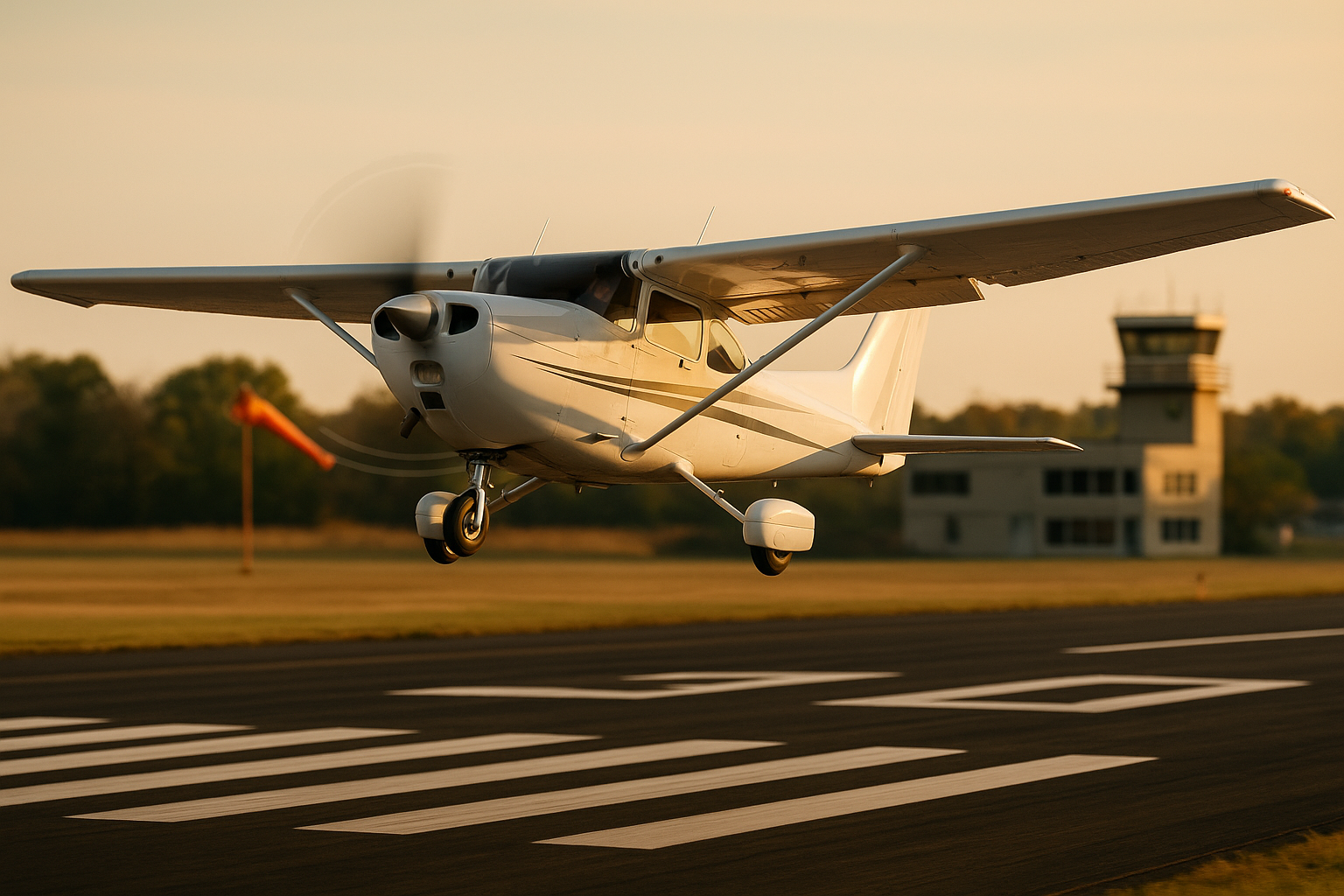
Deciding to go around is one of the most important judgment calls a pilot makes on every approach. The term go-around describes the deliberate interruption of an approach to landing, followed by a climb back to a safe altitude and either a stabilized re-approach or diversion. The primary keyword go-around appears intentionally early because understanding when and why to go around reduces risk, preserves options, and separates careful crews from reactive ones.
This article explains the operational logic behind go-around decisions, how pilots should interpret threats on final approach, and how to turn intention into safe action. It is written for pilots, student pilots, flight instructors, flight crews, and serious aviation professionals who want clear, practical guidance rather than abstract admonitions. You will get concrete decision-making frameworks, a realistic scenario, common mistakes to avoid, and a concise FAQ to reinforce learning.
What a Go-Around Really Means
A go-around is not a failure. It is an accepted flight maneuver that recovers an approach that has become unsafe or unstable. Operationally, a go-around accomplishes three things: it stops an approach that has unacceptable risk, creates time and space to reassess, and returns the airplane to a known safe state for troubleshooting, briefing, or diverting.
Technically, a go-around involves increasing thrust to establish a positive climb, configuring the aircraft for climb (which may include retracting flaps incrementally and ensuring landing gear is up when applicable), maintaining appropriate pitch and airspeed to avoid retreating into a stall, and following published missed approach or climb procedures when available. The precise sequence and power settings depend on the aircraft type and the operator's procedures.
Why Go-Around Decisions Matter in Real-World Aviation
Most approach and landing accidents start with a bad approach. Unstable approaches, misjudged visual cues, unexpected wind shifts, runway incursions, or mechanical anomalies are frequent precursors to incidents during the final phase of flight. The go-around is a defensive maneuver that interrupts the chain of events leading to an accident. It preserves aircraft control, prevents runway overruns, and reduces the likelihood of controlled flight into terrain during marginal approaches.
For flight instructors and training programs, normalizing the go-around is essential. Students and even experienced pilots often treat a go-around as an admission of poor technique rather than a tool for safety. If go-arounds are stigmatized, pilots will delay the decision until escape margins are narrower, increasing risk. A culture that values timely go-around decisions leads to safer operations and better judgment under pressure.
How Pilots Should Understand Go-Arounds: Decision-Making, Not a Checklist
Making a go-around decision is primarily cognitive and situational rather than procedural. The pilot must interpret an unfolding set of threats and determine if the approach remains within acceptable safety margins. Key mental checkpoints include aircraft stability, energy-state management (airspeed and descent profile), runway environment, aircraft configuration, and external threats such as traffic, weather, or ATC changes.
Use the following conceptual filters during the approach. These are not a checklist to check off in sequence but a way to keep priorities in the pilot's head:
- Stability: Is the approach stable on final for configuration, speed, descent rate, and alignment? If not, consider immediate correction or a go-around.
- Visual and runway cues: Are required visual references present and reliable for the intended landing? Reduced visibility, confusing runway lighting, or a displaced threshold can negate a landing opportunity.
- Aircraft readiness: Is the airplane configured for landing and performing normally? Any abnormal indications or handling qualities that degrade safety justify discontinuing the approach.
- Energy state: Is airspeed adequate and being maintained? Excessive sink rates close to the runway are difficult to recover from; timely go-arounds are safer than last-moment power applications.
- External threats: Is there traffic, birds, vehicles, or other hazards on or near the runway? Is weather changing rapidly? Any emergent hazard can require an immediate go-around.
Decide early. Committing to land late in the flare with warning signs present increases the likelihood of a mishap. Make the go-around decision while you still have clear control margins and time to execute the maneuver cleanly.
Common Mistakes and Misunderstandings
Pilots make certain recurring errors when it comes to go-arounds. Understanding these traps will help crews avoid them.
1) Delaying the decision because of external pressure. Whether from ATC, company scheduling, passengers, or the pilot's self-image, perceived pressure to land contributes to poor decisions. A go-around preserves options; it is a normal and acceptable part of flying.
2) Confusing aerodynamic recovery with procedural actions. Adding power without establishing a climb attitude or without recognising aircraft energy state can lead to high sink rate or pitch-induced stall. Proper climb profile and airspeed management must accompany thrust adjustments.
3) Not briefing the go-around. A quick verbal brief between pilot flying and pilot monitoring clarifies who flies, who communicates with ATC, and how flaps, gear, and automation will be managed. Lack of a brief leads to task saturation and coordination errors during execution.
4) Treating a go-around as only for bad weather. Go-arounds are equally necessary for mechanical abnormalities, runway incursions, unstable approaches, or deteriorating visual cues.
5) Failing to consider the missed approach path. Some airports have published missed approach procedures that avoid terrain and obstacles. Ignoring obstacles or terrain in the missed approach area can create new hazards after a go-around. When available, incorporate published missed approach guidance into pre-approach planning.
Practical Example: A Realistic Cockpit Scenario
Imagine you are flying a single-pilot IFR approach to a medium-length runway on an instrument approach in marginal visual conditions. Crosswind increases during the final segment, and you notice that your descent rate has increased despite maintaining power setting for the final. You also hear ATC advise of a vehicle on adjacent taxiway and see runway lights reduced by fog.
Assess quickly: approach is now unstable on descent rate and visual cues are degraded. The correct decision here is an immediate go-around. In a single-pilot environment, the sequence would be: apply full available power to establish a positive climb, pitch for the climb attitude appropriate to the aircraft and power setting, retract to the climb-safe flap setting according to the aircraft's standard operating procedure, confirm positive rate and then retract the landing gear if applicable, and call ATC to advise the missed approach. Maintain runway alignment while climbing until established on the missed approach course or until heading and obstacle clearance are assured. Re-evaluate weather and approach strategy while climbing to a safe altitude.
This example illustrates the interplay between energy management, external threats, and clear priority-setting. The objective is to restore margins, not to salvage the landing at the last possible moment.
Best Practices for Pilots
Adopt habits that make timely go-around decisions routine and dependable.
- Brief the missed approach or go-around as part of the pre-landing checklist, not as an afterthought. Make roles and initial actions clear for both pilot flying and pilot monitoring.
- Define and internalize stabilized approach criteria appropriate to your aircraft and operation. If the approach departs those criteria, plan to go around early.
- Practice go-arounds in training flights until the maneuver becomes smooth and efficient. Include scenarios with partial-panel, single-engine (for multi-engine pilots), and automation failures to build resilience.
- Keep a mindset that values margin over ego. Approach stabilization and safety should always trump the desire to complete a leg on schedule.
- When available, follow published missed approach procedures. If terrain or obstacles are present, brief and visualize the missed approach path before starting the approach.
- Communicate crisply with ATC. A quick radio call advising a missed approach handles traffic sequencing and helps ATC reassign vectors without surprise.
Human Factors and Crew Resource Management
Decision making for go-arounds is strongly influenced by human factors. Complacency, plan continuation bias, authority gradients, and expectation bias push crews to continue unstable approaches. Strong CRM practices counter these pressures through clear communication, assertiveness, and pre-established roles.
Encourage copilots and instructors to speak up early, and encourage pilot flying to be receptive to input. Standardized callouts and stabilized approach call points reduce ambiguity. When a non-flying pilot calls for a go-around, treat it with the same weight as any other safety-critical input.
Automation and Go-Arounds
Modern aircraft automation changes how go-arounds are flown but not the fundamental decision. In some glass-cockpit airplanes, selecting go-around can be accomplished by pressing a dedicated button that engages an automatic climb mode and follows missed approach guidance. In other aircraft, manual control inputs remain essential. Know your automation: if you expect the automation to fly the missed approach for you, verify how it behaves in degraded conditions and practice both automated and manual go-arounds in training.
When a Go-Around Can Create New Risks
While go-arounds reduce many risks, they can introduce new ones if poorly planned or executed. Examples include:
- Terrain and obstacle proximity that were not accounted for in the missed approach path.
- Traffic conflicts if other aircraft are on short final or if ATC has not sequenced the climb.
- Miscommunication between crew members about who will fly and who will handle radios or navigation.
These risks reinforce the value of pre-briefing the missed approach, flying published procedures when available, and maintaining strong CRM during execution.
Training Guidance and Practical Training Exercises
Training should make go-arounds routine and predictable. Instructors should design exercises that stress the components pilots will face during actual go-arounds: sudden wind shifts, partial panel, automation disconnects, and runway contamination. Rehearse the following training elements:
- Immediate manual go-around initiation from low altitude to build confidence with thrust and pitch management.
- Automated go-around initiation and monitoring, including aborting the automation if it does not behave as expected.
- Missed approach navigation with published procedures and with vectors from ATC.
- Decision drills where the instructor introduces destabilizing events on final to force a timely go-around decision.
Repetition builds a mental model so that, when a real threat appears, the pilot's actions are measured and effective rather than panicked and disorganized.
Frequently Asked Questions
When should I call a go-around?
Call a go-around whenever the approach becomes unstable, visual references are inadequate, aircraft systems are abnormal, or any external hazard threatens a safe landing. Timely decisions preserve margins and avoid last-minute, high-risk recoveries.
Is a go-around always the safest choice?
Not always. A properly stabilized approach in acceptable conditions with no threats is preferable to an unnecessary go-around. However, when doubt exists about safety margins, a go-around is the safer and more conservative option.
How should I brief a go-around?
Brief the missed approach or go-around during the approach briefing. Define who will fly, initial power and configuration actions, expected automation mode, and the missed approach track or ATC expectations. Keep the brief concise and confirm understanding.
What can I do to get better at go-arounds?
Practice go-arounds in training, including both manual and automated variants and with simulated failures or unusual situations. Review missed approach procedures for airports you use frequently and discuss options with instructors and peers.
How does the go-around affect passengers?
Passengers may perceive a go-around as a problem. Give a brief, calm explanation: "We are going around to get a safer approach. We will try again or divert if needed." Clear, concise communication reduces anxiety and supports professionalism.
Common Mistakes Revisited and How to Fix Them
To correct common go-around mistakes, implement these practical steps:
- Normalize go-arounds in culture by discussing them openly in debriefs and not penalizing crews for making conservative choices.
- Use standard callouts for stabilized approach criteria and missed approach initiation to reduce ambiguity.
- Train to a common set of procedures so that both pilot flying and pilot monitoring know the initial actions without hesitation.
Key Takeaways
- Practical takeaway: Decide early. If the approach becomes unstable, go around while margins remain comfortable.
- Safety takeaway: A timely go-around prevents many approach and landing accidents by restoring airspace and time to think.
- Training takeaway: Practice go-arounds regularly, brief missed approaches, and train for both manual and automated scenarios.
Making the right go-around decision requires preparation, practiced skills, and the mental willingness to accept a short delay for a safer outcome. Treat the go-around as part of standard operations and not an admission of failure. With training and a supportive safety culture, go-arounds become a reliable tool to manage risk in the terminal phase of flight.