
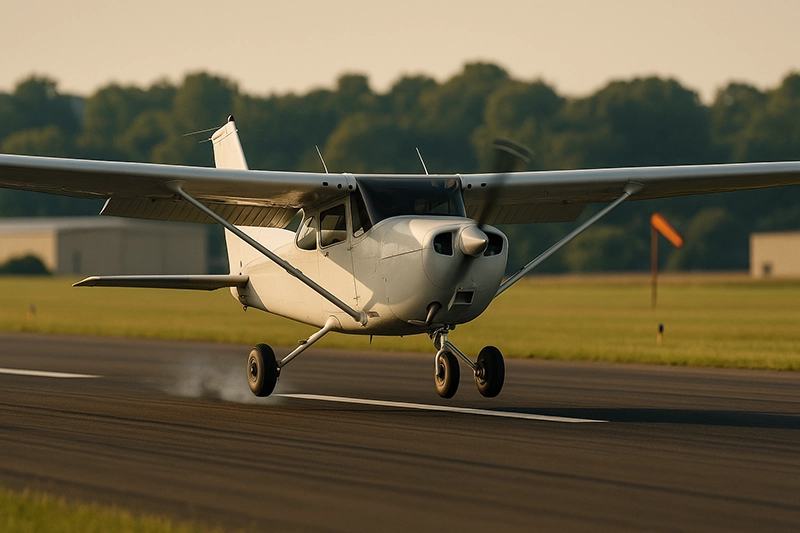
Hard landings are a common training and operational hazard that every pilot will face in some form. The term "hard landing" refers to a touchdown with higher-than-normal vertical acceleration or impact forces. Hard landings damage airframes, increase maintenance costs, degrade safety margins, and indicate shortcomings in approach control, judgment, or technique. For pilots, student pilots, and flight instructors, understanding what causes hard landings and how to avoid them is essential to safe, economical, and professional airmanship.
This article explains the mechanics behind hard landings, the human and environmental factors that produce them, and practical strategies to reduce their occurrence. You will learn how approach energy management, control technique, aircraft configuration, and decision-making intersect at touchdown. The content focuses on real-world application: flight training, go-around decision-making, crosswind operations, tailwheel versus tricycle gear differences, and instructor-student dynamics. Practical examples and an FAQ round out the discussion so you can immediately apply the lessons on the next flight.
Understanding What a Hard Landing Is
At its core, a hard landing is an event where the aircraft contacts the runway with excessive vertical speed or an awkward attitude that transmits higher impact loads to the landing gear and structure than during a normal touchdown. Hard landings are often visible as a sudden bounce, a heavy thump, or an abrupt change in pitch or roll at touchdown. The underlying problem is usually energy that was not adequately dissipated before the wheels or skids reached the surface.
Energy at landing is a function of the aircraft mass and the square of its vertical and horizontal velocities. Pilots control energy primarily through airspeed, pitch attitude, descent rate, and configuration. Anything that prevents precise control of those variables increases the risk of a hard landing.
Common Mechanical and Aerodynamic Causes
Several mechanical and aerodynamic factors influence whether a landing will be firm or hard. Understanding these helps pilots diagnose and prevent the conditions that produce hard impacts.
Flare timing and rate. The flare is the pilot's primary tool for converting descent rate into a safe touchdown. Flare too late or too aggressively and the rate of descent may remain high at contact. Flare too early or too long and the aircraft can balloon and then settle hard.
Airspeed control. Excess airspeed at threshold or on short final means more kinetic energy to bleed off. Higher-than-normal ground speed multiplies the energy the aircraft must absorb at touchdown. Conversely, slow airspeed near the stall can lead to poor pitch control and abrupt changes in sink rate during the flare.
Ground effect and sink. Approaching the runway, aerodynamic characteristics change because of ground effect. Some aircraft float in ground effect and can suddenly settle once leaving it. Tailwheel and some high-wing aircraft can present larger, less predictable transitions from ground effect to touchdown, complicating the flare.
Wind shear and turbulence. Rapid changes in headwind to tailwind, gusts, or wind gradients near the surface can suddenly increase sink rate or airspeed. A wind shear that reduces lift late in the approach will increase descent rate and can produce a hard touchdown. Crosswind gusts combined with correction inputs can also create heavy side loads at touchdown.
Aircraft configuration. Improperly set flaps, spoilers, or landing gear can change approach lift and drag characteristics. For example, delayed flap extension or selecting the wrong flap setting for the approach can alter the pitch and sink behavior during the flare.
Human Factors That Lead to Hard Landings
Pilot technique and judgment play a major role. Training, workload, situational awareness, and stress influence how well a pilot manages energy on final approach and during the flare.
Inexperience or poor technique. Student pilots and recently transitioned pilots may have inconsistent flare timing, misjudged height over the runway, or difficulty maintaining airspeed and attitude simultaneously. Instructors should look for early signs of poor energy management and remediate them in the pattern.
Task saturation. High workload during approach, such as managing radios, navigation, checklists, or cockpit distractions, reduces the pilot's ability to monitor descent rate and flare timing. When the pilot is busy with non-flying tasks, subtle cues like changing sink rate are more likely to be missed.
Fixation and expectation. Expecting a normal touchdown can lead pilots to continue an approach that has become unstabilized. Cognitive fixation on completing the landing rather than executing a go-around is a documented human factors risk.
Stress and fatigue. Decision-making degrades when pilots are tired or stressed. They are less likely to recognize a deteriorating approach early, and once on short final they may hesitate to execute a missed approach when appropriate.
Why Hard Landings Matter in Real-World Aviation
Hard landings affect safety, aircraft availability, and long-term maintenance. A single hard landing can bend or weaken landing gear, crack nacelle or fuselage structure, damage propellers, or misalign landing gear components. Beyond mechanical damage, repeated hard landings increase inspection frequency and maintenance costs, and can ground an aircraft if damage is discovered on subsequent checks.
For flight training operations, hard landings have operational consequences. Training aircraft often fly multiple cycles per day. An aircraft sidelined for repair disrupts scheduled lessons, increases costs for the operator, and reduces student access to aircraft time. From a safety culture perspective, instructors who do not teach or enforce proper touchdown technique risk normalizing unacceptable landing forces among students.
In commercial and ferry operations, a hard landing can trigger mandatory inspections or even temporary grounding until a qualified mechanic determines airworthiness. The business and safety costs of a hard landing are therefore nontrivial.
How Pilots Should Understand and Train for Hard Landing Prevention
Prevention blends technique, judgment, and environment assessment. Training should break down landing into its controllable parts: stabilized approach, proper configuration, energy management, and a disciplined go-around decision when the approach is not stabilized.
Stabilized approach. A stabilized approach means the aircraft is on the proper flight path, configured for landing, and at the correct airspeed with a descent rate manageable during flare. While exact parameters vary by aircraft and operation, the operational concept is universal. Pilots should aim to establish stability well before the runway threshold and correct deviations early.
Flare practice. The flare is a practiced motor skill. Use training time to develop a smooth, predictable flare that transitions energy from descent into a gentle touchdown. Practicing in varied wind conditions, at different weights, and with different flap settings builds adaptability.
Go-around discipline. A confident, immediate go-around when an approach becomes unstabilized reduces the chance of a hard landing. Teach students that the go-around is a fundamental safety maneuver, not a failure. Establish clear instructor-student expectations for who will call or initiate a go-around in training flights.
Wind and gust management. Anticipate gusts by flying a slightly higher approach speed when appropriate and current operating procedures recommend it. Coordinate with instructors or check the aircraft-specific guidance for recommended gust increments or stabilizing techniques. Anticipate wind shear near the runway by briefing likely shifts and readying a go-around if sudden sink develops.
Common Mistakes and Misunderstandings
Pilots often make predictable errors that lead to hard landings. Recognizing these mistakes is the first step in preventing them.
Attempting to salvage a poor approach. One of the most common errors is continuing a marginal approach in the hope it will get better. Once on short final, deviations in airspeed or glide path are harder to correct without aggressive inputs that create other problems. The correct action for a poor approach is usually a timely go-around.
Overcontrolling the pitch. Inexperienced pilots may make large control inputs during the flare to "save" the touchdown. These inputs can cause the aircraft to bounce or flip from nose to main gear contact. Smooth, small pitch inputs and anticipation of the aircraft response reduce this risk.
Mismanaging crosswind correction. Crosswind landings require a coordinated technique to align the aircraft with the runway while preventing side loads at touchdown. Relying on inadequate or last-minute corrections can produce heavy side loads or wing strikes. Training should emphasize proactive control and timely transition from crab to wing-low or skid correction as appropriate for the airplane type.
Ignoring weight and balance effects. A heavier aircraft has more momentum and needs more distance and time to dissipate descent energy. Failing to account for higher landing weight, especially after heavy fuel or payload, increases touchdown forces and the risk of a hard landing.
Practical Example: Training Scenario and Decision Points
Scenario: A Cessna 172 on a local training flight on a gusty afternoon. Student pilot flies the approach, stable until short final when a sudden reduction in headwind causes a rapid sink. The student attempts to flare, but the aircraft contacts the runway with an abrupt nose-down thump and bounces twice before settling.
Debrief points:
- Approach stabilization. Was the approach stabilized early enough to recognize the wind change and adjust airspeed or initiate a go-around?
- Gust management. Did the pilot add the recommended gust increment to approach speed or brief anticipated wind shifts? Would a slightly higher speed have allowed more control authority during the sink?
- Go-around decision. When the sink developed, did the student consider a go-around? If not, why? Was there hesitation due to perceived pressure to complete the landing?
- Flare technique. Did the student overcorrect pitch, leading to the bounce? Could a more gradual flare have reduced the bounce intensity?
- Instructor intervention. Did the instructor monitor and intervene at the correct time? Was the instructor prepared to take control or call for a go-around?
Actionable training steps after the event: practice stabilized approaches with simulated wind shifts, rehearse go-around procedures on every flight, and practice smooth flare control in calm conditions before introducing gusty-wind practice.
Best Practices for Pilots to Avoid Hard Landings
Below are practical habits and decision frameworks that reduce the frequency of hard landings.
- Practice and prioritize stabilized approaches. Make a habit of stabilizing by a predetermined altitude on final. Correct early or go around.
- Maintain correct approach speed. Use aircraft-specific recommended approach speeds and add a gust margin when winds are variable.
- Flare with intent and cadence. Work on timing and rate of flare during training sessions. Use visual references like runway aiming points and a consistent height judgment routine.
- Be decisive on the go-around. Train for an immediate, confident go-around at the first sign of an unstabilized approach or sudden wind shear.
- Manage distractions. Minimize nonessential tasks on short final. Delegate radios or checklist items earlier in the approach to keep attention on flying the aircraft.
- Brief before landing. Discuss expected winds, runway surface, touchdown point, and go-around criteria with passengers or students before final approach.
- Weight and configuration awareness. Plan for heavier approaches if carrying extra fuel or passengers and set flap and trim appropriately to ensure predictable flare behavior.
- Post-event inspection protocol. If a hard landing occurs, follow the aircraft-specific procedures for inspection. Even if damage is not immediately apparent, record the event and consult maintenance for a thorough check.
Aircraft Type Considerations
Different airframes behave differently on landing. Tailwheel aircraft, tricycle-gear aircraft, high-wing versus low-wing designs, and heavy aircraft all have unique handling characteristics that influence landing technique.
Tailwheel aircraft. Tailwheel airplanes tend to be less forgiving of improper flare technique because the main gear is forward of the center of gravity. They can porpoise or ground-loop if touchdown dynamics are not controlled. Training should emphasize energy control and coordinated rudder use on rollout.
Tricycle gear. Tricycle-gear aircraft usually allow a more forgiving nose-up attitude during flare and tend to be more stable on touchdown. However, excessive sink or fast flare rates can still cause hard touchdowns and nosegear damage.
Large and transport category aircraft. Larger aircraft have higher inertia. Hard landings in these types can have serious structural implications. Transport operators rely on strict stabilized-approach criteria and conservative go-around policies to prevent heavy touchdowns. Pilots should be attentive to company procedures and aircraft manufacturer guidance.
Maintenance and Reporting After a Hard Landing
Hard landings should be treated seriously on maintenance grounds. Even if an aircraft seems to operate normally after a heavy touchdown, internal components can be stressed or damaged.
Immediate actions: Park in a safe area and conduct a thorough preflight-style inspection. Look for obvious external signs such as bent gear, propeller nicks, skin wrinkling, leaking fluid, or instrument anomalies. Note any unusual sounds or handling characteristics during the subsequent taxi or flight segments.
Documentation and notification: Record the event in the aircraft logbook and notify your maintenance provider or operating authority. Follow the aircraft manufacturer's or operator's instructions for inspection and repair. If you are unsure whether an aircraft is airworthy, seek a maintenance inspection before further flight.
Training operations: Incorporate the occurrence into recurring training and safety briefings. Use it as a learning opportunity rather than hiding the event. Consistent reporting supports a safer training environment and prevents repeated damage to aircraft in the fleet.
Advanced Techniques and Instructor Guidance
Experienced instructors focus both on technique and mental models that help students anticipate and adapt. Key teaching points include energy management models, visual cues for height and sink rate, and error recovery drills.
Use of visual cues. Teach students to identify visual cues that signal approach rate and height, such as runway texture, relative motion of runway lights at night, and the apparent angle between the nose and horizon. These cues, combined with instrument references, form a robust judgement base for flare timing.
Simulated failures and variability. During training, introduce controlled variability such as simulated gusts, crosswind landings, and power changes late in the pattern. This controlled exposure builds student confidence and muscle memory for corrective inputs and for executing go-arounds when appropriate.
Positive intervention policy. Instructors should have a low threshold for taking control during unstable approaches. A consistent policy prevents students from learning risky behaviors and reinforces a culture of safety.
Frequently Asked Questions
What exactly counts as a hard landing?
A hard landing generally describes a touchdown with higher vertical impact forces than expected for a normal landing. It is characterized by a firm or heavy contact, excessive bounce, or an abrupt attitude change at touchdown. Aircraft-specific guidance typically defines inspection or maintenance actions after a classified hard landing.
Can a single hard landing make an aircraft unsafe?
Potentially. A single hard landing can damage gear components, propellers, or structural elements. Even when no external damage is obvious, internal stresses can compromise safety. After a hard landing, follow your maintenance protocol and obtain an inspection if there is any doubt about continued airworthiness.
When should I choose a go-around to avoid a hard landing?
If the approach is unstabilized in configuration, airspeed, or glide path near the runway, or if unexpected wind conditions develop, a go-around is the correct choice. Hesitation to execute a missed approach to avoid a hard landing often produces worse results than taking the go-around promptly.
How does crosswind affect the risk of hard landings?
Crosswinds increase the complexity of touchdown by requiring translation from a crabbed approach into alignment with the runway. Improper timing or excessive control inputs can create heavy side loads at touchdown. Practice and a clear crosswind technique for your specific aircraft are essential.
Are there indicators I can use in the flare to prevent bouncing?
Yes. Monitor the vertical speed and the sight picture of the runway. Use a smooth, consistent flare rate rather than abrupt pitch inputs. If a bounce occurs, apply appropriate control inputs to prevent a secondary hard landing, and consider a go-around if control is uncertain.
Key Takeaways
- Practical takeaway: Prioritize stabilized approaches and decisive go-arounds. Early correction prevents energy surprises at touchdown.
- Safety takeaway: Treat every hard landing seriously. Conduct proper inspections, log the event, and consult maintenance before further flight if damage is suspected.
- Training takeaway: Use repeatable flare practice, simulated variability, and a low threshold for instructor intervention to build safe landing technique.
Hard landings are both a technical and human factors problem. Pilots reduce the risk by practicing flare technique, stabilizing approaches early, managing energy, and making prompt go-around decisions when conditions deviate from the planned profile. Instructors and operators reinforce safe habits through deliberate practice, positive intervention policies, and transparent reporting that prioritizes safety over schedule.
If you are an instructor, include hard-landing avoidance drills in recurrent lessons. If you are a student, practice disciplined go-arounds and seek feedback on flare timing and approach management. For operators, ensure maintenance and documentation procedures are clear and enforced so a single hard landing does not become a hidden hazard.
Final lesson: touchdown quality is the product of preparation, technique, and decision-making. Build all three and the probability of a hard landing will drop significantly.