
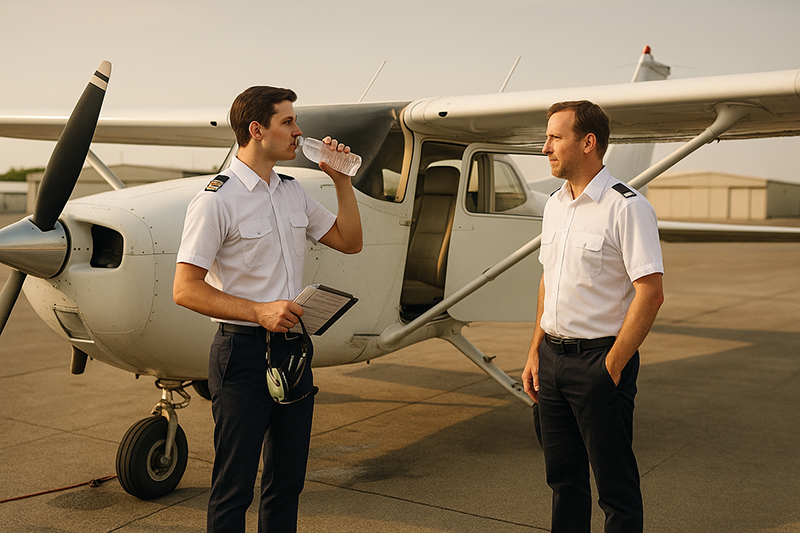
Hydration and pilot performance are closely connected because flying demands sustained attention, good judgment, fine motor coordination, and the ability to adapt when conditions change. A pilot does not need to be severely dehydrated to notice the kinds of effects that matter in an aircraft: fatigue, headache, reduced concentration, slower mental processing, irritability, or a tendency to rush decisions. In the cockpit, those small degradations can show up during radio work, checklist discipline, traffic scanning, instrument interpretation, and workload management.
For student pilots, instructors, professional crews, and aviation enthusiasts who fly regularly, hydration is not a wellness trend. It is part of personal readiness. Just as a pilot considers weather, fuel, aircraft status, and airspace, the pilot should also consider physical condition before and during the flight. This article explains how hydration affects cockpit performance, why dehydration can be easy to overlook, how it interacts with heat, altitude, fatigue, and caffeine, and what practical habits pilots can use without turning every flight into a medical exercise.
What Hydration Means for Pilots
Hydration refers to maintaining enough body fluid and electrolytes for normal physical and cognitive function. Electrolytes are minerals involved in nerve signaling, muscle function, and fluid balance. For most routine flying, the primary issue is not complex sports nutrition. It is simply whether the pilot has taken in enough fluid throughout the day to support normal performance and avoid avoidable fatigue.
Pilots often think about hydration only on hot summer days, but dehydration can develop in many operating environments. A long preflight on a ramp, a high workload training sortie, a cross-country flight with limited facilities, a day of repeated lessons, or several hours breathing dry cabin air can all contribute. Even a pilot who starts the morning adequately hydrated can become less prepared by late afternoon if fluid intake is neglected.
In aviation, hydration should be viewed through the same practical lens used for other human factors. The question is not whether a pilot feels dramatically ill. The better question is whether the pilot is in the best condition to manage the flight. A pilot who is thirsty, tired, distracted by a headache, or reluctant to drink because of restroom concerns may still be legally qualified to fly, but may not be performing at a personal best.
How Dehydration Can Affect Cockpit Performance
The cockpit is a demanding workplace. It requires simultaneous management of aircraft control, navigation, communication, weather assessment, systems monitoring, and decision-making. Dehydration can make those tasks feel harder by increasing fatigue, discomfort, and mental workload. A pilot may still be able to fly the aircraft, but the margin for absorbing surprises can shrink.
Common dehydration-related symptoms that matter in aviation include thirst, dry mouth, headache, lightheadedness, muscle cramps, reduced alertness, and a general sense of low energy. Not every person experiences the same symptoms, and not every symptom has dehydration as the cause. That is why pilots should treat these signs as prompts to reassess overall fitness, not as a self-diagnosis.
From a performance standpoint, the more important issue is how dehydration can combine with other stressors. A pilot who is slightly dehydrated, sleep-restricted, hungry, and flying in turbulence on a hot day may experience a much larger practical effect than any single factor would suggest. Human performance in aviation is often degraded by combinations: heat plus fatigue, time pressure plus distraction, workload plus discomfort. Hydration belongs in that same risk picture.
Student pilots may notice hydration issues during high-effort tasks such as ground reference maneuvers, instrument scan practice, emergency procedures, or pattern work in gusty conditions. Instructors may see a student become quiet, irritable, slow to respond, or less precise late in a lesson. These signs are not automatically hydration problems, but they are reasons to pause, debrief, and evaluate whether the training environment is still productive.
Why This Matters in Real-World Aviation
Hydration matters in real-world aviation because pilots rarely operate in ideal classroom conditions. They preflight aircraft on hot pavement, wait for fuel trucks, load baggage, brief passengers, manage schedule pressure, and then step into cockpits that may be warm, noisy, and mentally demanding. By the time the engine starts, the pilot may already have spent an hour working in conditions that increase fluid loss and fatigue.
In general aviation, the issue is especially practical because many aircraft have limited environmental control and limited restroom options. Pilots sometimes restrict fluid intake before a flight because they do not want to be uncomfortable later. That may feel practical in the short term, but intentional under-hydration can create its own risk. Good planning means balancing comfort with performance, not ignoring either one.
For flight instructors, hydration also affects teaching quality. An instructor may fly multiple lessons in a day, often in warm cockpits and busy traffic patterns. The instructor is not only monitoring the aircraft but also observing the student, communicating with ATC, guarding the controls, and making safety decisions. Dehydration-related fatigue can make instruction less patient, less precise, and less observant. A good instructor models personal risk management by taking breaks, drinking water, and recognizing when a lesson should be shortened or rescheduled.
For professional pilots, hydration is part of crew endurance and fatigue management. Airline, charter, corporate, aerial survey, flight training, and public service operations all place different demands on crews. The details vary, but the principle is consistent: a pilot who plans hydration as part of duty-day management is better positioned to maintain consistent performance across changing workload.
Hydration, Heat, Altitude, and Dry Cabin Air
Hydration becomes more important when environmental stress increases. Heat is the most obvious factor. Ramp surfaces, direct sunlight, low airflow, and cockpit greenhouse effect can cause pilots to sweat before and during flight. In many light aircraft, the cabin may remain uncomfortable during taxi, climb, or pattern operations, especially at low altitude in summer. A pilot who begins the flight already behind on fluids may find that performance drops faster as heat stress builds.
Altitude and dry air also deserve attention. Aircraft cabins often expose pilots to low humidity, and breathing dry air for long periods can contribute to dry mouth and discomfort. At higher altitudes, the body may also be managing lower oxygen availability, depending on aircraft type, altitude, duration, and oxygen use. Dehydration does not replace the need to understand oxygen physiology, hypoxia risk, or applicable regulations and equipment requirements, but it can add to the pilot's overall physiological workload.
Cold weather can be misleading. Pilots may sweat under winter clothing during preflight, then spend hours in dry air without feeling as thirsty as they would in summer. Because thirst is not always a perfect planning tool, winter flying still deserves deliberate fluid planning. A thermos of water or a planned hydration stop may be just as useful in January as in July.
Long cross-country flights require extra planning because hydration intersects with route selection, passenger needs, weather deviations, and fuel planning. A pilot who avoids drinking entirely to prevent a restroom stop may be trading a predictable inconvenience for reduced alertness. In many cases, a planned stop improves the whole flight: passengers stretch, the pilot resets mentally, fuel status is confirmed, weather is reviewed, and everyone returns to the aircraft more comfortable.
How Pilots Should Understand Hydration Practically
Pilots do not need to turn hydration into a complicated formula. A practical aviation approach is to think about hydration before, during, and after the flight. Before the flight, the pilot should avoid starting the day behind. During the flight, the pilot should maintain comfort and alertness without creating unnecessary distraction. After the flight, the pilot should recover, especially if more flying is planned later.
Before a training lesson or cross-country flight, the best habit is steady fluid intake throughout the day rather than quickly drinking a large amount immediately before engine start. Last-minute overcorrection can create discomfort and distraction. Better preparation starts the evening before or early in the day, especially before hot-weather flying, long lessons, or multi-leg operations.
During flight, water is usually the simplest cockpit choice. It is easy to carry, predictable, and does not add sugar or stimulants. Some pilots prefer an electrolyte beverage during hot weather or long duty days. That can be reasonable, especially when sweating is significant, but pilots should be cautious with unfamiliar products. Anything that causes stomach discomfort, unusual alertness, drowsiness, or frequent urination is not ideal for first-time use in the cockpit.
After flight, hydration supports recovery. This matters when a pilot has another leg, another lesson, or a drive home. The flight may be over, but safety decision-making is not. A fatigued, dehydrated pilot leaving the airport after a demanding day still needs to make good choices on the ground.
Caffeine, Energy Drinks, and Pilot Hydration
Caffeine is common in aviation, and many pilots use coffee or tea as part of a normal routine. Moderate caffeine use is not automatically a hydration problem, and many people tolerate it well. The operational concern is that caffeine can mask fatigue, increase jitteriness in some people, contribute to stomach discomfort, or interfere with sleep if used too late in the day. Caffeine may also increase urination in some individuals, particularly when intake is higher than usual.
Energy drinks deserve more caution because they can contain varying combinations of caffeine, sugar, herbal ingredients, and other stimulants. A pilot should know how any beverage affects them before using it around flight operations. The cockpit is not the place to experiment with a new stimulant, a new supplement, or a high-caffeine product. Personal response matters, and a beverage that feels fine during a normal workday may feel different during turbulence, heat, workload, or anxiety.
Alcohol deserves a separate mention because it affects hydration, sleep quality, and cognitive performance. Pilots must comply with all applicable alcohol regulations and should also use conservative judgment beyond minimum legal requirements. Even when a pilot is not impaired in the obvious sense, poor sleep and dehydration after alcohol use can reduce readiness. The practical question remains: am I fully fit to fly today?
Hydration and Aeromedical Decision-Making
Hydration is part of aeromedical self-assessment, but it is not a substitute for medical judgment. A pilot who has persistent dizziness, faintness, confusion, severe headache, vomiting, heat illness symptoms, or any condition that raises concern should not treat the issue as simply needing more water. Those signs can indicate problems that require medical evaluation.
Pilots should also consider medications and medical conditions. Some medications can affect fluid balance, alertness, blood pressure, or tolerance to heat. Some medical conditions require specific guidance on fluid intake. Pilots should consult an aviation medical examiner or appropriate healthcare professional when personal medical factors are involved. The goal is not to create anxiety, but to avoid casual assumptions about symptoms that may have more than one cause.
In training, instructors can help students build a healthy habit by including physical readiness in the preflight conversation. The IMSAFE concept is commonly used in aviation training as a simple framework for considering illness, medication, stress, alcohol, fatigue, and emotion or eating. Hydration fits naturally into that discussion because it influences fatigue, comfort, and mental sharpness. It should be treated as one element of the broader fitness-to-fly picture.
Common Mistakes and Misunderstandings
One common mistake is assuming that hydration only matters if a pilot feels very thirsty. Thirst is useful, but it can lag behind the need for fluid, and some pilots become accustomed to ignoring it. A better approach is to plan hydration in advance, especially when the operating environment is predictable: hot weather, long duty day, multiple lessons, or extended cruise.
Another mistake is deliberately avoiding water before a flight because restroom access is inconvenient. This is understandable, especially in small aircraft, but it is not a sound long-term habit. Pilots should plan route stops, use facilities before departure, brief passengers honestly, and select practical fluid timing rather than choosing avoidable dehydration.
A third misunderstanding is believing that every beverage supports cockpit readiness equally. Water, electrolyte drinks, coffee, soda, and energy drinks can all affect people differently. Sugar-heavy drinks may not sit well with every pilot. Highly caffeinated beverages may increase nervousness or disrupt sleep. Carbonated drinks may cause discomfort at altitude for some individuals. The best cockpit beverage is the one that supports alertness without creating a new distraction.
Pilots also sometimes underestimate preflight workload. A summer flight may begin with loading bags, pulling the aircraft from a hangar, checking fuel, cleaning the windshield, sumping tanks, and briefing passengers. That work may be done in direct sunlight before the Hobbs meter ever starts. If the pilot waits until cruise to think about hydration, the problem may already be developing.
Finally, some pilots treat hydration as a personal comfort issue rather than a safety issue. Comfort does matter, but the deeper issue is performance. Aviation safety depends on small margins: noticing a traffic call, catching a frequency error, recognizing deteriorating weather, or deciding to divert early. A pilot who feels physically well is more likely to preserve those margins.
Practical Example: A Hot-Weather Training Flight
Consider a student pilot scheduled for a late-afternoon lesson in a single-engine training aircraft. The plan includes steep turns, slow flight, power-off stalls, and several landings. The temperature is high, the aircraft has been parked in the sun, and the ramp is busy. The student arrives after a full day of classes or work, having had coffee in the morning and only a small amount of water during the day.
During preflight, the student is focused and enthusiastic but already warm. The instructor notices the student rushing the checklist and missing a minor item that they usually catch. After engine start, taxi is slow due to traffic. The cockpit is hot, the student is sweating, and the first departure is delayed. In the practice area, the student begins well but becomes quieter after several maneuvers. Radio calls are less crisp, altitude control becomes inconsistent, and the student reports a headache.
Nothing dramatic has happened, but the lesson is no longer as productive. The instructor has several good options. The lesson can be shortened, the aircraft can return for a break, or the training profile can shift to lower-workload tasks. The instructor can use the situation as a teaching moment about personal minimums and physiological readiness. The student learns that hydration is not separate from flying skill. It supports flying skill.
The better plan would have started earlier. The student could hydrate steadily before arriving, use the restroom immediately before departure, bring a secure water bottle, and brief the instructor if not feeling fully ready. The instructor could consider the heat, schedule shorter maneuver blocks, and plan a break before the student reaches the point of degraded performance. In this example, hydration planning does not require complex equipment. It requires awareness, timing, and the willingness to adjust.
Best Practices for Pilots
The best hydration habits are simple enough to repeat. Pilots should aim for steady intake, practical cockpit management, and honest self-assessment. The goal is not to drink constantly. The goal is to avoid preventable performance loss while maintaining comfort and operational focus.
A reliable approach begins before departure. If the weather is hot, the duty day is long, or the flight is expected to be demanding, hydration should start well before the pilot reaches the airport. A pilot who begins drinking only after becoming thirsty in the cockpit is reacting late. A pilot who drinks a large amount immediately before takeoff may create a different problem. Timing matters.
In the cockpit, water should be accessible but secure. Loose bottles can interfere with controls, rudder pedals, trim wheels, or floor-mounted equipment. A bottle should have a reliable lid, fit in an appropriate location, and be reachable without disrupting aircraft control. Instructors should teach students to manage cockpit items just as they manage charts, tablets, pens, and headsets.
For longer flights, pilots should build hydration into flight planning. This may include selecting fuel stops that also serve passenger and crew needs, considering airport services, and being realistic about delays. A planned stop is often better than pressing on with discomfort, distraction, or declining alertness. This is particularly true for student pilots building cross-country experience, where the goal is not only to arrive but to practice disciplined decision-making.
Practical habits include:
- Hydrate steadily during the day rather than trying to correct the issue immediately before flight.
- Carry water in a secure, spill-resistant container that will not interfere with aircraft controls.
- Plan restroom and stretch stops on longer flights, especially with passengers or students.
- Be cautious with unfamiliar energy drinks, supplements, or high-caffeine products before flying.
- Use physical symptoms such as headache, dizziness, unusual fatigue, or poor concentration as reasons to reassess fitness to fly.
- Teach hydration as part of personal risk management, not as an afterthought.
Hydration in Flight Training Culture
Flight training culture strongly influences pilot habits. If instructors model rushed preflights, skipped meals, and ignored discomfort, students may learn that pushing through is part of being a serious pilot. A better culture treats personal readiness as professional behavior. This does not mean canceling at the first minor inconvenience. It means recognizing that the pilot is part of the aircraft system.
Instructors can build hydration awareness into normal training without making it awkward. During the preflight briefing, a simple question about readiness can open the door: How are you feeling today, and are you prepared for the heat and workload? During the debrief, the instructor can connect performance trends to fatigue, hydration, nutrition, or stress when appropriate. The lesson is not that every mistake has a physiological cause. The lesson is that performance depends on the whole pilot.
Students should also learn to speak up. Many new pilots hesitate to admit discomfort because they want to appear capable. In reality, honest self-assessment is a sign of maturity. A student who says they need a water break, a shorter lesson, or a few minutes to reset is practicing the same judgment they will need as pilot in command.
Passenger Considerations
Hydration planning is not only for pilots. Passengers may also become uncomfortable, especially children, older adults, nervous flyers, or people not accustomed to small aircraft. A pilot should brief passengers about the expected flight time, restroom availability, cabin temperature, and what to bring. This helps prevent discomfort from becoming a distraction during flight.
Passenger hydration can also affect decision-making. If a passenger is uncomfortable, airsick, overheated, or anxious, the pilot's workload increases. The safest response may be a diversion, an early landing, or a delay before the next leg. Good passenger care is part of good cockpit management.
For scenic flights or personal trips, it is tempting to focus on the destination and overlook basic human needs. A professional mindset includes planning for water, shade, restrooms, and rest. These details may seem minor, but they support a smoother and safer flight experience.
Frequently Asked Questions
How much water should a pilot drink before flying?
There is no single aviation-specific amount that fits every pilot, flight, climate, and medical condition. A practical approach is to hydrate steadily before the flight, avoid starting the flight thirsty, and consider heat, workload, flight duration, and personal tolerance. Pilots with medical conditions or fluid restrictions should follow medical guidance.
Is coffee acceptable before or during a flight?
Many pilots tolerate moderate coffee use as part of a normal routine. The key is knowing your own response. If coffee makes you jittery, increases stomach discomfort, disrupts sleep, or leads to frequent urination, it may not support cockpit performance. Avoid experimenting with unusual caffeine intake before flying.
Can dehydration feel like fatigue or poor concentration?
Yes, dehydration can contribute to fatigue, headache, and reduced concentration, but those symptoms can also have other causes. Pilots should treat them as signals to reassess fitness to fly rather than assuming water alone will solve the problem.
Should pilots use electrolyte drinks?
Electrolyte drinks may be useful for some pilots during hot weather, long duty days, or periods of significant sweating. For routine flights, water is often sufficient. Pilots should avoid trying an unfamiliar drink for the first time immediately before or during a flight.
How should flight instructors handle hydration during training?
Instructors should model good personal risk management by planning breaks, encouraging students to bring water, and recognizing signs of fatigue or heat stress. Hydration can be discussed naturally during preflight and debrief as part of overall fitness to fly.
What if a pilot feels dizzy, confused, or severely unwell?
The pilot should not treat serious symptoms as a simple hydration issue. Dizziness, confusion, faintness, severe headache, vomiting, or heat illness concerns require conservative decision-making and may require medical evaluation. Do not fly if fitness is in doubt.
Key Takeaways
- Hydration supports pilot performance by helping preserve alertness, comfort, concentration, and decision-making capacity during flight operations.
- Heat, dry air, long duty days, caffeine choices, and preflight workload can combine with dehydration to reduce safety margins.
- Pilots and instructors should treat hydration as part of personal risk management and fitness-to-fly assessment, not as an afterthought.