
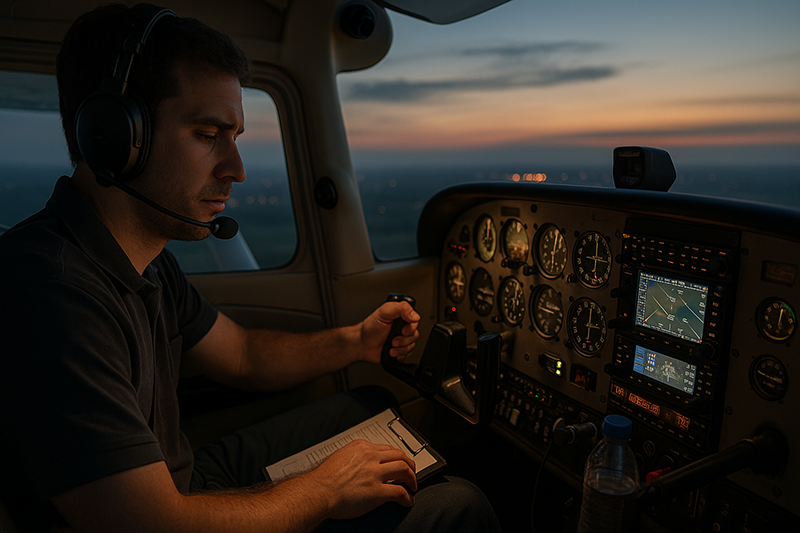
Managing long-distance pilot fatigue is not just a comfort issue. It is a core part of aeronautical decision-making, especially when a flight stretches across several hours, multiple legs, unfamiliar airspace, time zone changes, night operations, or demanding weather. A pilot can be legal, current, and proficient, yet still be poorly positioned to make sound decisions if fatigue has quietly reduced attention, judgment, scan discipline, and workload capacity.
Long-distance flying rewards planning, discipline, and honest self-assessment. It also exposes a weakness that many capable pilots underestimate: fatigue builds gradually, and by the time it becomes obvious, performance may already be degraded. This article explains how pilots, student pilots, flight instructors, and aviation professionals should think about fatigue before, during, and after extended flights. The goal is practical: recognize the risks early, build fatigue management into normal preflight planning, and make better go/no-go, continue/divert, and crew coordination decisions.
What Pilot Fatigue Really Means
Pilot fatigue is more than feeling sleepy. In aviation, fatigue can be understood as a reduced physical or mental capacity to perform flight duties safely and consistently. It may come from inadequate sleep, long periods of wakefulness, circadian rhythm disruption, workload, stress, dehydration, poor nutrition, illness, medication effects, environmental discomfort, or a combination of smaller factors that accumulate across the day.
Long-distance flights can be especially deceptive because they often begin with high alertness and strong motivation. The departure is planned, the aircraft is fueled, weather has been reviewed, and the pilot feels ready. Several hours later, the environment may be different. The aircraft has been droning along in cruise, the sun may be setting, the destination weather may have changed, and the pilot may be facing the most demanding part of the flight at the lowest point in personal energy. Fatigue often becomes operationally important exactly when precision matters most: descent planning, weather evaluation, approach setup, traffic awareness, landing, taxi, and post-flight decisions.
Fatigue also affects pilots differently. One pilot may become quiet and slow to respond. Another may become irritable, overconfident, or impatient. A student pilot may stop verbalizing procedures. An instructor may miss subtle errors because monitoring becomes less active. A professional crew may rely too heavily on automation because hand flying or cross-checking feels effortful. The symptoms vary, but the safety issue is the same: the pilot has less mental reserve available for surprise, complexity, and changing conditions.
Why This Matters in Real-World Aviation
Long-distance flying compresses several aviation risks into one operation. The flight may include complicated route planning, fuel management, changing weather systems, airspace transitions, ATC reroutes, terrain considerations, passenger needs, and a high-consequence arrival after hours of sustained attention. Fatigue does not need to cause a dramatic failure to matter. It can produce small errors that stack together.
A fatigued pilot may accept a marginal fuel plan because recalculating feels inconvenient. The pilot may delay a diversion decision because the destination is close. They may miss a radio call, misread a clearance, forget to switch fuel tanks in an aircraft that requires it, overlook a NOTAM, mismanage cabin heat or oxygen equipment, or brief an approach too late. None of these examples requires recklessness. They are ordinary tasks that become easier to mishandle when attention and working memory are reduced.
Flight training adds another layer. Student pilots often learn cross-country planning as a navigation and fuel exercise, but fatigue management deserves equal attention. A dual cross-country on a calm morning may not feel demanding, but a solo long cross-country late in the day can be very different. Instructors should help students understand that endurance is not proof of safety. A pilot who can physically remain in the seat for several hours may still be cognitively overloaded or too tired to handle a complex arrival.
For aviation professionals, fatigue management is part of professional discipline. Commercial operations may have specific duty, rest, and scheduling requirements depending on the operation. Those requirements must be followed, but they should not be mistaken for a complete fatigue solution. Legal rest does not always guarantee personal readiness. Personal health, sleep quality, circadian timing, commuting, stress, and operational workload still matter. The safest pilots treat fatigue as a condition to manage, not a weakness to hide.
How Pilots Should Understand Fatigue on Long Flights
The first practical concept is that fatigue is cumulative. A pilot does not begin a long-distance flight with a clean slate simply because the engine starts and the checklist is complete. The previous night’s sleep, the previous workday, early wake-up time, commute to the airport, preflight stress, delays, weather uncertainty, and personal responsibilities all come along for the ride. A long flight that is safe after a restful night may be a poor decision after a short night, a stressful morning, or several demanding days in a row.
The second concept is circadian timing. Human alertness normally rises and falls during a daily rhythm. A flight that overlaps the pilot’s normal sleep period can be more fatiguing than a daytime flight of similar duration. Early morning departures, late evening arrivals, and overnight flying deserve special planning because the body may not be as alert as the flight schedule assumes. Time zone changes can add another layer by making local clock time less meaningful than the pilot’s body clock.
The third concept is workload shape. Long-distance flying does not produce a constant workload. The beginning and end of the flight are usually task-heavy, while cruise may be relatively quiet. Quiet cruise can create complacency, boredom, and reduced stimulation. Then the pilot must transition quickly into descent, approach, and landing. Fatigue makes that transition harder. A good fatigue plan anticipates the arrival workload before the pilot is tired.
The fourth concept is self-assessment. Pilots are trained to evaluate aircraft status, weather, runway conditions, fuel, performance, and regulations. The same seriousness should be applied to personal condition. A fatigue self-check should be more specific than asking, “Am I tired?” Better questions include: Did I sleep enough to operate safely? Have I been awake too long? Am I relying on caffeine just to feel normal? Am I rushing because of passengers or schedule pressure? Do I have the mental energy to divert, hold, or fly an unexpected approach? If the honest answer is uncomfortable, the flight plan needs to change.
Fatigue Warning Signs Pilots Should Not Ignore
Fatigue warning signs often appear as small performance changes before they appear as obvious sleepiness. A pilot may notice slower mental math, more frequent checklist rereads, difficulty copying clearances, reduced patience with passengers or ATC, or a tendency to stare at one instrument. Other signs include missing expected radio calls, forgetting routine flows, drifting from assigned altitude or heading, accepting sloppy navigation, or feeling unusually relieved when automation is engaged.
Physical signs can include heavy eyelids, yawning, dry eyes, headache, muscle stiffness, and difficulty staying comfortable. Cognitive signs are more important operationally: indecision, fixation, memory lapses, poor prioritization, and a shrinking awareness of alternatives. A fatigued pilot may become increasingly destination-focused. Instead of comparing options, they may keep trying to make the original plan work because changing the plan requires energy.
In two-pilot operations, fatigue may show up in crew interaction. Callouts may become quieter or incomplete. Cross-checking may become passive. The pilot monitoring may watch the flight path but stop actively anticipating errors. The pilot flying may become defensive when questioned. Good crew resource management depends on the willingness to say, “I’m not as sharp as I need to be,” and the discipline to redistribute workload or change the plan before performance degrades further.
Preflight Planning for Long-Distance Fatigue
Fatigue management begins before route selection. A smart long-distance plan includes the pilot’s condition as a planning variable, not an afterthought. Before accepting the mission, consider the total duty-like day even if the operation is personal flying. Include travel to the airport, aircraft preparation, fueling, weather briefing, passenger coordination, flight time, possible delays, ground transportation at the destination, and the return or next-day schedule.
Sleep planning is the most powerful fatigue countermeasure. Caffeine, cockpit lighting, conversation, and fresh air may help alertness temporarily, but they do not replace sleep. Pilots should avoid treating coffee as a substitute for rest. If the flight requires an early departure, the fatigue plan may need to start the day before. That may mean finishing packing early, avoiding late-night maintenance or planning work, reducing alcohol use, and protecting a realistic sleep opportunity.
Route planning can also reduce fatigue. A direct route is not always the least tiring route if it crosses sparse alternates, complex weather, high terrain, or airspace that demands constant attention. A route with better alternates, predictable fuel stops, and manageable terrain may reduce cognitive load. For general aviation pilots, a planned fuel and rest stop can be a safety tool rather than an inconvenience. A stop provides movement, hydration, weather reassessment, and a chance to make a fresh decision about continuing.
Weather planning should include the arrival time, not just departure conditions. A pilot launching into good morning weather may arrive near convective development, lowering ceilings, gusty surface winds, nightfall, or increasing traffic complexity. Fatigue reduces the margin for weather surprises. When the destination forecast is uncertain, the fatigue plan should be conservative. That may mean an earlier departure, a shorter leg, a more robust alternate plan, or a decision point that occurs well before fuel and daylight margins become tight.
In-Flight Fatigue Management
Once airborne, fatigue management becomes active monitoring. The pilot should preserve energy for the high-workload phase ahead. That means using automation appropriately, staying ahead of navigation, managing communications calmly, and avoiding unnecessary cockpit clutter or distraction. Automation can reduce workload, but it must remain supervised. A tired pilot who stops monitoring automation has not reduced risk. They have simply moved the error detection task to a weaker part of their performance.
Hydration and nutrition matter because discomfort and low energy can amplify fatigue. Pilots should plan water and simple food that can be used safely in the cockpit. The exact approach depends on the aircraft, crew, workload, and personal needs, but the principle is straightforward: do not allow avoidable hunger, dehydration, or discomfort to become another stressor during arrival. At the same time, cockpit tasks and aircraft control always take priority over eating or drinking.
Movement is limited in many cockpits, especially small aircraft, but pilots can still reduce stiffness and maintain alertness during appropriate low-workload periods. Adjusting posture, stretching hands and shoulders, scanning outside, reviewing the next phase of flight, and verbalizing the plan can help keep the mind engaged. In multi-crew operations, conversation should support alertness without distracting from duties.
One of the best in-flight countermeasures is an early arrival briefing. Waiting until top of descent to organize the arrival is a common way to overload a tired pilot. Well before the descent, review weather, runway, expected approach or pattern entry, terrain, frequencies, taxi plan, fuel state, alternates, and missed approach or go-around thinking as applicable. The purpose is not to memorize every detail. It is to reduce the number of decisions that must be made when fatigue and workload are both rising.
Decision Points: Continue, Stop, Divert, or Delay
Long-distance fatigue becomes dangerous when the pilot treats the plan as a promise. A flight plan is a proposal based on conditions known before departure. It should remain flexible. A fatigue-aware pilot builds decision points into the trip and honors them. These decision points may occur before departure, at a fuel stop, before crossing a large area with limited alternates, before nightfall, before weather deterioration, or before committing to a complex arrival.
The hardest decision is often stopping short when the destination is close. Fatigue makes “almost there” feel persuasive. Yet a safe landing at a suitable intermediate airport is often the most professional decision available. The inconvenience of a delay is usually easier to manage than the consequences of pushing into an arrival when the pilot knows performance is fading.
Passengers can make this harder. Friends, family, business travelers, or clients may not understand why the airplane is capable but the pilot is choosing to stop. The best time to manage that pressure is before the flight. A simple passenger briefing can help: “We will stop or divert if weather, fuel, aircraft status, or pilot readiness makes that the safer choice.” When fatigue becomes part of normal aviation risk management, it is easier to act on it without apology.
Common Mistakes and Misunderstandings
One common mistake is assuming that fatigue is only a night-flying problem. Night operations can be demanding, but fatigue can affect a pilot at any time of day. A long, hot, turbulent daytime flight after a poor night’s sleep can be just as concerning as an evening flight. Heat, vibration, workload, and dehydration can all contribute to reduced alertness.
Another misunderstanding is equating experience with immunity. Experienced pilots may recognize fatigue sooner and manage it better, but experience does not remove human physiology. In fact, experience can create subtle risk if a pilot assumes they can “handle it” because they have completed similar trips before. Past success is useful information, not a guarantee.
A third mistake is treating legal compliance as the only fatigue question. Regulations matter and must be followed, but they are not a complete personal fitness assessment. A pilot can meet the applicable rule set and still be unfit for a particular flight because of sleep quality, illness, stress, medication effects, or cumulative workload. Fitness to fly remains a pilot judgment issue.
A fourth mistake is delaying the fatigue conversation until the aircraft is already airborne. If a pilot waits until performance is obviously degraded, the safest options may be fewer and more complicated. Fatigue should be addressed during scheduling, preflight planning, passenger briefing, and fuel stop decisions.
Finally, pilots sometimes underestimate the post-landing phase. The flight is not over at touchdown. Taxi, runway crossings, ramp movement, shutdown, securing the aircraft, and ground transportation still require attention. A fatigued pilot can make mistakes after landing because the mind relaxes too early. The discipline to complete the operation carefully is part of fatigue management.
Practical Example: A Long Cross-Country That Changes Shape
Consider a private pilot planning a long cross-country in a single-engine airplane to attend a family event. The route is familiar, the weather looks acceptable, and the pilot has flown similar distances before. The original plan includes one fuel stop and an arrival before sunset. On paper, the plan is reasonable.
The fatigue risk begins the night before, when work runs late and the pilot gets less sleep than intended. The next morning, a minor maintenance delay pushes departure back by ninety minutes. The pilot still feels motivated and decides to continue because the weather is good. During the first leg, light turbulence and headwinds increase workload and extend time en route. At the fuel stop, the pilot is hungry, behind schedule, and aware that passengers are eager to continue.
This is the critical point. A fatigue-resistant mindset asks: “What is the safest version of the rest of this trip?” The answer might be to take a longer ground break, eat, hydrate, update weather, and reassess daylight. It might be to shorten the next leg and stop overnight. It might be to continue only if arrival weather, daylight, fuel margin, and pilot alertness are clearly acceptable. What matters is that the pilot treats fatigue as real operational information, not as an embarrassment.
If the pilot launches immediately without reassessment, the second leg may become increasingly fragile. As sunset approaches, the pilot may rush descent planning, miss an updated wind report, or accept a less stable approach because everyone wants to arrive. A safe outcome may still happen, but the safety margin has narrowed unnecessarily. By contrast, a planned delay or stop may feel inconvenient, but it preserves the pilot’s ability to make disciplined decisions when the workload is highest.
Best Practices for Pilots
The best fatigue management habits are simple, but they require consistency. They work because they move fatigue decisions earlier, when the pilot has more options and better judgment. Pilots should build rest, nutrition, hydration, route flexibility, and honest self-assessment into the same planning flow used for fuel and weather.
- Plan sleep as part of the flight plan. Protect a realistic sleep opportunity before long-distance flying, especially before early departures, late arrivals, or night operations.
- Use conservative scheduling. Avoid building a plan that only works if every leg, fuel stop, weather condition, and passenger movement goes perfectly.
- Create decision points before departure. Decide in advance when you will stop, delay, divert, or reassess rather than waiting until pressure is high.
- Brief passengers honestly. Normalize the possibility of weather, fuel, aircraft, or pilot readiness decisions changing the plan.
- Manage cruise workload deliberately. Use quiet periods to prepare for arrival, update weather, review alternates, and organize the cockpit.
- Respect early warning signs. Missed calls, fixation, irritability, poor checklist discipline, and slow decisions are not personality quirks. They may be fatigue cues.
- Do not use caffeine as a flight-planning foundation. It can support alertness for some pilots, but it does not replace adequate rest or remove the need for conservative decisions.
- Be willing to stop short. A safe landing at a suitable airport is often the best fatigue countermeasure available once airborne.
Instructors can reinforce these habits by integrating fatigue discussions into cross-country training. Instead of only asking students to calculate fuel, groundspeed, and navigation checkpoints, ask them to evaluate sleep, departure time, route complexity, weather timing, and personal readiness. Professional pilots and operators can support the same mindset through open fatigue reporting cultures, realistic scheduling, and procedures that encourage conservative decisions without stigma.
Training Fatigue Judgment in Student Pilots
Student pilots often want clear answers: how many hours is too long, how much sleep is enough, or when exactly should a flight be canceled? Aviation rarely provides one-size-fits-all answers because fatigue depends on the person, the operation, and the conditions. The training objective should be judgment, not memorization of a universal number.
A useful instructor technique is scenario-based discussion. Present a planned solo cross-country with a late departure, marginal weather trend, unfamiliar destination, and a student who slept poorly. Then ask what should change. The best answer may include delaying, flying with an instructor, selecting a shorter route, adding a fuel stop, or canceling. The lesson is that fatigue is not separate from weather, fuel, and proficiency. It changes how much margin the pilot needs in every category.
Instructors should also model good behavior. If an instructor is clearly tired but continues a demanding lesson without acknowledging it, the student learns the wrong norm. Professionalism includes saying when conditions, aircraft status, student readiness, or instructor readiness are not right for the planned lesson. That example may be more powerful than any lecture.
Fatigue, Automation, and Modern Cockpits
Modern avionics can help reduce workload, but they do not eliminate fatigue risk. GPS navigation, autopilots, moving maps, traffic displays, and datalink weather can support long-distance flying when used correctly. They can also create traps if the pilot becomes passive, accepts displayed information without understanding its limitations, or waits too long to verify the next step.
A tired pilot may become more dependent on automation while becoming less effective at monitoring it. This is a poor trade. The proper use of automation is active management: confirm modes, verify route changes, cross-check altitude and heading, understand what the system will do next, and remain prepared to hand fly if appropriate. If the pilot is too fatigued to supervise automation, the flight has already exceeded a safe personal margin.
Good automation discipline includes setting up the arrival early, avoiding last-minute programming at low altitude or in busy airspace, and using checklists to confirm configuration and navigation status. In single-pilot operations, this is especially important because there is no second crewmember to catch mode confusion or missed setup items.
Frequently Asked Questions
Is long-distance pilot fatigue only a concern for professional pilots?
No. Professional pilots may operate under specific scheduling and rest rules, but fatigue is a human performance issue that affects private pilots, student pilots, instructors, and recreational pilots as well. A personal cross-country can involve long duty-like days, schedule pressure, weather decisions, and demanding arrivals. Every pilot should manage fatigue as part of risk management.
Can caffeine solve pilot fatigue on a long flight?
Caffeine may improve alertness temporarily for some people, but it is not a substitute for sleep and should not be the foundation of a fatigue plan. A pilot who needs caffeine just to feel capable should reassess the flight, especially if the remaining operation includes weather, night flying, unfamiliar airports, or high workload.
What are the most important warning signs of fatigue in flight?
Important warning signs include slow decisions, missed radio calls, fixation, checklist errors, irritability, poor altitude or heading control, difficulty copying clearances, and a strong desire to continue simply because the destination is close. These cues should prompt a workload reduction, reassessment, and possibly a diversion or stop.
How should pilots plan rest stops on long cross-country flights?
Rest stops should be planned as safety opportunities, not just fuel events. A good stop allows time to move, hydrate, eat, review weather, check fuel status, reassess daylight or night conditions, and make an honest continue-or-stop decision. The more demanding the next leg, the more valuable that reassessment becomes.
Does using an autopilot reduce fatigue risk?
An autopilot can reduce physical workload and help with precise aircraft control, but it does not remove the pilot’s responsibility to monitor the aircraft, navigation, systems, weather, and airspace. Automation is most helpful when the pilot remains actively engaged and understands what the system is doing.
When should a pilot cancel or delay because of fatigue?
A pilot should consider canceling or delaying when sleep, alertness, stress, illness, medication concerns, workload, or circadian timing make it doubtful that the flight can be completed with safe margins. If the pilot is not confident they can handle a diversion, unexpected weather, a system abnormality, or a demanding arrival, delaying is often the safer decision.
Key Takeaways
- Managing long-distance pilot fatigue starts before departure with sleep planning, conservative scheduling, realistic route design, and honest self-assessment.
- Fatigue often shows up as small performance changes such as fixation, missed calls, slower decisions, and weaker checklist discipline before it feels like obvious sleepiness.
- Legal compliance is essential, but safe decision-making also requires a personal fitness-to-fly assessment and the willingness to stop, divert, or delay when fatigue reduces margins.