
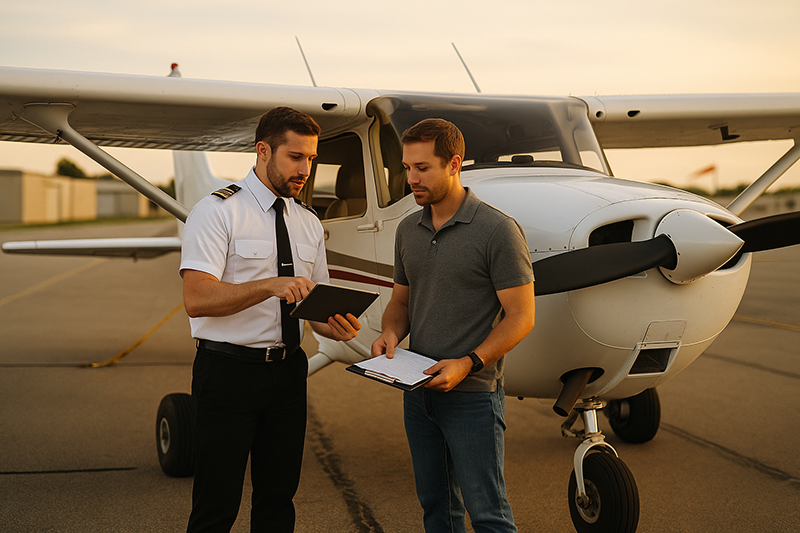
A personal proficiency program is a pilot’s deliberate plan for staying sharp between checkrides, flight reviews, aircraft transitions, and formal training events. It is not a replacement for required training, endorsements, currency, or sound aeronautical decision-making. Instead, it is the structure that helps a pilot keep important skills from fading and gives each flight a purpose beyond simply logging time.
Every pilot knows that legal currency and real proficiency are not the same thing. A pilot may meet recent experience requirements and still feel rusty with crosswind landings, instrument scan, radio work, emergency procedures, or complex airspace. The value of a personal proficiency program is that it turns those vague concerns into a practical training plan. It helps pilots identify the skills that matter most for the way they actually fly, practice them at appropriate intervals, and evaluate progress with the help of instructors, mentors, simulators, and honest self-assessment.
What a Personal Proficiency Program Really Is
A personal proficiency program is a repeatable system for maintaining and improving pilot performance. It can be simple or highly detailed, but it should always answer five questions: What kind of flying do I do, what skills does that flying demand, where am I weakest, how will I practice, and how will I know whether I am improving?
The best programs are not built around generic lists. They are built around the pilot’s real operating environment. A private pilot who flies a normally aspirated single-engine airplane on weekend trips has different proficiency needs than an instrument-rated pilot flying regular business travel, a tailwheel pilot operating from turf strips, a CFI teaching primary students, or a commercial pilot preparing for more advanced aircraft. The aircraft, airspace, weather exposure, mission profile, and personal experience level all shape the plan.
A useful program also separates currency from proficiency. Currency is a regulatory or operational status. Proficiency is demonstrated performance. A pilot can be current yet uncomfortable, or not current yet still have strong foundational knowledge that needs formal restoration before flight. A personal proficiency program recognizes both. It keeps required items visible, but it goes further by addressing the practical skill, judgment, and workload management needed for safe flight.
Start With an Honest Pilot Profile
The first step is building a realistic pilot profile. This is not a resume and it is not a place for optimism. It is a working description of how you fly today. Include your certificate level, ratings, typical aircraft, avionics experience, recent flight time, recent training, usual airports, normal weather minimums, common passengers, and the types of trips you actually make.
A pilot who flies mostly local day VFR may need more emphasis on pattern discipline, slow flight awareness, traffic scanning, radio communication, abnormal procedures, and short cross-country planning. An instrument pilot may need regular work on instrument procedures, approach briefings, missed approaches, holds, automation management, and weather decision-making. A pilot returning after a long break may need a broader rebuilding phase before focusing on mission-specific skills.
This profile should also include personal risk factors. Fatigue, workload, infrequent flying, limited night experience, unfamiliar avionics, complex family or business travel pressures, and discomfort with certain airspace all belong in the discussion. Good pilots do not ignore these factors. They convert them into training objectives.
Choose Proficiency Areas That Match Your Flying
A strong personal proficiency program usually includes several broad categories. The exact content will vary, but most pilots benefit from attention to aircraft control, procedures, navigation, weather judgment, emergency response, communication, and decision-making. These categories are connected. Weakness in one area often increases workload in another.
Aircraft control remains the foundation. This includes maintaining altitude, heading, airspeed, bank angle, pitch attitude, and energy state with precision appropriate to the phase of flight. It also includes takeoffs, landings, go-arounds, slow flight recognition, stall awareness, steep turns, climb and descent planning, and crosswind technique. The goal is not perfection for its own sake. The goal is enough control margin that the pilot has mental capacity left for navigation, communication, weather, and traffic.
Procedural proficiency is the ability to use checklists, flows, callouts, avionics, performance planning, and aircraft systems knowledge in a disciplined way. Many pilots lose procedural sharpness before they lose basic stick-and-rudder ability. That can show up as missed checklist items, rushed cockpit setup, unclear approach briefings, weak fuel planning, or poor automation mode awareness.
Navigation and airspace proficiency deserve regular attention, especially as avionics become more capable. Modern GPS, moving maps, tablets, and autopilots can reduce workload when used well, but they can create confusion when a pilot does not understand what the equipment is doing. A personal proficiency program should include periodic practice with both normal and degraded navigation. That may mean flying with the moving map covered, practicing VOR navigation if equipped and appropriate, reviewing lost procedures, or rehearsing what to do when a tablet overheats or a database item is not where the pilot expected it to be.
Weather proficiency is not simply reading a forecast. It is the ability to compare weather information with aircraft performance, terrain, personal minimums, alternate options, daylight, passenger needs, and pilot workload. For VFR pilots, this includes avoiding marginal conditions that may exceed capability. For instrument pilots, it includes evaluating ceilings, visibility, convective activity, icing potential, turbulence, winds aloft, alternates, and approach options in a practical way.
Why This Matters in Real-World Aviation
Proficiency matters because aviation rarely challenges only one skill at a time. A gusty crosswind landing after a long day is not just a landing problem. It is also an energy management problem, a fatigue problem, a decision-making problem, and sometimes a passenger management problem. An unexpected reroute in busy airspace is not just a navigation issue. It may involve radio communication, avionics workload, fuel awareness, and situational awareness all at once.
In real flying, skills decay unevenly. A pilot may still handle normal cruise and basic landings comfortably while losing confidence in short-field technique, night operations, simulated instrument flight, or emergency checklist use. Because the loss is gradual, it may not be obvious until the workload increases. A personal proficiency program helps reveal those gaps before they appear during a demanding flight.
The program also supports better go or no-go decisions. When pilots have a clear picture of their own recent practice, they are less likely to confuse optimism with readiness. If the last actual or simulated instrument work was months ago, that fact should affect the weather decision. If crosswind landings have not been practiced recently, a strong direct crosswind at a narrow runway deserves more conservative planning. If a pilot has not flown at night lately, a night cross-country with passengers should not be treated as routine simply because the certificate allows it.
How Pilots Should Understand Proficiency
Proficiency is best understood as a combination of skill, knowledge, judgment, and workload capacity. Skill is what you can physically do with the airplane. Knowledge is what you understand about the aircraft, airspace, weather, procedures, and regulations that apply to the flight. Judgment is how you decide whether the flight should continue, change, or stop. Workload capacity is the mental margin you have left when the flight becomes less routine.
A pilot with good proficiency does not simply complete maneuvers. The pilot manages the flight. That means briefing before acting, staying ahead of the airplane, recognizing deteriorating conditions, communicating clearly, and using available resources. It also means knowing when to slow down, ask for help, divert, discontinue an approach, go around, or return to the airport.
For training purposes, it is helpful to divide proficiency into three layers. The first layer is baseline safety: normal takeoffs and landings, aircraft control, checklist discipline, basic navigation, and emergency memory items appropriate to the aircraft. The second layer is mission readiness: the specific skills required for the pilot’s typical flights, such as night operations, instrument procedures, mountain flying, busy airspace, or passenger-carrying trips. The third layer is growth: new skills, advanced avionics use, additional ratings, upset awareness, more precise weather planning, or more challenging airports under instructor supervision.
This layered approach keeps the program realistic. A rusty pilot should not begin by adding complexity. The first priority is rebuilding the basics. A highly active pilot, on the other hand, may need a program that challenges complacency and prevents routine operations from becoming automatic in the wrong way.
Build the Program Around Training Cycles
A personal proficiency program works best when it is organized into cycles rather than random flights. A cycle might be monthly, quarterly, seasonal, or built around a certain number of flight hours. The exact interval should match how often the pilot flies, the complexity of the operation, and the seriousness of the proficiency gap.
For many pilots, a monthly or seasonal rhythm is practical. One month might emphasize takeoffs, landings, go-arounds, and pattern work. Another might focus on navigation, airspace, and diversion practice. A third might include emergency procedures, systems review, and abnormal scenarios with an instructor. Instrument-rated pilots may build regular simulator or aircraft sessions around approaches, holds, missed approaches, partial-panel concepts, and weather decision-making.
The cycle should include three parts: prepare, fly, and debrief. Preparation is where the pilot chooses objectives, reviews procedures, checks aircraft documents and performance data, studies weather, and decides what success will look like. The flight is where the pilot practices the planned items while maintaining normal safety margins. The debrief is where the real learning occurs. What went well? What was sloppy? What caused workload to rise? What should be repeated soon? What should be practiced with an instructor?
A written record helps. It does not need to be complicated. A simple proficiency notebook or digital document can capture the date, aircraft, conditions, objectives, results, lessons learned, and next training item. Over time, this record becomes a useful map of strengths and weaknesses. It also makes future training with a CFI more productive because the instructor can see patterns rather than relying on a single snapshot.
The Role of Flight Instructors and Mentors
Self-directed practice has value, but it has limits. A pilot can normalize small errors if nobody is watching. A flight instructor brings outside perspective, current training standards, scenario design, and the ability to identify issues the pilot may not feel from the left seat. Even experienced pilots benefit from periodic dual instruction focused on real-world proficiency rather than merely completing a required event.
Instructors should help pilots build programs that are specific, measurable, and operationally relevant. Instead of saying, “practice landings,” a better objective might be to regain consistent stabilized approaches, appropriate crosswind correction, accurate touchdown zone control, and sound go-around judgment. Instead of saying, “practice instruments,” a better objective might be to manage one full route scenario from clearance through missed approach while maintaining situational awareness and using automation appropriately.
Mentors can also help, especially in aircraft ownership groups, flying clubs, and professional aviation communities. A mentor is not a substitute for required instruction or endorsements, but an experienced pilot can help a less experienced pilot think through trip planning, weather strategy, aircraft loading, passenger expectations, and conservative alternatives. The key is to choose mentors who value discipline and safety, not bravado.
Using Simulators and Chair Flying Effectively
Simulation can be a valuable part of a personal proficiency program when used for the right purposes. Aviation training devices, desktop trainers, avionics simulators, and even structured chair flying can help reinforce flows, callouts, checklist discipline, instrument scan concepts, navigation setup, and cockpit task management. The benefit is repetition without the cost and pressure of every minute being airborne.
Simulators are especially useful for instrument procedures, automation familiarization, emergency decision-making, and practicing the sequence of tasks. A pilot can rehearse briefing an approach, loading and activating procedures, setting frequencies, identifying fixes, and preparing for the missed approach. For VFR pilots, chair flying can help with radio calls, traffic pattern entries, emergency landing flow, diversion planning, and cockpit organization.
The limitation is that simulation does not fully replace aircraft handling, seat-of-the-pants cues, real weather, actual traffic, or the consequences of energy mismanagement. A good program uses simulation to prepare and reinforce, then uses actual flight to validate aircraft control, situational awareness, and operational judgment.
Common Mistakes or Misunderstandings
One common mistake is treating a flight review, instrument proficiency check, checkout, or rental requirement as the entire proficiency program. Those events can be valuable, and some may be required depending on the pilot’s privileges and intended operations, but they are periodic snapshots. A personal proficiency program fills the space between those events.
Another mistake is practicing only what is enjoyable. Pilots often gravitate toward comfortable flights: a familiar airport, good weather, the same runway, the same route, and the same avionics setup. Familiar flying has value, but proficiency grows when the pilot deliberately addresses weak areas within safe limits. If short-field planning, night landings, holds, crosswind correction, or emergency procedures are uncomfortable, those topics deserve structured attention.
A third misunderstanding is confusing automation use with automation proficiency. Using an autopilot on nearly every cross-country does not automatically mean the pilot understands modes, limitations, failures, disconnect procedures, or how to transition smoothly back to hand flying. A proficiency program should include both proper automation use and hand-flying practice appropriate to the aircraft and operation.
Pilots also sometimes build programs that are too ambitious. A single flight cannot safely cover every maneuver, emergency, approach, diversion, and landing condition. Overloading a practice flight creates fatigue and reduces learning. Better training comes from focused sessions with clear priorities and enough time for briefing and debriefing.
Finally, some pilots avoid debriefing because it feels uncomfortable. That is a missed opportunity. A professional debrief is not about blame. It is about accuracy. The goal is to identify what actually happened and what should happen next time. The most useful proficiency programs are built by pilots who are willing to say, “That was not as good as I want it to be. I need to practice it again.”
Practical Example: A Personal Proficiency Month
Consider a private pilot with an instrument rating who flies a four-seat single-engine airplane several times a month, mostly for regional trips. The pilot is legally current for the planned type of flying, but recent flights have been mostly daytime VFR in smooth weather. A family trip is coming up that may involve busy airspace, an unfamiliar airport, and a possible instrument departure or arrival if the weather is not ideal.
Rather than waiting until the trip week, the pilot builds a one-month proficiency cycle. The first session is a solo or dual VFR flight focused on aircraft control and landings. The pilot practices stabilized approaches, go-arounds, normal and crosswind technique if conditions allow, and a diversion to a nearby airport. The emphasis is not on logging a large number of landings. It is on consistency and decision-making.
The second session is a simulator or avionics practice session. The pilot reviews route planning, clearance copying, loading procedures, activating legs, briefing approaches, and handling a missed approach. The goal is to reduce cockpit workload before the airplane ever leaves the ground.
The third session is dual instruction under the hood or in actual instrument conditions only if appropriate and with an instructor. The instructor builds a scenario: departure from the home airport, a route amendment, an approach to an unfamiliar airport, a missed approach, and a diversion. The pilot is evaluated not just on heading and altitude control, but on briefing, communication, automation awareness, and the willingness to slow the operation down when workload rises.
The final step is a debrief and trip readiness decision. The pilot identifies personal minimums for the family trip, including weather, wind, daylight, alternates, and fatigue limits. If conditions exceed those limits, the plan includes delaying, driving, flying commercially, or taking an instructor or more experienced safety pilot if appropriate and legal for the operation. The program has not guaranteed a perfect flight, but it has replaced hope with preparation.
Best Practices for Pilots
A personal proficiency program should be practical enough that the pilot will actually use it. The most effective programs are specific, recurring, and honest. They focus on the pilot’s real missions, include periodic instructor involvement, and leave room for adjustment as experience grows.
Start by choosing a small number of priority areas for the next 60 to 90 days. If you try to improve everything at once, the program will become vague. If you choose two or three meaningful areas, you can make real progress. For example, a VFR pilot might focus on crosswind landings, airspace communication, and emergency approach planning. An instrument pilot might focus on approach briefings, missed approach execution, and weather alternate planning.
Use scenario-based practice whenever possible. Maneuvers are important, but scenarios connect maneuvers to decisions. A simulated alternator problem, deteriorating weather, unexpected runway closure, passenger discomfort, or stronger-than-forecast wind can turn a routine training flight into a realistic decision-making exercise. The scenario should be appropriate to the pilot and aircraft, and it should be briefed clearly when conducted with an instructor.
Keep personal minimums current. Personal minimums are not a sign of weakness. They are a risk management tool. As proficiency improves, some minimums may be adjusted with care. After a long break, illness, aircraft transition, or reduced flying activity, they may need to become more conservative. The important point is that personal minimums should reflect current capability, not past confidence.
Build review habits into normal flying. Before each flight, identify one proficiency objective. After each flight, identify one thing to keep and one thing to improve. That small habit turns ordinary flying into continuous learning. It also keeps the pilot from assuming that time in the air automatically equals progress.
- Plan proficiency cycles around your actual aircraft, avionics, airports, and mission profile.
- Use a CFI periodically to identify blind spots and raise training quality.
- Separate legal currency from demonstrated performance.
- Practice uncomfortable skills in a controlled, conservative environment.
- Debrief every flight honestly, even when the flight seemed routine.
How to Measure Progress Without Chasing Perfection
Proficiency does not require perfection, but it does require standards. A pilot should be able to describe what acceptable performance looks like before the flight begins. That might involve maintaining assigned altitudes and headings within appropriate tolerances for the training event, flying stabilized approaches, making timely radio calls, using checklists without rushing, or making conservative decisions when conditions change.
Measurement should include both technical and judgment-based outcomes. Did the pilot configure the aircraft correctly? Did the pilot recognize an unstable approach early enough to go around? Did the pilot brief the missed approach before needing it? Did the pilot notice rising workload and ask for clarification from ATC? Did the pilot maintain fuel awareness during a diversion? These questions are often more valuable than simply asking whether the maneuver was completed.
A simple color system can help. Green means the skill is comfortable and reliable. Yellow means it is acceptable but needs reinforcement. Red means it requires instructor attention before being relied upon in normal operations. This kind of self-rating is not official, but it can guide training priorities and reduce the temptation to ignore weak areas.
When to Update the Program
A personal proficiency program should change when the pilot’s flying changes. New aircraft, new avionics, a new home airport, a new rating, a long break from flying, more passenger trips, night operations, instrument flying, mountain or coastal environments, and unfamiliar airspace all justify a program update. The program should also change after a flight that exposed a weakness.
Aircraft transitions deserve special respect. Even aircraft that appear similar can differ in sight picture, avionics logic, performance, fuel systems, trim behavior, checklist flow, and emergency procedures. A proficiency program after transition should emphasize aircraft-specific systems knowledge, normal and abnormal procedures, takeoff and landing technique, and workload management before the pilot adds demanding passengers, weather, or unfamiliar destinations.
Seasonal changes matter too. The skills needed for summer density altitude planning, convective weather avoidance, winter preflight considerations, shorter daylight, night operations, or gusty spring winds may not be equally fresh all year. A seasonal proficiency review keeps those topics from arriving as surprises.
Frequently Asked Questions
Is a personal proficiency program required for private pilots?
A personal proficiency program, as described here, is a voluntary training and risk management tool. Pilots must still comply with applicable regulations, aircraft requirements, endorsements, currency, and operational rules. The program helps organize additional practice beyond minimum requirements.
How often should a pilot practice proficiency skills?
The right interval depends on how often the pilot flies, the complexity of the aircraft, the type of operation, and recent performance. Infrequent pilots usually need more structured review. Active pilots still benefit from recurring focused practice, especially for skills not used on every flight.
Should I build my program with a flight instructor?
Yes, if possible. A CFI can help identify blind spots, design realistic scenarios, and evaluate performance objectively. Even when much of the practice is self-directed, periodic dual instruction usually improves the quality of the program.
Can simulator time be part of my proficiency plan?
Yes. Simulation can be useful for procedures, instrument workflow, avionics practice, abnormal scenarios, and cockpit task management. Pilots should understand the limitations of any simulator or training device and use actual flight to validate aircraft handling and operational performance when appropriate.
What is the difference between currency and proficiency?
Currency generally refers to meeting a defined recent experience or regulatory requirement. Proficiency refers to the pilot’s actual ability to perform safely and effectively. A pilot may be current but still need practice before taking on more demanding conditions.
What should I do if my proficiency plan reveals a major weakness?
Treat it as useful information, not a failure. Reduce operational risk, avoid flights that depend on that weak skill, and schedule focused training with a qualified instructor. The purpose of the program is to find gaps early, before they appear during a high-workload flight.
Key Takeaways
- A personal proficiency program turns general concerns about rust, workload, and skill decay into a structured plan for focused practice.
- Legal currency and real-world proficiency are related, but they are not the same. Safe pilots evaluate both before accepting a flight.
- The most effective programs include honest self-assessment, instructor involvement, realistic scenarios, careful debriefing, and regular updates as missions change.