
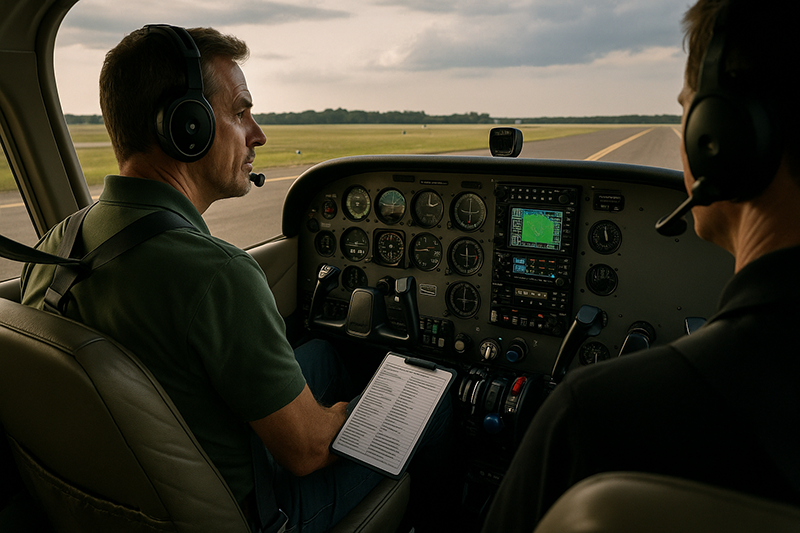
Pilot complacency is one of the more uncomfortable safety topics in aviation because it often appears where confidence, proficiency, and routine operations overlap. Experienced pilots usually know the aircraft, the airspace, the procedures, and the rhythm of flight. That experience is valuable, but it can also make certain threats feel familiar enough to underestimate. Complacency does not mean a pilot is careless by nature. More often, it develops gradually when repeated success reduces the pilot’s sense of uncertainty.
For student pilots, complacency may sound like a problem that belongs to high-time aviators. For flight instructors, commercial pilots, aircraft owners, and aviation professionals, it is a daily human factors concern. The pilot who has flown the same route many times may stop seeing subtle changes in weather. The instructor who has demonstrated the same maneuver hundreds of times may accept a slightly rushed setup. The aircraft owner who knows the airplane well may become too comfortable with a minor abnormal indication. This article explains how complacency develops in experienced pilots, why it matters in real-world flying, and how pilots can build habits that keep experience from turning into assumption.
What Pilot Complacency Really Means
Complacency in aviation is a state of reduced alertness, reduced questioning, or reduced disciplined attention because the situation feels familiar, easy, or predictable. It is not the same as calmness. A calm pilot can still be highly attentive, deliberate, and skeptical. A complacent pilot may feel calm because the operation no longer appears to demand full attention.
The distinction matters. Aviation rewards pilots who remain composed under pressure, but it also demands continuous monitoring. A safe pilot does not need to be anxious, but does need to remain engaged. Complacency can quietly replace active monitoring with passive expectation. The pilot expects the clearance to be routine, expects the runway to be correct, expects the fuel plan to work, expects the weather to remain acceptable, and expects the airplane to behave as it always has.
Experienced pilots are especially exposed to this trap because they have a large library of successful flights behind them. Past success creates useful pattern recognition. It helps a pilot anticipate workload, understand aircraft behavior, and make better decisions. But the same pattern recognition can lead to premature conclusions. The mind says, “I have seen this before,” and stops looking for what is different today.
Complacency often shows up as small changes in behavior rather than dramatic negligence. A checklist is read from memory instead of verified. A weather briefing is scanned rather than evaluated. A taxi clearance is acknowledged without building a clear mental picture. A stabilized approach criterion becomes flexible because the pilot knows the airplane can be brought back into shape. These are not always violations or obvious errors. They are subtle erosions in the margin that protects a flight from normal human fallibility.
Why Experience Can Create a Complacency Trap
Experience is one of aviation’s greatest safety assets. It teaches judgment, aircraft feel, weather interpretation, workload management, and communication discipline. The problem is not experience itself. The problem is unexamined confidence that grows from experience without continued self-audit.
Every pilot develops mental shortcuts. These shortcuts are necessary because the cockpit is a dynamic environment. A pilot cannot consciously analyze every sound, indication, radio call, and traffic advisory from first principles. Experience helps the pilot filter what matters. However, mental shortcuts become risky when they filter out information that should have prompted a second look.
Repetition also changes the way pilots perceive risk. A procedure that once required deliberate attention can begin to feel automatic. A crosswind landing, night arrival, short taxi route, or local training area departure may no longer feel like a demanding task. This is where the pilot’s internal risk meter may become poorly calibrated. The operation may not have changed, but the pilot’s perception of the operation has.
Another reason complacency develops is that many flights are uneventful. Aviation training emphasizes what can go wrong because the consequences can be significant, but most well-planned flights proceed normally. When a pilot repeatedly accepts small shortcuts and nothing bad happens, the shortcut can start to feel validated. The absence of a negative outcome is mistaken for evidence that the technique is sound.
Experienced pilots can also become vulnerable to identity pressure. A newer pilot may feel comfortable asking for help, slowing down, or admitting uncertainty. A more experienced pilot may feel an internal pressure to appear smooth, decisive, or unfazed. That pressure can discourage the very behaviors that interrupt complacency, such as asking for clarification, discontinuing an approach, requesting delay vectors, or saying, “I need a minute.”
How Complacency Develops Over Time
Complacency rarely appears in a single moment. It usually develops through a series of small permissions. A pilot allows one procedural step to become casual because the risk seems low. Later, that casual habit becomes normal. Eventually the pilot no longer recognizes it as a change at all.
The process often begins with familiarity. The pilot flies the same aircraft, uses the same avionics, departs from the same airport, or performs the same mission profile. Familiarity reduces workload, which can be helpful. But it can also reduce curiosity. Instead of asking, “What is different about this flight?” the pilot may subconsciously answer, “Nothing important.”
Next comes expectation. The pilot begins expecting predictable results from repeated patterns. The engine always starts normally. The runway is usually assigned. The controller usually issues the same departure instruction. The fuel burn is usually close to the planned number. The weather usually moves as forecast. Expectations are not inherently wrong, but they must be tested against current evidence.
Then comes normalization. Minor deviations become accepted as long as the outcome remains acceptable. A rushed preflight did not reveal a problem. A high approach still ended in a normal landing. A checklist interruption did not cause a missed item. A marginal weather decision still led to a successful arrival. Over time, the pilot’s personal standard may shift from “Is this the disciplined way to do it?” to “Has this caused a problem before?”
The final stage is reduced sensitivity to warning signs. The pilot may notice cues but assign them less importance. A slightly unexpected engine indication, an unfamiliar clearance, a deteriorating ceiling, or a distraction during a checklist may not receive the same response it would have received earlier in training. The pilot has not lost knowledge. The pilot has lost the habit of treating uncertainty as meaningful.
Why This Matters in Real-World Aviation
Complacency matters because aviation safety depends on layers of defense. Preflight planning, aircraft inspection, checklist discipline, weather evaluation, standard operating practices, crew communication, and decision-making are all layers. A single weak layer may not create an immediate problem. Several weakened layers can align quickly, especially when time pressure, weather, traffic, fatigue, or equipment issues enter the flight.
In real-world flying, many risks are not dramatic at first. Weather deterioration may begin as a small difference between forecast and actual conditions. Fuel concern may begin as a slight delay, a stronger headwind, or an unplanned reroute. Navigation error may begin as an assumption that the next fix or runway is the expected one. Aircraft configuration error may begin as a minor interruption. Complacency allows these early cues to pass without enough attention.
Flight instructors see this pattern in training. A student may be more alert when practicing a new maneuver than when flying a familiar traffic pattern. A certificated pilot returning for a flight review may demonstrate sound knowledge but reveal relaxed habits around checklists, briefings, or go-around decisions. The lesson is not that experience is dangerous. The lesson is that experience must be paired with disciplined routines that do not depend on mood, memory, or how familiar the flight feels.
In crew environments, complacency can affect communication. A crew that has flown together often may become efficient, but may also become less explicit. A challenge and response may become rushed. A briefing may become abbreviated because everyone “knows the plan.” In single-pilot operations, the same issue appears as internal communication. The pilot may stop verbalizing intentions, stop reviewing threats, and stop creating clear decision points before workload increases.
Automation adds another layer. Autopilots, flight directors, GPS navigators, moving maps, traffic displays, and engine monitors can increase situational awareness when used properly. They can also invite passive monitoring if the pilot stops cross-checking. An experienced pilot may know the avionics well, but that familiarity can make it easier to miss a mode change, database issue, altitude capture problem, route discontinuity, or incorrect selection. The more capable the automation, the more important it becomes for the pilot to remain an active manager rather than a passenger in the front seat.
How Pilots Should Understand Complacency
Pilots should understand complacency as a human factors condition, not a character defect. That framing is important because pilots are more likely to manage a risk they are willing to acknowledge. If complacency is treated as something that only happens to careless pilots, experienced professionals may dismiss the warning. If it is understood as a predictable human tendency under routine conditions, it becomes manageable.
The practical question is not, “Am I complacent?” A better question is, “Where is this flight inviting me to assume instead of verify?” That question shifts the focus from self-judgment to operational awareness. It can be applied before taxi, before takeoff, during cruise, before descent, on approach, and after landing.
Experienced pilots should also separate confidence from certainty. Confidence is useful when it comes from skill, preparation, and current information. Certainty can become dangerous when it closes the door to new evidence. A pilot can be confident in the ability to fly the airplane while still being uncertain enough to verify the runway assignment, recalculate fuel after a reroute, brief the missed approach, or ask for a repeat of a clearance.
One helpful mental model is to treat routine flights as the place where professionalism is most visible. During an obvious emergency, most pilots become alert because the situation demands it. During a routine flight, the pilot must choose alertness voluntarily. That is where habits matter. The disciplined use of checklists, callouts, briefings, and personal minimums is not only for difficult days. It is what keeps ordinary days from drifting into unnecessary risk.
Complacency should also be understood in relation to workload. Low workload can invite under-attention, while high workload can create task saturation. A pilot may be complacent early in the flight and overloaded later because the early opportunity to prepare was missed. For example, a relaxed cruise segment may be the ideal time to review arrival weather, brief the approach, confirm fuel status, and plan alternatives. If the pilot assumes the arrival will be routine and delays that work, a sudden runway change or weather update can create unnecessary pressure.
Common Mistakes and Misunderstandings
One common misunderstanding is that complacency means a pilot does not care. In most cases, the pilot does care. The problem is that caring is not the same as actively managing risk. A pilot can care deeply about safety and still become casual around repeated tasks. Good intentions do not replace structure.
Another mistake is relying too heavily on memory because the task is familiar. Memory is useful, but aviation procedures are designed around verification for a reason. Checklists, flows, callouts, and briefings help protect against interruptions, fatigue, expectation bias, and distractions. When a pilot says, “I have done this so many times I do not need to slow down,” that is often exactly the moment to slow down.
A third mistake is confusing smoothness with safety. Experienced pilots often take pride in making the flight look easy. Smooth control inputs, polished radio work, and efficient cockpit management are valuable. But a flight can look smooth while the pilot is quietly accepting too much risk. Conversely, a safe decision may look inconvenient or conservative. Going around, delaying departure, requesting clarification, or diverting may interrupt the appearance of smoothness, but these actions can reflect strong judgment.
Complacency also hides behind phrases such as “just a quick flight,” “it is only local,” or “we do this all the time.” Short flights, local flights, and familiar flights still require airworthiness awareness, fuel planning, weather assessment, traffic vigilance, and disciplined cockpit management. The airplane does not know that the mission is simple. Weather, mechanical issues, airspace complexity, and human distraction can affect any flight.
Another common misunderstanding involves automation. Some pilots believe that experience with advanced avionics removes the need for detailed monitoring. In reality, automation requires a different kind of attention. The pilot must know what the system is doing, what it will do next, and whether that matches the intended flight path. A familiar system can still be misprogrammed, misunderstood, or left in an unexpected mode.
Finally, pilots may underestimate the role of fatigue, schedule pressure, and emotional state. A pilot who is tired, rushed, frustrated, or distracted is more likely to accept assumptions. This does not require extreme impairment. Even ordinary life stress can reduce the patience needed for careful verification. Experienced pilots may compensate well for a while, but compensation is not the same as prevention.
Practical Example: The Familiar Weekend Cross-Country
Consider an experienced private pilot who regularly flies a well-equipped single-engine airplane between two familiar airports. The route is short enough to feel routine, the pilot knows the terrain, and the destination airport has been visited many times. The weather appears acceptable at first glance, and the pilot has flown in similar conditions before.
Because the flight feels ordinary, the pilot performs a quicker-than-usual weather review and notes that conditions are generally visual along the route. During preflight, a friend asks questions about the airplane, and the inspection is interrupted twice. The pilot returns to the inspection but does not consciously restart the interrupted section. Nothing obvious appears wrong, so the flight continues.
After departure, the pilot engages the autopilot and settles into cruise. A stronger-than-expected headwind appears on the groundspeed readout, but the destination is close and fuel has never been an issue on this route. The pilot decides to reassess later. Near the destination, the reported ceiling is lower than expected, and traffic is using a runway that is not the pilot’s usual arrival runway. The pilot accepts a tighter pattern entry to fit in with traffic and begins to feel rushed.
None of these events is extraordinary by itself. A weather review can be imperfect, a preflight can be interrupted, headwinds can differ from expectations, and runway changes happen routinely. The risk develops because each cue is treated as minor and familiar. The pilot is not deliberately unsafe. The pilot is allowing the comfort of experience to reduce the response to changing information.
A more disciplined version of the same flight would look different. The pilot would restart any interrupted preflight section or use a clear method to confirm where the inspection resumed. In cruise, the pilot would compare actual groundspeed and fuel status against the plan early enough to preserve options. Before descent, the pilot would brief the expected and alternate runway, review the airport layout, and set a personal trigger for going around if the pattern or approach becomes unstable. These actions do not make the flight complicated. They restore active management.
Best Practices for Experienced Pilots
The best defense against pilot complacency is not suspicion of every action. It is the deliberate use of habits that keep the pilot engaged. Experienced pilots should build routines that make verification normal, especially when a flight feels easy.
One effective practice is to identify the most likely complacency points before each flight. For a local flight, the risk may be rushing because the route is familiar. For an instrument flight, it may be overtrusting automation. For an instructional flight, it may be allowing the teaching task to distract from aircraft management. For a cross-country flight, it may be assuming the weather and fuel picture will match previous trips. Naming the likely trap makes it easier to notice.
Another useful habit is to brief even when alone. A single-pilot briefing does not need to be theatrical. It can be a concise verbal review of the departure plan, runway, initial altitude, emergency considerations, weather concerns, and first navigation task. Before arrival, the pilot can review runway, pattern or approach plan, missed approach or go-around intentions, taxi route, and any threats. Speaking the plan out loud helps expose assumptions.
Checklist discipline is also central. A checklist is not a symbol of inexperience. It is a professional tool for managing human limitations. Experienced pilots may use flows to configure the aircraft efficiently, but the checklist should still confirm critical items. If interrupted, a pilot should have a clear personal method for resuming safely. Many errors begin not because the pilot does not know the item, but because attention was diverted at the wrong moment.
Personal minimums can help prevent complacency from turning into rationalization. These minimums are most useful when they are specific enough to guide decisions before pressure builds. A pilot who has already thought about wind, visibility, ceiling, fuel reserve preferences, night operations, terrain, and recent experience is better positioned to make a calm decision. Personal minimums are not a substitute for regulations or aircraft limitations. They are an additional decision-making tool for managing individual risk.
Recurrent training is another strong defense. A flight review, instrument proficiency session, simulator scenario, aircraft checkout, or instructor-led proficiency flight can reveal habits that the pilot no longer sees. The goal is not to embarrass the pilot. The goal is to create a professional feedback loop. Experienced pilots benefit when another qualified person observes their flows, communications, automation management, and decision-making.
After-action review is equally valuable. After landing, a pilot can ask: What surprised me? What did I assume? Where did workload increase? What would I do earlier next time? This short reflection turns ordinary flights into training events. It also helps the pilot detect drift before it becomes embedded.
- Use checklists as verification tools, not as optional memory aids.
- Brief routine departures and arrivals, even when flying single-pilot.
- Treat interruptions as a reason to pause, reset, and verify.
- Compare actual conditions against the plan early, especially weather, fuel, and time.
- Invite outside feedback through recurrent training and proficiency flights.
The Instructor’s Role in Preventing Complacency
Flight instructors have a special role because they model cockpit behavior. Students learn not only what the instructor says, but what the instructor consistently does. If an instructor treats checklists, briefings, and go-around decisions as normal professional habits, students are more likely to adopt that standard. If the instructor shortcuts routine tasks, students may conclude that discipline is only necessary during checkrides or difficult lessons.
Instructors should also help experienced pilots understand complacency without making the discussion personal. A returning pilot may be highly capable but rusty in specific areas. An aircraft owner may know the airplane well but have developed informal habits. A professional pilot may have strong procedural discipline at work but be more relaxed in personal flying. The instructor’s job is to identify the operational behavior, explain the risk, and offer a practical correction.
Scenario-based training can be especially useful. Rather than simply asking whether a pilot knows the correct answer, the instructor can create realistic conditions where complacency tends to appear. Examples include an interrupted preflight, a runway change, a distraction during taxi, a minor automation programming error, or a weather update that requires a decision. These scenarios help pilots practice recognizing drift while workload is still manageable.
How Organizations and Flight Departments Can Help
Complacency is not only an individual issue. Flight schools, flying clubs, charter operators, corporate flight departments, and maintenance organizations can influence whether disciplined behavior remains normal. A healthy safety culture makes it acceptable to ask questions, slow down, reject unstable situations, and report concerns without unnecessary blame.
Organizations can reduce complacency by making standard practices clear and usable. Procedures that are overly complicated may be ignored. Procedures that are practical, trained, and reinforced are more likely to become habit. Leadership matters as well. When senior pilots, chief instructors, and managers demonstrate disciplined behavior during routine operations, they set the tone for everyone else.
Debriefing also matters. If routine flights are never discussed unless something goes wrong, subtle drift may remain invisible. Short, constructive debriefs can identify recurring distractions, confusing ramp procedures, ambiguous communications, or training gaps. The goal is not to create paperwork for its own sake. The goal is to keep the system learning.
Warning Signs That Complacency May Be Developing
Pilots can look for early warning signs in their own behavior. One sign is irritation at basic procedures. If a checklist, briefing, or weather review starts to feel like an unnecessary obstacle, that attitude deserves attention. The procedure may need to be improved, but the irritation itself can indicate that familiarity is reducing respect for the task.
Another warning sign is repeated reliance on phrases such as “it will be fine” without a clear reason. Optimism is not a plan. A safer version of that thought is, “Here is why this remains within my plan, and here is what I will do if it changes.” The difference is evidence and a decision point.
A third sign is decreased willingness to discontinue. A pilot who rarely goes around, rarely delays, rarely asks for clarification, and rarely changes the plan may be operating well within margins, or may be unconsciously committed to completion. The ability to discontinue is a marker of disciplined command judgment.
Finally, pilots should pay attention when other people notice a change. A fellow pilot, instructor, mechanic, dispatcher, or passenger may observe rushing, skipped briefings, or casual comments about weather or fuel. Feedback can be uncomfortable, especially for experienced aviators. It can also be valuable, because complacency is often easier to see from the outside.
Keeping Experience Sharp
The answer to complacency is not to distrust experience. Aviation needs experienced pilots. The answer is to keep experience sharp through disciplined attention, humility, and continuous learning. The best pilots use experience to anticipate risk, not to dismiss it.
A strong professional habit is to approach every flight with two questions. First, what is familiar about this operation? Second, what is different today? The first question helps the pilot use experience efficiently. The second question prevents experience from becoming assumption. Weather, aircraft status, runway conditions, airspace, traffic, passenger needs, pilot condition, and mission pressure can all change from one flight to the next.
Experienced pilots can also benefit from deliberately practicing the basics. Hand-flying, power-off planning, crosswind technique, diversion planning, radio clarity, checklist discipline, and abnormal procedures are not beginner topics. They are core skills that require maintenance. A pilot who continues to practice fundamentals is less likely to confuse currency with proficiency.
Complacency develops quietly, but it can be managed deliberately. The pilot who remains curious, verifies critical items, welcomes feedback, and respects routine operations is using experience in the best possible way. In aviation, professionalism is not proven only during emergencies. It is proven in the ordinary habits that keep emergencies less likely.
Frequently Asked Questions
Can highly experienced pilots still become complacent?
Yes. Experience improves judgment and skill, but it does not remove human factors risk. Experienced pilots may be especially vulnerable when a flight, aircraft, route, or procedure feels routine. The defense is disciplined verification, recurrent training, and a willingness to question assumptions.
Is complacency the same as overconfidence?
They are related, but not identical. Overconfidence is an inflated belief in one’s ability or control. Complacency is reduced vigilance because the situation feels familiar or low-risk. A pilot can be competent and confident while still becoming complacent during routine tasks.
What cockpit habits help prevent complacency?
Useful habits include consistent checklist use, clear briefings, active monitoring of automation, early weather and fuel reassessment, and a deliberate response to interruptions. Single-pilot verbal briefings and post-flight self-review can also help maintain engagement.
How can flight instructors address complacency without discouraging experienced pilots?
Instructors should focus on observable behaviors rather than personal criticism. For example, they can discuss a skipped verification, an abbreviated briefing, or a late decision point, then connect it to practical risk management. Scenario-based training is often more effective than lecturing.
Does automation reduce or increase complacency risk?
Automation can reduce workload and improve situational awareness when the pilot actively manages it. It can increase complacency risk if the pilot stops monitoring modes, flight path, altitude, navigation inputs, or system status. The pilot remains responsible for understanding what the automation is doing.
What is the simplest way to detect complacency before a flight?
Ask, “What am I assuming because this feels familiar?” Then look specifically at weather, fuel, aircraft status, runway plan, airspace, pilot condition, and time pressure. This short question can reveal areas that deserve a more careful review.
Key Takeaways
- Pilot complacency often develops gradually when repeated success turns verification into assumption.
- Routine flights deserve disciplined attention because familiar operations can hide changing weather, fuel, traffic, aircraft, or workload risks.
- Experienced pilots can manage complacency through checklist discipline, briefings, recurrent training, feedback, and a habit of asking what is different today.