
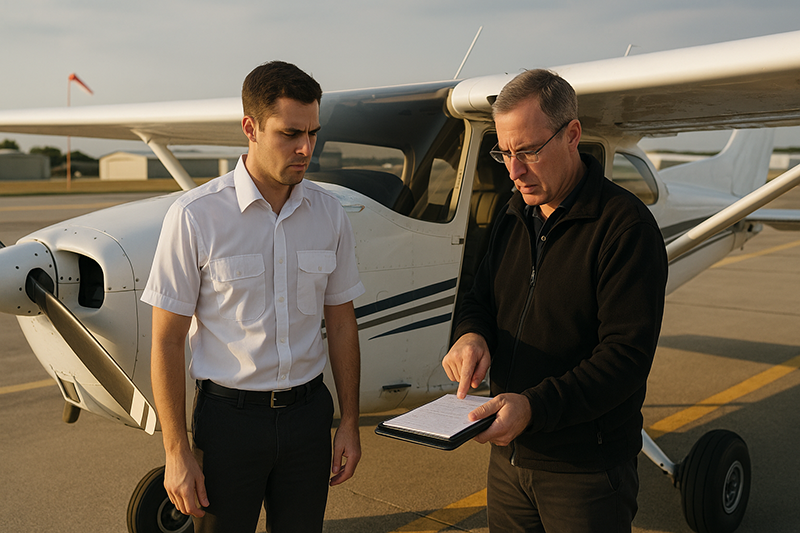
Pilot currency vs proficiency is one of the most important distinctions in aviation training, safety, and personal decision-making. A pilot can be current enough to meet a regulatory requirement and still not be proficient enough to manage a demanding flight with confidence, precision, and good judgment. That difference matters to student pilots building habits, certificated pilots returning after time away, flight instructors evaluating readiness, and aviation professionals responsible for safe operations.
Currency is usually about recency. It answers the question, “Have I met the required recent experience for this operation?” Proficiency is about capability. It asks a more practical question: “Can I perform this flight, in this aircraft, in these conditions, to a safe and consistent standard?” The safest pilots understand that both matter. They use currency as a minimum legal gate, then build proficiency through deliberate practice, honest self-assessment, scenario-based training, and conservative decision-making.
Currency and Proficiency Are Not the Same Thing
In aviation, currency refers to meeting a recent experience requirement, company requirement, training program requirement, or personal standard tied to time or repetition. A pilot may be current to carry passengers, operate under instrument flight rules, serve as pilot in command, or complete another activity because the applicable recent experience has been satisfied. The details depend on the certificate, operation, aircraft, privileges used, and applicable rules or policies.
Proficiency is broader and more demanding. It is the demonstrated ability to perform safely and effectively. A proficient pilot is not merely able to complete a maneuver once. A proficient pilot can plan well, brief clearly, control the aircraft accurately, recognize deviations early, make timely decisions, communicate effectively, manage workload, and adapt when conditions change.
Currency can often be measured by a date, a logbook entry, or a required event. Proficiency must be evaluated through performance. It shows up in the quality of a takeoff, the stability of an approach, the timeliness of a go-around decision, the discipline of checklist use, and the pilot’s ability to manage risk before the flight ever begins.
A useful way to think about the difference is this: currency may allow you to begin the flight, but proficiency determines how well you are likely to manage it. Currency is not meaningless. It is an important regulatory and operational concept. But by itself, it does not prove that a pilot is sharp, comfortable, or ready for a specific mission.
Why This Matters in Real-World Aviation
The distinction between currency and proficiency becomes most visible when conditions are less than ideal. Many pilots can fly acceptably on a calm day, in a familiar aircraft, from a familiar airport, with no passengers and no schedule pressure. The real test comes when the crosswind is stronger than expected, the arrival airport is busy, the airplane is heavier than usual, the weather requires a new plan, or the pilot is operating after several weeks away from flying.
A pilot who is technically current but not truly proficient may be legal to depart but may struggle with workload, aircraft control, traffic pattern judgment, instrument scan, radio communication, or abnormal procedures. These weaknesses do not always appear immediately. They often emerge during high workload phases such as departure, approach, landing, weather deviations, airspace transitions, or unexpected system issues.
For flight instructors, the difference matters because training cannot be reduced to checking boxes. A student may have practiced a maneuver recently, but that does not mean the student can recognize when to use the underlying skill in context. A certificated pilot may have completed a required review, but that does not automatically mean the pilot is comfortable in night operations, actual instrument conditions, mountain terrain, busy airspace, or an unfamiliar avionics suite.
For aircraft owners and flying clubs, the issue is equally practical. A member may satisfy club recency requirements and still need dual instruction before taking a family trip, flying a technically advanced aircraft, or returning to an aircraft after a long absence. For professional operations, training departments and chief pilots often think in similar terms: meeting a regulatory or internal requirement is necessary, but operational readiness requires demonstrated skill, judgment, and standardization.
How Pilots Should Understand Currency
Currency is best understood as a minimum threshold. It is a gate that says certain recent experience, training, or review has been completed. It does not automatically describe the quality of that experience. A pilot who completes the minimum required events in perfect weather at a familiar airport may not have practiced enough variety to be prepared for a more demanding operation.
Common examples of aviation currency include recent takeoffs and landings for passenger-carrying privileges, instrument recent experience for instrument operations, completion of a flight review or equivalent qualifying event, medical qualification where applicable, and any aircraft or operator-specific requirements. The exact requirements can vary, and pilots should verify the current rule, aircraft category and class, operating rules, and any organization policies before relying on a general memory of the requirement.
Currency also has a time component. Skills degrade when they are not used. Some skills fade faster than others. Radio communication, basic aircraft control, checklist habits, and traffic pattern flow may return quickly for some pilots. Instrument scan, crosswind landing technique, emergency memory items, avionics management, and weather decision-making may require more structured practice. The rate of skill fade depends on the pilot, the complexity of the operation, training history, frequency of practice, and the quality of prior instruction.
The limitation of currency is that it can create false confidence. A pilot may say, “I am current,” and treat that statement as if it answers every safety question. It does not. It only answers the specific currency question. It does not answer whether the pilot is rested, prepared, familiar with the equipment, comfortable with the weather, or able to manage passengers and workload.
How Pilots Should Understand Proficiency
Proficiency is the practical standard that matters once the aircraft starts moving. It is not a vague feeling of confidence. It is observable performance. A proficient pilot can consistently fly within appropriate tolerances, remain ahead of the aircraft, manage distractions, detect errors, and make conservative decisions without waiting until a situation becomes urgent.
Proficiency includes technical skill, but it also includes aeronautical decision-making. A pilot may have excellent hands-and-feet coordination and still be weak in risk management. Another pilot may understand regulations well but struggle with workload in busy terminal airspace. True proficiency blends knowledge, skill, judgment, discipline, and self-awareness.
In a training environment, proficiency should be evaluated against the task and the context. Can the pilot maintain airspeed and altitude during a maneuver? Can the pilot plan a descent without rushing? Can the pilot brief an approach accurately and fly a stabilized approach? Can the pilot recognize when an approach is unstable and go around without hesitation? Can the pilot handle a simulated abnormal situation while continuing to aviate, navigate, and communicate?
Proficiency is also mission specific. A pilot may be proficient in local daytime VFR flying but not proficient for night cross-country operations. A pilot may be proficient in a familiar trainer but not in a faster aircraft with different avionics and performance. An instrument-rated pilot may be proficient in simulated instrument conditions but need additional preparation before launching into low weather, complex airspace, or convective weather environments.
This is why good pilots do not ask only, “Am I legal?” They ask, “Am I ready for this flight today?” That question includes the aircraft, weather, route, passengers, terrain, airspace, personal condition, and recent practice.
The Regulatory Minimum Is Not a Personal Standard
Aviation regulations establish minimum requirements. They are not designed to predict every pilot’s skill level for every situation. A minimum requirement may be adequate for one pilot in a simple scenario and insufficient for another pilot facing a more complex mission. Treating the minimum as the goal is one of the most common weaknesses in pilot development.
A stronger approach is to build personal minimums and training habits above the minimum requirement. Personal minimums are self-imposed limits for conditions such as ceiling, visibility, wind, crosswind component, runway length, night operations, terrain, fuel reserves, and passenger-carrying operations. They should be realistic, written down, adjusted with experience, and revisited with an instructor or mentor.
Personal standards should also include skill recency. For example, a pilot may decide not to carry non-pilot passengers at night unless the pilot has recently flown night takeoffs, landings, and navigation in similar conditions. An instrument pilot may decide to schedule an instrument proficiency session if it has been a while since flying approaches, holds, missed approaches, and avionics procedures in a realistic workload environment.
The point is not to create unnecessary barriers. The point is to prevent a legal flight from becoming an unwise flight. A pilot who holds a higher personal standard is not less capable. That pilot is more disciplined.
Why Proficiency Changes With the Mission
One of the most useful questions a pilot can ask is, “Proficient for what?” Proficiency is not universal. It is tied to the task, aircraft, environment, and pressure level of the flight.
A pilot who flies a light training aircraft weekly in the local practice area may be highly proficient in basic VFR maneuvering. That same pilot may not be proficient in night operations over sparsely lit terrain, flying into a major Class B airport, or operating with a full passenger load on a hot day. The baseline skill is there, but the mission adds complexity.
Aircraft differences matter as well. A pilot transitioning from a simple trainer to a high-performance, complex, tailwheel, technically advanced, or multi-engine aircraft faces new workload, energy management, systems knowledge, and emergency procedure demands. Even within the same category and class, avionics differences can create meaningful workload. A familiar aircraft with unfamiliar avionics can surprise a pilot during a clearance change or approach setup.
Weather is another major factor. VFR proficiency does not automatically translate to instrument proficiency. Instrument proficiency requires a disciplined scan, precise aircraft control, procedure knowledge, communication skills, and the ability to manage automation without becoming distracted by it. A pilot who has not practiced instrument procedures recently may find that task saturation arrives quickly, especially in actual weather.
Passengers can also change the mission. Carrying passengers adds responsibility, distraction, expectation management, and sometimes subtle pressure to continue. A proficient pilot manages passengers before departure by setting expectations, briefing sterile cockpit moments, explaining delays or diversions calmly, and avoiding the temptation to let passenger plans drive aviation decisions.
Common Mistakes and Misunderstandings
The most common misunderstanding is believing that legal currency equals safe readiness. Currency is important, but it is not a complete safety assessment. A pilot who meets a recent experience requirement may still need dual instruction, simulator practice, or a less demanding first flight back.
Another mistake is counting poor-quality practice as meaningful proficiency. Three rushed landings at the end of a long day may satisfy a recent experience need in some contexts, but they may not rebuild judgment, crosswind technique, go-around discipline, or passenger-ready confidence. Practice is most valuable when it is intentional, varied, and honestly evaluated.
Pilots also sometimes overestimate proficiency because they remember how well they used to fly. Prior experience is valuable, but aviation skill is perishable. A pilot who flew frequently years ago may retain excellent knowledge and judgment, yet still need time to regain aircraft handling, radio rhythm, avionics fluency, and approach discipline.
Another trap is avoiding the very tasks that need work. A pilot uncomfortable with crosswinds may wait for calm days. A pilot rusty on instrument procedures may file only in excellent weather. A pilot uncertain with avionics may avoid complex airspace. Avoidance can reduce immediate discomfort, but it does not build capability. The safer path is structured practice with an instructor or qualified safety pilot when appropriate.
There is also a psychological risk in using the logbook as a comfort blanket. A logbook records experience, but it does not guarantee current skill. Flight time matters, especially when it reflects varied, recent, and relevant experience. But total time alone does not prove proficiency for today’s mission.
Finally, pilots may confuse confidence with competence. Confidence is useful when it is earned through training and performance. It is dangerous when it is based on optimism, past success, or reluctance to admit rust. A proficient pilot can say, “I need practice,” without embarrassment.
Practical Example: Current but Not Yet Proficient
Consider a private pilot who has not flown much during the winter. The pilot reviews the logbook and determines that the basic recent experience needed for a local passenger flight appears to be satisfied. The aircraft is familiar, the destination is only 80 nautical miles away, and the weather is VFR. On paper, the flight looks simple.
During preflight planning, however, the pilot notices several factors that make the trip more demanding. The departure airport has a gusty crosswind. The destination runway is shorter than the home airport runway. The pilot’s passengers are family members who have not flown in a small airplane before. The route passes near busy airspace. The pilot has not practiced short-field landings, crosswind landings, or diversion planning recently.
A currency-only mindset might say, “I am legal, so let’s go.” A proficiency mindset produces a better decision. The pilot schedules an hour with an instructor before the trip. They practice crosswind takeoffs and landings, short-field technique, go-arounds, traffic pattern spacing, and a simulated diversion. The instructor also observes checklist discipline, radio communication, and energy management.
After that flight, the pilot may decide the passenger trip is appropriate, adjust the departure time for better winds, choose an alternate destination with more runway, or postpone. Any of those outcomes may be responsible. The key point is that the pilot moved from a logbook-based assumption to an evidence-based decision.
This example is common because many personal flights are not technically complex, but they combine small pressures. A little rust, a little wind, a shorter runway, unfamiliar passengers, and busy airspace can add up. Proficiency is what helps the pilot manage that accumulation before it becomes a problem.
Building Proficiency Without Turning Training Into a Checklist
Good proficiency training is structured but not mechanical. It should include skill practice, scenario thinking, and decision-making. A pilot does not become proficient by simply repeating maneuvers. The pilot becomes proficient by understanding why the maneuver matters, how errors develop, how to correct them early, and how the skill fits into real flights.
For VFR pilots, proficiency work might include normal and crosswind takeoffs and landings, go-arounds, slow flight, stalls, emergency procedures, navigation, airspace review, weather decision-making, and passenger briefing. The goal is not to perform isolated tasks for their own sake. The goal is to build a pilot who can operate smoothly and make good decisions in context.
For instrument pilots, proficiency work should include aircraft control by reference to instruments, approach briefing, holding, missed approaches, partial panel or backup procedures as appropriate, automation management, communication, and realistic workload. Instrument proficiency is especially sensitive to disuse because the task requires continuous discipline and a strong scan. A pilot who has not practiced recently should be cautious about launching into demanding instrument conditions without a meaningful refresher.
For instructors, proficiency development requires more than signing off a required event. The instructor should look for patterns. Does the pilot become task saturated during radio calls? Does airspeed control deteriorate in the traffic pattern? Does checklist discipline fade under pressure? Does the pilot verbalize risks and alternatives? These observations reveal more than a single successful landing or approach.
For experienced pilots, proficiency training should remain challenging. Repeating only comfortable tasks can create a polished routine but leave weak areas untouched. A valuable session might include an unfamiliar airport, a realistic diversion, simulated system irregularities, different runway environments, or practice using backup avionics procedures. The level of challenge should be appropriate and safe, but it should not be so easy that nothing is learned.
Best Practices for Pilots
The best pilots treat currency as the beginning of the decision, not the end. Before a flight, they consider whether their recent experience is relevant to the planned operation. A pilot who recently completed several daytime landings may still need night practice before a night passenger flight. A pilot who flew instrument approaches in a simulator may still need to consider aircraft-specific avionics, weather, and workload before flying in actual conditions.
A practical proficiency plan does not have to be complicated. It should be honest and specific. Identify the types of flying you actually do, then practice the skills that support those missions. If you fly cross-country, practice diversions, fuel planning, weather evaluation, and unfamiliar airport arrivals. If you fly in busy airspace, practice radio communication and arrival planning. If you fly passengers, practice smooth, predictable operations and clear passenger briefings. If you fly IFR, practice full procedure flows, missed approaches, and automation management.
Regular instruction is one of the most effective ways to prevent blind spots. A good instructor can see small weaknesses before they become habits. The value is not only in maneuver review. It is in objective feedback, scenario design, and judgment development.
Pilots should also use lower-risk ways to stay sharp. Chair flying, avionics practice on the ground, cockpit flows, simulator sessions, and careful post-flight review can all support proficiency. None of these replaces actual aircraft handling when that is the skill being trained, but they can reduce workload and improve preparation.
When returning after a break, choose a conservative reentry plan. Fly first in good weather. Use a familiar airport and aircraft. Leave passengers at home for the first session if that reduces pressure. Practice with an instructor if the gap was significant, if the aircraft is unfamiliar, or if the planned mission is demanding. Build back gradually rather than trying to prove everything on the first flight.
- Before each flight, ask whether your recent flying matches the aircraft, weather, airspace, and mission.
- Use an instructor when the answer is uncertain, not only when a regulation requires it.
- Practice weak areas intentionally instead of repeating only comfortable tasks.
- Set personal minimums that reflect current skill, not ideal skill.
- Debrief every flight honestly, especially the parts that felt rushed or uncomfortable.
The Instructor’s Role in Separating Currency From Proficiency
Flight instructors have a unique responsibility in this discussion. They often serve as the bridge between regulatory completion and true operational readiness. A lesson can satisfy a required training purpose while also revealing whether the pilot is actually prepared for the intended type of flying.
Instructors should be careful not to reduce proficiency checks to a sequence of tasks. A pilot may perform individual maneuvers acceptably but still demonstrate weak planning, poor situational awareness, or delayed decision-making. Conversely, a pilot may need a little polish on one maneuver while showing excellent judgment and workload management. Good instruction evaluates the whole pilot.
Scenario-based training is especially valuable. Instead of asking only for a steep turn or a landing, the instructor can build a realistic flight that includes weather evaluation, performance planning, airspace decisions, passenger considerations, and an unexpected change. This style of training better reflects how skills are used in actual operations.
Instructors also help pilots calibrate confidence. Some pilots underestimate themselves and need structured experience to build comfort. Others overestimate their readiness and need clear, professional feedback. In both cases, the goal is the same: help the pilot make decisions based on demonstrated performance rather than emotion.
Using Personal Minimums to Connect Currency and Proficiency
Personal minimums are one of the best tools for turning proficiency into practical decisions. They create a bridge between what the pilot is legally allowed to do and what the pilot should do today. Personal minimums should not be copied blindly from another pilot. They should be based on training, experience, recent practice, aircraft performance, local conditions, and instructor input.
A newer pilot might set conservative wind, visibility, and runway limits, then expand them gradually through training. An experienced pilot returning after time away might temporarily tighten personal minimums until proficiency is restored. An instrument pilot might set different minimums for day versus night, familiar versus unfamiliar airports, or single-pilot versus crew operations.
The most important feature of personal minimums is that they are used before pressure builds. It is easier to make a conservative decision at the kitchen table than on the ramp with passengers waiting. Written minimums reduce negotiation with yourself when conditions are marginal.
Personal minimums should evolve, but only through evidence. If a pilot wants to lower weather minimums, increase crosswind limits, or accept more complex operations, that change should follow training and demonstrated performance. Experience should expand capability, not merely tolerance for risk.
Frequently Asked Questions
What is the main difference between currency and proficiency?
Currency means meeting a recent experience, review, or qualification requirement. Proficiency means being able to perform the operation safely, consistently, and with sound judgment. A pilot can be current without being fully proficient for a specific aircraft, environment, or mission.
Can a pilot be legal to fly but still unsafe to go?
Yes. A flight can meet the applicable legal requirements and still be unwise if the pilot is rusty, the weather is demanding, the aircraft is unfamiliar, or the mission creates workload beyond the pilot’s current capability. Legal eligibility is only one part of a sound go/no-go decision.
How often should pilots train to stay proficient?
There is no single answer that fits every pilot. The right training frequency depends on the type of flying, aircraft complexity, recent experience, weather exposure, and personal skill retention. Pilots who fly infrequently, fly IFR, carry passengers, or operate more complex aircraft often benefit from more frequent structured practice.
Does simulator training count as proficiency training?
Simulator or aviation training device practice can be very useful, especially for procedures, instrument scan, avionics management, decision-making, and abnormal scenarios. Pilots should understand what a particular device can and cannot replace, and they should verify how any simulator time applies to specific regulatory requirements before relying on it for currency.
What should I do if I am current but feel rusty?
Treat that feeling as useful information. Schedule a flight with an instructor, choose a simple first flight back, avoid carrying passengers until you are comfortable, and practice the specific skills that feel weak. Proficiency is rebuilt through deliberate practice, not wishful thinking.
How can instructors help pilots understand this distinction?
Instructors can explain that completing a requirement is not the same as demonstrating readiness for every flight. They can use scenario-based training, objective feedback, and realistic debriefing to help pilots connect regulations, skill performance, judgment, and personal minimums.
Key Takeaways
- Currency is a minimum recent-experience or qualification threshold; proficiency is demonstrated capability for the actual flight you plan to make.
- A legal flight is not automatically a smart flight. Weather, aircraft familiarity, passengers, airspace, fatigue, and skill rust all affect readiness.
- Use deliberate practice, instructor feedback, and written personal minimums to turn regulatory compliance into safer operational decision-making.