
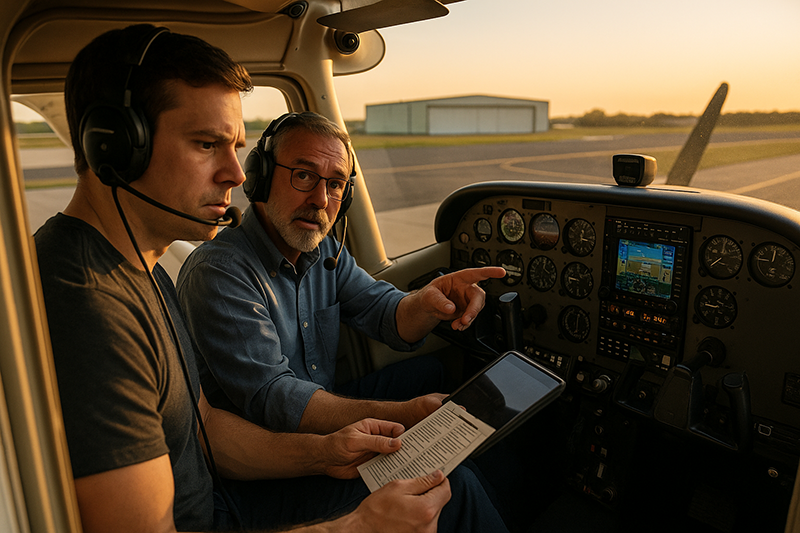
Pilot proficiency when you fly infrequently is not built by hoping that old habits will return once the engine starts. It is built through deliberate preparation, honest self-assessment, and training that focuses on the skills most likely to fade between flights. A pilot may be legally current and still feel behind the airplane after several quiet weeks. That gap between currency and proficiency is where smart training habits matter.
For student pilots, private pilots, instrument pilots, flight instructors, and aviation professionals, infrequent flying creates a predictable challenge: aviation skill is perishable. Radio work, aircraft control, traffic pattern timing, checklist flow, weather judgment, avionics use, and decision-making all depend on recent practice. The good news is that proficiency does not require flying every day. It does require a structured plan that keeps your mind engaged, your procedures familiar, and your flights purposeful.
Currency Is Not the Same as Proficiency
Currency is a regulatory concept. Proficiency is an operational condition. Currency asks whether a pilot has met applicable legal requirements for a specific privilege or operation. Proficiency asks whether that pilot can perform the flight safely, smoothly, and with enough spare attention to manage abnormal situations, weather changes, traffic, and workload.
This distinction matters because pilots often use currency as a comfort signal. If the logbook shows recent landings, a flight review is in date, or instrument experience appears adequate, it can be tempting to assume readiness. In practice, a pilot who flies only occasionally may satisfy a minimum requirement but still need additional training before carrying passengers, departing into challenging weather, flying at night, or operating in busy airspace.
Proficiency also varies by task. A pilot might be comfortable with basic aircraft handling but rusty with crosswind landings. Another might have strong radio skills but struggle with avionics setup after time away. An instrument-rated pilot may remember the theory of holding, approaches, and alternate planning, yet need practice managing workload in actual or simulated instrument conditions. Treating proficiency as a collection of specific skills allows you to improve it more effectively.
The most useful mindset is simple: legal currency is the starting line, not the finish line. Before each flight, ask what the flight will demand and whether your recent experience supports it. If the answer is uncertain, build proficiency before adding complexity.
Why Infrequent Flying Changes the Risk Picture
Flying infrequently affects more than hand-eye coordination. It affects rhythm. A pilot who flies often tends to move through preflight planning, cockpit setup, taxi, runup, takeoff, navigation, communication, and landing with a familiar cadence. When flights are separated by long gaps, that cadence can slow down. Items that used to feel automatic require conscious thought, which increases workload at exactly the wrong time.
Workload is a central issue. During a normal flight, a pilot is constantly processing aircraft control, navigation, communication, aircraft systems, airspace, weather, traffic, terrain, passengers, and fuel. When basic tasks become rusty, they consume more mental bandwidth. Less attention remains for judgment and problem-solving. That is why a seemingly simple flight can feel surprisingly busy after time away.
Infrequent flying can also create uneven confidence. Some pilots become overly cautious and avoid flying altogether, which deepens the proficiency gap. Others assume that experience from years ago will return immediately, which can lead to rushed decisions. The best path is neither fear nor overconfidence. It is a measured plan that gradually restores recency, skill, and judgment.
Aircraft familiarity is another consideration. If you rent, fly club aircraft, alternate between avionics suites, or fly aircraft that have been upgraded, even a familiar airframe may not feel familiar in the cockpit. Changes in GPS interfaces, autopilot modes, engine monitors, ADS-B displays, or audio panels can increase distraction. A pilot who flies infrequently should plan extra time to review equipment and avoid learning or relearning critical systems during a high-workload phase of flight.
Build a Personal Proficiency Baseline
A personal proficiency baseline is an honest picture of what you can do comfortably today, not what you once did well. It should cover aircraft control, procedures, planning, weather interpretation, navigation, communication, abnormal situations, and decision-making. The goal is not to criticize yourself. The goal is to identify the skills that deserve attention before they become operational problems.
Start with the flights you actually intend to make. A pilot who mostly flies local daytime trips in familiar airspace needs a different plan than a pilot who wants to take family members on a weekend cross-country through busy airspace. An instrument pilot planning to file IFR after a long break needs a different plan than a VFR pilot returning to pattern work. Proficiency should be matched to mission.
Consider dividing your baseline into three categories: ready now, needs review, and needs training. Ready-now items are tasks you have performed recently and confidently. Needs-review items are tasks you understand but have not practiced recently, such as short-field procedures, crosswind correction, diversion planning, or emergency checklist usage. Needs-training items are tasks that should be practiced with an instructor or qualified safety pilot before being used in normal operations.
This baseline should include human factors. Fatigue, stress, work schedule, family obligations, and long gaps between study sessions can affect flying performance. If you arrive at the airport mentally overloaded, rusty, and pressed for time, you are not setting up a high-quality proficiency flight. Infrequent flyers benefit from slower pacing, earlier planning, and a conservative first flight back.
Use Ground Preparation to Make Flight Time Count
When flight time is limited, ground preparation becomes one of the best tools for building proficiency. A pilot who arrives prepared can use the airplane to practice flying, not to rediscover basic procedures. Chair flying, cockpit flows, scenario review, and avionics practice can sharpen memory before the Hobbs meter starts.
Chair flying is more than pretending to move your hands. Done properly, it is a mental rehearsal of the flight from preflight to shutdown. Sit with the checklist, cockpit diagram, or actual aircraft if available. Talk through the sequence: weather briefing, performance planning, inspection, engine start, taxi clearance, runup, takeoff briefing, departure, cruise checks, descent planning, pattern entry, landing, and shutdown. Include callouts and decision points. If something sounds vague, that is exactly where review is needed.
Avionics practice is especially valuable. Modern panels can reduce workload when used correctly, but they can increase workload when the pilot is unsure which button, knob, page, mode, or menu is needed. Review how to load and activate a flight plan, select frequencies, set transponder codes, use the audio panel, display traffic or weather information, and manage autopilot modes if installed. If the aircraft uses a specific GPS, flight display, or autopilot, study the appropriate pilot guide or training material for that equipment.
Ground preparation should also include weather and performance. Infrequent pilots sometimes focus heavily on stick-and-rudder skills while underestimating planning skills. Before a flight, review forecast weather, winds aloft, NOTAMs, runway lengths, expected density altitude, fuel planning, alternates if appropriate, and personal minimums. A proficiency flight is still a real flight, and real flights deserve complete planning.
Make Every Flight a Training Flight
A pilot who flies infrequently cannot afford unstructured flying. That does not mean every flight must feel like a checkride. It means each flight should have a purpose beyond simply getting airborne. Even a short local flight can include specific training objectives, such as stabilized approaches, traffic pattern consistency, radio clarity, navigation backup, slow flight awareness, or emergency procedure review.
Purposeful flying begins with a short preflight briefing, even when flying alone. Identify the main objective, the conditions you expect, the maneuvers or procedures you will practice, and the limits that would cause you to stop or change the plan. For example, if the goal is crosswind landing practice, define a reasonable wind limit, choose a suitable runway, and decide whether an instructor should be onboard. If the wind exceeds your comfort level, the lesson may become a ground discussion or a dual flight rather than solo practice.
During the flight, focus on quality rather than quantity. Ten rushed landings may not build as much proficiency as four well-briefed, well-flown approaches with a thoughtful debrief. After each landing or maneuver, ask what happened, why it happened, and what you will adjust next time. This habit turns every flight into a feedback loop.
After the flight, write down observations while they are fresh. Note which tasks felt solid, which tasks felt rusty, and what should be practiced next. Over time, these notes become a personal training record that is often more useful than total hours alone. They help you identify patterns: perhaps your first landing after a long gap is consistently flat, or your radio calls slow down in complex airspace, or your descent planning is rushed on cross-country flights. Patterns point to training priorities.
Work With an Instructor Before the Rust Becomes a Problem
Flight instructors are not only for student pilots, checkouts, or flight reviews. For pilots who fly infrequently, periodic dual instruction is one of the most efficient ways to rebuild proficiency. A good instructor can identify small deviations before they become habits, adjust the difficulty of the flight, and introduce realistic scenarios in a controlled way.
Dual instruction is especially valuable when returning after a long break, changing aircraft, flying with passengers again, operating at night, entering busy airspace, using unfamiliar avionics, or resuming instrument flying. These are situations where workload can rise quickly. Having an instructor onboard allows the pilot to practice decision-making and procedures without carrying the full burden alone.
The best recurrent training is specific. Rather than scheduling a generic hour in the pattern, tell the instructor what you need. Examples include: crosswind takeoffs and landings, short-field and soft-field technique, go-around decision-making, simulated engine failure procedures, airspace and ATC communication, avionics setup, instrument scan, approach briefings, missed approach procedures, or night operations. A focused lesson respects your time and produces measurable improvement.
Instructors should also help infrequent pilots calibrate personal minimums. Personal minimums are self-imposed limits that may be more conservative than legal or aircraft limits. They can address ceiling, visibility, crosswind, runway length, terrain, night conditions, fuel reserves, airspace complexity, and passenger considerations. For an infrequent pilot, personal minimums should reflect current proficiency, not best-ever performance.
Prioritize the Skills That Fade Fastest
Not every skill fades at the same rate for every pilot, but some areas commonly deserve attention after time away. The first is aircraft control at slow speeds. Takeoff, approach, landing, go-around, and maneuvering near the airport all require precise pitch, power, trim, rudder, and airspeed control. These phases of flight leave less room for distraction and are often where rust becomes most visible.
Traffic pattern discipline is another priority. A good pattern is not just a rectangle around the airport. It is a sequence of energy management decisions. Spacing, altitude, speed, configuration, wind correction, descent rate, and aiming point all have to come together. Infrequent pilots should spend time rebuilding pattern rhythm before launching into longer or more demanding trips.
Emergency procedures also require recurring attention. The pilot does not need to create drama, but should be able to respond promptly to engine roughness, abnormal indications, electrical issues, radio problems, unexpected weather, and other realistic scenarios. The exact procedure depends on the aircraft and situation, so aircraft-specific checklists and pilot operating information matter. Memory items, if applicable to the aircraft, should be reviewed carefully and practiced appropriately with an instructor.
Communication can fade as well. Radio phraseology, listening for your call sign, anticipating instructions, and reading back clearances become easier with recency. Pilots who have not flown recently may find that ATC communication consumes more attention than expected. Practicing with live airport recordings, simulator scenarios, or instructor-led role play can help restore fluency.
For instrument pilots, scan and workload management are critical. Instrument proficiency is not only the ability to keep the needles centered. It includes briefing an approach, setting up navigation equipment, managing automation, interpreting clearances, staying ahead of altitude and course changes, recognizing deviations, and executing a missed approach when required. If instrument flying has not been practiced recently, a conservative return plan is essential.
Use Simulators and Aviation Training Devices Wisely
Simulators and aviation training devices can be excellent tools for infrequent pilots when used with realistic goals. They are especially useful for procedures, instrument scan, avionics workflow, emergency decision-making, weather scenarios, and communication practice. They can allow repetition that would be expensive or impractical in the airplane.
The key is to understand what the device can and cannot do. A simulator can help you practice approach setup, checklist flow, holds, abnormal procedures, and decision-making. It may not reproduce the exact sight picture, control feel, runway environment, turbulence, or stress level of the actual aircraft. Treat simulator time as a supplement to flight time, not a complete replacement for aircraft proficiency.
For VFR pilots, a desktop or training device can still provide value. Practice route planning, diversion decisions, cockpit flow, radio calls, pattern entries, and emergency scenarios. For instrument pilots, a qualified instructor can build demanding but controlled sessions that develop scan discipline and workload management. The best sessions include a briefing, specific objectives, realistic distractions, and a debrief.
When using a simulator at home, avoid turning every session into entertainment. If the goal is proficiency, fly like you would in the aircraft. Use checklists, weather, charts, altitude discipline, heading control, and stabilized approach criteria. Sloppy simulator habits can become sloppy cockpit habits if practiced often enough.
Set Personal Minimums That Match Recent Experience
Personal minimums are one of the most practical tools for pilots who fly infrequently. They create a buffer between what is legal, what the aircraft may be capable of, and what is wise for the pilot on that day. The right minimums are not permanent. They should expand with recent practice and contract after time away, illness, fatigue, aircraft changes, or demanding life events.
For a pilot returning after several weeks or months, a conservative first flight might be daytime, VFR, light winds, familiar airport, familiar aircraft, no passengers, and a clear training objective. That is not a sign of weakness. It is a professional approach to risk management. Once performance is revalidated, the pilot can add complexity gradually.
Common personal minimum categories include ceiling and visibility, surface wind and crosswind, runway length, terrain, night conditions, fuel margin, airport familiarity, airspace complexity, and passenger carriage. Instrument pilots may also define minimums for approach types, weather trends, alternate options, equipment status, and recency of actual or simulated instrument practice. These limits should be written down and reviewed before flights, not invented under pressure at the airport.
Personal minimums should also include a no-go standard for proficiency. If you have not flown recently and the planned flight includes weather, night, unfamiliar avionics, passengers, or a tight schedule, the answer may be to fly dual first, delay the trip, or simplify the mission. Good aviation judgment often shows up as a quiet decision made before the airplane moves.
Common Mistakes and Misunderstandings
One common mistake is treating a flight review, checkout, or currency event as a complete proficiency solution. These events can be valuable, but proficiency is maintained through ongoing practice. A single satisfactory flight does not automatically prepare a pilot for every mission, aircraft, airport, or weather condition.
Another misunderstanding is believing that experience never expires. Total time matters, but recent experience matters too. A pilot with many hours can still be rusty in a specific aircraft, airspace, avionics system, or operating environment. Humility is not only for low-time pilots. It is a professional habit at every experience level.
Some pilots also underestimate the effect of passengers. Carrying family, friends, clients, or coworkers changes cockpit workload. Passengers may ask questions, feel anxious, become airsick, distract the pilot, or create subtle pressure to complete the trip. An infrequent pilot should regain solo or dual proficiency before adding passenger responsibility, especially for longer flights or more challenging conditions.
A fourth mistake is practicing only what feels comfortable. If every proficiency flight is a smooth-air sightseeing loop on a calm evening, weak areas may remain hidden. Training should include realistic but controlled exposure to skills that need improvement, such as go-arounds, crosswind correction, diversion planning, power-off approaches, abnormal indications, and communication in busier environments. This is where an instructor adds significant value.
Finally, pilots sometimes allow schedule pressure to override proficiency concerns. The aircraft is booked, the weather is marginal but technically workable, passengers are waiting, or a personal commitment feels important. Infrequent pilots should be especially alert to external pressure. If your recent flying does not support the mission, changing the plan is good airmanship.
Practical Example: Returning After a Long Break
Consider a private pilot who has not flown for three months and wants to take a friend on a Saturday lunch flight to an airport 90 nautical miles away. The pilot is legally eligible for some operations but has not practiced landings, airspace communication, or cross-country planning recently. The destination airport is familiar from past flights, but the route crosses busy airspace and the forecast includes moderate surface winds by afternoon.
A weak plan would be to arrive late, glance at the weather, start the engine with a passenger onboard, and assume the first landing will bring everything back. A stronger plan begins several days earlier. The pilot reviews the aircraft manual, checklist, avionics, route, airspace, weather patterns, performance, fuel plan, and personal minimums. The pilot also schedules a one-hour dual session before the passenger flight.
During the dual session, the instructor and pilot practice normal and crosswind takeoffs and landings, go-arounds, simulated engine failure procedures, radio work, and avionics setup. They also discuss the planned cross-country and identify decision points. The pilot discovers that the first two landings are safe but not as precise as desired, and radio calls are slower than expected. By the end of the session, performance improves, but the pilot recognizes that afternoon winds at the destination may be close to personal comfort limits.
The final decision is to move the passenger flight to the morning, choose a closer alternate lunch stop, or postpone if winds exceed personal minimums. That decision may seem conservative, but it reflects sound risk management. The pilot used training to reveal actual proficiency, adjusted the mission, and avoided turning a rust-removal flight into a passenger-carrying test.
Best Practices for Building Proficiency Efficiently
The most effective proficiency plan is realistic, repeatable, and tied to the kind of flying you actually do. It should include study, chair flying, dual instruction, solo practice when appropriate, scenario-based training, and honest debriefing. It should also account for the aircraft, environment, and personal factors that influence each flight.
A practical rhythm for infrequent pilots might include brief weekly ground review, monthly cockpit or simulator practice, and periodic dual instruction based on mission complexity. The exact schedule should match the pilot’s certificate, ratings, aircraft, goals, and local operating environment. What matters is consistency. Small, regular touches with aviation knowledge and procedures reduce the amount of relearning required before each flight.
Use a simple proficiency plan that covers the following areas:
- Aircraft knowledge, including limitations, systems, checklists, and normal procedures.
- Basic aircraft control, including trim, airspeed, altitude, heading, and coordinated flight.
- Takeoffs, landings, go-arounds, and traffic pattern discipline.
- Navigation, communication, avionics setup, and backup planning.
- Weather evaluation, performance planning, fuel planning, and personal minimums.
- Abnormal and emergency procedures appropriate to the aircraft.
- Post-flight debriefing with notes for the next training session.
Keep the plan flexible. If your last flight revealed weak radio work, make that the next training focus. If winds have been calm for months, schedule crosswind practice with an instructor when conditions are suitable. If avionics caused confusion, spend time on the ground until the workflow is comfortable. Proficiency grows fastest when training addresses the actual friction points, not an idealized checklist.
Also protect the quality of your first flight back. Avoid stacking risk factors. A rusty pilot, unfamiliar aircraft, marginal weather, night conditions, passengers, complex airspace, and time pressure should not all meet on the same flight. Add one challenge at a time and give yourself room to learn.
How Flight Instructors Can Help Infrequent Pilots
Instructors play an important role in helping occasional flyers stay safe and engaged. The best approach is not to shame pilots for flying less than they would like. Most pilots balance aviation with work, family, finances, health, and weather. Effective instruction meets the pilot where they are and builds a pathway back to confidence.
For instructors, the first step is diagnosis. Ask what the pilot wants to do, how long it has been since recent experience, what aircraft and avionics are involved, and what concerns the pilot has. Then build a lesson that tests core skills without overwhelming the pilot. Early wins matter, but so does honest feedback.
Scenario-based training is particularly useful. Instead of isolated maneuvers only, connect skills to real decisions. What if the destination wind is higher than forecast? What if the radio fails near a towered airport? What if the GPS flight plan disappears? What if a passenger becomes uncomfortable? What if the landing does not stabilize by a predetermined point? These scenarios help pilots practice judgment, not just control inputs.
Instructors should also encourage pilots to leave with a written next step. A recurrent lesson should not end with only a signature or a handshake. It should produce a clear training recommendation: fly two solo local flights before carrying passengers, return for crosswind practice, complete an avionics ground session, practice instrument procedures in a simulator, or revise personal minimums. Specific next steps turn a lesson into a proficiency program.
Frequently Asked Questions
How often should an infrequent pilot fly to stay proficient?
There is no single interval that fits every pilot, aircraft, rating, or mission. A pilot flying simple daytime local VFR trips may maintain practical proficiency with a different schedule than an instrument pilot flying in busy airspace. Instead of relying only on calendar time, evaluate recent performance, mission complexity, weather, aircraft familiarity, and whether you can manage normal and abnormal tasks without falling behind.
Can I be legally current but not proficient?
Yes. Legal currency and practical proficiency are different concepts. Currency addresses whether applicable requirements have been met. Proficiency addresses whether you can safely perform the specific flight you are planning. A conservative pilot treats currency as a minimum and uses training, practice, and personal minimums to determine readiness.
What should my first flight be after a long break?
For many pilots, the best first flight back is a dual proficiency flight in familiar daytime VFR conditions. It should focus on aircraft control, takeoffs and landings, go-arounds, checklist flow, communication, and any aircraft-specific procedures that feel rusty. If the break has been short and the mission is simple, a solo local flight may be appropriate, but the decision should be based on honest self-assessment.
Are simulators useful for pilots who do not fly often?
Yes, when used purposefully. Simulators and aviation training devices can help maintain procedures, instrument scan, avionics workflow, checklist discipline, and decision-making. They are most effective when paired with realistic scenarios and debriefing. They should not be treated as a complete substitute for aircraft handling, landings, and real-world cockpit workload.
When should I fly with an instructor instead of practicing alone?
Fly with an instructor when the planned task is outside your recent comfort zone, when you are changing aircraft or avionics, when you are returning after a significant break, when weather or airspace adds complexity, or when you want objective feedback. Dual instruction is often the fastest and safest way to rebuild confidence.
How should I decide whether to carry passengers after not flying much?
Passenger flights should come after you have revalidated your own proficiency. Consider a recent solo or dual flight first, review applicable currency requirements, and set conservative personal minimums. If you would not feel comfortable handling an abnormal situation while also managing passenger distraction, wait until you have more recent practice.
Key Takeaways
- Build pilot proficiency when you fly infrequently by using deliberate ground preparation, focused flight objectives, and honest post-flight debriefing.
- Do not confuse legal currency with operational readiness. Match your flying plans to your recent experience, aircraft familiarity, weather, and workload.
- Use instructors, simulators, personal minimums, and scenario-based training to rebuild skill before adding passengers, night operations, instrument conditions, or complex airspace.