
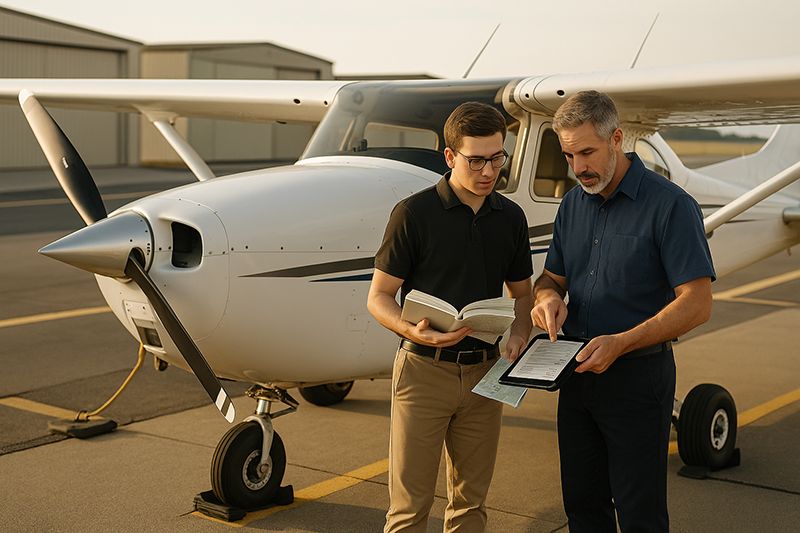
Preparing for a flight review is one of the most useful habits a pilot can develop, not because it is simply a regulatory event, but because it is a structured opportunity to sharpen judgment, refresh aircraft handling, and identify weak spots before they matter in flight. For certificated pilots, the flight review is a recurring part of staying current and legally qualified to act as pilot in command, but the best pilots treat it as more than a box to check.
A well-planned flight review can be tailored to the way you actually fly. A private pilot who makes weekend cross-country trips, an instrument-rated pilot returning after a break, a flight instructor rebuilding proficiency, and a commercial pilot flying complex aircraft may all need different emphasis. The common thread is honest preparation. The more clearly you understand your current flying, your recent experience, your aircraft, and your decision-making habits, the more valuable the review becomes.
This guide explains how pilots should prepare for a flight review, what to expect during the ground and flight portions, how to work productively with an instructor, and how to avoid common mistakes that turn a valuable proficiency event into a stressful surprise. It is written for pilots who want a practical, safety-focused approach rather than a last-minute cram session.
What a Flight Review Is Designed to Accomplish
A flight review is a proficiency and knowledge review conducted by an authorized instructor. In practical terms, it gives the pilot and instructor time to evaluate whether the pilot is operating safely, understands applicable operating rules, and can demonstrate the level of aircraft control and judgment expected for the kind of flying the pilot intends to do.
Under commonly referenced FAA rules, a flight review includes at least one hour of ground training and at least one hour of flight training. The ground portion generally includes a review of current general operating and flight rules. The flight portion is not intended to be a full re-test for a pilot certificate, but it should include enough flight training for the instructor to evaluate proficiency and provide useful correction or coaching. Pilots should always verify the current regulation and any applicable endorsements or alternatives before relying on a flight review for pilot-in-command eligibility.
The best way to understand the flight review is to think of it as a professional conversation and proficiency flight, not as an adversarial exam. Your instructor is not simply looking for perfection. A good instructor is looking for safe operating habits, sound judgment, appropriate aircraft control, and the ability to recognize and correct errors. If you demonstrate that you can plan, brief, fly, communicate, and make decisions appropriately, the review becomes a constructive training event.
That said, the flight review still matters. A pilot who arrives unprepared, cannot explain basic operating rules, struggles with aircraft control, or makes unsafe decisions should expect additional training before receiving a satisfactory endorsement. That is not a failure of the process. It is exactly why the process exists.
Why This Matters in Real-World Aviation
Many pilots complete a flight review after a period of reduced flying activity. Others complete one while transitioning to a different aircraft, returning to cross-country flying, renewing confidence after a layoff, or preparing for more demanding operations. In each of these situations, the review can reveal gaps that may not be obvious during routine local flights.
Real-world flying requires more than the ability to keep the airplane upright. Pilots must manage weather, airspace, aircraft performance, fuel, passengers, cockpit workload, avionics, communications, abnormal procedures, and personal limitations. A flight review creates a structured environment to revisit those skills with an instructor who can observe habits that may have become invisible to the pilot.
For example, a pilot may still fly smooth traffic patterns but may no longer brief takeoff performance carefully. Another pilot may handle steep turns well but may be uncomfortable with modern avionics or unfamiliar airspace. A third pilot may be technically current but rusty in aeronautical decision-making. The flight review is an opportunity to connect proficiency with the actual conditions under which the pilot operates.
From a safety standpoint, the flight review is also a chance to discuss risk management. That includes personal minimums, weather decision-making, runway selection, fuel planning, passenger pressure, night operations, and the difference between legal minimums and practical margins. These conversations are often where the greatest value of a review is found.
How Pilots Should Understand the Regulatory Requirement
Pilots often describe the flight review as a recurring requirement, but the practical meaning is more important than the calendar reminder. If a pilot is required to have completed a flight review before acting as pilot in command, the pilot must ensure the review is completed, properly documented, and accepted by an authorized instructor. The endorsement is not just paperwork. It is the instructor’s confirmation that the required review was completed satisfactorily.
In general aviation, the common planning assumption is that pilots need a flight review within the required 24-calendar-month window unless another qualifying event or accepted program satisfies the requirement. Certain checkrides, proficiency checks, or FAA-recognized proficiency programs may affect this requirement, but pilots should verify the details before relying on them. Instructors should also be careful to apply the current rules accurately rather than relying on hangar talk or memory.
There is an important practical point here: currency and proficiency are different. A pilot may satisfy the flight review requirement and still need additional training for a specific operation. For example, a pilot who completes a flight review in a basic trainer may still need transition training before operating a high-performance aircraft, technically advanced aircraft, tailwheel airplane, or unfamiliar avionics suite. The flight review is a minimum recurring proficiency event, not a guarantee that every pilot is ready for every mission.
Another common misunderstanding is that the flight review has a fixed national script. It does not need to be identical for every pilot. The instructor must ensure the required elements are covered, but the training content should be tailored to the pilot’s certificate level, ratings, experience, aircraft, operating environment, and risk profile. A review for a VFR-only pilot who flies rural daytime trips should not look exactly like a review for an instrument-rated pilot who regularly operates near complex airspace.
Start With an Honest Self-Assessment
Good preparation begins before you meet the instructor. Take a realistic look at your flying over the past several months or years. How often have you flown? What types of operations have you actually performed? Have you flown at night, in busy airspace, on cross-country trips, with passengers, in gusty winds, or into unfamiliar airports? Have you practiced emergency procedures recently? Have you used all of the avionics and automation in the aircraft, or only the features you are comfortable with?
This self-assessment should not be treated as a confession. It is a planning tool. If you tell your instructor that you have not practiced short-field landings in two years, that is useful information. If you are uncomfortable with radio work around Class C or Class B airspace, that can become a training objective. If you are returning after a long break, it may be wise to plan more than the minimum flight time so the review can be thorough and low-pressure.
Pilots should also review their own logbook before scheduling the flight review. Confirm recent experience, aircraft categories and classes flown, endorsements, and any previous notes from instructors. If you fly rental aircraft or aircraft owned by a club, check local checkout requirements separately. A flight review endorsement may not satisfy an operator’s internal rental, insurance, or checkout requirements.
The most productive pilots arrive with questions. They ask about weak areas, recent airspace or procedure changes, weather decision-making, avionics techniques, and scenario-based training. This sets the tone for a collaborative review rather than a passive evaluation.
Preparing for the Ground Portion
The ground portion should be more than a quick conversation at the dispatch desk. It is the instructor’s opportunity to review applicable operating rules, evaluate the pilot’s knowledge, and discuss real-world decision-making. A pilot who prepares thoughtfully will get far more out of this portion than one who simply waits to be asked questions.
Start by refreshing the rules that apply to the flying you actually do. That may include pilot-in-command responsibilities, required documents, aircraft airworthiness, weather minimums, right-of-way rules, fuel requirements, airspace requirements, special use airspace, temporary flight restrictions, equipment requirements, and operational limitations. The goal is not to memorize isolated trivia. The goal is to understand how these rules affect decisions before and during a flight.
Aircraft documents and inspections are another useful area to review. Pilots should understand what documents must be in the aircraft, how to verify that inspections are current, and how to determine whether the aircraft is legal and safe for the intended operation. This is especially important for pilots who rent aircraft and may be accustomed to assuming that the airplane is ready because it appears on the schedule.
Weather knowledge should also be part of preparation. A pilot should be able to interpret common aviation weather products, recognize conditions that exceed personal minimums, and explain how weather affects aircraft performance and route selection. For VFR pilots, this includes understanding visibility, ceiling, wind, convective activity, terrain, daylight, and alternate options. For instrument-rated pilots, it also includes IFR system knowledge, approach planning, alternates when applicable, and the practical risks of icing, thunderstorms, low ceilings, and fuel reserves.
Risk management belongs in the ground discussion as well. A modern flight review should not be limited to maneuvers and regulations. Discuss personal minimums, passenger management, external pressure, fatigue, recent experience, and go/no-go decision-making. If you have had a close call, a confusing clearance, a weather diversion, or an uncomfortable moment in the aircraft, bring it up. Those stories often lead to the most valuable training.
Preparing for the Flight Portion
The flight portion should be tailored, but pilots can expect the instructor to evaluate basic aircraft control, checklist use, traffic pattern operations, takeoffs and landings, navigation, communication, and emergency or abnormal procedures appropriate to the aircraft and environment. Depending on the pilot’s qualifications and needs, the review may also include stalls, steep turns, slow flight, short-field or soft-field operations, instrument references, avionics use, airspace navigation, and scenario-based decision-making.
Preparation starts with the aircraft. Know the pilot’s operating handbook or aircraft flight manual for the airplane you will fly. Review normal operating speeds, limitations, emergency procedures, weight and balance, performance data, fuel system operation, electrical system basics, and any avionics or autopilot features you plan to use. You do not need to recite the manual word for word, but you should be able to find and apply the information needed for a safe flight.
Before the review, practice mental flows for normal and abnormal procedures. A checklist is essential, but a pilot also needs to understand the sequence of actions. For example, in an engine power-loss scenario, the pilot should be able to establish the proper glide attitude, select a landing area, attempt appropriate troubleshooting, communicate when workload permits, and prepare for landing. The exact steps depend on the aircraft and operating handbook, so preparation should be aircraft-specific.
Landings deserve special attention because they reveal a great deal about aircraft control, energy management, and judgment. A pilot preparing for a flight review should be comfortable with normal landings and should be ready to discuss crosswind technique, go-around decisions, stabilized approach concepts, runway selection, and how aircraft weight, wind, density altitude, and runway surface affect performance.
It is also wise to refresh radio communication. Many pilots who fly from non-towered airports become rusty with towered airport procedures. Others who fly mostly in controlled airspace become less disciplined with position reports and traffic scanning at non-towered fields. A flight review is an excellent time to practice both environments if practical.
Designing a Review Around the Way You Fly
A generic flight review can meet the minimum requirement, but a customized review is usually more valuable. Before the flight, tell the instructor what kind of flying you do and what kind of flying you intend to do in the next year. This helps the instructor create scenarios that match real operational risk.
If you fly family cross-country trips, the review might include route planning, fuel stops, weather diversion decisions, passenger briefing, and arrival at an unfamiliar airport. If you fly mostly local VFR flights, the review might focus on airspace boundaries, traffic pattern discipline, emergency landing options, and wind judgment. If you fly at night, the review should include night-specific planning, lighting, illusions, alternates, and personal minimums. If you are instrument-rated but not recently active in the system, the instructor may recommend combining the flight review with instrument proficiency training, if appropriate.
Technically advanced aircraft deserve particular attention. Many pilots can keep the airplane under control while still being behind the avionics. The review should examine whether the pilot can use the navigation system, communication radios, transponder, autopilot, and flight displays without losing basic situational awareness. Automation should reduce workload, not become the primary source of workload.
For pilots transitioning into a new aircraft, the flight review can be part of a broader training plan, but it should not be used as a shortcut. If the aircraft has unfamiliar systems, higher performance, different handling qualities, or different emergency procedures, plan enough training to become genuinely competent. The endorsement should be the result of demonstrated proficiency, not the objective that drives the session.
Common Mistakes or Misunderstandings
One of the most common mistakes is treating the flight review as a minimum-time appointment. A pilot may schedule exactly one hour of ground and one hour of flight with no preparation, then become frustrated when the instructor identifies areas that require more work. The minimum time is not a guarantee that the review will be completed satisfactorily within that time. If proficiency or knowledge needs improvement, additional training is appropriate.
Another misunderstanding is assuming that a flight review is the same thing as a checkride. It is not a practical test for a new certificate or rating, and the instructor is not issuing a certificate. However, that does not make it casual. The instructor must be satisfied that the pilot has completed the required review and demonstrated safe proficiency. A pilot who cannot safely perform basic operations should expect more training.
Some pilots over-prepare for trivia and under-prepare for decision-making. Knowing a regulation is useful, but applying it in context is more important. For example, a pilot should not only know weather minimums but also be able to decide whether a marginal VFR trip is wise given terrain, daylight, fatigue, passenger expectations, and alternate airports. The review should connect knowledge to action.
Another common issue is neglecting aircraft systems. Pilots who fly the same airplane often become comfortable with normal operation but vague about abnormal operation. They may know where the fuel selector is but not fully understand the fuel system. They may use the autopilot often but be uncertain about disconnect modes or failure indications. They may know the published speeds they use every day but not where to find performance data. These gaps can become serious when workload increases.
There is also a tendency to hide weak areas. A pilot may avoid mentioning discomfort with crosswinds, radio work, stalls, airspace, or emergency procedures because they do not want to appear unprepared. This defeats the purpose of the review. An instructor can help only with the issues that are visible. A good flight review should make weak areas safer, not punish a pilot for admitting them.
Practical Example: A Returning Private Pilot
Consider a private pilot who has not flown regularly for more than a year. The pilot wants to resume weekend flights with a spouse to airports within 150 nautical miles. The aircraft is a familiar four-seat single-engine airplane equipped with a moving-map GPS and basic autopilot. The pilot schedules a flight review and tells the instructor, “I am legal on paper only if we complete this, but I know I am rusty. I want to be comfortable before I carry passengers again.”
The instructor begins with a ground discussion. They review pilot-in-command responsibilities, aircraft documents, recent inspections, weather planning, airspace along a proposed route, fuel planning, performance considerations, and personal minimums. The instructor asks the pilot to plan a short cross-country scenario and identify a diversion airport if ceilings lower or winds increase. They also discuss passenger briefings and how to handle pressure to complete a trip.
During the flight, the instructor asks the pilot to depart the home airport, navigate toward a nearby checkpoint, obtain weather information, and divert to a different airport. Along the way, the pilot uses the GPS but must also maintain outside visual scanning and verify position with pilotage. The instructor introduces an abnormal scenario such as a rough-running engine or a simulated alternator issue, using the aircraft’s procedures and limitations as the reference.
At the destination airport, the pilot flies normal and crosswind landings if conditions permit, practices a go-around, and reviews traffic pattern judgment. On the return leg, the instructor covers slow flight or stalls as appropriate, then discusses emergency landing options and cockpit workload. If the pilot handles the session safely but shows weakness in crosswind landings, the instructor may recommend another lesson before endorsing the review. If the pilot demonstrates sound proficiency and judgment, the review can be completed with a meaningful debrief.
This example illustrates an important principle: the flight review should resemble the kind of flying the pilot intends to do. The pilot who wants to carry passengers on cross-country trips needs more than a few maneuvers in the practice area. The review should connect aircraft control, knowledge, planning, and risk management into one realistic operating picture.
Best Practices for Pilots Preparing for a Flight Review
The best preparation is deliberate and specific. Rather than asking, “What will the instructor make me do?” ask, “What do I need to be ready to do safely as pilot in command?” That mindset changes the review from an obligation into a professional development event.
Before the appointment, review the aircraft manual, your logbook, applicable operating rules, local airspace, and recent weather decision-making. If you use electronic flight planning tools, make sure you understand the data you are relying on. Automation is useful, but the pilot remains responsible for understanding the route, fuel, weather, airspace, and aircraft performance.
Have a candid conversation with the instructor before flying. Explain your recent experience, comfort level, aircraft familiarity, and goals. If you want to combine the flight review with transition training, instrument practice, night proficiency, or cross-country scenario work, say so early. Some goals may require more time, a different aircraft, or a separate lesson plan.
A practical preparation plan might include the following:
- Review the current rules and requirements that apply to your flight review and intended operations.
- Study the aircraft operating handbook or flight manual for limitations, performance, systems, and emergency procedures.
- Plan a realistic flight scenario, including weather, fuel, weight and balance, airspace, and alternates.
- Identify weak areas honestly, such as crosswinds, radio communication, avionics, stalls, or emergency procedures.
- Arrive rested, organized, and ready to learn rather than simply trying to obtain an endorsement.
After the flight, take the debrief seriously. The instructor’s comments are not just a pass-or-not-pass discussion. They are a snapshot of your current operating habits. Write down the main takeaways and make a plan to address them. If the review reveals that you need another lesson, treat that as a safety investment. If the review goes well, identify what you should practice over the next few months so proficiency does not fade again.
How Instructors Can Make Flight Reviews More Effective
Flight instructors play a major role in whether a flight review becomes meaningful training or just a regulatory transaction. The most effective instructors begin by learning about the pilot’s experience, aircraft, mission profile, and concerns. They avoid one-size-fits-all scripts unless a standardized school or operator program requires specific content.
A strong instructor uses scenario-based questions during the ground portion. Instead of asking only isolated knowledge questions, the instructor might ask how the pilot would handle lowering ceilings on a planned VFR route, a passenger who is anxious to return home, a runway with a direct crosswind, or a maintenance discrepancy found during preflight. These scenarios reveal how the pilot thinks.
During the flight, the instructor should balance evaluation with teaching. If a pilot is safe but rusty, coaching can help rebuild skill quickly. If a pilot is unsafe, the instructor should intervene clearly and provide additional training before endorsing completion. The purpose is not to surprise the pilot. The purpose is to produce a safer pilot.
Debriefing should be specific. “Good job” is not enough, and neither is a vague warning to “study more.” A useful debrief identifies strengths, weaknesses, safety concerns, and next steps. It may include recommendations for recurrent training, aircraft-specific study, simulator work, instrument practice, or supervised cross-country flying.
Using the Flight Review to Improve Risk Management
A flight review is one of the best times to update personal minimums. Personal minimums are self-imposed limits that may be more conservative than legal minimums. They can include minimum ceilings and visibility, maximum crosswind component, minimum runway length, fuel reserve targets, terrain clearance preferences, and restrictions on night, weather, or passenger operations.
Personal minimums should be realistic and experience-based. A newly certificated private pilot may need conservative limits while building experience. A highly experienced pilot may use more flexible limits but should still account for recency, aircraft, terrain, weather complexity, and fatigue. The point is not to create artificial fear. The point is to make good decisions before pressure builds.
The review is also a good time to discuss external pressures. Many unsafe decisions begin with a non-aviation goal: getting home for work, pleasing passengers, making a reservation, avoiding embarrassment, or justifying the cost of the aircraft. An instructor can help a pilot build decision points into the plan, such as specific weather triggers, fuel triggers, and diversion criteria.
Another valuable topic is workload management. Pilots should be able to aviate, navigate, and communicate in that priority order. In modern cockpits, the temptation is to spend too much time programming equipment during high-workload phases of flight. A flight review can expose these tendencies in a controlled setting and reinforce simpler, safer cockpit habits.
After the Flight Review: Keep the Momentum
The period immediately after a flight review is a good time to set a proficiency plan. If the review identified weak areas, schedule follow-up training promptly. Skills improve faster when lessons are close together. If the review went smoothly, choose a few areas to practice on future flights so the benefit does not disappear.
Pilots who fly infrequently should consider structured recurrent training before the next required review period. This might include periodic dual instruction, simulator sessions, instrument practice, avionics training, night flying, or crosswind landing practice. The specific plan depends on the pilot’s certificate, ratings, aircraft, and mission profile.
Documentation also matters. Ensure that the instructor provides the appropriate logbook endorsement if the review is completed satisfactorily. Keep records organized and understandable. If you participate in a proficiency program or complete another event that may satisfy the flight review requirement, confirm that the documentation is complete and that you understand how it applies.
Most importantly, do not let the flight review become the only time you train with an instructor. Aviation skill is perishable. A pilot who uses instructors periodically for targeted training is usually better prepared for abnormal situations, changing technology, and more demanding flights.
Frequently Asked Questions
How early should I prepare for a flight review?
Start preparing as soon as you schedule it, and preferably earlier if you have not flown recently. Review your logbook, the aircraft manual, applicable operating rules, local airspace, and recent weather planning habits. If you know you are rusty, plan additional time rather than trying to force everything into the minimum session.
Is a flight review the same as a checkride?
No. A flight review is not a practical test for a new certificate or rating. It is a required proficiency and knowledge review conducted by an authorized instructor. However, the instructor still must be satisfied that the review has been completed appropriately and that the pilot has demonstrated safe proficiency.
Can a flight review take longer than the minimum time?
Yes. The commonly referenced minimum ground and flight times are minimums, not guarantees. If the pilot needs more training to demonstrate safe proficiency or cover required areas properly, the instructor may recommend or require additional training before endorsing completion.
What should I bring to a flight review?
Bring your pilot certificate, medical certificate if required for the operation, government identification, logbook or electronic logbook access, aircraft documents if applicable, current charts or approved electronic flight planning tools, and any materials needed for the aircraft you will fly. Also bring questions and an honest assessment of your recent experience.
Should instrument-rated pilots include instrument work in a flight review?
It can be valuable, especially if the pilot intends to fly IFR or has not used instrument skills recently. Whether the flight review is combined with instrument proficiency work depends on the pilot’s needs, instructor qualifications, aircraft equipment, weather, and regulatory requirements. Pilots should plan this with the instructor in advance.
What happens if I do not perform well during the review?
If performance or knowledge is not satisfactory, the instructor should provide training and identify what needs improvement. The review may continue later after additional practice. This should be viewed as a safety benefit, not a personal failure. The goal is to return to pilot-in-command privileges with confidence and competence.
Key Takeaways
- Prepare for a flight review by reviewing your recent experience, aircraft knowledge, operating rules, and the kind of flying you actually plan to do.
- The most valuable reviews connect maneuvers, regulations, weather, aircraft systems, and risk management to real-world pilot-in-command decisions.
- A flight review endorsement should reflect demonstrated proficiency, not just time spent. If more training is needed, treat it as an investment in safety.