
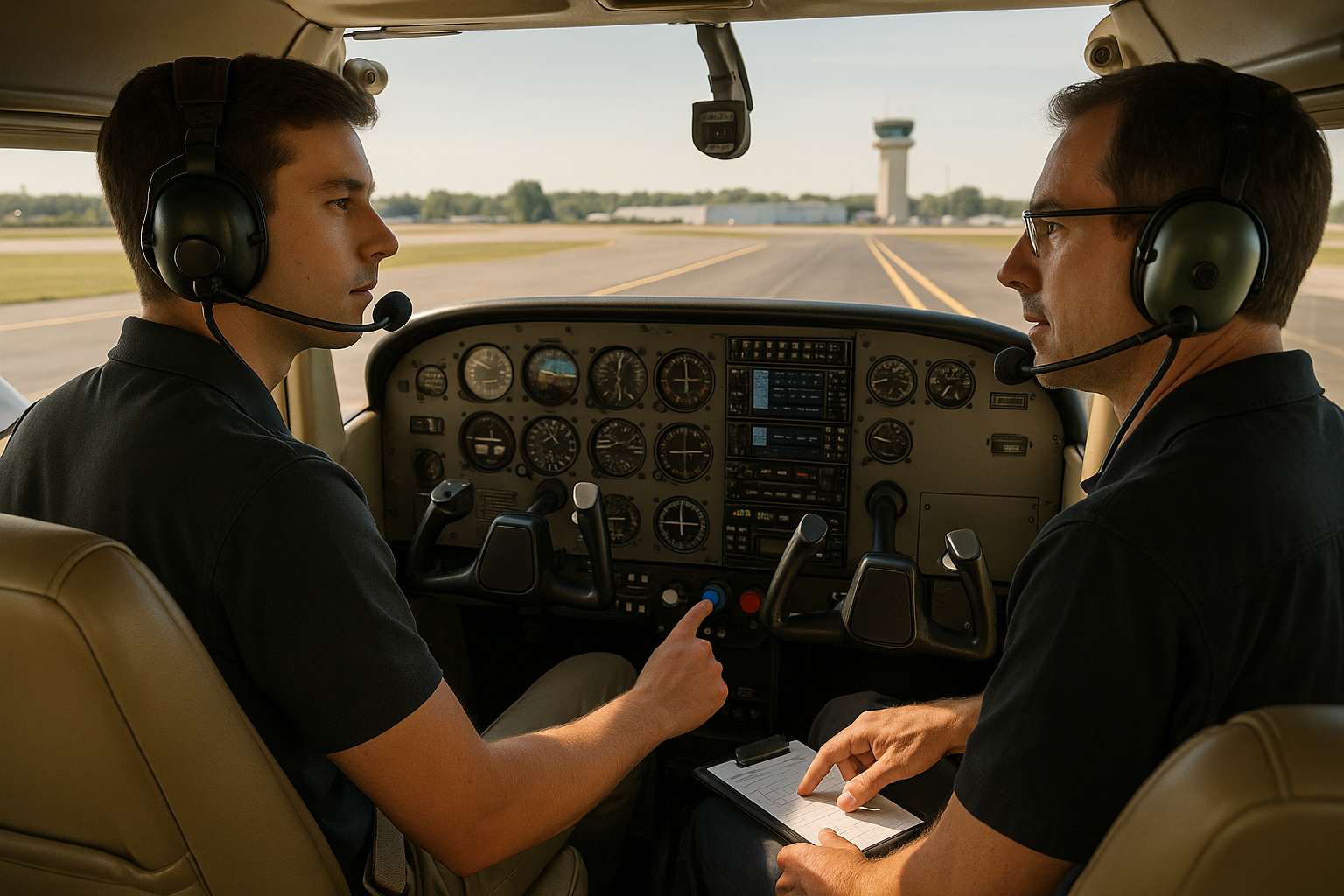
Radio confidence is one of the first operational skills student pilots must develop. Clear, timely radio communication reduces workload, prevents misunderstandings, and improves safety in training and in the traffic pattern. For many students the radio is more intimidating than the airplane; yet confidence with radio work is a learnable skill with predictable training steps.
This article explains what radio confidence means in practical flying terms, how instructors and students can train it, the common mistakes that slow progress, and field-tested exercises that transfer directly into safer cockpit decision making. The primary keyword "radio confidence" appears early because this article focuses on the human, procedural, and training elements that turn hesitant students into competent communicators.
Clear main idea: What radio confidence really is
Radio confidence is the combination of knowledge, phraseology, timing, and mental preparation that lets a pilot make concise and effective transmissions under pressure. It is not simply about speaking loudly or memorizing a script. True radio confidence includes:
- Familiarity with common phraseology and airport/airspace terminology.
- The ability to listen, process a transmission, and respond appropriately without excessive delay.
- Preflight planning for likely radio calls during departure, en route, traffic pattern, and approach.
- Practical experience handling miscommunications and dealing with frequency congestion.
Building these elements reduces cognitive load. When students know what to expect, they spend less mental energy on the radio and more on aircraft control and tactical decision making.
Why this matters in real-world aviation
Radio work is not an isolated skill. It ties directly to situational awareness, traffic avoidance, and collision risk management. In training environments you may be operating at busy uncontrolled fields, in complex airspace, or alongside aircraft with varying performance. Hesitant or unclear transmissions delay sequencing and can create ambiguity for other pilots and controllers.
For flight instructors, weak radio skills in a student are an operational hazard. Instructors must decide when to intervene on the radio and when to let students make the call. That balance affects the learning curve and, importantly, the safety margin if unexpected traffic or weather appears.
Beyond safety, radio confidence enables better training outcomes. Students who master communications learn faster because they can execute tasks while coordinating with ATC and other traffic. Employers and examiners also evaluate communication skills as part of practical checks and operational readiness assessments.
How pilots should understand radio work
Radio communication in light airplanes is a procedural skill supported by a small vocabulary and predictable routines. Understanding those routines and rehearsing them reduces the temptation to improvise under stress. Break radio work into approachable pieces:
Preflight preparation. Know the airport layout, common traffic pattern entry points, departure and arrival procedures, and the frequencies you will use. Think through the first two or three calls you will make after engine start and after takeoff. Anticipation removes surprise.
Active listening. Spend time on the headset listening before you transmit. That helps you adopt the radio cadence and learn how controllers or other pilots phrase instructions at your local field.
Concise phraseology. Use plain, standard phraseology for common exchanges and avoid long explanations on initial transmissions. State your callsign, position or request, and any critical information. If you need to provide more detail, do it after you make initial contact.
Structured responses. When you receive a frequency change, heading, or instruction, read it back to confirm. Brief readbacks are not just formalities. They serve as memory aids and confirm mutual understanding; this is a practical habit, not a bureaucratic exercise.
Error recovery. Misheard calls happen. A calm, structured approach to correcting a miscommunication prevents escalation. Simple language such as "Say again" or "Unable" used correctly will prompt clarification.
Common mistakes and misunderstandings
Recognizing typical pitfalls helps instructors target training and helps students avoid patterns that undermine confidence.
1. Overpreparing the script. Students sometimes attempt to memorize long scripted transmissions. When the actual traffic or instruction differs from the script the student freezes. Focus training on short templates and the mental steps behind them rather than rigid verbatim text.
2. Too-fast transmissions. Speaking rapidly to get the call out often reduces clarity. Slow down slightly, enunciate, and keep each transmission short. Controllers expect and prefer clear transmissions over rushed ones.
3. Failing to listen first. Transmitting without listening creates collisions in frequency use and may interrupt important calls. Teach the habit of listening for two or three seconds before transmitting, especially on non-towered frequencies.
4. Avoiding initiative. Some students wait for instructions even when simple, expected actions would be appropriate. Developing radio confidence includes learning when to state intentions without prompting, such as announcing a midfield downwind entry or a position report when entering the pattern at an uncontrolled field.
5. Poor phraseology for abnormal situations. In an emergency or an unexpected change, panicked or vague language is unhelpful. Train specific, calm phrasing for basic contingencies like engine problems, lost communications, or inadvertent airspace entry.
Practical example: a training scenario that builds confidence
Scenario setup. Single-engine trainer at a moderately busy uncontrolled airport. Student is preparing for solo cross-country practice that includes a touch-and-go at a nearby uncontrolled field. Instructor's objective is to build repeatable pattern calls, traffic avoidance, and frequency scan discipline.
Step-by-step training flow.
- Preflight brief. Instructor and student discuss expected radio calls for taxi, takeoff, midfield downwind, base, and final. They agree on short call templates and the order of information for each call.
- Ground-based dry runs. At the training office, the student practices calls while seated in the aircraft or a mock cockpit. The instructor role-plays other traffic to create interruptions and overlapping transmissions. The goal is to practice listening and deciding whether to wait or to transmit.
- Controlled exposure on the ground. On the first flight leg, the student makes the preplanned calls while the instructor monitors and provides immediate feedback after each transmission. The instructor allows mistakes but stops the student when operational judgment or phraseology creates safety concerns.
- Incremental challenge. On the next flight, the instructor adds a surprise element such as simulated radio interference or a competing traffic call to force the student to listen, wait, and prioritize transmissions.
- Debrief and consolidation. After the flight, the instructor reviews specific exchanges, highlights effective decisions, and suggests concise wording alternatives. Homework includes listening to live traffic or recorded ATC audio to build ear training.
How this transfers to solo operations. By rehearsing short templates and practicing under staged frequency congestion, the student learns to prioritize transmissions and avoid the freeze response. The approach builds both procedural fluency and situational judgment.
Best practices for pilots and instructors
These actions are practical and repeatable. They work in training flights, solo practice, and initial cross-country operations.
- Practice short templates. Create and rehearse one- or two-sentence templates for the most common calls you will make at your airport or in your airspace.
- Plan your first three calls. Before engine start know the calls for taxi, runway entry or takeoff, and initial departure or pattern position.
- Listen actively. Make a habit of listening for two to three seconds before keying the mic. Use the airplane's audio panel to adjust volume and standby frequencies so you can hear other traffic clearly.
- Role-play on the ground. Instructors should role-play ATC and interfering traffic to create realistic practice conditions. Simulate interruptions and overlapping transmissions to teach prioritization.
- Record and review. Use cockpit audio recording with consent and review transmissions during debriefs. Hearing yourself often reveals clarity and timing issues you may not notice in the moment.
- Practice call sign discipline. Keep the aircraft callsign crisp and consistent. Overlong identifiers add confusion when frequencies are busy.
- Use plain language for problems. If you have an abnormal or emergency situation, say it clearly and succinctly. Avoid lengthy descriptions until you and ATC confirm the immediate needed action.
- Build listening time. Spend ground time listening to local traffic or recorded live ATC to become familiar with cadence and typical controller expectations.
Psychological and instructional techniques to speed learning
Radio confidence is as much about mindset as it is about technique. These teaching approaches shorten the curve.
Desensitization through repetition. Repeated exposure to typical radio exchanges reduces anxiety. Start in low-stress settings and gradually add complexity.
Chunking information. Teach radio calls as small chunks: callsign plus one or two key items. Chunking reduces working memory load and makes responses more automatic.
Failure-safe practice. Intentionally create benign errors in practice so students learn recovery steps. For example, instruct the student to deliberately skip a readback in one exercise so they learn to ask for confirmation without panicking.
Positive reinforcement and reflective feedback. Highlight what a student did well before correcting mistakes. Focus feedback on one or two teachable moments per flight to avoid overload.
Common safety risks tied to poor radio skills
Poor radio technique can amplify other operational hazards. Understand the connections so training remains safety-centered.
Missed traffic calls. If the student does not actively monitor the frequency, traffic calls can be missed, increasing collision risk in the pattern.
Frequency congestion and stepping on calls. Transmitting without listening leads to overlapping transmissions. This can delay sequencing or cause misidentification of aircraft.
Delayed decision making. Spending too much cognitive bandwidth on wording or worrying about making mistakes delays in-flight decisions such as go-arounds. That delay has direct safety implications.
Lost communications at critical times. Poor procedure for frequency changes or navigation calls increases the chance of being out of position or missing an approach clearance. Practice correct timing for frequency changes and confirmations.
Practical drills and exercises
Below are exercises instructors can use in progressive training sessions. Each drill emphasizes a specific component of radio confidence.
1. Call-and-response drill. Instructor reads short ATC prompts while the student responds using a concise template. Gradually speed up the prompts to simulate a busier frequency.
2. Interruption drill. During a routine approach the instructor introduces short, realistic interruptions such as simulated traffic calls or a runway closure advisory. The student practices prioritizing safety-critical transmissions.
3. Silent listening. Before transmitting, students spend the first three minutes of the flight actively listening to the frequency and annotating typical local calls. This builds pattern awareness without speaking.
4. Recorded playback. Record radio exchanges during training flights and conduct playback sessions where students mark unclear wording and rewrite it more concisely.
5. Cross-country radio block. Plan a short cross-country with multiple frequency changes and towered/uncontrolled airports. Assign clear learning objectives for each leg, such as clean handoffs, readbacks, and position reports.
Integrating technology without losing fundamentals
Modern avionics can simplify radio tasks but should not replace radio discipline. Tools like intercom muting, audio prioritization, and autopilot can free cognitive bandwidth, but pilots still need to practice the core skills.
Use flight simulators and apps to practice radio exchanges in quiet environments before attempting real-world communications. Then move to live environments with a staged approach. Maintain basic antenna and comm checks and do not assume automation eliminates the need to listen actively.
Frequently asked questions
How quickly should a student expect to gain radio confidence?
Progress varies with exposure and practice. With consistent, structured training students often become comfortable with basic pattern calls within a few weeks of regular flights. Complex airspace or non-native language environments can extend that timeline. The key is regular, realistic practice and incremental exposure to busy frequencies.
What are simple phrase templates I can practice?
Keep templates short and predictable. Examples include: "[Airport] traffic, Cessna 12345, taxiing from ramp to runway 27," or "[Airport] traffic, Cessna 12345, midfield downwind runway 27, full stop." Adapt wording to local customs but keep the structure consistent. Practice these until they become second nature.
How should instructors correct radio mistakes without breaking student confidence?
Provide immediate, specific feedback focusing on one or two areas per flight. Use role-play to let students try again in a low-risk setting. Emphasize that mistakes are part of learning and that clarity and safety matter more than perfect wording.
Is it okay to use non-standard language if it feels more natural?
Non-standard wording can work in informal environments among familiar pilots, but standard, concise phraseology reduces ambiguity and improves safety, especially with controllers or unfamiliar pilots. Practice standard templates first, then adapt cautiously when appropriate.
What if I mishear an instruction?
Stay calm and ask for clarification using concise language such as "Say again all after..." or "Confirm runway and clearance." Avoid guessing at instructions. A prompt, clear correction prevents compounding errors.
Should I record my radio transmissions for practice?
Yes. Recording is a highly effective training tool. Playback reveals pacing, clarity, and missed calls. Ensure recorded material is handled according to any applicable privacy or school policies before sharing.
Key Takeaways
- Practical takeaway: Rehearse short phrase templates and plan the first three radio calls before engine start to reduce surprises.
- Safety takeaway: Active listening and timely readbacks reduce frequency congestion and prevent miscommunications that can compromise traffic separation.
- Training takeaway: Use staged role-play, recorded playback, and incremental exposure to busy frequencies to build radio confidence safely.
Radio confidence is a skill that compounds with exposure and thoughtful practice. For students, the path is predictable: prepare, listen, practice short templates, and gradually accept more complex radio environments. For instructors, the opportunity is to create safe, repeatable exercises that simulate operational pressures while keeping the learning curve manageable. Over time, radio work becomes one less source of cognitive load and one more tool for safe, effective flying.