
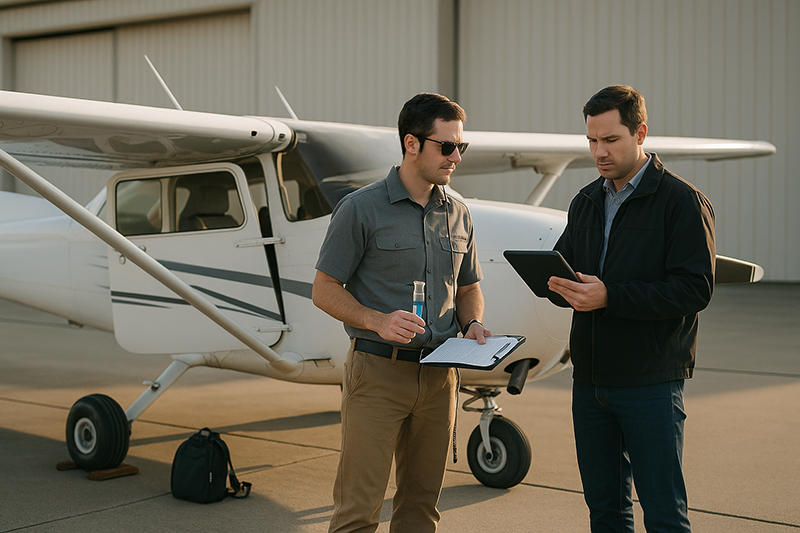
Rental aircraft risk management begins before a pilot touches the door handle, checks the fuel caps, or turns the master switch on. A rented airplane may be perfectly airworthy and well maintained, but it also brings variables that are different from flying an aircraft you own or operate every week. The pilot may be unfamiliar with the avionics configuration, the maintenance history may be summarized rather than personally known, and the dispatch process may depend on local school or FBO procedures. Those factors do not make rental flying unsafe. They simply require a disciplined way to identify, evaluate, and manage risk.
For student pilots, renter pilots, flight instructors, and aviation professionals, rental aircraft are an essential part of general aviation. They make training possible, allow pilots to maintain proficiency, and give access to aircraft without the cost and responsibility of ownership. The tradeoff is that each flight must be approached with a clear understanding of aircraft condition, pilot currency and proficiency, weather, operating limitations, insurance responsibilities, and local procedures. This article explains how to think like pilot in command when the airplane belongs to someone else.
What Rental Aircraft Risk Management Really Means
Risk management in a rental aircraft is the process of asking, before and during the flight, what could reasonably reduce the safety margin and what practical action will control that risk. It is not a paperwork exercise and it is not a substitute for good stick-and-rudder skill. It is the habit of connecting information from the airplane, the pilot, the environment, and the operation into a clear go, no-go, or modify-the-plan decision.
A rental aircraft environment has several distinct risk areas. The first is aircraft familiarity. Even two aircraft of the same make and model can differ in avionics, autopilot installation, engine instrumentation, fuel system details, equipment status, and cockpit ergonomics. A pilot who is comfortable in one training airplane should not assume that another aircraft on the same ramp will behave, display information, or fail in exactly the same way.
The second area is aircraft condition and maintenance awareness. A renter may not personally know when a component was replaced, how often a squawk has occurred, or what equipment has recently been deferred or repaired. That does not mean the aircraft is unsuitable for flight, but it does mean the pilot should use the dispatch process, maintenance records available through the operator, aircraft status sheets, placards, logbook entries when available, and a careful preflight inspection to build an informed picture.
The third area is operational context. A rental aircraft may be used by multiple pilots with different training levels, habits, and missions. It may fly several times in one day. Fuel quantity, oil quantity, tire condition, cabin organization, and avionics settings can change quickly. The pilot who accepts the aircraft is accepting a real-time airplane, not the idealized version shown in the scheduling system.
The fourth area is personal readiness. A pilot may be legally current but not truly proficient in the exact mission. A cross-country flight at night, a flight into busy airspace, a gusty crosswind arrival, or a trip with passengers can increase workload. Good rental aircraft risk management includes an honest look at the pilot, not just the airplane.
Why This Matters in Real-World Aviation
Rental aircraft are often used in high-workload situations: primary training, instrument training, flight reviews, first passenger flights, day trips to unfamiliar airports, and proficiency flights after time away from flying. These are exactly the kinds of operations where small assumptions can stack up. A pilot may be new to the cockpit layout, working with an unfamiliar instructor, trying to interpret weather, managing passenger expectations, and operating on a schedule. Each factor may be manageable by itself, but the combination deserves attention.
Consider how many decisions happen before takeoff. The pilot verifies the aircraft is the correct one for the reservation, reviews dispatch notes, checks fuel, evaluates weather, calculates performance, confirms route and airspace considerations, inspects the aircraft, programs avionics, briefs passengers, and decides whether the airplane and pilot are ready. If any one of those steps is rushed, the flight can begin with uncertainty. In rental flying, uncertainty should be treated as a signal to slow down.
Risk management also matters because the pilot in command cannot delegate judgment to the rental counter. A flight school, flying club, or FBO may have excellent maintenance and dispatch practices, but the pilot still has to decide whether the aircraft is suitable for the specific flight. A trainer that is appropriate for a local daylight lesson may not be the best choice for a long cross-country in deteriorating weather. An aircraft with unfamiliar avionics may be acceptable for a dual instructional flight but not ideal for a single-pilot instrument trip unless the pilot is proficient with the equipment.
Real-world aviation rewards conservative preparation. Rental pilots who build a habit of asking better questions tend to catch issues early: a weak tire before taxi, an inoperative light before a night flight, an expired database before an instrument lesson, a fuel imbalance before engine start, or a mission that exceeds the pilot's recent experience. These discoveries are not inconveniences. They are evidence that the system is working.
How Pilots Should Understand Rental Aircraft Risk
A practical way to understand rental aircraft risk is to separate it into four areas: pilot, aircraft, environment, and external pressures. This framework is familiar to many pilots because it encourages a complete look at the flight rather than a narrow focus on one concern. In a rental aircraft, each area has its own questions.
The pilot portion includes certificates, ratings, recent experience, proficiency, medical fitness, fatigue, stress, and familiarity with the aircraft. Currency is a starting point, not a guarantee of performance. A pilot who has not flown a particular avionics suite for months should expect extra workload. A pilot who has not practiced short-field landings recently should be cautious about choosing a short runway with passengers and baggage. A pilot returning after a break may benefit from flying dual, even if not explicitly required by the operator.
The aircraft portion includes airworthiness, required equipment for the intended operation, maintenance status, performance capability, fuel and oil, weight and balance, and known discrepancies. A rental aircraft may have a squawk sheet or dispatch release process. Read it carefully. If something is unclear, ask. If a placard identifies inoperative equipment, understand whether that equipment matters for your planned flight. Avoid treating a placard as background decoration. It is operational information.
The environment portion includes weather, density altitude, runway conditions, terrain, airspace, daylight, and airport familiarity. Rental aircraft are often flown by pilots building experience, so environment selection matters. A gusty crosswind may be a useful dual training opportunity and a poor solo passenger mission. A high-density-altitude departure may be well within the aircraft's capability only if the pilot accurately calculates performance and uses proper technique. A marginal weather day may be acceptable for an instrument instructor and instrument student, but not appropriate for a rusty VFR renter trying to get home.
External pressures include schedule, rental minimums, passenger expectations, deposits, instructor availability, and the desire to complete training or make a planned trip. In rental operations, these pressures can be subtle. The airplane may be booked after your slot. A passenger may have taken time off work. An instructor may be difficult to reschedule. A destination event may be waiting. None of those factors improve aircraft performance, weather, or pilot proficiency. Recognizing pressure does not mean canceling automatically. It means making the decision on aviation facts rather than social momentum.
Aircraft Checkout: More Than a Signature
A rental checkout should be treated as a serious transition, even when the aircraft type is familiar. The purpose is not simply to satisfy a local policy. It is to help the pilot understand the aircraft's systems, normal procedures, abnormal procedures, performance, avionics, and local operating expectations well enough to use the airplane safely.
For a simple training aircraft, a good checkout still deserves depth. The pilot should understand fuel system operation, engine starting technique, recommended leaning practices, flap operation, electrical system basics, limitations in the approved aircraft documents, emergency procedures, and performance planning. For aircraft equipped with advanced avionics or autopilots, the checkout should also cover mode awareness, navigation source selection, autopilot disconnect procedures, failure indications, and basic reversionary or backup procedures where applicable.
One common rental risk is assuming that a checkout in one aircraft transfers perfectly to the next aircraft with similar paint and seating. It may not. Avionics upgrades, engine variants, propeller differences, supplemental equipment, and local operating rules can change how the airplane should be flown. Even if the aircraft model is familiar, review the specific aircraft's documents and equipment before launching.
Flight instructors play a key role here. A professional checkout is not a trap, and it should not be a casual ride around the pattern. It should reveal how the pilot manages workload, communicates, plans, verifies performance, and responds to abnormal situations. It should also give the renter a chance to ask detailed questions without the pressure of passengers or a destination.
Maintenance Awareness and Preflight Discipline
Rental pilots are not expected to be maintenance technicians, but they are expected to perform a meaningful preflight inspection and make sound decisions when something does not look right. The preflight is the pilot's last close look at the aircraft before flight. In a rental airplane, it is also the moment when the pilot verifies the condition of an aircraft that may have flown several times since the pilot last saw it.
Preflight discipline begins before walking outside. Review the aircraft status through the operator's dispatch system. Look for open squawks, recent maintenance notes, equipment status, fuel instructions, and any local restrictions. If a discrepancy has been cleared, ask if you do not understand what was done. A good operator should welcome thoughtful safety questions.
During the physical inspection, avoid turning the checklist into a memory walkaround. Move slowly enough to notice condition, not just presence. Fuel caps should be secure. Fuel quantity should match the plan and be verified in a way appropriate to the aircraft. Oil quantity should meet the operator's and aircraft's operating guidance. Tires should be inspected for inflation appearance, flat spots, cord, cuts, or other obvious concerns. Flight controls should move correctly and be free of external locks or obstructions. Static ports, pitot tube, antennas, cowling fasteners, inspection panels, windows, brakes, and lights deserve attention.
If something is questionable, the safest response is usually to stop and ask before continuing. Do not normalize uncertainty because the aircraft flew earlier in the day. Previous operation does not prove suitability for the next flight. A renter pilot should also be careful with informal ramp advice. If the issue relates to airworthiness, maintenance, equipment status, or a limitation, involve the operator's authorized personnel rather than relying on casual opinion.
Inside the cockpit, check documents and required equipment appropriate to the operation, but avoid treating document checks as a ritual detached from the mission. The point is to confirm the aircraft can be legally and safely operated for the intended flight. If you plan to fly at night, in instrument conditions, in controlled airspace requiring specific equipment, or across longer distances, the equipment and paperwork review should match that mission.
Insurance, Rental Agreements, and Financial Risk
Risk management is not limited to preventing accidents. Rental aircraft also involve financial and contractual risk. A rental agreement may define who can operate the aircraft, where it may be taken, what weather minimums apply under local policy, whether grass strips or unimproved runways are allowed, how fuel reimbursement works, and what responsibilities apply if the aircraft is damaged or delayed.
Pilots should read the rental agreement before the day of flight. If the agreement references insurance, deductibles, renter responsibilities, or prohibited operations, those details matter. Many pilots also consider non-owned aircraft insurance, often called renter's insurance, to address liability or physical damage exposure. Policy terms vary, and pilots should not assume that an FBO's insurance fully protects the renter from every financial consequence. Insurance questions should be verified with the operator and a qualified insurance professional.
This is an area where assumptions can be expensive. A pilot may believe a flight is covered because the aircraft was rented normally, but local rules or policy terms may limit certain operations. Examples might include landing on unapproved surfaces, taking the aircraft outside an authorized geographic area, using it for instruction without approval, or allowing another pilot to manipulate the controls. The exact terms depend on the operator and policy, so the correct action is to verify rather than guess.
Operational Planning for a Rental Aircraft
Performance planning is especially important in rental aircraft because pilots may not have a deep personal history with the airplane's actual behavior. Use the approved performance information and apply it thoughtfully to the day's conditions. Runway length, slope, surface, wind, temperature, pressure altitude, aircraft weight, and obstacle environment all matter. If conditions are close enough that small errors in technique or calculation would remove the safety margin, consider reducing weight, delaying the flight, using a different airport, flying with an instructor, or choosing another aircraft.
Weight and balance also deserves more than a quick estimate. Training aircraft are often flown lightly, so pilots can be surprised when passengers, baggage, and full fuel change the picture. A rental aircraft may have specific empty weight and equipment changes that differ from another airplane of the same model. Use the current aircraft information provided by the operator, not numbers remembered from another tail number.
Fuel planning should be conservative and specific. Verify usable fuel concepts for the aircraft and understand how the fuel gauges, dipsticks, tabs, or visual indicators should be interpreted. Plan fuel stops with weather, airport services, terrain, and alternate options in mind. If the aircraft has a fuel selector, know its positions and operating procedures before engine start. Fuel system mistakes are often simple in concept but serious in consequence.
Avionics planning is another overlooked area. Before departure, confirm the navigation database status if it matters to the operation, understand how to load and activate a route or approach if appropriate, and know how to revert to basic navigation if the display or automation does something unexpected. Advanced avionics can reduce workload when used properly, but they can increase workload when the pilot is heads-down trying to solve a programming problem in busy airspace.
Common Mistakes and Misunderstandings
One of the most common mistakes in rental flying is confusing availability with suitability. If the scheduling system shows the aircraft is available, that only means it can be reserved. It does not automatically mean it is the right aircraft for the pilot, passengers, weather, airport, or mission. Suitability is a pilot decision.
Another misunderstanding is believing that a recent checkout eliminates the need for review. A checkout establishes a baseline, but skills fade and details blur. If a pilot has not flown a specific aircraft or avionics package recently, a short review with an instructor can be a smart investment. This is particularly true before night flying, instrument flying, operations at unfamiliar airports, or flights with passengers.
A third mistake is accepting ambiguous maintenance information. If a squawk says a system is intermittent, recently repaired, or inoperative, the renter should understand what that means for the planned flight. Some discrepancies may be minor for one operation and significant for another. For example, an inoperative landing light has different implications for a daytime local flight than for a night arrival. The proper answer depends on aircraft equipment requirements, operating rules, and local policies, so the pilot should not guess.
Rushing the preflight is another frequent problem. Rental schedules can create time pressure. The previous renter may return late, the aircraft may need fuel, or a passenger may be waiting. Time pressure is exactly when a structured preflight matters most. If the schedule no longer allows a careful inspection, planning, and briefing, the safe decision may be to delay or shorten the flight.
Pilots also sometimes underestimate passenger management. In rental aircraft, passengers may be friends or family who are excited, nervous, or unfamiliar with small aircraft. Their questions, movement, bags, phones, and expectations can add workload. A clear passenger briefing should cover seat belts, doors, sterile cockpit expectations during critical phases, emergency exits, headset use, and the importance of not distracting the pilot at key moments.
Finally, many pilots underestimate external pressure. Rental costs, cancellation fees, aircraft availability, instructor schedules, and destination plans can influence decisions. The professional habit is to name the pressure out loud: “I want to go because the airplane is booked and the weather might still work.” Once stated plainly, it becomes easier to separate desire from aeronautical judgment.
Practical Example: The Familiar Airplane That Is Not Familiar Today
Imagine a private pilot renting a four-seat training aircraft for a Saturday day trip with one passenger. The pilot has flown the same model many times, but not this specific tail number. The route is about two hours each way, with warm afternoon temperatures, a destination airport the pilot has never visited, and a return planned near sunset.
At dispatch, the pilot notices two important details. First, this aircraft has a different GPS and audio panel than the one used during the pilot's checkout. Second, a previous squawk about a landing light has been addressed, but the pilot is not sure whether the light is currently operating. During preflight, the fuel quantity appears lower than expected for the planned trip plus reserves, and the passenger has brought more baggage than discussed.
A weak risk management response would be to continue because the airplane is reserved, the weather looks good, and the pilot has flown the model before. A stronger response is to slow down. The pilot asks the dispatcher for clarification on the landing light status, verifies the fuel quantity and fueling plan, recalculates weight and balance using the actual baggage, reviews performance for the warm day, and spends time on the ground learning the avionics differences. The pilot also adjusts the return plan so arrival is comfortably before dark unless the lighting and pilot proficiency support a later return.
None of these actions are dramatic. They are routine professional decisions. The flight may still go as planned, but it now begins with fewer unknowns. If the recalculation shows the baggage or fuel plan is unsuitable, the pilot has options: reduce baggage, add a fuel stop, depart earlier, select a different aircraft, fly with an instructor, or cancel. Good risk management does not remove all risk. It prevents avoidable surprises from becoming airborne problems.
Best Practices for Pilots Renting Aircraft
The best rental pilots are not necessarily the ones with the most hours. They are the ones who consistently build margin. They arrive early, review the aircraft and weather, ask clear questions, and stay willing to modify the plan. They treat each rental aircraft as a specific machine with a specific status on a specific day.
Several practices are especially useful:
- Know the exact aircraft. Review the specific tail number, equipment, performance data, and operating procedures rather than relying on memory from a similar aircraft.
- Read the dispatch and squawk information. Do not ignore notes, placards, or equipment status. If it affects the mission, clarify it before flight.
- Plan performance and weight honestly. Use current conditions, actual passengers and baggage, and the aircraft's current information.
- Set personal minimums. Establish weather, crosswind, runway, fuel, and proficiency limits that may be more conservative than legal minimums or operator policy.
- Respect unfamiliar avionics. Learn the equipment on the ground. Do not make the first real learning event happen during a busy departure or approach.
- Protect the preflight from schedule pressure. If the aircraft is late, the answer is not to inspect faster. The answer is to adjust the plan.
- Understand the rental agreement. Know the operator's rules, insurance expectations, geographic limits, and prohibited operations before the day of flight.
- Use instructors strategically. Dual instruction is not just for meeting requirements. It is a practical tool for refreshing skills, learning equipment, and expanding personal margins.
Instructors and operators can strengthen rental safety by creating a culture where questions are welcomed. A renter should never feel embarrassed for asking about a maintenance note, equipment status, or procedure. Clear communication protects pilots, passengers, aircraft, and the organization.
Decision-Making Before, During, and After the Flight
Rental aircraft risk management is not complete once the airplane leaves the ground. During flight, the pilot should continue comparing expectations with reality. Is the engine instrumentation normal? Is fuel consumption matching the plan? Are the winds stronger than forecast? Is the passenger becoming uncomfortable? Is the pilot getting behind the airplane because of avionics or airspace workload? These are not reasons to panic. They are cues to update the plan.
Good in-flight decisions often involve early, simple changes. Land for fuel sooner than planned. Request assistance from air traffic control when appropriate. Divert before weather closes options. Discontinue an approach or landing that is becoming unstable. Return to the departure airport if a system concern appears. The earlier a pilot acts, the more options remain available.
After the flight, close the loop. Report discrepancies clearly and promptly through the operator's process. Vague comments such as “it seemed weird” are less useful than specific observations: when the issue occurred, what indication was observed, what system was affected, and whether the problem repeated. Good squawk reporting is part of safety culture. It helps maintenance personnel, protects the next renter, and preserves the quality of the aircraft fleet.
Debriefing personal performance is equally valuable. Ask what went well, what was rushed, what created workload, and what should be changed next time. Rental flying offers continuous learning because each flight may involve a slightly different aircraft, destination, instructor, passenger, or weather picture. Pilots who debrief honestly improve faster and make better decisions.
Frequently Asked Questions
Is a rental aircraft riskier than an aircraft I own?
Not automatically. A well-run rental operation can provide safe, professionally maintained aircraft. The risk difference is that a renter may have less personal familiarity with the specific aircraft's condition, equipment, and history. That makes careful checkout, dispatch review, preflight inspection, and mission planning especially important.
Should I buy renter's insurance?
Many pilots consider non-owned aircraft insurance because rental agreements and operator insurance may not cover every financial exposure a renter could face. Coverage varies by policy and situation. Pilots should review the rental agreement and discuss specific needs with the aircraft operator and a qualified insurance professional.
What should I do if I find a squawk before flight?
Stop and clarify the issue through the operator's process. Determine whether the discrepancy affects airworthiness, required equipment, local policy, or the safety of the intended mission. Do not assume a questionable item is acceptable because the aircraft flew earlier or because another pilot was comfortable with it.
How often should I get a checkout or refresher in a rental aircraft?
The answer depends on the operator's policy, the aircraft, the avionics, and the pilot's recent experience. Even when a formal checkout is not due, a refresher with an instructor can be wise after time away, before flying a different avionics setup, before carrying passengers, or before a more demanding mission.
What is the biggest risk for pilots renting aircraft?
The biggest practical risk is often assumption. Pilots may assume the aircraft is configured like another one, assume a squawk does not matter, assume fuel is sufficient, assume insurance works a certain way, or assume personal proficiency is unchanged. Replacing assumptions with verification is the core of rental aircraft risk management.
Key Takeaways
- Rental aircraft risk management means verifying the specific aircraft, pilot readiness, environment, and mission before accepting the flight.
- Safety margins improve when pilots slow down for dispatch review, maintenance questions, performance planning, fuel verification, and a disciplined preflight.
- Good renter pilots manage more than legality. They manage proficiency, equipment familiarity, insurance awareness, passenger expectations, and external pressure.