
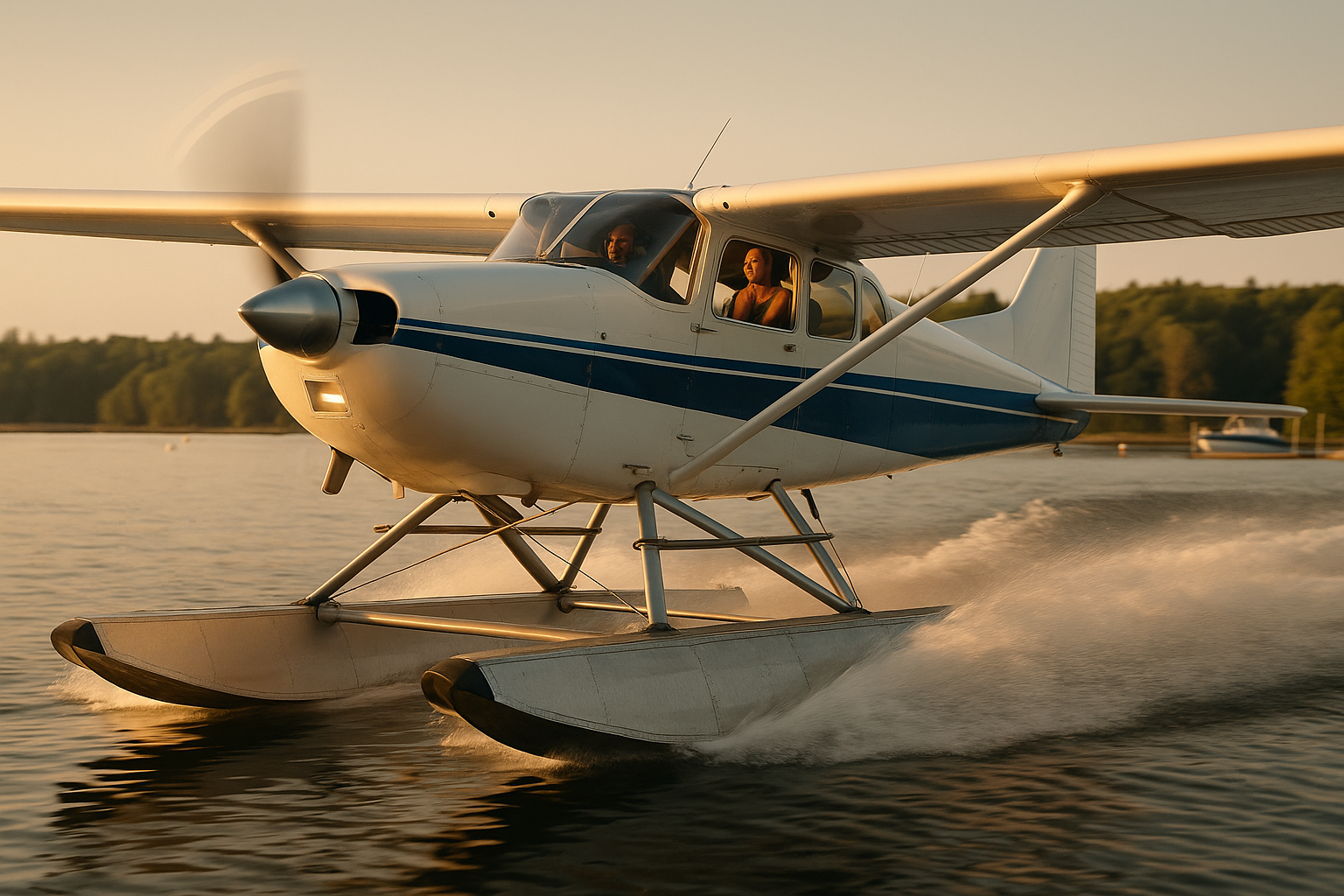
Seaplane flight training introduces pilots to water operations, a set of skills and judgments that differ from landplane flying in important ways. Seaplane flight training is about learning how floats or hulls change aircraft handling, how water conditions affect takeoff and landing, and how to make safe operational decisions on lakes, rivers, and coastal areas.
This article explains the fundamentals pilots, student pilots, and instructors need to understand before starting seaplane training. It focuses on the operational knowledge, handling techniques, and safety decision-making that make seaplane flying unique and practical. Read on for real-world guidance, common mistakes, a realistic training scenario, and clear takeaways you can use in preflight briefings and training flights.
Core Concepts of Seaplane Flight Training
At its core, seaplane flight training teaches how to operate an aircraft equipped with floats or a boat-style hull on water. The primary differences from landplane flying arise from the interaction between the aircraft and the water surface at low speeds, and from additional tasks such as docking, step taxiing, and evaluating water and wind conditions.
Key concepts trainees must master include water handling, float or hull aerodynamics, power and pitch management during waterborne operations, the effect of surface conditions on control, and the special risks associated with glassy water, currents, and debris. An understanding of these principles helps pilots transition safe piloting techniques from hard-surface runways to variable water operating surfaces.
Why This Matters in Real-World Aviation
Seaplane operations are common in remote-area transport, tourism, flightseeing, and maritime operations. The ability to operate from water opens access to lakes, rivers, and coastal destinations that lack runways. That operational benefit comes with added responsibilities.
In the real world, water operations change decision-making in several ways. Preflight planning must include water condition checks, tide and current awareness, and assessment of human activity on the water such as shipping lanes, boats, and swimmers. Performance planning must account for water friction, float drag, and surface conditions that affect takeoff distance and acceleration. During the approach and landing phase, the pilot must judge a moving, irregular surface rather than a fixed runway, and plan for contingencies such as wind shifts, wakes from other boats, and engine-out options over water.
How Pilots Should Understand Seaplane Flight Training
Seaplane flying requires both technical skills and refined judgment. Many maneuvers look similar to land operations, but the inputs and cues differ. For example, taxiing on water involves differential power, rudder and water rudder use, and careful timing of control inputs to avoid porpoising or loss of directional control. Takeoffs require managing the transition from displacement mode, where floats displace water and plane moves slowly, to the step, where hydrodynamic lift reduces drag and allows acceleration into flight.
Pilots should think in phases when on the water. The main phases are approach, contact, settling or displacement, stepping and acceleration, rotation, and climb-out. Each phase has distinct control priorities: maintaining the proper pitch attitude, managing power to avoid excessive porpoising, and keeping directional control with water rudders, rudder pedals, or differential power. Recognizing the phase you are in helps choose the correct control inputs.
Hydrodynamic behavior and the step
Floats and hulls generate hydrodynamic forces. When at rest or taxiing slowly, the aircraft is in displacement mode and is affected primarily by buoyancy and water resistance. As speed increases, a properly designed float or hull reaches a step, a change in hull geometry that reduces wetted surface and reduces drag. Reaching and maintaining the step is critical for a successful takeoff. Too little pitch or insufficient power can prevent the airplane from stepping, causing long, slow runs. Too much back pressure at the wrong time can cause porpoising or popping off prematurely.
Control surfaces and water rudders
Water rudders or water steering devices are used on the surface; they are effective at low speeds but usually retracted for takeoff and landing because they increase drag and can cause steering anomalies. Directional control primarily comes from rudder effectiveness as speed increases in the step and from differential power when necessary. Pilots must practice deploying and retracting water rudders smoothly and understand the aircraft-specific procedures for when and how to use them.
Operational Factors: Weather, Water, and Maintenance
Weather and water conditions directly affect seaplane operations. Wind direction and speed determine suitable landing and takeoff headings. Surface chop, swell, and wakes change how the aircraft contacts the water. Tides and currents alter available takeoff and landing areas and can move swim platforms, moorings, or debris into operations zones.
Maintenance considerations differ with water operations. Corrosion control, seal integrity on floats and hull compartments, and the condition of water rudders and step seams are critical. Preflight inspections must include checks for water intrusion, leaks, loose fasteners, and the condition of anti-corrosion treatments. Logbook entries and maintenance records for seaplane equipment should be current and reviewed before every flight that involves water operations.
Training Progression and Instructional Emphases
Seaplane training typically progresses from basic water handling and taxiing to takeoffs and landings, then to advanced techniques such as glassy water operations, rough-water handling, docking, and confined-area maneuvering. Instructors emphasize pattern work and go-arounds on water because the margin for error can be small when surface conditions change quickly.
Instruction should include thorough briefings on emergency procedures specific to water operations, such as engine failure scenarios during takeoff or when on final approach over water. Instructors also need to build student judgment on choosing landing areas, recognizing dangerous water conditions, and deciding when to divert or delay operations because of marginal conditions.
Common Mistakes or Misunderstandings
Students and some transitioning pilots often make predictable errors during seaplane training. One common mistake is treating water like a fixed runway. Unlike a runway, water is a dynamic surface with movement, texture changes, and floating hazards. Pilots who expect a uniform surface will misjudge where and how to touch down.
Another frequent error is improper pitch and power management during the step. Pilots may leave too much back pressure, causing porpoising, or too little, which can prevent reaching lift-off speed. Misuse of water rudders is also common; using them beyond their effective speed window can result in reduced control or damage. Lastly, underestimating the effects of wakes or other traffic can lead to abrupt directional changes during low-speed operations.
Practical Example: A Typical Training Flight
Imagine a training sortie on a calm morning lake. The student has already completed a preflight that included checking float fittings, drain plugs, and the water rudder operation. The instructor briefs wind, traffic on the water, and the planned sequence: taxi to the practice area, step run practice, pattern work, and a return for a full-stop landing and docking practice.
On taxi, the instructor demonstrates differential power and the use of the water rudder at slow speeds to steer. The student practices S-turns and approaches to the dock, learning how propwash over the rudder and float surfaces affects steering. For the takeoff run, the instructor explains the feel of the step and asks the student to call out transitions: "displacement, stepping, on step, rotate." The student manages throttle and pitch to reach a smooth step and accelerate through the step to flying speed.
During landing practice, the instructor sets up an approach that allows the student to judge rate of descent and touchdown point while monitoring for wind shifts. After a successful landing, the student practices step-taxiing back to the dock using cautious power adjustments and hand signals between aircraft and dock personnel if available. Throughout, the instructor emphasizes scanning for other water users and anticipating wake interactions.
Common Scenarios and Decision Points
Several decision points occur during any seaplane operation. Before leaving the dock or mooring area, pilots decide whether conditions support the planned maneuver. Questions include: Is the wind direction suitable? Are there obstructions or boat wakes in the intended pattern? Is there sufficient distance to accelerate and climb out given surface conditions? If the answer to any question is marginal, the pilot should consider postponing, repositioning, or choosing a different landing area.
During approach, pilots must be ready to go around. A go-around on water requires decisive power and pitch control, attention to directional control as the aircraft transitions back into the step, and awareness of obstacles behind or on the approach path. Pilots should brief go-around procedures before each approach so everyone in the cockpit knows the plan.
Best Practices for Pilots
Good habits make seaplane operations safer and more predictable. Adopt the following practices consistently.
- Thorough preflight inspections: Check floats or hull compartments for water intrusion, inspect seams and fittings, verify drain plugs, and confirm water rudder operation.
- Briefings before every maneuver: Discuss wind, water traffic, emergency options, and go-around procedures before every takeoff and landing.
- Use a phased approach to control inputs: Manage pitch and power smoothly through displacement, stepping, and takeoff, and avoid abrupt control movements that can trigger porpoising.
- Scan water continuously: Watch for wakes, debris, swimmers, and nonstandard traffic patterns; anticipate other users’ actions.
- Respect surface limitations: Avoid confined areas until proficient, and evaluate how tides, currents, and wind will affect available operating space.
- Practice conservative decision-making: If a landing or takeoff feels marginal, be ready to divert or reconfigure the approach.
Training Safety and Instructor Considerations
From an instructor’s perspective, safety on seaplane training flights depends on clear demonstration, graduated skill building, and specific emphasis on decision-making. Early lessons should take place in benign conditions. Instructors should demonstrate both correct technique and common errors in a controlled way so students can feel the differences and learn recovery methods.
Instructors must also develop student situational awareness specific to water operations. That includes how to interpret water texture for winds and currents, how to recognize dangerous glassy water conditions, and how to plan for emergency egress and flotation in the event of a forced landing on water. Brief surviving on water and how to use onboard survival equipment as part of primary training objectives.
Common Mistakes or Misunderstandings — Detailed
Beyond the general errors highlighted earlier, several nuanced misunderstandings hinder learning. One is misinterpreting visual cues. Reflections, glare, and poor contrast can hide the horizon and make judging height above water difficult. Pilots should be taught to use instruments and peripheral visual cues, and to rely on practiced approach profiles when visual cues are unreliable.
Another subtle pitfall is overreliance on landplane techniques for crosswind control. On water, crosswind corrections that work on a runway can push the floats into a different attitude because of differing aerodynamic and hydrodynamic forces. Learning how the aircraft responds when floats contact waves or wakes will prevent incorrect control inputs that could escalate into porpoising or directional loss.
Finally, pilots sometimes underestimate the effect of weight and balance for water operations. Adding a significant load near the tail or nose changes how the aircraft sits on the water, how quickly it reaches the step, and its susceptibility to porpoising. Thorough weight and balance planning and real-time awareness of payload distribution are essential.
Frequently Asked Questions
Do I need a special license to fly a seaplane?
Requirements vary by country. Many aviation authorities require a specific endorsement, rating, or training in seaplane operations before a pilot may carry passengers in a seaplane solo. Check your local regulator for exact requirements and complete training with a qualified seaplane instructor before operating on water without supervision.
What is glassy water and how do I handle it?
Glassy water is a calm, mirror-like surface that offers few depth or texture cues. Judging height can be difficult. Standard practice is to use a steeper approach angle and power control, aim for a three-point or shallow-stance touch down as trained, and consider a gust penetration or delayed flare technique suited to the aircraft. If uncertain, choose a more textured area of water for the landing or perform a go-around.
How do currents and tides affect seaplane operations?
Currents and tides change available operating areas, affect takeoff and landing distances, and can create cross-currents near shoreline features. Always plan operations with local tide and current knowledge, particularly in coastal regions and tidal rivers. When in doubt, reposition or delay operations until conditions are more favorable.
What emergency considerations are unique to seaplanes?
Engine failures over water increase the complexity of emergency procedures. Pilots need to evaluate whether to land straight ahead on water, turn to a suitable landing area, or attempt to reach shore. Water landings require attention to aircraft attitude to avoid flipping or structural damage on contact. Also, consider post-landing survival: life vests, signaling devices, and securing the aircraft to prevent it from sinking or drifting into hazards.
How should I practice docking and mooring safely?
Approach docking with minimal speed and clear communication if others are assisting. Use gentle power changes and expect propwash effects near the dock. When mooring, secure the aircraft promptly, check for rising tides or strong current that could stress mooring lines, and confirm the location provides adequate clearance from traffic and wakes.
Practical Training Example: Step-by-Step Takeoff Lesson
Use this example as a framework for an instruction session on takeoff technique. Begin with a preflight brief covering wind, planned heading, takeoff run distance, and go-around options. Confirm fuel quantity and weight distribution.
Taxi to the takeoff area and complete a run-up. Coach the student through the following steps: smooth application of full power, allowing the aircraft to build speed in displacement mode while holding the recommended pitch attitude for the aircraft, recognizing and calling the moment the aircraft reaches the step, reducing or modulating back pressure as required to allow acceleration across the step, rotating at appropriate speed, and establishing climb attitude and positive rate of climb after liftoff. Debrief immediately afterward, focusing on where the student felt control transitions and where they would adjust pitch or power next time.
Maintenance Considerations Pilots Should Know
Pilots operating seaplanes should know enough about float or hull maintenance to identify common problems on preflight. Check for signs of corrosion, loose or missing fasteners, worn water rudder linkages, damaged sacrificial anodes, and signs of water intrusion in compartments. If anything appears suspect, defer flight until a qualified maintenance technician inspects and signs off on the repairs.
Instructor Checklist for Effective Training
While not a formal checklist, instructors should consistently emphasize: thorough briefings, incremental skill building, supervised exposure to a variety of water conditions, explicit go-around drills, emergency water egress and survival training, and an emphasis on conservative decision-making when conditions are marginal.
Key Takeaways
- Practical takeaway: Learn the phases of water operations and practice smooth power and pitch control through displacement, stepping, and rotation.
- Safety takeaway: Always brief go-around and emergency procedures for water operations, and be ready to divert if conditions are marginal.
- Training/decision takeaway: Build judgment by practicing in benign conditions first and gradually introducing wind, currents, and confined-area operations under instructor supervision.
Final Thoughts
Seaplane flight training expands a pilot’s capability and opens access to diverse operating environments. The core of good seaplane flying is deliberate practice, conservative decision-making, and respect for the dynamic nature of water. Instructors play a key role by teaching both handling skills and operational judgment. For pilots transitioning to water, developing a methodical preflight and approach routine and practicing in a range of benign conditions will build the muscle memory and situational awareness needed for safe, confident seaplane operations.
If you are considering seaplane training, seek a reputable instructor and operator, focus on consistent, phased skill development, and treat each water operation as a unique environment requiring careful assessment and planning.