
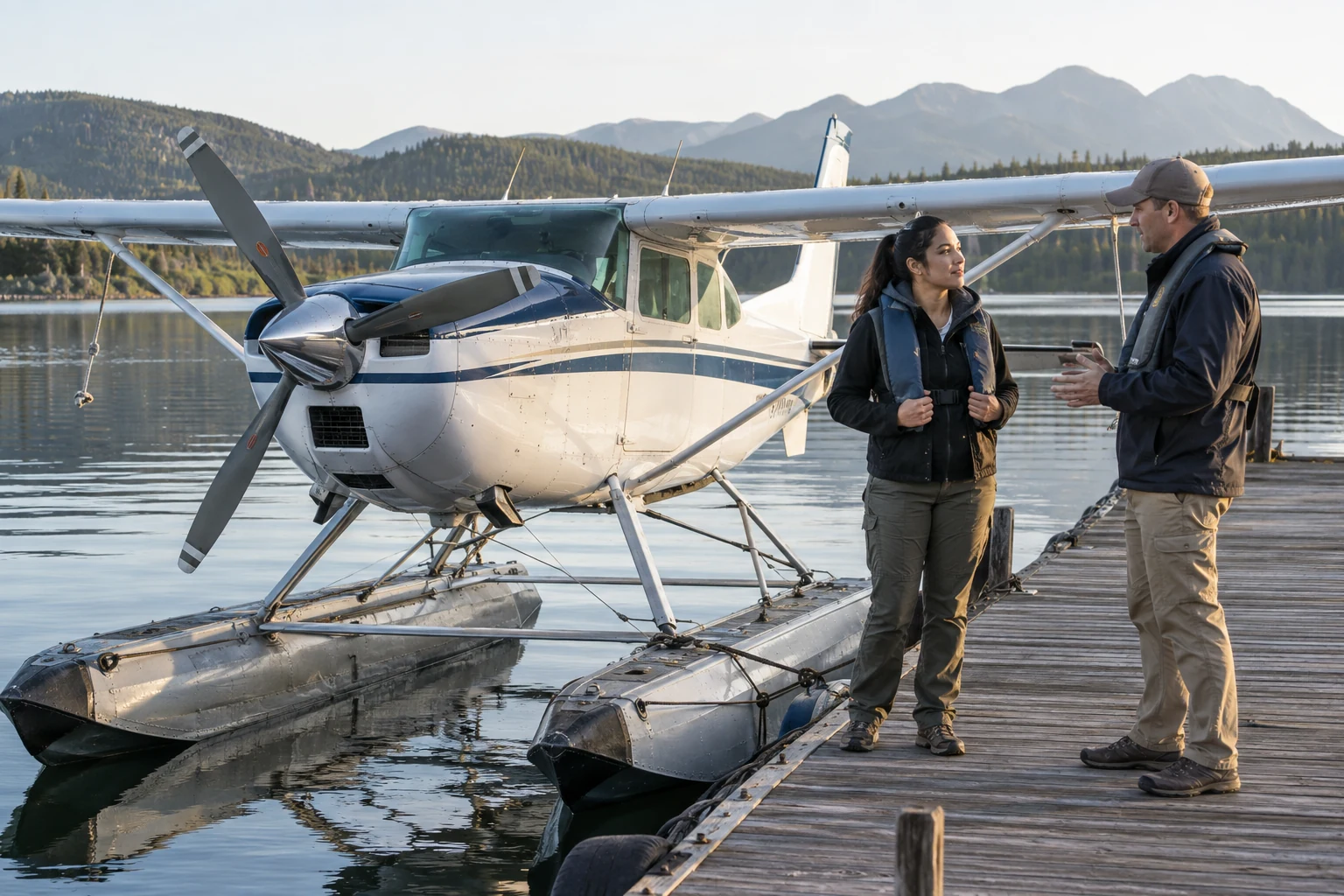
Seaplane training introduces water handling, step taxi, glassy-water and rough-water techniques, docking, beaching, and environment-specific decision-making.
For pilots, students, instructors, and aviation professionals, the practical question is not whether the subject can be defined. The useful question is how it changes preparation, cockpit priorities, and the decision to continue, modify, or stop an operation. Water operations add wind, surface, docking, and judgment skills to normal airmanship.
This article explains the topic in operational language and uses the same framework applied throughout professional aviation training: understand the system or hazard, recognize the early cues, protect the flight path, follow current aircraft-specific and regulatory guidance, and debrief what should change before the next flight.
What Seaplane Training: What Pilots Should Expect Means in Practice
Seaplane Training: What Pilots Should Expect should be understood as an operational discipline rather than a single maneuver, definition, or checklist item. The subject connects knowledge, aircraft control, communication, risk management, and the pilot’s ability to recognize when the original plan no longer matches reality.
The first operational point is read wind and water surface before takeoff or landing. In seaplane training: what pilots should expect, this is not an isolated fact to memorize; it changes what the pilot should notice, brief, verify, and do when workload rises. The safest application is aircraft- and operation-specific, supported by current guidance, and measured by whether the flight remains controlled, understandable, and within a conservative margin.
A second consideration is understand displacement, plow, and step taxi limitations. In seaplane training: what pilots should expect, this is not an isolated fact to memorize; it changes what the pilot should notice, brief, verify, and do when workload rises. The safest application is aircraft- and operation-specific, supported by current guidance, and measured by whether the flight remains controlled, understandable, and within a conservative margin.
Pilots should also recognize that plan docking and shutdown before entering confined areas. In seaplane training: what pilots should expect, this is not an isolated fact to memorize; it changes what the pilot should notice, brief, verify, and do when workload rises. The safest application is aircraft- and operation-specific, supported by current guidance, and measured by whether the flight remains controlled, understandable, and within a conservative margin.
Another important element is connect the aerodynamic principle to what the pilot feels and sees. In seaplane training: what pilots should expect, this is not an isolated fact to memorize; it changes what the pilot should notice, brief, verify, and do when workload rises. The safest application is aircraft- and operation-specific, supported by current guidance, and measured by whether the flight remains controlled, understandable, and within a conservative margin.
In practice, the useful standard is manage energy, coordination, and angle of attack throughout the maneuver. In seaplane training: what pilots should expect, this is not an isolated fact to memorize; it changes what the pilot should notice, brief, verify, and do when workload rises. The safest application is aircraft- and operation-specific, supported by current guidance, and measured by whether the flight remains controlled, understandable, and within a conservative margin.
The training value becomes clear when use clearing, altitude, and recovery criteria as real safety controls. In seaplane training: what pilots should expect, this is not an isolated fact to memorize; it changes what the pilot should notice, brief, verify, and do when workload rises. The safest application is aircraft- and operation-specific, supported by current guidance, and measured by whether the flight remains controlled, understandable, and within a conservative margin.
The first operational point is adjust technique for aircraft weight, configuration, wind, and density altitude. In seaplane training: what pilots should expect, this is not an isolated fact to memorize; it changes what the pilot should notice, brief, verify, and do when workload rises. The safest application is aircraft- and operation-specific, supported by current guidance, and measured by whether the flight remains controlled, understandable, and within a conservative margin.
Why This Matters in Real-World Aviation
Real flights combine several demands at once. Weather, traffic, aircraft configuration, communication, automation, fatigue, schedule pressure, and unfamiliar environments can turn a small misunderstanding into a high-workload event. The importance of seaplane training: what pilots should expect is that it helps the pilot preserve margin before the situation becomes urgent.
The strongest pilots do not wait for a dramatic warning. They monitor trends, compare actual conditions with the plan, and use conservative decision points. Instructors and operators should evaluate not only whether the final outcome was acceptable, but whether the process was repeatable, compliant, and resilient to distraction.
How Pilots Should Understand This Topic
A useful mental model is to connect knowledge, cues, action, and verification. Knowledge explains the system or requirement. Cues reveal what is actually happening. Action protects the aircraft and applies the correct procedure. Verification confirms that the response produced the intended result.
For this topic, the most useful cues include read wind and water surface before takeoff or landing, understand displacement, plow, and step taxi limitations, plan docking and shutdown before entering confined areas. Those cues should be briefed before workload peaks. If the pilot cannot explain what will be checked, what would trigger a change, and what source controls the decision, more preparation is needed.
Good airmanship also requires humility. A familiar-looking aircraft, procedure, route, or assignment may contain important differences. Current charts, regulations, manuals, operator procedures, and qualified instruction take priority over memory or habit.
Common Mistakes or Misunderstandings
- Memorizing control movements without understanding the aerodynamic result. This can hide the developing risk, delay a safer decision, or reinforce a habit that becomes harder to correct under pressure.
- Fixating on one instrument or ground reference. This can hide the developing risk, delay a safer decision, or reinforce a habit that becomes harder to correct under pressure.
- Using abrupt inputs to chase precision. This can hide the developing risk, delay a safer decision, or reinforce a habit that becomes harder to correct under pressure.
- Practicing outside appropriate altitude, weather, or supervision. This can hide the developing risk, delay a safer decision, or reinforce a habit that becomes harder to correct under pressure.
These errors usually come from the same underlying problem: the pilot acts on an assumption before confirming the actual aircraft state, requirement, or operating condition. Slowing the decision long enough to verify the controlling information is often faster than recovering from a wrong action.
Practical Example
A lake appears calm but offers few depth cues. The instructor shifts to the aircraft-approved glassy-water technique and selects a shoreline reference rather than improvising a normal flare.
The important part of the example is not a perfect outcome. It is the sequence of recognition and decision-making. The pilot identifies the first meaningful cue, preserves aircraft control and options, consults the appropriate source, and communicates before the situation becomes compressed.
A useful debrief would ask what changed, when it first became noticeable, what assumptions influenced the initial plan, and what trigger should be established for the next flight. That discussion turns one event into durable judgment.
Best Practices for Pilots
The following practices make the subject usable without turning it into a rigid script:
- Brief entry, performance, recovery, and abort criteria.
- Use coordinated, measured control pressure.
- Monitor energy and trend rather than isolated numbers.
- Practice with an instructor until the maneuver is repeatable.
- Debrief the earliest deviation, not just the final error.
Training and Operational Considerations
Training should progress from explanation to demonstration, supervised application, realistic scenario work, and self-assessment. Complexity should increase only after the pilot can recognize the basic cues and protect the aircraft without continuous prompting.
Aircraft and operations differ. A procedure that is correct in one installation, company, or category may be incomplete or wrong in another. Use the current AFM or POH, supplements, checklists, regulations, OpSpecs, and operator manuals that apply to the exact operation.
Documentation matters. When the event affects maintenance, training, duty, navigation capability, security, or qualification, record enough factual detail for the next pilot, instructor, mechanic, dispatcher, or manager to understand what occurred and what remains unresolved.
Frequently Asked Questions
What is the most important idea to remember?
The central idea is to read wind and water surface before takeoff or landing while keeping aircraft control, legal requirements, and operational context in view.
What should a pilot do first when the issue appears?
Begin by stabilizing the operation and verifying the facts that matter most: understand displacement, plow, and step taxi limitations. Then use the applicable checklist, rule, manual, or approved procedure.
How should an instructor teach this subject?
Instructors should brief the objective, create a realistic but controlled scenario, observe the learner’s cues and decisions, and debrief the earliest point where performance began to improve or degrade.
Does this article replace aircraft-specific or regulatory guidance?
No single article or rule-of-thumb replaces the current regulation, aircraft flight manual, operating procedures, weather information, or qualified instruction applicable to the flight.
When should a pilot seek additional help?
Seek qualified assistance whenever the aircraft, regulation, medical condition, maintenance status, or operational approval is uncertain enough that an incorrect assumption could reduce safety.
References and Further Study
- FAA Airplane Flying Handbook (FAA-H-8083-3C)
- FAA Pilot’s Handbook of Aeronautical Knowledge (FAA-H-8083-25C)
Key Takeaways
- Water operations add wind, surface, docking, and judgment skills to normal airmanship.
- Read wind and water surface before takeoff or landing; understand displacement, plow, and step taxi limitations.
- Use current aircraft-specific, regulatory, medical, maintenance, and operator guidance whenever the operation depends on details not resolved by general training material.