
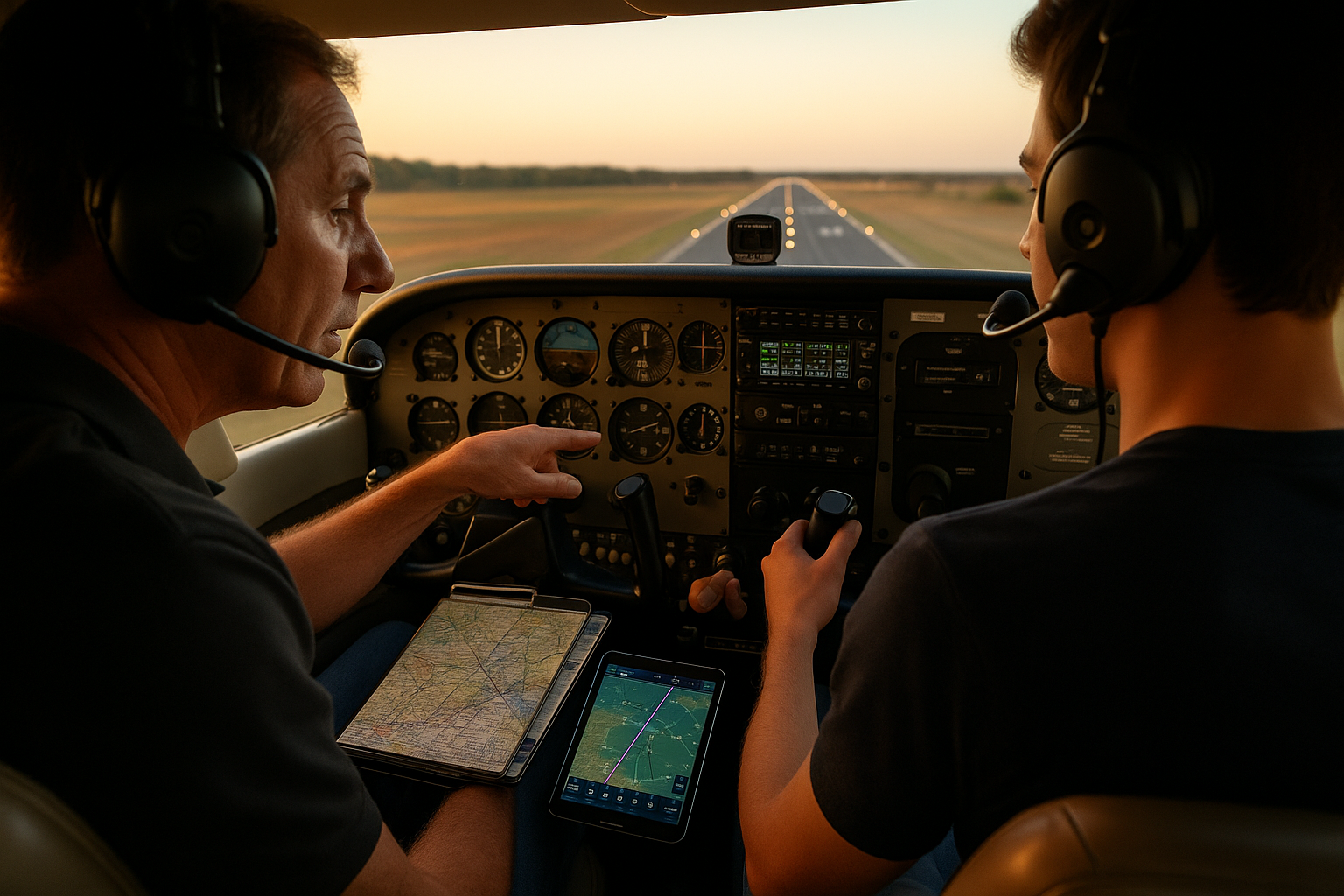
Staying current as a private pilot is more than meeting minimum legal requirements. It is an ongoing process of skill maintenance, risk management, decision making, and realistic training that keeps you safe, competent, and confident in the cockpit. Whether you fly regularly or sporadically, keeping your flying skills sharp reduces risk, improves judgment, and preserves the quality of your flying experience.
This article explains practical ways to remain current and proficient as a private pilot. You will find operational techniques, training-oriented approaches, safety-minded habits, and realistic examples you can apply immediately. The guidance is written for pilots, student pilots, flight instructors, and aviation professionals who want precise, usable advice rather than a simple checklist.
Core idea: Currency versus proficiency
Currency and proficiency are related but distinct concepts. Currency is the demonstrated minimum recent experience needed to exercise specific privileges. Proficiency is a broader measure of capability, judgment, and mental and physical skill. A pilot can be legally current yet lack proficiency; conversely, a proficient pilot is often deliberately more conservative than the minimum currency standards.
Think of currency as eligibility and proficiency as readiness. Staying current preserves eligibility. Working toward proficiency protects safety. A robust program to remain current also emphasizes proficiency, and that is the focus of the practices below.
Why this matters in real-world aviation
Pilot performance degrades with inactivity. When that degradation meets changing weather, unfamiliar airports, or time-pressured decisions, risks increase. Maintaining currency and pursuing proficiency directly reduces those risks because it improves task execution, checklist discipline, situational awareness, and the ability to recover from unexpected events.
For flight instructors and operators, keeping students, clients, or fleet pilots current is a safety-critical training responsibility. Well-structured recurrent training lowers accident risk and builds a culture of conservative decision making. For single-pilot private operators, currency and proficiency are primary defences against common mishaps like controlled flight into terrain, loss of control during approach and landing, and spatial disorientation during night or marginal weather flights.
How pilots should understand staying current
Treat currency as a program, not a task. A program has recurring elements: scheduled practice flights, scenario-based training, focused skill refreshers, knowledge updates, and honest personal assessments. The program should be tailored to the type of flying you do. A pilot who flies short VFR hops needs a different emphasis from someone who regularly conducts cross-country IFR flights.
Effective currency programs include the following elements in a sustainable cycle:
- Routine practice sessions that refresh core maneuvers and emergency procedures.
- Planned cross-country flights to practice navigation, flight planning, and fuel/alternates decision making.
- Scenario-based sessions that combine multiple tasks under realistic constraints, such as diverting with low fuel or managing an electrical failure during approach.
- Proficiency checks with a qualified instructor or examiner focused on judgment and decision making, not only stick-and-rudder skills.
- Knowledge refreshers for weather interpretation, airspace changes, and updated procedures.
Frequency and intensity of these elements should match your personal risk tolerance, the complexity of your flying environment, aircraft complexity, and how long you go between flights.
Common categories to include in a currency program
Organize training around practical categories that matter in day-to-day flying. These categories help you target limited practice time where it yields the biggest safety benefits.
Basic handling and maneuvers. This includes takeoffs, landings, go-arounds, stall recognition and recovery, slow-flight control, and slips for crosswind landings. These are core stick-and-rudder skills that degrade quickly without practice.
Navigation and flight planning. Routine cross-country practice preserves planning discipline: accurate weight and balance, performance planning, fuel planning with reserves, alternate selection, and adherence to planned routing while remaining flexible to changes in weather or ATC.
Systems and abnormal procedures. Refresh your knowledge of aircraft systems and the steps to handle malfunctions. Simulate avionics failures, radio-out scenarios, electrical system anomalies, and partial panel work where safe and appropriate.
Instrument flying and partial-panel skills. Even if you are not instrument rated, practicing basic instrument scanning or flying with a view-limiting device under instructor supervision improves control and reduces the chance of spatial disorientation. For IFR-rated pilots, maintaining instrument proficiency is essential; integrating occasional instrument approaches in VMC is a useful way to practice.
Night flying. Night operations have higher risk factors because of reduced visual cues, greater chance of spatial disorientation, and different landing visual illusions. Night landing practice, night cross-country planning, and recognition of night-specific hazards are crucial.
Decision making and risk management. Use scenario-based debriefs to practice go/no-go decisions, diversion planning, and risk mitigation. Emphasize personal minimums and stable approach criteria so that split-second decisions during approaches are clear and consistent.
Common mistakes or misunderstandings
Pilots often misunderstand what 'staying current' truly requires. The most common mistakes include relying solely on minimum legal currency, confusing currency with proficiency, and failing to practice emergency procedures until an actual emergency occurs.
Relying on minimum currency. Meeting the minimum recent experience does not make a pilot safe under all conditions. Minimums are eligibility thresholds. Treat them as a starting point for a broader proficiency program.
Neglecting scenario-based training. Practicing maneuvers in isolation is helpful, but it does not build integrated judgement. Scenario-based training that replicates real operational pressures produces the best gains in decision making and risk reduction.
Skipping fundamental skills after initial training. Takeoffs and landings, basic stall recovery, and emergency checkouts should be refreshed regularly. If you have not practiced a skill in months, treat your first flight back as a proficiency sortie and plan accordingly.
Assuming simulators or desktop practice fully substitute for real flight practice. Simulators and procedural trainers are powerful training aids for procedures and instrument scan, but they do not fully replicate tactile control, real-world traffic, or the sensory cues of an actual airplane. Use them as part of a blended program, not a replacement for in-air training.
Practical example: getting current after a six-month hiatus
Scenario. You are a private pilot who has not flown for six months. You have a planned personal cross-country in two weeks. You feel rusty and want to be safe and competent.
Step 1: Honest self-assessment. Before you fly, list maneuvers and tasks you are least confident about. Typical items are crosswind landings, radio communications in busy airspace, and emergency procedures.
Step 2: Ground review. Spend time with the POH, current charts, and recent NOTAMs. Refresh performance calculations for takeoff and landing given expected weight and density altitude. Review the VFR or IFR procedures you plan to use.
Step 3: Simulated practice. Use a flight simulator or procedural trainer to rehearse the cross-country route, radios, and procedures. Practice approaches or holding procedures if you expect potential IMC. Focus on checklist flows, which are mostly mental work that benefit from repetition.
Step 4: Instructor flight. Schedule a proficiency flight with a flight instructor. Use the session to practice normal and emergency procedures, perform a few full-stop landings, and complete at least one diverted approach. Debrief with the instructor and write a short action plan for remaining gaps.
Step 5: Solo sortie planning. Plan a short local flight to validate comfort level. Limit yourself to conservative personal minimums: favorable winds, good visibility, fuel margins, and daylight. If anything feels off, postpone the cross-country and plan more practice.
This measured approach rebuilds skills progressively, reduces risk, and provides objective feedback from an instructor.
Best practices for pilots
Design your currency program using these practical, safety-focused actions.
- Schedule recurring proficiency flights. Make short, focused flights routine so practice does not become a large, intimidating task.
- Mix skill practice with scenario training. Combine maneuvers into realistic scenarios such as an inflight diversion with a partial-panel failure.
- Use an instructor strategically. A qualified instructor can correct subtle control issues, help rebuild scan patterns, and provide objective assessment.
- Keep a personal minimums checklist. Document weather, fuel, airport, and personal readiness thresholds that must be met before each flight.
- Train for emergencies when safe. Simulated engine failures, radio loss, and electrical problems practiced under supervision prepare you for real events.
- Practice single-pilot resource management. Prioritize tasks, manage communications, and use checklists consistently to avoid task saturation on the approach.
- Maintain currency in navigation tools. If you use tablets or advanced avionics, practice failures and fallback procedures for GPS or autopilot outages.
- Periodically fly with different instructors or pilots. Exposure to varied perspectives improves judgment and reduces routine complacency.
- Log reflective notes after flights. Brief notes on what went well and areas to practice focus future training efficiently.
Tools and training resources
Use a combination of tools to maintain currency. Flight simulators, inexpensive flight training devices, avionics trainers, and online scenario modules all support proficiency. Combine these with real flights to ensure tactile skills remain sharp.
Some practical uses for these tools include procedural rehearsals in a tablet-based trainer, emergency checklist sequence practice in a procedural trainer, and workload management practice in a simulator. Always pair simulator work with at least one supervised flight every few months to validate motor skills.
Instructor and examiner roles in currency
Flight instructors are central to maintaining pilot proficiency. An instructor-led proficiency check focuses on judgement and operational decision making, not just technique. Instructors provide an independent assessment and can sign off training events when appropriate.
Use instructors proactively. Instead of waiting until you feel rusty, schedule quarterly or semiannual proficiency flights. An instructor can design scenario-based sessions tailored to the specific missions you fly, such as mountain flying, night operations, or short-field techniques.
Integrating weather, airspace, and changing systems
Currency is not only about stick-and-rudder skills. It includes up-to-date knowledge of weather interpretation, airspace changes, and avionics updates. Weather briefings, NOTAM review, and chart familiarity are part of being current.
When avionics or procedures change — new approaches, rerouted airways, or updated instrument procedures — schedule a ground or simulator review to internalize the changes. Plan an in-air session to practice the new procedures under instructor supervision when the change affects your typical flights.
Common safety risks when pilots are not current
Risk increases when pilots are not current or proficient. Common safety risks include:
- Stabilized approach failures and improper go-around decision making.
- Poor energy management during approach and landing leading to hard landings or loss of control.
- Navigation errors and controlled flight into terrain during cross-country flights, especially when weather worsens.
- Spatial disorientation during night flights or in IMC when instrument scan is inadequate.
- Failure to handle systems malfunctions due to lack of practiced emergency flows.
Many of these risks are reduced with focused practice and conservative personal minimums.
How to structure a yearly currency plan
Create a simple, repeatable annual plan with quarterly checkpoints. Each quarter should include at least one supervised flight that addresses a specific skill gap, one simulated or procedural session, and a knowledge update such as a review of airspace or weather topics.
Example annual structure:
- Quarter 1: Basic handling refresh and emergency procedures with an instructor.
- Quarter 2: Cross-country planning and diversion practice; night operations if applicable.
- Quarter 3: Instrument procedures practice or partial-panel work, even for VFR pilots.
- Quarter 4: Systems review, avionics update, and a scenario-based proficiency check.
Adjust the schedule based on how often you fly. A high-hours pilot might compress items into monthly brief sessions while a low-hours pilot should ensure each quarter includes at least one in-air proficiency validation.
Frequently asked questions
What is the difference between currency and proficiency?
Currency refers to the minimum recent experience that allows you to exercise certain privileges. Proficiency is the broader capability to handle routine operations and unexpected events competently. Aim to exceed currency by pursuing proficiency; this is what keeps flights safe and predictable.
Can simulator time count toward staying current?
Simulator practice is valuable for procedures, instrument scan, and avionics familiarity. It supports currency efforts but does not fully replace in-air practice for tactile control and real traffic environment. Use simulators as part of a blended program that includes supervised flights.
How often should I fly to maintain proficiency?
There is no one-size-fits-all frequency. Regular short flights are more effective than infrequent long flights. Many pilots find a routine of weekly or biweekly local flights combined with monthly longer sorties sustains proficiency. Tailor frequency to your mission, aircraft complexity, and personal comfort level.
Is it safe to resume flying after a long break?
Yes, if you take a conservative, staged approach. Do a thorough ground review, use a simulator to rehearse procedures, and plan one or more supervised flights with an instructor. Build back into full mission profiles gradually and use conservative personal minimums until you are confident.
How do I know when I need formal refresher training?
Seek formal refresher training when you notice persistent control issues, difficulty with approach stability, loss of confidence in communications, or when you are returning to more demanding operations such as night flying, mountain flying, or instrument flying. An instructor can provide an unbiased assessment of when formal training is appropriate.
Practical training checklist
Use this as a training structure rather than a prescriptive checklist. Spend time on each item until you feel comfortable and document progress in your logbook or training notes.
- Ground review of POH and performance calculations for your typical flights.
- Practice normal takeoffs and landings until stabilized approach criteria are consistently met.
- Rehearse emergency flows and abnormal procedures with a qualified instructor.
- Complete at least one cross-country that includes a diversion to an alternate airport.
- Practice night takeoffs and landings if you fly at night; focus on approach stabilization.
- Spend time in a simulator or training device on instrument scan and approach tracking.
- Review navigation and communications procedures in busy airspace and practice radios under realistic load.
Key Takeaways
- Practical takeaway: Treat currency as a program that mixes short routine practice, scenario training, and instructor feedback.
- Safety takeaway: Prioritize stabilized approaches, conservative personal minimums, and emergency procedure practice to reduce the most common accident risks.
- Training takeaway: Use simulated practice and instructor-led proficiency checks to convert minimum currency into genuine proficiency.
Staying current is a habit as much as a legal status. Build a realistic program that fits your flying profile, use instructors strategically, practice emergency and partial-panel skills, and keep knowledge up to date. The result will be safer flights, clearer decision making, and flying that remains enjoyable rather than stressful.