
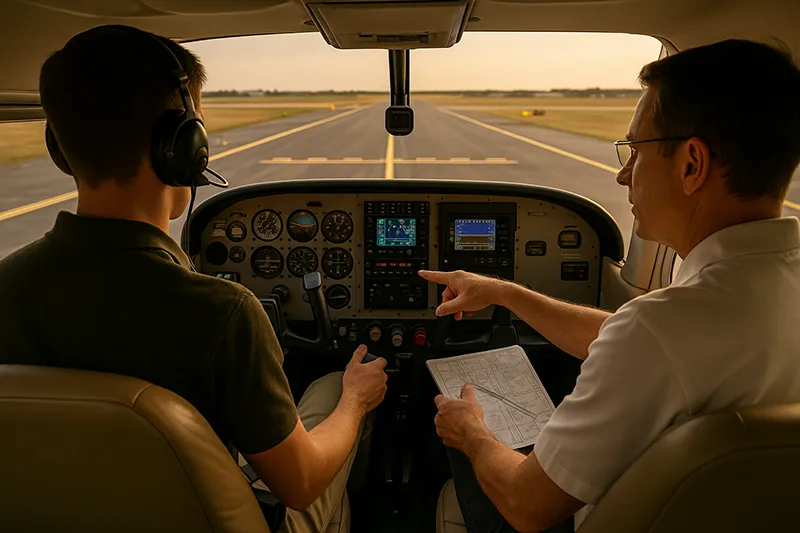
Taxi operations are where a lot of real flying practice begins and ends. For student pilots, mastering taxi operations means developing situational awareness, radio discipline, airplane control, and the judgment to recognize when to stop and ask for clarification. Taxi operations are the everyday skill set that prevents runway incursions, reduces wear on the aircraft, and sets the tone for safe departures and arrivals.
This article explains taxi operations in practical terms for students, instructors, and aviation professionals. You will learn how to read airport diagrams for surface movement, prepare for taxi before engine start, manage the airplane while moving on the ground, interpret common signs and markings, stay safe in low visibility and night conditions, and recognize common mistakes that create operational risk. The primary keyword taxi operations appears early because these skills are central to safe airport surface movement.
What Taxi Operations Really Mean
Taxi operations encompass the planning, communication, and physical control of an aircraft while it moves under its own power on airport surfaces other than runways during takeoff or landing roll. That includes movement on ramps, aprons, taxiways, and when crossing runways. Taxiing requires translating a mental image of the airport diagram into precise, low-speed aircraft control and clear interaction with other pilots and air traffic control when applicable.
In practice, taxi operations combine three core elements: pre-taxi preparation, controlled movement, and dynamic decision-making. Preparation uses documents such as the airport diagram, the pilot’s checklist, and local briefings. Controlled movement is the physical handling of power, brakes, and steering, together with an eye on traffic, signs, pavement conditions, and obstacles. Decision-making is the continuous process of confirming you are where you expect to be and pausing to clarify instructions when something is uncertain.
Why Taxi Operations Matter in Real-World Aviation
Taxi operations are where many avoidable incidents occur. Runway incursions, ground collisions, and foreign object damage often happen at low speed but with serious consequences. For student pilots, taxiing is an arena to apply cockpit management, see-and-avoid scanning, and clear radio procedures. For instructors, taxi is an excellent training environment to teach judgment, airplane handling, and the habit of briefing contingencies. For operators and safety managers, safe taxi operations reduce maintenance costs and operational disruptions.
Operationally, a student who can taxi well reduces the instructor’s workload, creates safer pattern operations, and is more likely to make better decisions under pressure. Airport surface movement also connects to weather, aircraft performance, and human factors. For example, contaminated taxiways change braking effectiveness. Night operations lower visual cues. High-density airports add communication and routing complexity. Understanding these relationships improves safety and pilot confidence.
How Pilots Should Understand Taxi Operations
Think of taxiing as controlled, low-speed flight that requires planning and constant verification. The following areas are key to a working mental model for taxi operations.
Pre-Taxi Briefing and Preparation
Preparation begins before the engine is running. Review the planned route on the airport diagram so you know taxiway names, runway crossings, hold short points, hot spots, and the location of aprons and parking. Confirm performance considerations such as wind direction for engine start and movement away from other aircraft. Brief the student or passenger on expected taxi flow, a simple hand signal or briefing about brakes, and what to do if you need to stop immediately.
Use a standard pre-taxi flow that includes verifying brakes, steering, flight controls, and cockpit items such as lights and transponder settings when appropriate. If operating at a towered airport, listen on the ground frequency before requesting taxi so you are familiar with current traffic and any ground delays. If non-towered, monitor the common traffic advisory frequency to build situational awareness about ground activity.
Understanding Signs, Markings, and Lighting
Airport signs, pavement markings, and edge lighting are the language of the airport surface. Learn the difference between mandatory instruction signs, direction signs, location signs, and runway holding position markings. Pavement centerlines and taxiway-edge markings indicate where wings and gear should remain to avoid obstructions. Surface painted runway holding positions show where to stop before entering a runway. Lighting systems like taxiway centerline lights and runway guard lights provide cues for night or low visibility operations.
Because terminology and color coding are standardized in many countries, gaining familiarity with these visual cues reduces uncertainty. However, always verify your position with the airport diagram and, when in doubt, stop and clarify with ATC or another pilot. Never proceed across a marked runway holding position unless you have clear authorization or are certain the runway is inactive and it is safe to cross.
Communication and Radio Work
Clear surface communication reduces conflicts. When working with ATC, ensure you understand taxi clearances and read them back. Effective radio technique includes listening before transmitting, keeping transmissions concise, and repeating any hold-short instructions accurately. At non-towered fields, use standardized position reporting to share your intentions with others on the frequency.
For students, practicing radio calls during taxi in a low-pressure setting helps build fluency. Instructors should pause and correct imprecise phraseology constructively. Remember that phraseology can vary by country and facility. When unsure, ask ATC to clarify rather than proceed on an assumption.
Control Inputs: Power, Brakes, and Steering
Ground control of the airplane requires coordinated use of power, brakes, and steering. For tricycle-gear aircraft, differential braking and toe brakes combine with nosewheel steering for ground maneuvering. For tailwheel airplanes, rudder use is essential because the tailwheel often does not provide effective steering at low speeds. In light twins and larger aircraft, differential power and careful brake application manage turns and speed.
Manage speed to maintain control but avoid tied-up brakes that can overheat. Use idle or low power settings for slow taxi and brief power increases for controlled movement across soft or uneven surfaces. Whenever possible, taxi at a speed that allows you to stop within the available sight distance. If visibility is limited or there is congested traffic, slow further and be ready to stop quickly.
Common Mistakes or Misunderstandings
Many student pilots make predictable mistakes during taxi operations. Recognizing these common errors and their underlying causes helps prevent incidents and builds safer habits.
Rushing and Overconfidence
Taxiing too quickly or proceeding without confirming routing is a frequent problem. Rushing often comes from perceived pressure to keep the schedule or from trying to reduce time in the cockpit. The remedy is a pre-taxi plan and the discipline to stop and verify when something does not match the plan.
Poor Airport Diagram Use
Not cross-referencing your movement on the ground with the airport diagram leads to wrong turns, missed hold positions, or entering runways unintentionally. Student pilots should practice following a taxi route on the diagram as they move, checking off points mentally or on paper if needed.
Inadequate Lookout and Scan Technique
Some pilots focus narrowly on their own movement and neglect scanning for other traffic, ground vehicles, or personnel. Effective lookout uses short, repeated scans and attention to potential conflict points such as runway crossings and intersections.
Misinterpreting Signs and Lighting
Signs and lights help, but misreading them or assuming their meaning without verification creates risk. For example, illuminated taxiway centerline lights do not replace the need to stop at a marked runway holding position. Students should learn to interpret signs but also to use them as part of a broader confirmation process that includes map checking and ATC confirmation.
Brake Mismanagement and Steering Errors
Overusing brakes at slow taxi can overheat them. Conversely, relying solely on steering inputs at low speed in a tailwheel airplane can lead to loss of directional control. Understanding the aircraft’s ground handling characteristics and practicing appropriate power and brake application are essential.
Practical Example: Moving Through a Busy Towered Airport
Imagine a student pilot preparing for a dual lesson at a medium-size towered airport with multiple parallel taxiways and active runway crossings. Before engine start, the instructor and student review the airport diagram and the planned taxi route to runway 27R. They identify two runway crossings and a known hot spot where pilots have previously missed a hold-short marking.
After completing the pre-taxi flow, the student checks brakes and steering, starts the engine, and the instructor has the student taxi to the runway with a specific path on the diagram. The student tunes the ground frequency, listens to ongoing traffic, and confirms the assigned route on the airport diagram. At the first runway holding position, the student stops, rechecks the hold position marking and the runway environment, and reads back the hold short instruction on the radio. The instructor coaches the student on how to place the airplane to maintain a margin from other parked aircraft and how to scan for vehicles approaching the runway crossing.
At the second runway crossing, low sun creates glare. The instructor advises a brief taxi stop to reposition the airplane in a place where the student gets a clear view of the hold position marking. The student then continues and reaches the runway, where the instructor transitions to runway brief and takeoff checks. This example highlights planning, visual verification, and willingness to stop and clarify as key elements of safe taxi operations.
Best Practices for Pilots
Develop habits that reduce uncertainty and create predictable behavior for you and other pilots on the ground. A few practical best practices are particularly helpful.
- Plan your route on the airport diagram before you move and update it if ATC issues a different routing.
- Brief runway crossings and hot spots with your instructor or crewmembers before taxiing.
- Taxi at a speed that allows you to stop within the pilot’s visible distance.
- Use brief, clear radio calls and confirm hold-short instructions when working with ATC.
- Conduct periodic position confirmations with the airport diagram, especially at intersections and before runway crossings.
- Maintain a disciplined scan for other traffic, ground vehicles, and personnel working near the movement areas.
- For night or low visibility operations, illuminate appropriate exterior lights per your checklist and reduce speed.
Human Factors in Taxi Operations
Human factors play a large role in taxi safety. Complacency, distraction, fatigue, and communication breakdowns are common contributors to ground incidents. For student pilots, the risk often comes from divided attention between radio work, taxi planning, and aircraft control. Instructors should create training scenarios that require managing multiple tasks during taxi, such as navigating unfamiliar taxiway layouts or dealing with a simulated low-visibility condition.
Another important human factor is the effect of authority gradient. Students may feel reluctant to question an instructor or other pilot’s taxi path. Cultivate the habit of speaking up when you are unsure. In multi-crew environments, use brief confirmations and challenge-and-response techniques to ensure the pilot flying and pilot monitoring share the same picture of surface movement.
Taxiing in Special Conditions
Night Operations
At night, visual references change. Taxiways and hold short markings may be harder to identify. Use cockpit lighting that preserves your night vision and switch on the aircraft exterior lights to increase your visibility to others. Slow down and rely on airport lighting such as taxiway edge lights and centerline lights to maintain alignment.
Low Visibility and Contaminated Surfaces
Reduced visibility requires slower taxi speeds and more frequent position verification. Contaminated surfaces such as snow, ice, or standing water reduce braking effectiveness and can hide surface markings. In these conditions, rely on pilot technique and local guidance rather than assumed pavement friction. If you have any doubt about a taxi clearance or your ability to stop, pause and ask for clarification.
Heavy or Unfamiliar Aircraft
Different aircraft types taxi differently. High-wing vs low-wing affects sightlines, tailwheel vs tricycle changes directional control, and multi-engine aircraft may require different power management on the ground. When transitioning to a new aircraft type, practice taxi maneuvers in a low-traffic environment first until you understand its ground handling characteristics.
Training Recommendations for Instructors
Instructors should use taxi operations as a structured training module rather than an incidental activity. Break taxi training into phases: airport diagram briefing, low-traffic taxiing for handling practice, complex airport taxiing for planning and communications, and special condition taxiing for weather or night work. Use progressive challenges that build competence without creating undue risk.
Conduct debriefs after taxi sessions that focus on decision points, scanning technique, and communication. Encourage students to verbalize their taxi plan and to call out uncertainties. Make correction specific and linked to observable behavior such as braking technique, steering control, or missed checklist items.
Common Questions Pilots Ask About Taxi Operations
What should I brief before taxiing?
Brief the planned taxi route on the airport diagram, identify runway crossings and hot spots, confirm who will handle radios, and review any aircraft-specific ground handling notes. Also include a brief contingency plan for unexpected hold times or if you become uncertain about your position.
How do I handle confusing taxi instructions at a busy airport?
Stop at a safe location if necessary and request clarification. It is better to lose a few minutes than to follow an instruction you do not fully understand. Use the airport diagram to confirm taxiway names and ask ATC for progressive taxi instructions if available.
How fast should I taxi?
Taxi speed depends on airport congestion, surface condition, and visibility. A general principle is to taxi at a speed that allows you to stop within the distance you can see to be clear. Comfortably low speed allows time to scan, make radio calls, and maintain control without aggressive brake use.
What are hot spots and how should I use them?
Hot spots are locations on the airport surface with increased risk for conflicts or pilot deviations. Familiarize yourself with hot spots on the airport diagram and plan additional verification steps such as pausing before crossing or double-checking signage and lighting at those locations.
Should I use my brakes to steer on the ground?
Brakes are part of ground steering but should not substitute for appropriate rudder or tiller use. In tricycle-gear aircraft, gentle differential braking combined with nosewheel steering is common. In tailwheel aircraft, rudder effectiveness is essential. Understand your airplane’s recommended taxi technique and practice gentle, deliberate inputs.
Frequently Asked Questions
How do I confirm I am at the correct runway holding position?
Visually identify the painted hold-short markings and associated signage, cross-check with the airport diagram, and if working with ATC read back or confirm the location as necessary. If you cannot see the markings due to lighting or snow, request guidance rather than proceeding.
What should I do if I miss a taxiway turn?
Stop at a safe location, assess your position on the airport diagram, and if necessary, call ground control or announce your position on the common frequency at non-towered airports. Avoid making sudden turns or backing up without clear communication and an understanding of obstacles.
Can I taxi with the wingtips close to other aircraft or obstacles?
No. Maintain a safe clearance from other aircraft, vehicles, and fixed objects. If you have limited clearance, request assistance from ground personnel or a wing walker if available. Never assume there is adequate clearance based purely on perception from the cockpit.
How should I taxi when the airport is congested?
Increase vigilance, slow down, and confirm your route step by step. Keep an eye on ground vehicle movements and other aircraft. Use cockpit briefings with passengers or other crewmembers to assign lookout tasks where appropriate.
Final Thoughts on Taxi Operations
Taxi operations are deceptively simple in concept but rich in operational nuance. For student pilots, taxiing is a practical training environment to develop judgment, scanning, and communication skills that carry over to all phases of flight. For instructors, taxi time is a prime opportunity to coach non-technical skills and build safety habits.
Above all, create the habit of planning, confirming, and pausing when necessary. The simple discipline of stopping to verify a hold short line or asking ATC to repeat a clearance can prevent serious incidents. Treat taxi operations as deliberate, controlled, and teachable moments rather than hurried transitions between parking and runway.
Key Takeaways
- Practical takeaway: Plan your taxi on the airport diagram and confirm critical points before moving.
- Safety takeaway: Slow down, scan actively, and stop to clarify any ambiguous routing or signage.
- Training takeaway: Use taxi operations to practice communication, cockpit discipline, and decision making.