
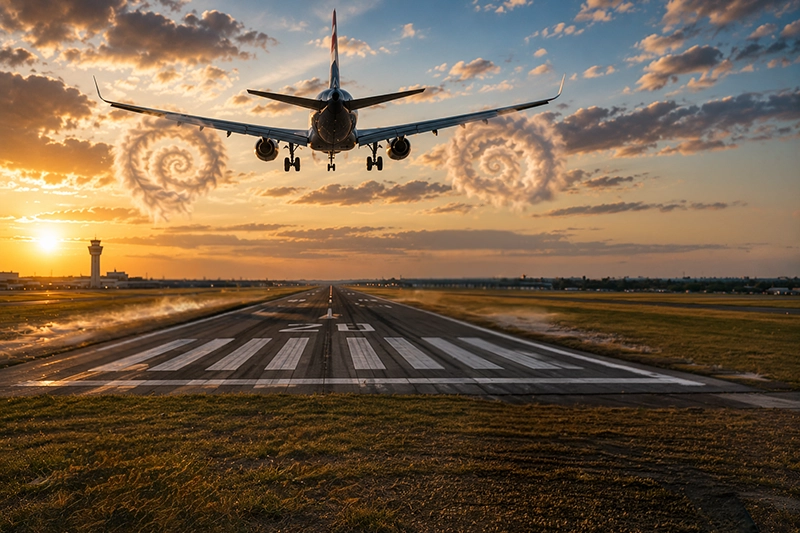
Wake turbulence is one of those invisible hazards that contributes to pilot workload and stress long before it becomes a handling problem. For pilots, student pilots, flight instructors, and aviation professionals, understanding wake turbulence and adopting consistent operational practices reduces exposure, simplifies decision-making, and preserves margins when it matters most.
This article focuses on practical, operationally useful best practices for managing wake turbulence in everyday flying. It explains the aerodynamic basics in clear terms, connects the concept to real-world flight training and operations, covers common pilot mistakes, and shows how deliberate briefing, spacing, and recovery techniques lower stress and improve safety. The primary keyword wake turbulence appears here and throughout the article to keep the focus practical and searchable.
Understanding the core idea
Wake turbulence refers to the vortices and disturbed airflow left behind a generating aircraft. Those vortices originate at the wingtips as a consequence of lift production: higher pressure under the wing wraps around to the lower pressure region above the wingtip, creating rolling columns of air. The strength of the vortices depends on several factors that pilots can observe or infer: aircraft weight, wingspan and planform, configuration, and airspeed. Heavier, slower, and clean-configured aircraft generally produce stronger, longer-lasting vortices.
Vortices descend and propagate outward from the flight path of the generating aircraft. Their behavior is influenced by ambient wind, atmospheric stability, temperature stratification, and ground proximity. Crosswinds can transport vortices laterally; light winds and stable air let vortices persist longer; ground effect causes vortices to flatten and remain near the runway after touchdown. All these characteristics affect where and when wake turbulence poses a hazard to following aircraft.
Why this matters in real-world aviation
Wake turbulence matters because it directly affects aircraft control, approach stability, and the workload required to maintain safe flight. For student pilots and newly certificated pilots, a sudden roll or pitch upset close to the ground can quickly overwhelm flying skills. For instructors and operators, predictable procedures and good judgment prevent close calls and reduce stress for both pilot and controller. For aviation professionals designing training, incorporating realistic wake turbulence exposure builds competence without unnecessary risk.
Operationally, wake turbulence influences runway selection, approach sequencing, spacing, and briefing content. Pilots crossing behind large jets need to consider the generating aircraft's flight path, touchdown or rotation point, and the possible drift of vortices. On takeoff, a small airplane rotating close behind a heavy can encounter wake turbulence that rolls the airplane unexpectedly. In mixed-traffic environments this is a common and persistent operational risk that requires clear mental models and simple, repeatable responses.
How pilots should understand wake turbulence in practical terms
Translate the aerodynamic concept into cockpit actions by thinking in three layers: anticipatory, tactical, and recovery. Anticipatory actions reduce the chance of encountering hazardous vortices. Tactical actions adjust flight path or timing when avoidance is required. Recovery actions are the immediate control responses if a vortex encounter occurs.
Anticipatory: Build a mental picture during preflight and before descending into the terminal area. Consider the types of aircraft operating at the field, typical approach speeds, and wind conditions. Use the ATIS and tower information to identify heavy or turbojet arrivals. Brief potential wake turbulence encounters during your approach briefing, include who is ahead, and set expectations for spacing or go-around if the flight is unstable.
Tactical: On approach or departure, aim to fly where vortices are least likely to be encountered. In general, remain above the flight path of a preceding aircraft, avoid the immediate flight path of the aircraft ahead on final, and do not fly below or close behind the touchdown point of a heavier aircraft. On departure, rotate slightly above the previous aircraft's rotation point when possible and avoid the flight path centerline of a larger aircraft. Use small, smooth control inputs and avoid abrupt control movements in the presence of wake turbulence.
Recovery: If you encounter wake turbulence, the immediate goal is to maintain positive control and arrest undesired motion. Prioritize attitude and power management rather than aggressive control inputs. For light airplanes, reduce angle of attack if a wing drops, apply coordinated aileron and rudder as required, and add power to arrest a descent. Avoid full rapid control deflections; small, deliberate control corrections are generally more effective. If the encounter occurs near the ground, execute a stabilized go-around if the aircraft is not firmly controlled.
Common mistakes or misunderstandings
Pilots frequently underestimate how long vortices persist, or they assume vortices always stay on the runway centerline. Both assumptions are dangerous. Vortices can translate sideways with crosswind and can remain close to the runway in ground effect. Another common mistake is concentrating only on the immediate lead aircraft and neglecting traffic that rotated or touched down earlier but remains nearby. Fixating on the runway numbers instead of scanning for wake cues increases the chance of surprise encounters.
Students often respond to a sudden roll with aggressive control movements. Aggressive inputs can exacerbate the upset and increase stress and workload. Instead, training should stress small, measured corrections and early recognition of the signs of wake-induced roll or pitch excursions. Instructors sometimes limit training exposure to wake turbulence, but that also limits a pilot s ability to develop calm, effective reactions during unplanned encounters.
Another misunderstanding is treating wake turbulence as exclusively an issue near heavy jets. While the largest vortices come from heavy transport-category aircraft, smaller airplanes can produce hazardous vortices relative to even lighter follow-on aircraft. The relative size and capability of the following aircraft versus the generating aircraft determines risk more than absolute aircraft weight alone.
Practical example
Scenario: You are flying a single-engine trainer on a visual approach to a towered airport. Tower clears a Boeing 737 to land, and you are number two behind that arrival. The wind is light from the southwest. During the approach briefing, you noted the 737's expected touchdown point and briefed the go-around point if the approach becomes unstable. As you configure for landing, you see the 737 flare and touch down slightly long near the runway centerline.
Actions: First, remain above the 737's flight path until you can confirm the touchdown point and any lateral drift of the vortices. Adjust your aimpoint slightly to land beyond the 737's touchdown if runway length and performance allow. Maintain a stabilized approach and avoid trying to land in front of or directly on the same touchdown point. Be prepared to execute a go-around if you feel any rolling motion, excessive sink, or if the approach becomes unstabilized. Communicate with tower if you intend to go around so they can manage spacing. After landing, roll out cautiously and remain aware of the possibility that vortices may still be present off the runway for some distance, particularly if the wind is light.
Training takeaways: Use this scenario to rehearse the mental picture of vortex location, plan a conservative aimpoint, and practice prompt, calm go-around execution. Instructors should stage this scenario in a simulator or dual flights to let students experience the cues associated with wake encounters without real hazard exposure.
Best practices for pilots
These best practices focus on reducing uncertainty, lowering workload, and preserving control margins. They are organized by phase of flight and by human factors considerations.
Preflight and dispatch: Know the field and common traffic mix. If possible, select runways and departure/arrival procedures that minimize operations behind heavy traffic. Brief wake turbulence during preflight planning, especially for single-pilot operations and flights with students on board.
Terminal area and briefing: Always include wake turbulence considerations in your approach briefing. State who is ahead, the anticipated touchdown or rotation point, your intended spacing, and a clear go-around decision point. Brief expected control inputs and a recovery plan in case of an encounter. Use simple, repeatable wording so that the briefing becomes automatic.
On approach: Maintain a stabilized approach path. Where practical, fly above the preceding aircraft's flight path and identify its touchdown point. Avoid attempting to land before the preceding aircraft's touchdown point or to land on the same aimpoint. If you must cross below the preceding aircraft's flight path, increase spacing and be prepared to take prompt recovery action.
On departure: When taking off behind larger aircraft, delay rotation slightly beyond their rotation point without compromising obstacle clearance. If departing from an intersection, avoid the larger aircraft s rotation area. Consider using a different runway when heavy jet departures are frequent and a safer option exists.
Visual scanning and cues: Develop observation habits that reveal wake cues early. Look for wingtip vortices trailing the generating aircraft, disturbed smoke, or debris movement. Note any unusual yaw or roll tendencies in your aircraft as soon as they begin and respond with measured corrections.
Control technique: Train for small, precise control inputs, and avoid large or abrupt movements when recovering from a wake encounter. Use coordinated aileron and rudder inputs to level the wings. If the aircraft begins to roll, reduce angle of attack slightly and add power if necessary to arrest descent. Avoid overcontrolling; let the aerodynamics damp the motion once you have applied corrective inputs.
Automation and systems: Use autopilot when appropriate and when it reduces workload. Autopilot systems may maintain control more smoothly through a wake encounter than a startled pilot. However, pilots must understand autopilot limits and be ready to disconnect if the system cannot cope with large disturbances or unusual attitudes.
Communication: Stay proactive with ATC. If wake turbulence creates a hazard or if your requested spacing is insufficient, request additional spacing or a go-around. Tower controllers can often adjust sequencing to reduce risk, but you must communicate your needs clearly and early.
Training and currency: Incorporate wake turbulence scenarios into recurrent training. Simulator sessions, mode-specific briefings, and supervised real-world exposures build confidence and muscle memory. For instructors, progressively increase complexity as students demonstrate competence.
Human factors: reducing stress and preserving decision quality
Stress from wake turbulence often stems from surprise and uncertainty. Reduce stress by converting uncertainty into a plan. A short, well-rehearsed briefing, clear decision criteria for go-around, and simple phrases for communicating with ATC help pilots remain composed. Mentally rehearsing responses and running through what-if scenarios during taxi reduces cognitive load during critical moments.
Use checklists and standard operating procedures to limit ad hoc decision-making when workload is high. Confidence in your plan reduces hesitation and keeps control inputs smooth. Encourage a culture of conservative decision-making: a go-around or delayed landing to avoid a hazardous vortex is a successful outcome, not a failure.
Training program considerations
Flight schools and operators should make wake turbulence part of initial and recurrent syllabi. That means classroom explanation of vortex generation and behavior, simulator practice for encounters, and supervised in-flight exposure in controlled conditions. Train pilots to make rapid but deliberate decisions about spacing and go-arounds. Emphasize recognition cues and recovery technique tailored to your aircraft type, since response characteristics vary with performance and control effectiveness.
Instructors should debrief wake-related events carefully. Discuss what cues were present, what mental model the student used, and what could be done earlier to avoid the encounter. Encourage constructive feedback and use the event to update local SOPs or briefing templates where appropriate.
Common mistakes and misunderstandings revisited
Many errors arise from underestimating environmental factors. For example, pilots sometimes assume that a crosswind will quickly dissipate vortices. In reality, a crosswind can translate vortices laterally and deposit them where a following aircraft does not expect them. Similarly, pilots may think that touching down behind a heavy that landed long means the vortex will have passed by the time they reach that touchdown point. That is not assured, particularly in light wind or stable conditions.
Another misconception is relying solely on published separation standards as a cue for personal safety decisions. Regulatory or ATC separation may provide legal allowance for traffic sequencing, but pilots must still judge their aircraft s capability and current conditions. If you feel unsafe, request more spacing or execute a go-around regardless of published minima.
Best-practice checklist for stress reduction
Use this short list to form habits that reduce stress in wake-prone environments:
- Brief wake turbulence and go-around criteria on every approach.
- Aim to stay above the preceding aircraft's flight path on final when practical.
- Choose aimpoints that avoid landing on another aircraft s touchdown point.
- Use small, measured control inputs during disturbances.
- Communicate early with ATC for spacing adjustments.
- Practice wake encounter scenarios in the simulator or dual flights.
Frequently asked questions
How long do wake vortices last?
Vortex persistence depends on aircraft weight, atmospheric stability, wind, and terrain. In calm, stable air, vortices can persist longer and remain hazardous near the runway. In breezier or turbulent conditions, vortices dissipate or are carried away more rapidly. Because persistence varies with conditions, plan for conservative spacing and be prepared to go around if you suspect a lingering vortex.
Can I follow directly behind a heavy jet on final?
Following directly behind a heavy jet increases the risk of encountering wake turbulence. If you must follow, increase spacing, remain above the heavy's flight path where possible, and avoid attempting to land on the same touchdown point. If the situation feels unstable, execute a go-around and re-sequence.
What should I do if my airplane rolls unexpectedly on final approach?
Prioritize attitude control and smooth corrective inputs. Reduce angle of attack slightly, use coordinated aileron and rudder to stop the roll, and add power to arrest descent if necessary. If control does not return quickly to a stabilized condition, initiate a go-around early rather than fight to salvage the landing.
Does a crosswind increase or decrease wake risk?
Crosswinds change how vortices move. A crosswind can transport vortices laterally away from the runway centerline, creating unexpected hazard locations. Light crosswinds may keep vortices near the runway longer, while stronger winds can move them clear. Always assess wind direction and strength when anticipating vortex behavior.
Should I use autopilot to handle wake encounters?
Autopilot can reduce workload and smooth small disturbances, but pilots must know the autopilot s performance envelope. If the disturbance is large or the autopilot begins to oscillate or disconnect, be ready to take manual control promptly. Training should cover both autopilot-assisted and manual recovery techniques.
Practical training scenario for instructors
Objective: Build student recognition and recovery skills without exposing the aircraft to unnecessary risk. Use a simulator or dual instruction flight. Set up an approach behind a simulated heavy transport that touches down slightly long. The instructor should brief specific cues to watch for and a conservative go-around decision point. Allow the student to recognize a mild roll and recover with measured control inputs. Debrief and discuss cues, control technique, and decision timing.
Progression: Start with mild, short-duration disturbances and progress to stronger, longer-lasting vortex effects as the student demonstrates competence. Emphasize calm control inputs, early go-around decisions, and clear communication with ATC or the instructor.
Key Takeaways
- Practical takeaway: Brief wake turbulence and a clear go-around point on every approach to convert uncertainty into a plan.
- Safety takeaway: Maintain conservative spacing and fly above the lead aircraft's flight path when possible to reduce exposure to vortices.
- Training and decision-making takeaway: Practice small, deliberate control corrections and rehearse go-arounds in training to reduce stress if a vortex encounter occurs.
Wake turbulence is manageable with good anticipation, simple tactical choices, and calm recovery techniques. Reducing pilot stress is largely a matter of converting unknowns into predictable behaviors: brief potential encounters, choose conservative aimpoints, maintain clear communication, and practice measured control inputs. These habits decrease surprise, preserve margins, and build confidence across all pilot experience levels.
Use the guidance in this article to inform your personal SOPs, training syllabi, and preflight briefings. When in doubt, prioritize a stabilized approach and a timely go-around. A deliberate avoidance or a safe go-around is an effective, stress-reducing outcome that protects both aircraft and pilot confidence.