
Chapter 18
Emergency Procedures
Turns
Turns are perhaps the most potentially dangerous maneuver for the untrained instrument pilot for two reasons:
- The normal tendency of the pilot to over-control, leading to steep banks and the possibility of a “graveyard spiral.”
- The inability of the pilot to cope with the instability resulting from the turn.
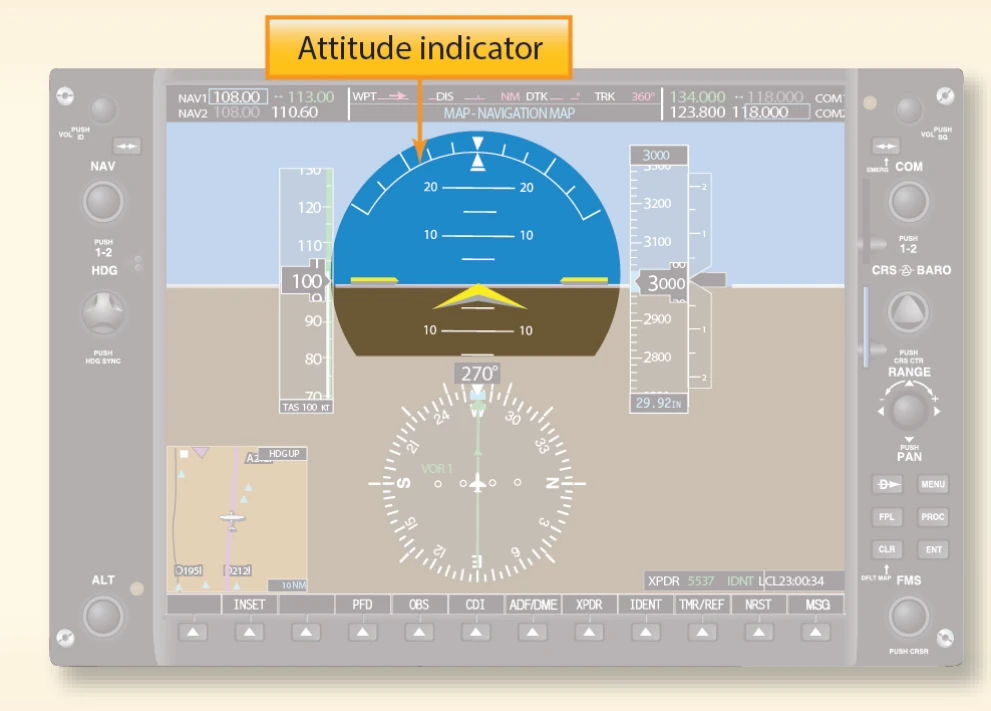
When a turn is to be made, the pilot should anticipate and cope with the relative instability of the roll axis. The smallest practical bank angle should be used—in any case no more than 10° bank angle. [Figure 18-13] A shallow bank takes very little vertical lift from the wings resulting in little if any deviation in altitude. It may be helpful to turn a few degrees and then return to level flight if a large change in heading is necessary. Repeat the process until the desired heading is reached. This process may relieve the progressive overbanking that often results from prolonged turns.
Climbs
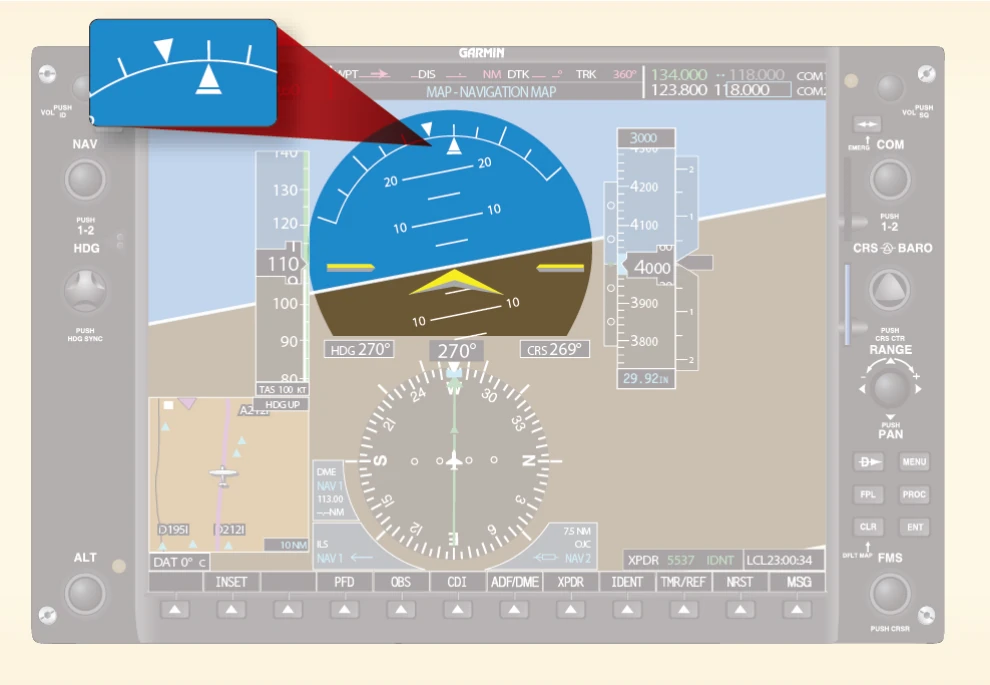
If a climb is necessary, the pilot should raise the miniature airplane on the attitude indicator no more than one bar width and apply power. [Figure 18-14] The pilot should not attempt to attain a specific climb speed but accept whatever speed results. The objective is to deviate as little as possible from level flight attitude in order to disturb the airplane’s equilibrium as little as possible. If the airplane is properly trimmed, it assumes a nose-up attitude on its own commensurate with the amount of power applied. Torque and P-factor cause the airplane to have a tendency to bank and turn to the left. This should be anticipated and compensated for. If the initial power application results in an inadequate rate of climb, power should be increased in increments of 100 rpm or 1 inch of manifold pressure until the desired rate of climb is attained. Maximum available power is seldom necessary. The more power that is used, the more the airplane wants to bank and turn to the left. Resuming level flight is accomplished by first decreasing pitch attitude to level on the attitude indicator using slow but deliberate pressure, allowing airspeed to increase to near cruise value and then decreasing power.
Descents
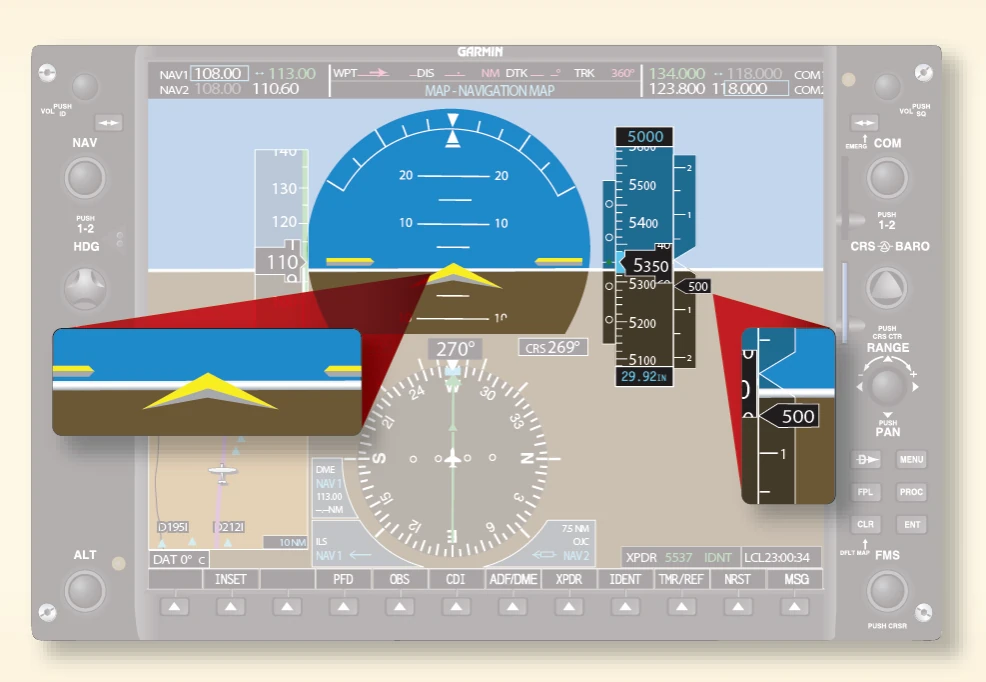
Descents are very much the opposite of the climb procedure if the airplane is properly trimmed for hands-off straight-and-level flight. In this configuration, the airplane requires a certain amount of thrust to maintain altitude. The pitch attitude is controlling the airspeed. The engine power, therefore, (translated into thrust by the propeller) is maintaining the selected altitude. Following a power reduction, however slight, there is an almost imperceptible decrease in airspeed. However, even a slight change in speed results in less down load on the tail, whereupon the designed nose heaviness of the airplane causes it to pitch down just enough to maintain the airspeed for which it was trimmed. The airplane then descends at a rate directly proportionate to the amount of thrust that has been removed. Power reductions should be made in increments of 100 rpm or 1 inch of manifold pressure and the resulting rate of descent should never exceed 500 fpm. The wings should be held level on the attitude indicator, and the pitch attitude should not exceed one bar width below level. [Figure 18-15]
Combined Maneuvers
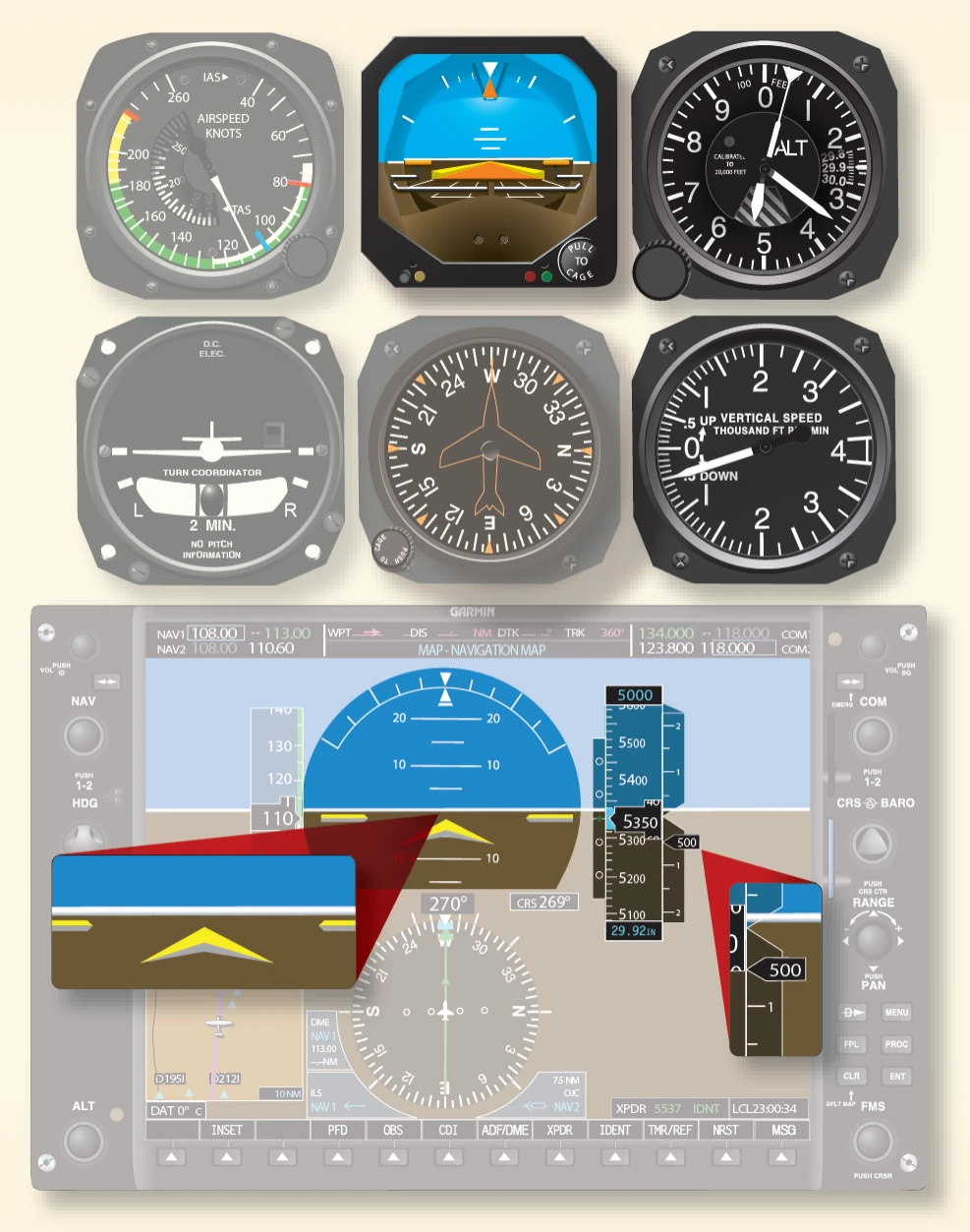
Combined maneuvers, such as climbing or descending turns, should be avoided if at all possible by an untrained instrument pilot. Combining maneuvers only compounds the problems encountered in individual maneuvers and increases the risk of control loss. The objective is to keep the airplane under control by maintaining as much of the airplane’s natural equilibrium as possible. Deviating as little as possible from straight-and-level flight attitude makes this much easier.
When being assisted by ATC, the pilot may detect a sense of urgency while being directed to change heading and/or altitude. This sense of urgency reflects a normal concern for safety on the part of the controller. Nevertheless, the pilot should not let this prompting lead to rushing into a maneuver that could result in loss of control. It's reasonable to ask the controller to slow down, if this becomes an issue.
Transition to Visual Flight
One of the most difficult tasks a trained and qualified instrument pilot contends with is the transition from instrument to visual flight prior to landing. For the untrained instrument pilot, these difficulties are magnified.
The difficulties center around acclimatization and orientation. On an instrument approach, the trained instrument pilot prepares in advance for the transition to visual flight. The pilot has a mental picture of what to expect when the transition to visual flight is made and will quickly acclimate to the new environment. Geographical orientation also begins before the transition, as the pilot visualizes where the airplane is in relation to the airport/runway.
In an ideal situation, the transition to visual flight is made with ample time, at a sufficient altitude above terrain, and to visibility conditions sufficient to accommodate acclimatization and geographical orientation. This, however, is not always the case. The untrained instrument pilot may find the visibility still limited, the terrain completely unfamiliar, and altitude above terrain such that a “normal” airport traffic pattern and landing approach is not possible. Additionally, the pilot is most likely under considerable self-induced psychological pressure to get the airplane on the ground. The pilot should take this into account and, if possible, allow time to become acclimatized and geographically oriented before attempting an approach and landing, even if it means flying straight and level for a time or circling the airport. This is especially true at night.