
Chapter 7
Aircraft Materials, Hardware, & Processes
The roll pin is a pressed fit pin with chamfered ends. It is the hole-walls keeps it in place until deliberately removed with a drift punch or pin punch.
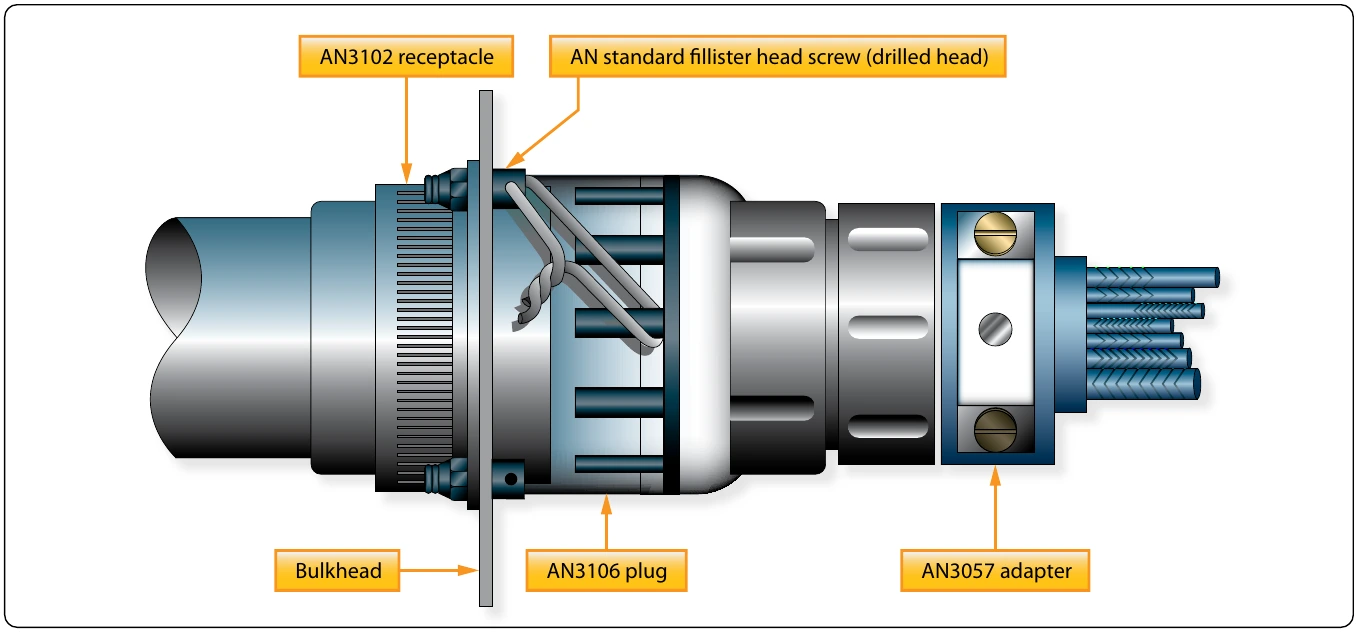
Safety Wiring
Safety wiring is the most positive and satisfactory method of safetying cap screws, studs, nuts, bolt heads, and turnbuckle barrels, which cannot be safetied by any other practical means. It is a method of wiring together two or more units in such a manner that any tendency of one to loosen is counteracted by the tightening of the wire.
Nuts, Bolts, & Screws
Nuts, bolts, and screws are safety wired by the single wire or double twist method. The double twist method is the most common method of safety wiring. The single wire method may be used on small screws in a closely spaced closed geometrical pattern, on parts in electrical systems, and in places that are extremely difficult to reach. Safety wiring should always be per conventional methods or as required by the manufacturer, especially for Light Sport Aircraft (LSA).
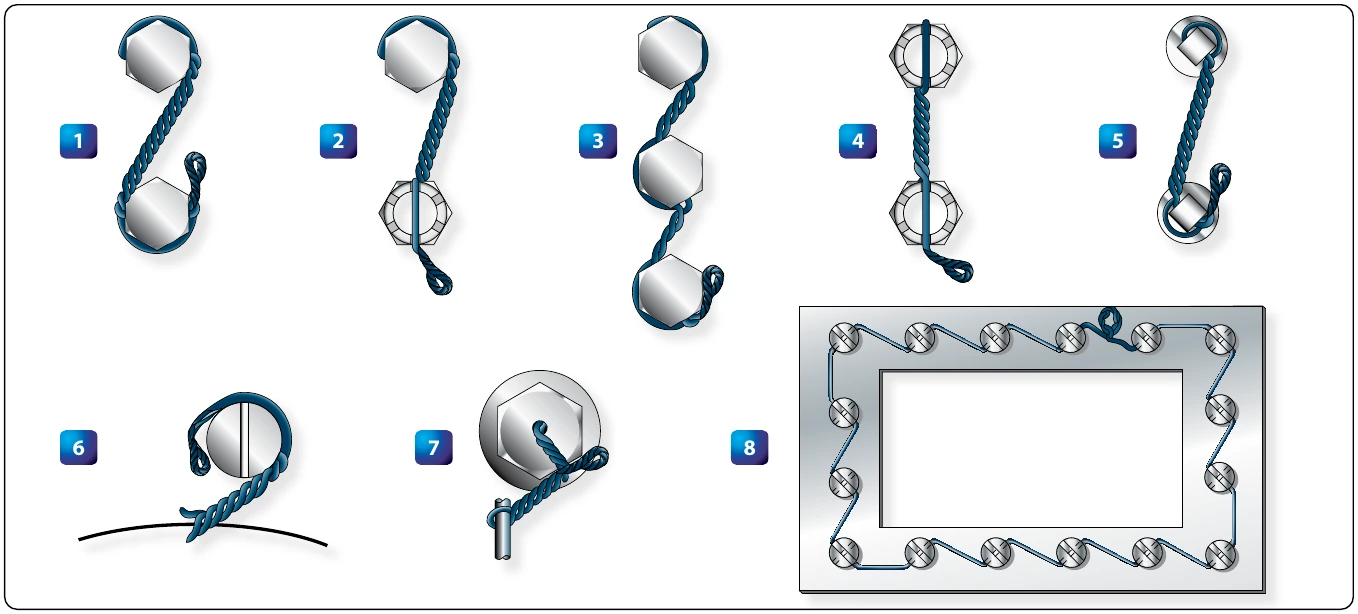
Figure 7-72 is an illustration of various methods that are commonly used in safety wiring nuts, bolts, and screws. Careful study of Figure 7-72 shows that:
- Examples 1, 2, and 5 illustrate the proper method of safety wiring bolts, screws, square-head plugs, and similar parts when wired in pairs.
- Example 3 illustrates several components wired in series.
- Example 4 illustrates the proper method of wiring castellated nuts and studs. (Note that there is no loop around the nut.)
- Examples 6 and 7 illustrate a single-threaded component wired to a housing or lug.
- Example 8 illustrates several components in a closely spaced closed geometrical pattern using a single wire method.
When drilled head bolts, screws, or other parts are grouped together, they are more conveniently safety wired to each other in a series rather than individually. The number of nuts, bolts, or screws that may be safety wired together is dependent on the application. For instance, when safety wiring widely spaced bolts by the double twist method, a group of three should be the maximum number in a series.
When safety wiring closely spaced bolts, the number that can be safety wired by a 24-inch length of wire is the maximum in a series. The wire is arranged so that if the bolt or screw begins to loosen, the force applied to the wire is in the tightening direction.
Parts being safety wired should be torqued to recommend values and the holes aligned before attempting the safetying operation. Never over torque or loosen a torqued nut to align safety wire holes.
Oil Caps, Drain Cocks, & Valves
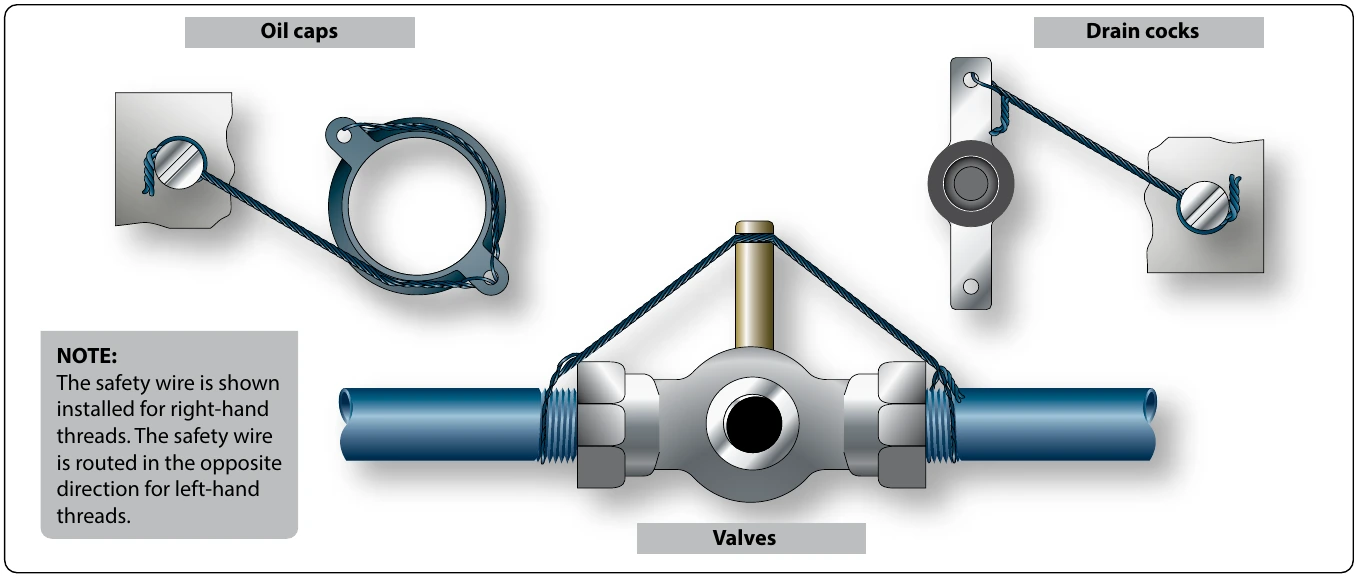
These units are safety wired as shown in Figure 7-73. In the case of the oil cap, the wire is anchored to an adjacent fillister head screw.
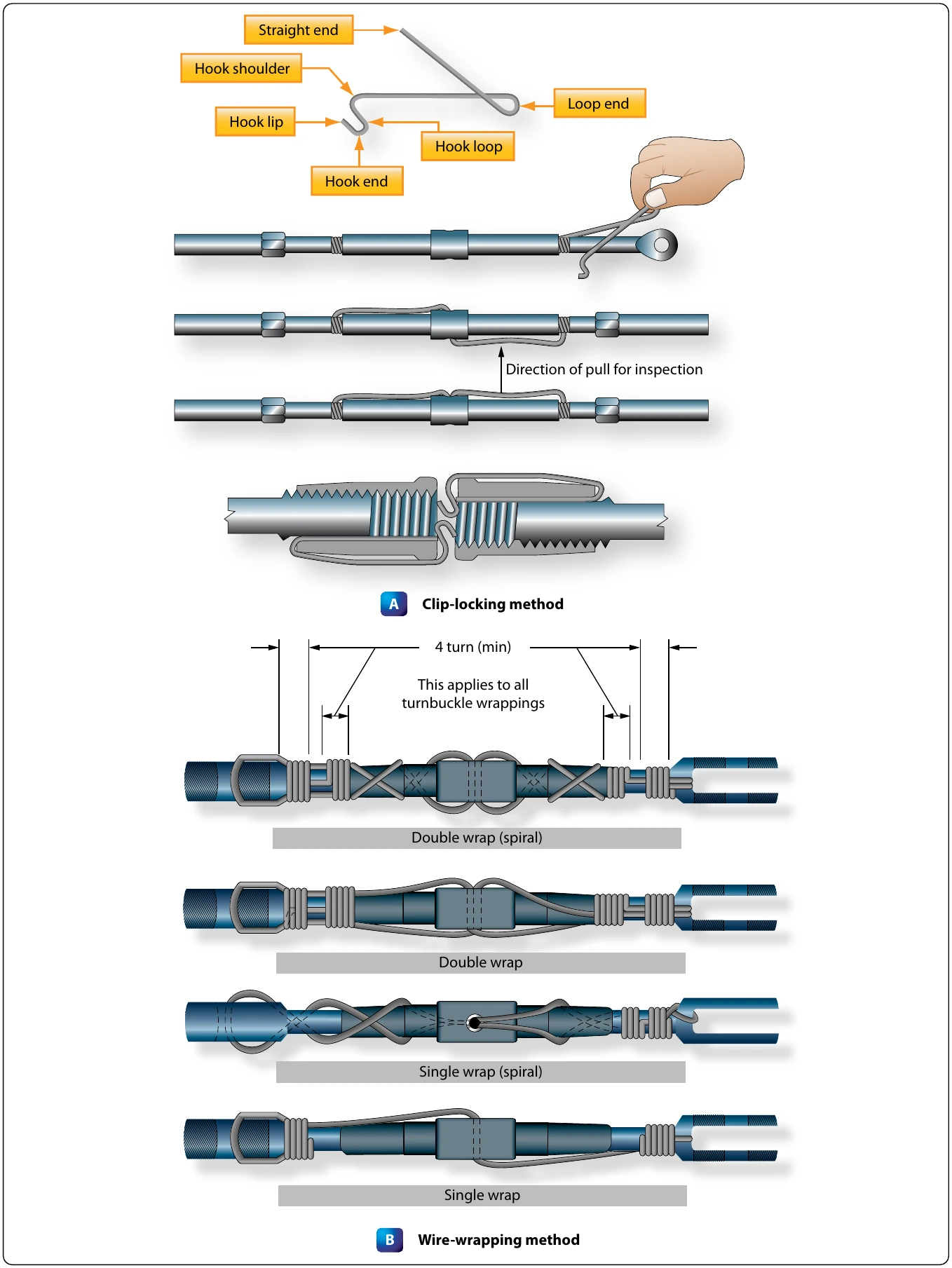
wire-wrapping method.