
Chapter 8
Airspace Classification and Requirements
Class E Airspace
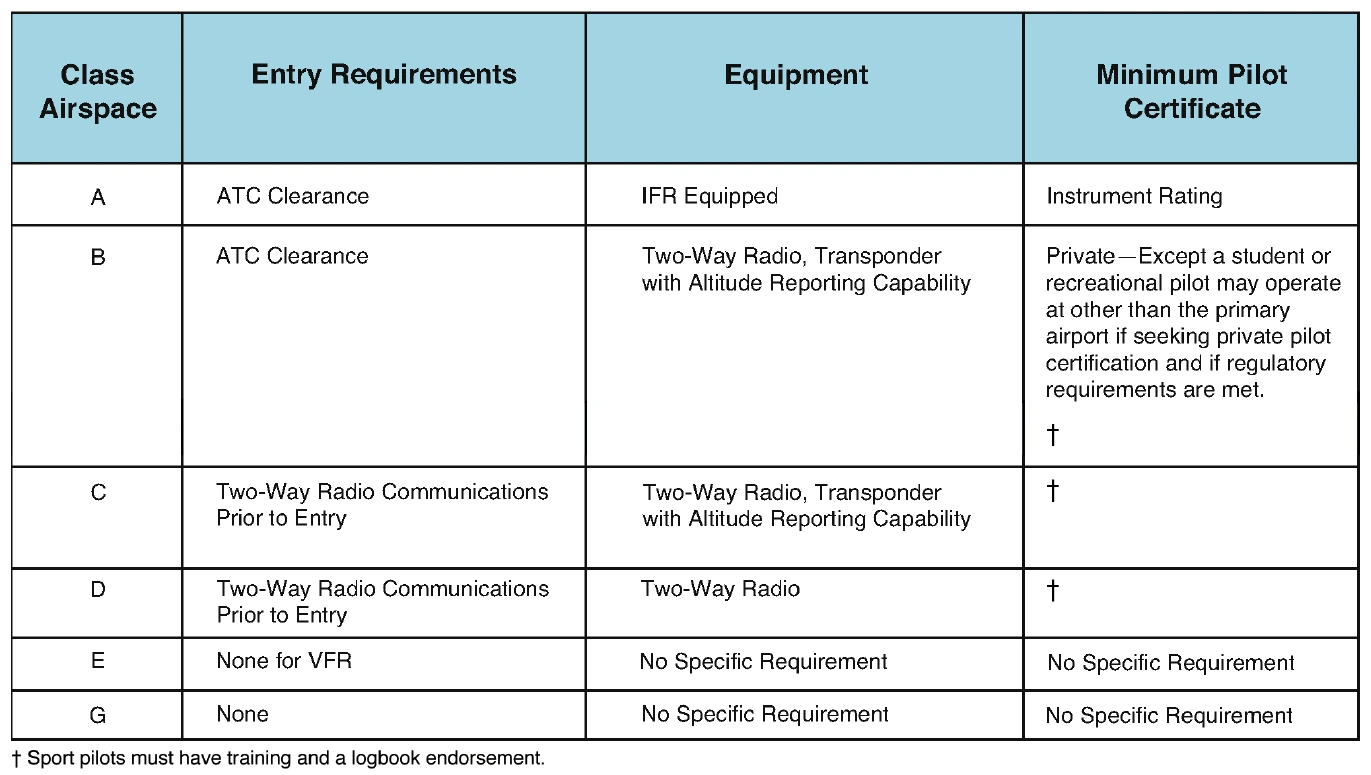
Class E airspace is generally controlled airspace that is not designated A, B, C, or D. Except for 18,000 feet MSL, Class E airspace has no defined vertical limit, but rather it extends upward from either the surface or a designated altitude to the overlying or adjacent controlled airspace. With visibility and cloud clearance requirements met, powered parachute operations are not restricted. Most PPC operations take place in Class E airspace.
Uncontrolled Airspace: Class G Airspace
Uncontrolled or Class G airspace is the portion of the airspace that has not been designated as Class A, B, C, D, or E. It is therefore designated uncontrolled airspace. Class G airspace extends from the surface to the base of the overlying Class E airspace. Although air traffic control has no authority or responsibility to control air traffic in Class G airspace, you should remember there are visual flight rule (VFR) minimums (visibility and cloud clearance) which apply to Class G airspace.
Special Use Airspace
Special use airspace exists where activities must be confined because of their nature. In special use airspace, limitations may be placed on aircraft that are not a part of the activities. Special use airspace usually consists of:
- Prohibited Areas.
- Restricted Areas.
- Warning Areas.
- Military Operation Areas.
- Alert Areas.
- Controlled Firing Areas.
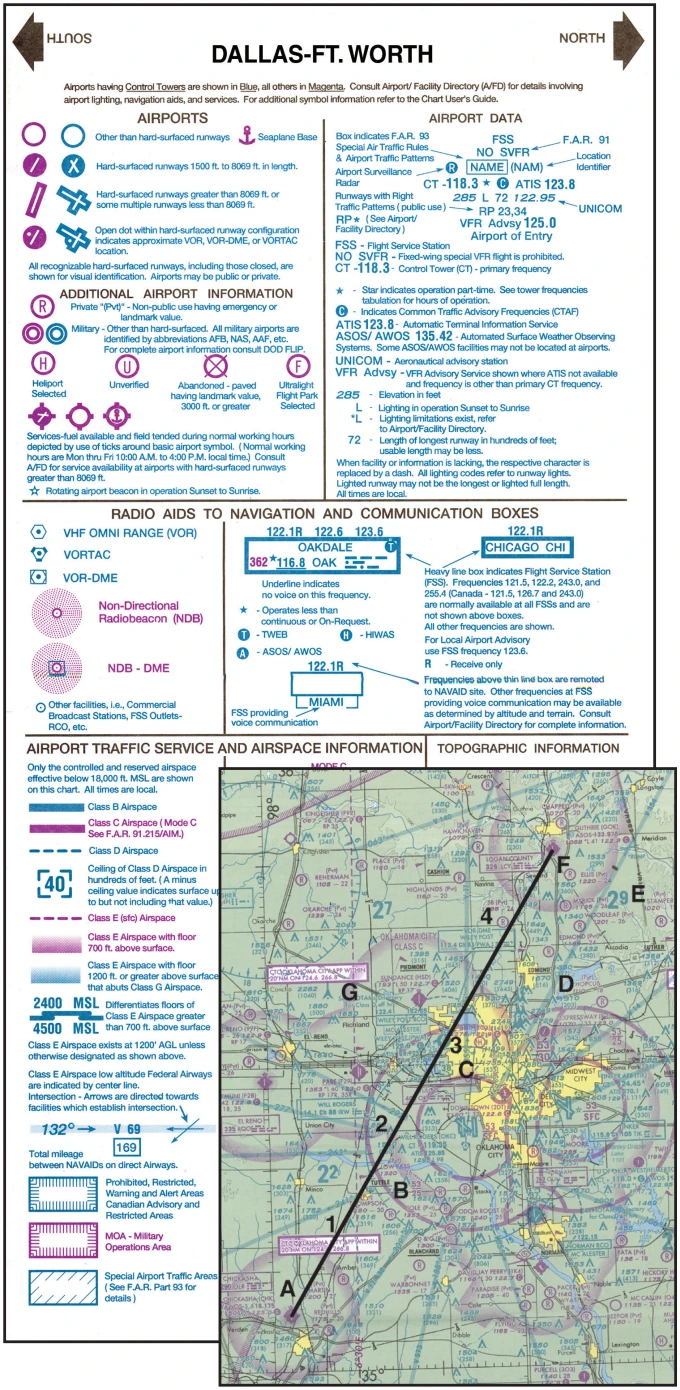
It is important you review the current sectional chart for the area you will be flying in to make sure you avoid operating in special use airspace without proper training and authority. [Figure 8-4]
Prohibited Areas
Prohibited areas are established for security or other reasons associated with the national welfare. Prohibited areas are published in the Federal Register and are depicted on aeronautical charts.
Restricted Areas
Restricted areas denote the existence of unusual, often invisible hazards to aircraft such as artillery firing, aerial gunnery, or guided missiles. An aircraft may not enter a restricted area unless permission has been obtained from the controlling agency. Restricted areas are depicted on aeronautical charts and are published in the Federal Register. Restricted areas may have altitude limitations and hours of operation. Aircraft operations are not restricted if the restricted area is not active.
Warning Areas
Warning areas consist of airspace which may contain hazards to nonparticipating aircraft in international airspace. The activities may be much the same as those for a restricted area. Warning areas are established beyond the 3-mile limit. Warning areas are depicted on aeronautical charts.
Military Operation Areas
Military operation areas (MOA) consist of airspace of defined vertical and lateral limits established for the purpose of separating certain military training activity from IFR traffic. There is no restriction against a pilot operating VFR in these areas; however, a pilot should be alert since training activities may include acrobatic and abrupt maneuvers. MOAs are depicted on aeronautical charts. MOAs may have altitude limitations and hours of operation.
Alert Areas
Alert areas are depicted on aeronautical charts and advise pilots that a high volume of pilot training or unusual aerial activity is taking place. You should be particularly vigilant while flying in this airspace due to the high volume of training activities.